Cayenne-type peppers
These peppers are typically long, narrow and pointed, maturing from green to bright red. Their thin walls and strong heat make them especially suitable for drying and grinding.

Tuscany Cuisine Ingredient Library · Heat, flavor, chili identity and culinary usage
Cayenne pepper is a hot ground chili spice made by drying and grinding cayenne-type peppers. In professional kitchens it is valued for focused heat, vibrant red color and the ability to sharpen sauces, soups, rubs and finishing seasonings with only a small quantity.
This page organizes cayenne by origin, chili identity, heat profile, fabrication method, culinary use and system record so it can function both as an educational page and as a synchronized Tuscany Cuisine ingredient identity.
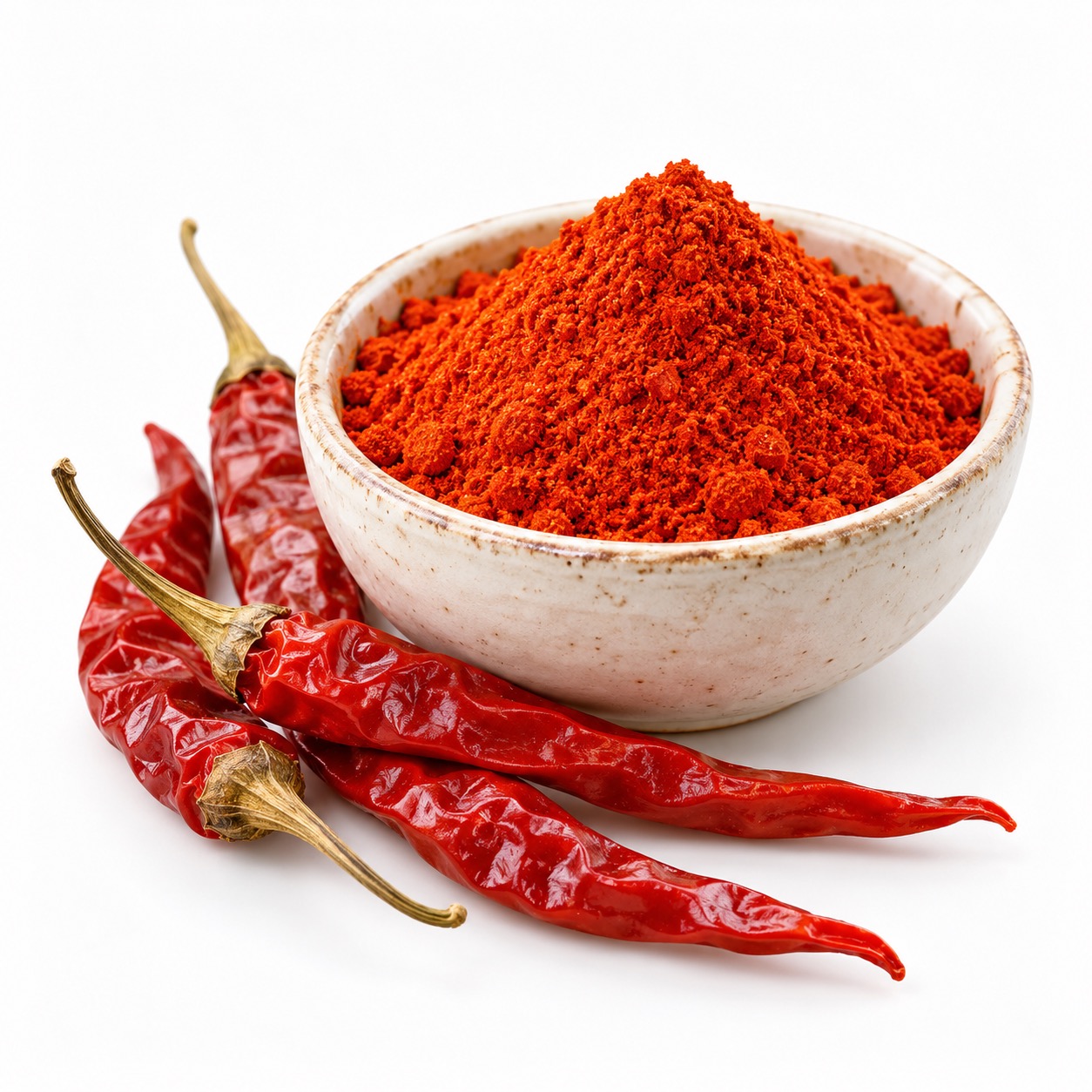
Cayenne belongs to the global chili story: peppers native to the Americas traveled outward and became foundational seasonings across many cuisines.
Cayenne is associated with slender red cayenne-type chilies, most commonly within the broader Capsicum annuum group, although naming traditions in trade and horticulture can vary.
These peppers are typically long, narrow and pointed, maturing from green to bright red. Their thin walls and strong heat make them especially suitable for drying and grinding.
Commercial cayenne pepper is generally a single-spice product: dried ground hot red pepper. It is different from prepared chili powders that may contain cumin, oregano, garlic or other seasonings.
Because the flavor is relatively clean and focused, cayenne adds heat efficiently without significantly altering the base identity of the dish beyond a hot chili note.
Cayenne's personality is built on direct spicy impact. It is usually used in much smaller quantities than sweet paprika.
| Attribute | Description | Kitchen implication |
|---|---|---|
| Heat | Distinctly hot, sharp and immediate | Measure carefully; a small dose often goes a long way |
| Flavor | Clean chili taste with light earthy and faint fruity notes | Adds heat without too much extra flavor complexity |
| Color | Bright red to deep orange-red | Contributes a warm red tone to sauces, soups and rubs |
| Comparison to paprika | Usually much hotter and less sweet than paprika | Do not substitute one-for-one without adjusting quantity and dish balance |
Good cayenne depends on full ripeness, proper drying and careful milling so the spice stays vivid and aromatic.
Cayenne works best when used strategically. It seasons aggressively, so it is often applied in pinches rather than in large spoonfuls.
A pinch lifts tomato sauces, cream sauces, barbecue sauces, aioli-style preparations and vinaigrettes without making them taste like a full chili blend.
Useful when soups, beans or slow-cooked meat dishes need a clean spicy edge. It helps deepen warmth without changing the primary flavor direction.
Cayenne is classic with shrimp, crab, shellfish broths and spicy seafood seasoning mixes because it cuts richness and adds bright heat.
Blend with salt, pepper, paprika, herbs or sugar for dry rubs. It performs well on grilled meats, roasted chicken and barbecue applications.
It can wake up roasted vegetables, sautéed greens, deviled eggs and breakfast dishes when only a quick heat accent is needed.
Because cayenne is concentrated, it is ideal for final correction: taste the dish, then add tiny measured amounts until the balance is right.
Ground cayenne is nutritionally concentrated by weight, but recipes usually use only a small amount. Its culinary value comes primarily from color, aroma and capsaicin-driven heat rather than from serving-size nutrition alone.
The deep red-orange color comes from carotenoid pigments naturally present in ripe chili peppers. These compounds are part of the pepper's plant chemistry and contribute to both appearance and micronutrient value.
Capsaicin and related capsaicinoids are the compounds responsible for the characteristic heat. They are concentrated mainly in the inner placental tissue of hot peppers, which is why cayenne can deliver strong pungency in very small quantities.
Pure dried cayenne can contribute provitamin-A carotenoids and small amounts of vitamin E, vitamin K and minerals. Because a normal culinary portion is often a pinch or fraction of a teaspoon, the actual nutrient contribution per plate is usually modest.
Ground chili spices deteriorate faster than whole dried peppers, so storage discipline matters.
Look for a vivid bright red color, a clean hot chili aroma and a dry even texture. Avoid product that smells stale, dusty, moldy or rancid, or that shows moisture clumps.
Store tightly sealed in a cool dry place away from light and heat. Rotate often, because old cayenne loses punch and can turn flat, dull or harsh rather than cleanly spicy.
This cayenne page is prepared to support recipe integration, inventory, purchasing and master search within the Tuscany Cuisine system.
TC-ICON-SPICE-CAYENNE
Quick answers for cooks, menu planning and ingredient organization.
Sometimes, but not directly one-for-one. Cayenne is a fine powder and disperses instantly, while crushed red pepper has flakes, seeds and a different texture impact.
It can be briefly bloomed in fat, but use care because very hot oil can scorch it quickly and create bitterness. Usually a short warm contact is enough.
Because it is concentrated and hot. Its role is often to sharpen and lift the overall flavor rather than to dominate the dish.
Dried cayenne is concentrated by weight and contains carotenoid pigments, capsaicinoids and several micronutrients, but culinary portions are usually very small. For exact nutrient calculations, use the specific purchased product or a validated food-composition database.
Yes, especially in soups, eggs, seafood and dressings, as long as it is used lightly and dispersed evenly.
For precise nutrient calculations and food-safety procedures, use authoritative current data rather than a generic spice estimate.
Use FoodData Central as a reference point when a verified nutrient profile is needed for a specific cayenne or red pepper product.
When processing fresh hot peppers, protect hands and avoid touching the face or eyes. Dry spices should be protected from moisture, heat and contamination.