
The History of Garganelli
At first glance, Garganelli may resemble penne, but a closer look reveals the unmistakable elegance of a handmade pasta shape formed with skill, patience, and tradition.
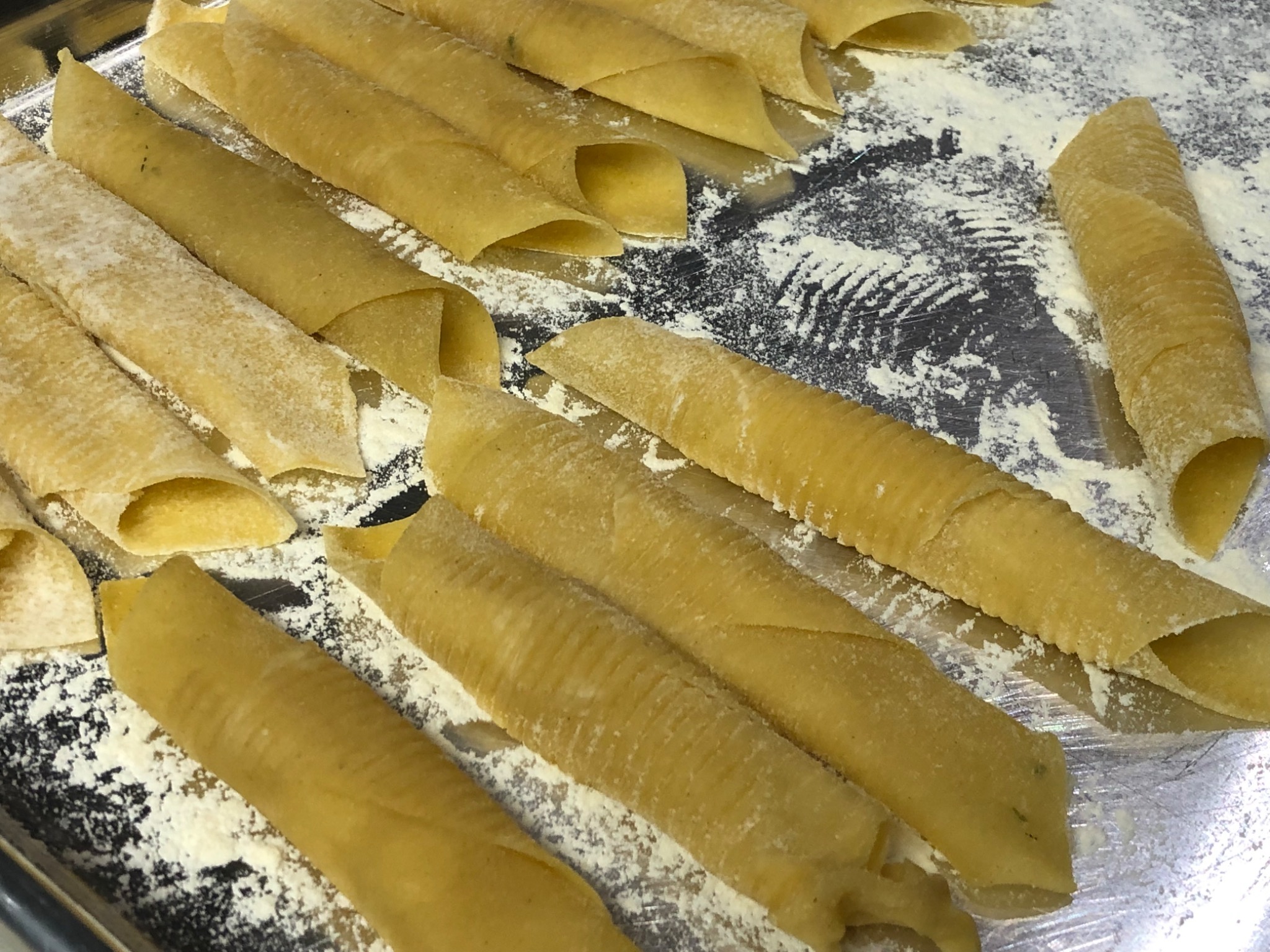
Each piece of Garganelli is created by rolling a small square of pasta dough around a wooden dowel and pressing it over a ridged board or loom-like paddle. This gives the pasta its signature tubular form and delicate ridges that spiral along the surface. These ridges are not only beautiful, but practical, allowing the sauce to cling to every bite.
A Pasta Born from Ingenuity
The story of Garganelli reaches back to the 18th century in Emilia-Romagna, one of Italy’s great pasta heartlands. According to culinary legend, a cook preparing cappelletti ran out of filling and, rather than wasting the dough, improvised by rolling the pasta squares into ridged tubes. Using a weaving loom’s comb-like tool to texture the dough, she created a new pasta shape entirely by accident. What began as a moment of resourcefulness became one of the region’s most beloved specialties.
Traditional Pairings
In Emilia-Romagna, Garganelli has long been paired with rich, savory ragùs, especially ragù alla Romagnola prepared with pork, veal, or a blend of meats. Thanks to its hollow center and textured surface, Garganelli captures robust sauces exceptionally well. It is also delicious with cream-based preparations such as panna, prosciutto, and peas, reflecting the dairy-rich identity of the region.
Garganelli Today
Today, Garganelli remains a celebrated handmade pasta in both rustic kitchens and refined restaurants. While machines can imitate its shape, true Garganelli rolled by hand still carries the mark of craftsmanship. Modern chefs pair it with truffle cream, fresh tomato and basil, slow-braised meats, and elegant seasonal sauces — making it a pasta that beautifully bridges tradition and contemporary dining.