
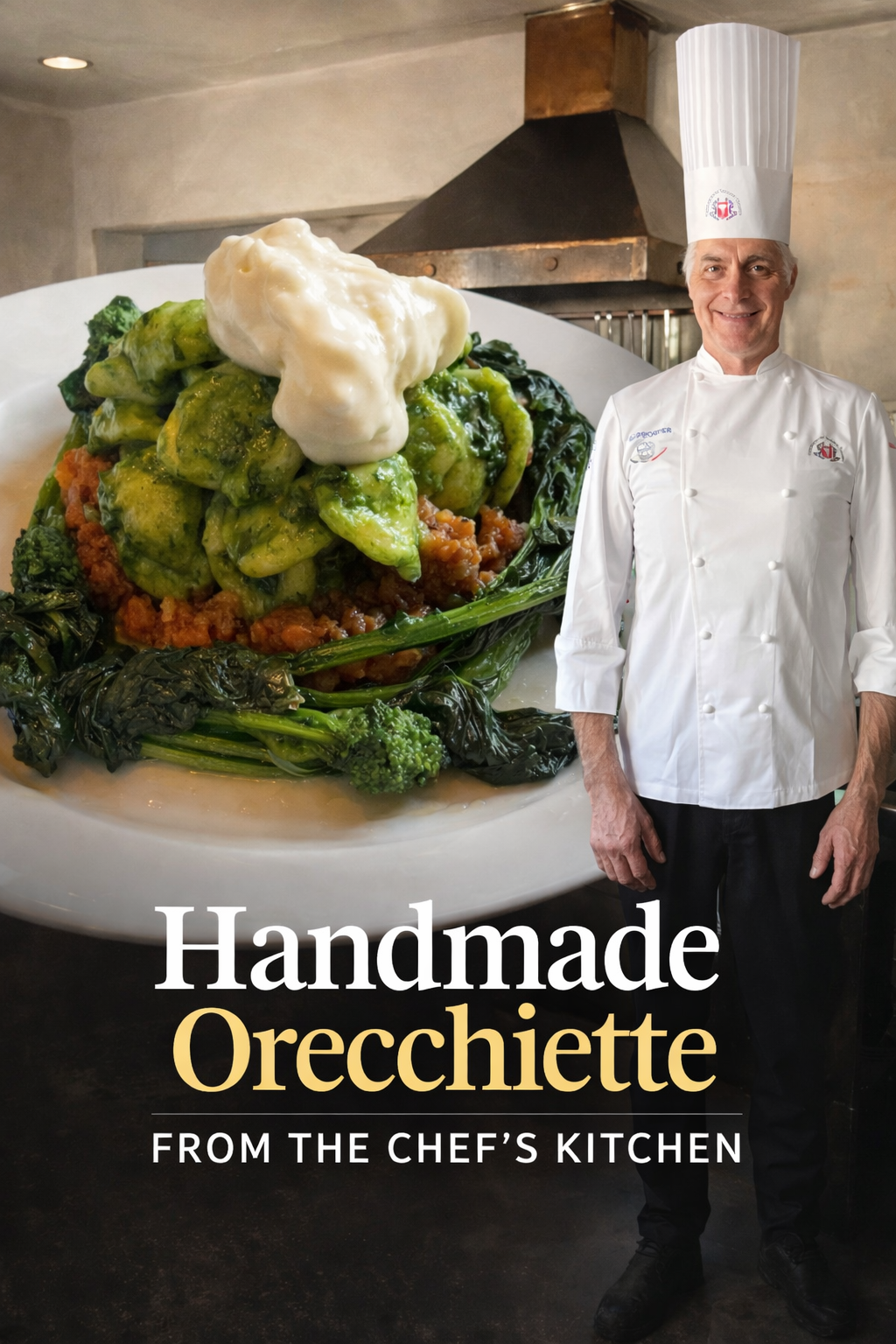
Ancient Origins Between the Middle Ages and Peasant Culture
The origins of orecchiette are often placed in the Middle Ages, although no official document confirms the exact moment of its birth. Many food historians connect its development to traditional handmade pasta methods that spread across Southern Italy through cultural exchange, migration, and domestic cooking traditions.
Over time, orecchiette became deeply associated with Puglia, especially the area of Bari, where generations of cooks shaped each piece by hand on wooden boards. Their slightly concave form is perfect for catching sauce, small vegetables, olive oil, and rustic ragù.
Like many traditional peasant foods, its greatness comes from simplicity: flour, water, patience, and skill. It belongs to a culinary world where technique was inherited through observation rather than written instruction.
A Shape That Reflects Regional Identity
The name orecchiette means “little ears,” a reference to the round shape and the delicate indentation made by the thumb or knife while forming the dough. This form is not just beautiful — it is practical. The rough interior and curved body hold sauces with remarkable elegance.
In traditional Southern cooking, orecchiette is often paired with bitter greens, olive oil, garlic, sausage, tomato, or simple vegetable condiments. Its rustic character allows it to remain both humble and refined, a perfect example of how regional Italian cuisine elevates simple ingredients through method.
From Tradition to the Modern Table
Today, orecchiette remains one of the most recognizable handmade pasta shapes in Italy and beyond. Whether served with broccoli rabe, fresh tomato sauce, seafood, or slow-cooked ragù, it continues to bridge history and modern dining.
At Tuscany Cuisine, we celebrate this pasta not only for its flavor, but for the craft behind it — the rhythm of shaping dough by hand, the respect for regional identity, and the beauty of preserving culinary knowledge through every recipe page we build.