

Recipe Overview
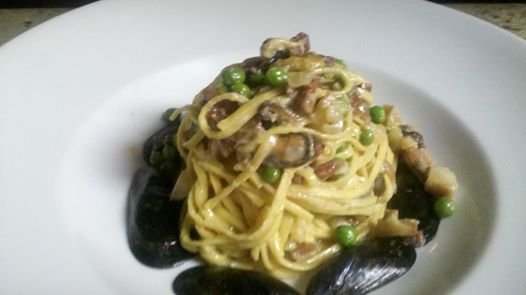
This plate brings together the sea and the countryside in one elegant pasta course: hand-cut spaghetti alla chitarra, sweet Prince Edward Island mussels, tender green peas, and savory guanciale, all bound in a silky egg and Parmigiano carbonara-style sauce. It is rich, refined, and full of character while still deeply rooted in Italian pasta tradition.
Ingredients
- 680 g fresh spaghetti alla chitarra pasta dough or cut pasta
- 900 g Prince Edward Island black mussels, cleaned
- 450 g fresh green peas
- 115 g guanciale, diced
- 250 g yellow onion, finely chopped
- 150 g whole egg, beaten
- 80 g grated Parmigiano Reggiano
- 120 ml extra virgin olive oil, plus more as needed
- 6 g garlic, for steaming mussels, optional
- 60 ml dry white wine, for steaming mussels, optional
- Sea salt and freshly ground black pepper, to taste
Preparation
- Roll out the fresh pasta dough to about 1.5 mm thickness. Let the sheet dry slightly, then cut into spaghetti using the chitarra tool. Dust with semolina, portion, and refrigerate until ready to cook.
- In a small sauté pan, stew the green peas in a little extra virgin olive oil with sea salt and black pepper until just tender. Set aside.
- In a wide pot, warm a drizzle of olive oil with a crushed garlic clove. Add the cleaned mussels and a splash of dry white wine. Cover and steam until the shells open.
- Remove the mussels from their shells, strain and reserve the cooking liquid, and keep the mussel meat aside.
- In a large sauté pan or rondeau, warm some olive oil over medium heat. Add the finely chopped onion and sweat gently until softened and translucent.
- Add the diced guanciale and cook until the fat renders and the pieces are lightly crispy.
- Add the mussel meat, some of the reserved mussel juice, and the cooked peas to the pan with the guanciale and onions. Keep this mixture warm over low heat without reducing it too much.
- In a bowl, whisk together the whole eggs and grated Parmigiano Reggiano until smooth and creamy. Season lightly with black pepper.
- Boil the spaghetti alla chitarra in plenty of salted water until al dente. Reserve a small ladle of the pasta water and drain.
- Add the drained pasta directly to the pan with mussels, guanciale, peas, and onions. Toss over low heat, adjusting the consistency with a splash of pasta water or reserved mussel juice if needed.
- Remove the pan from the heat and immediately add the egg and Parmigiano mixture. Toss quickly and continuously so the eggs thicken into a silky sauce without scrambling.
- Adjust seasoning with sea salt and black pepper, plate in warm bowls, garnish with a few reserved mussel shells for presentation, and serve at once.
History & Tradition
Spaghetti alla chitarra comes from the central Italian tradition of fresh cut pasta made with a special wire-framed tool called the chitarra. Its square-edged shape gives the pasta a stronger bite and helps sauces cling beautifully to the strands. In this version, the classic Roman spirit of carbonara meets the coastal flavor of black mussels for a more contemporary seafood expression.
Guanciale brings the essential savory depth expected from a carbonara-inspired pasta, while mussels and peas add sweetness, freshness, and a marine perfume that keeps the dish elegant rather than heavy. The result is a refined balance between inland Italian comfort and coastal Tuscan style.