

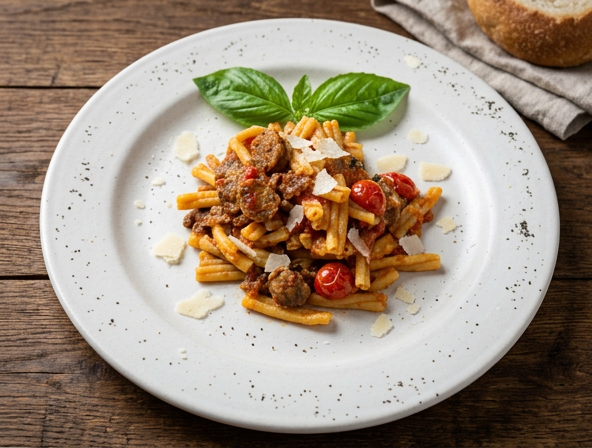
Recipe Overview
Strozzapreti has the rustic texture to carry a hearty sausage ragout. In this source recipe, dry Strozzapreti is cooked al dente and finished with a prepared Tuscan sausage ragout, sweet cherry tomatoes, Pecorino Romano and basil. The Costing V2 integration keeps the final pasta execution separate from the upstream ragout batch so the plate inherits only the exact component amount used.
Chef Notes
The beauty of this dish is the balance between rustic depth and freshness. Let the sausage ragout remain rich, while the tomatoes and basil keep the final plate bright and lively.
Connected Experience
The 1,425 ml Tuscan Sausage Ragout is treated as a reusable prepared component. Its future measured finished-yield cost will carry the ragout ingredients and batch labor once, while this page adds only the raw finishing ingredients and final Primi execution labor.
Ingredients
-
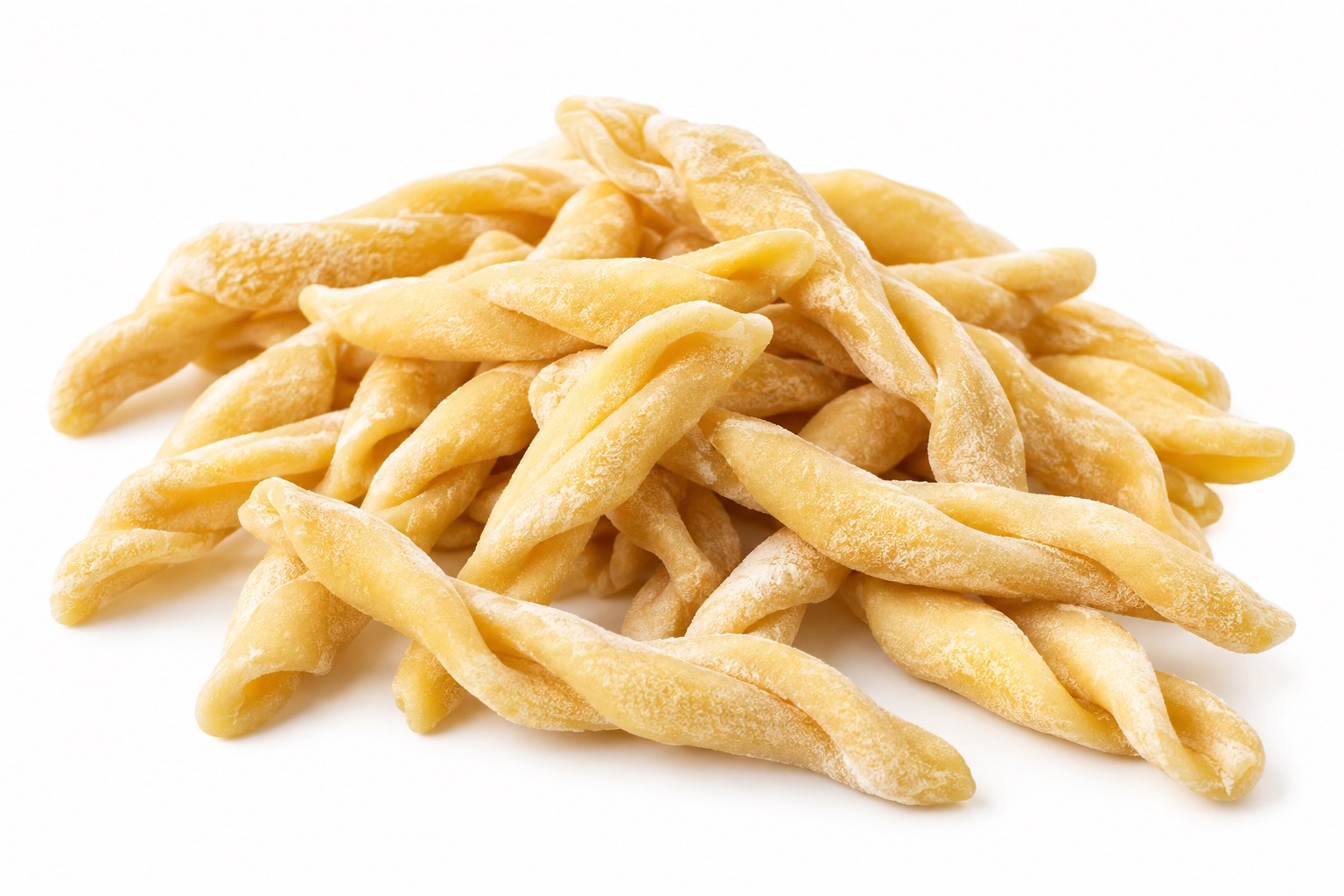 Dry Strozzapreti Pasta — 450 g · dry Strozzapreti pasta; source formula preserved
dry_strozzapreti_pasta
Dry Strozzapreti Pasta — 450 g · dry Strozzapreti pasta; source formula preserved
dry_strozzapreti_pasta
-
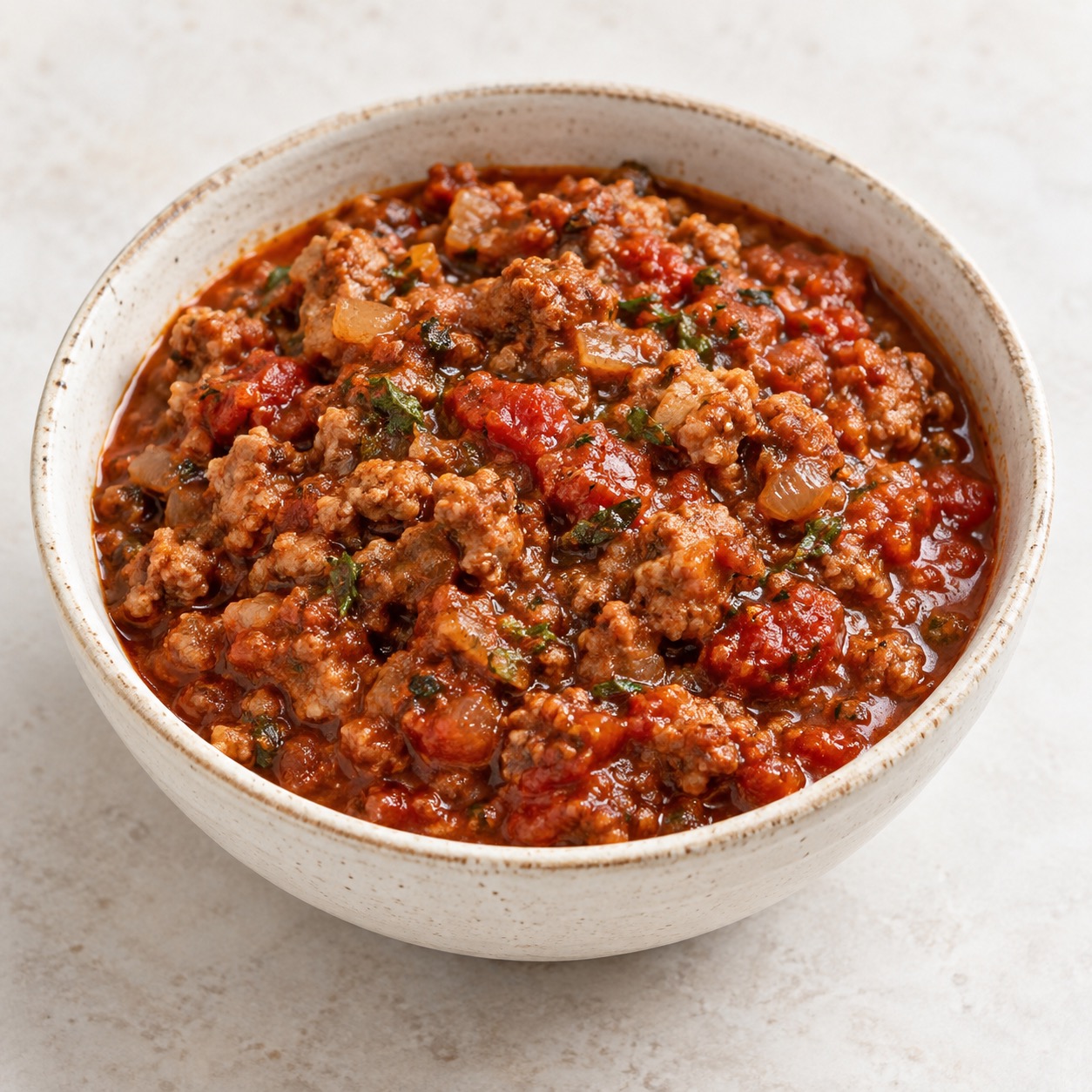 Tuscan Sausage Ragout — 1425 ml · prepared component
SAUCE-TUSCAN-SAUSAGE-RAGOUT-001
Tuscan Sausage Ragout — 1425 ml · prepared component
SAUCE-TUSCAN-SAUSAGE-RAGOUT-001
-
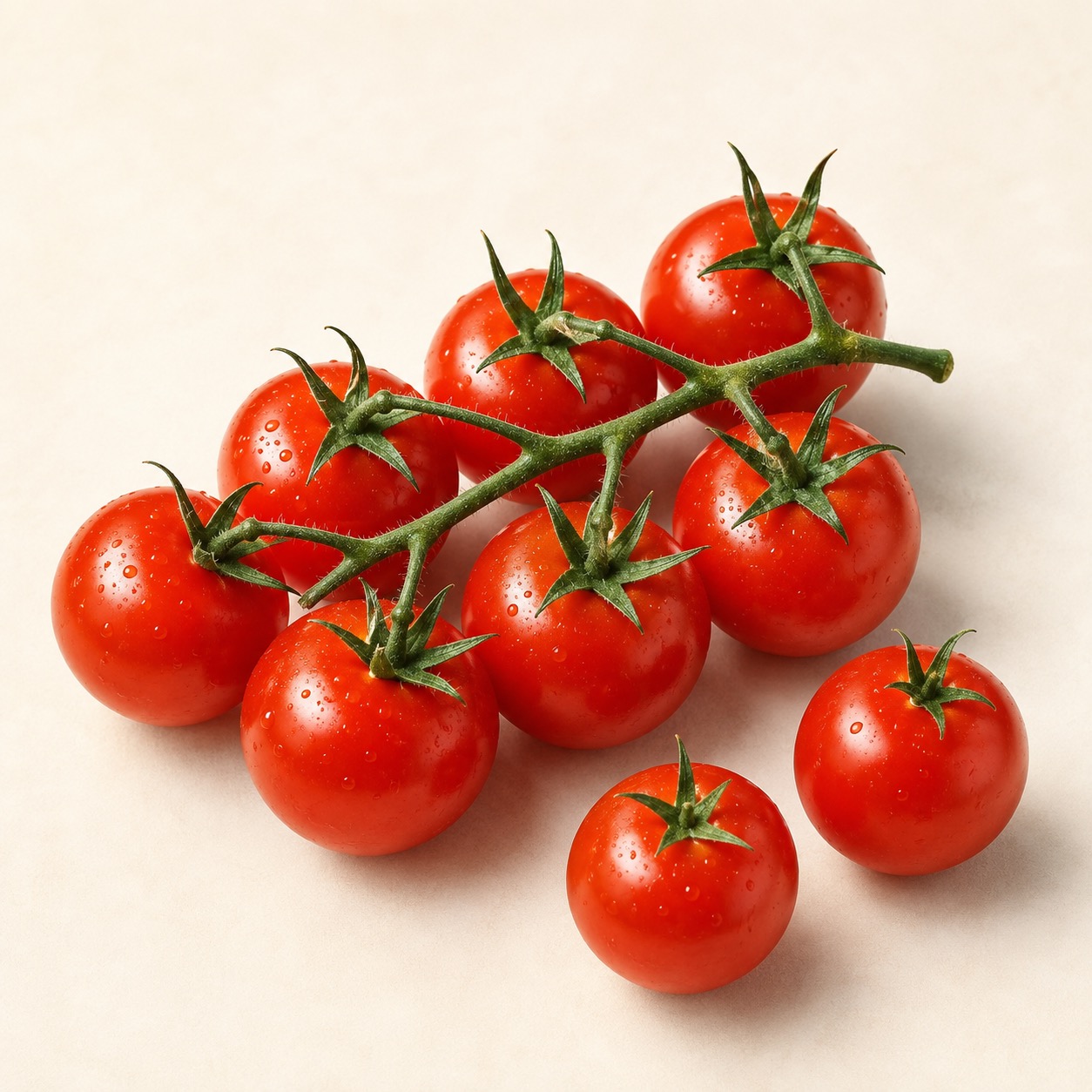 Cherry Tomatoes — 450 g · halved
PRODUCE-TOMATO-CHERRY-001
Cherry Tomatoes — 450 g · halved
PRODUCE-TOMATO-CHERRY-001
-
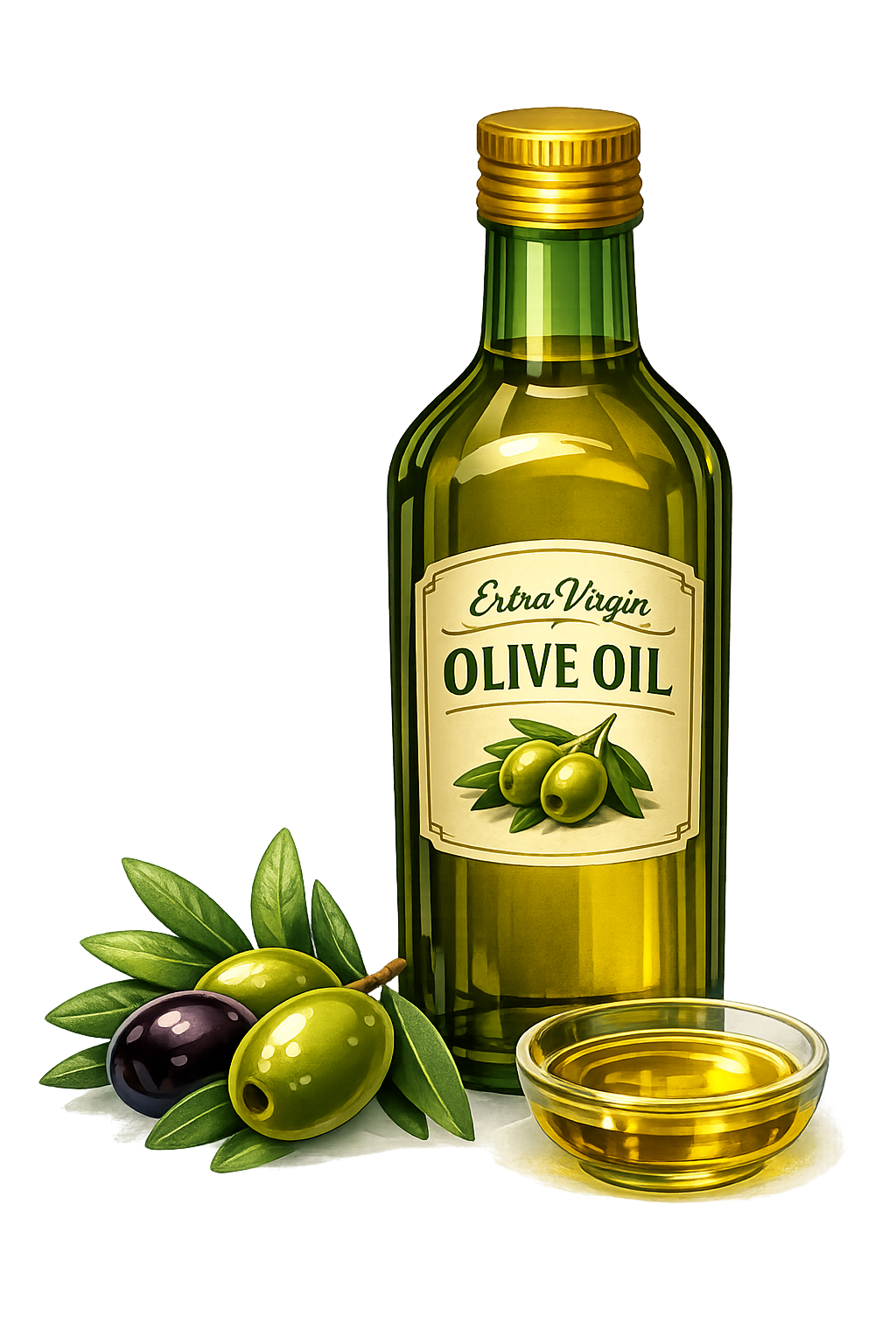 Extra Virgin Olive Oil — 30–45 ml · source range preserved; costing uses 45 ml planning maximum
OIL-0001
Extra Virgin Olive Oil — 30–45 ml · source range preserved; costing uses 45 ml planning maximum
OIL-0001
-
 Pecorino Romano — 90 g · freshly grated
TC-DAIRY-PECORINO-ROMANO
Pecorino Romano — 90 g · freshly grated
TC-DAIRY-PECORINO-ROMANO
-
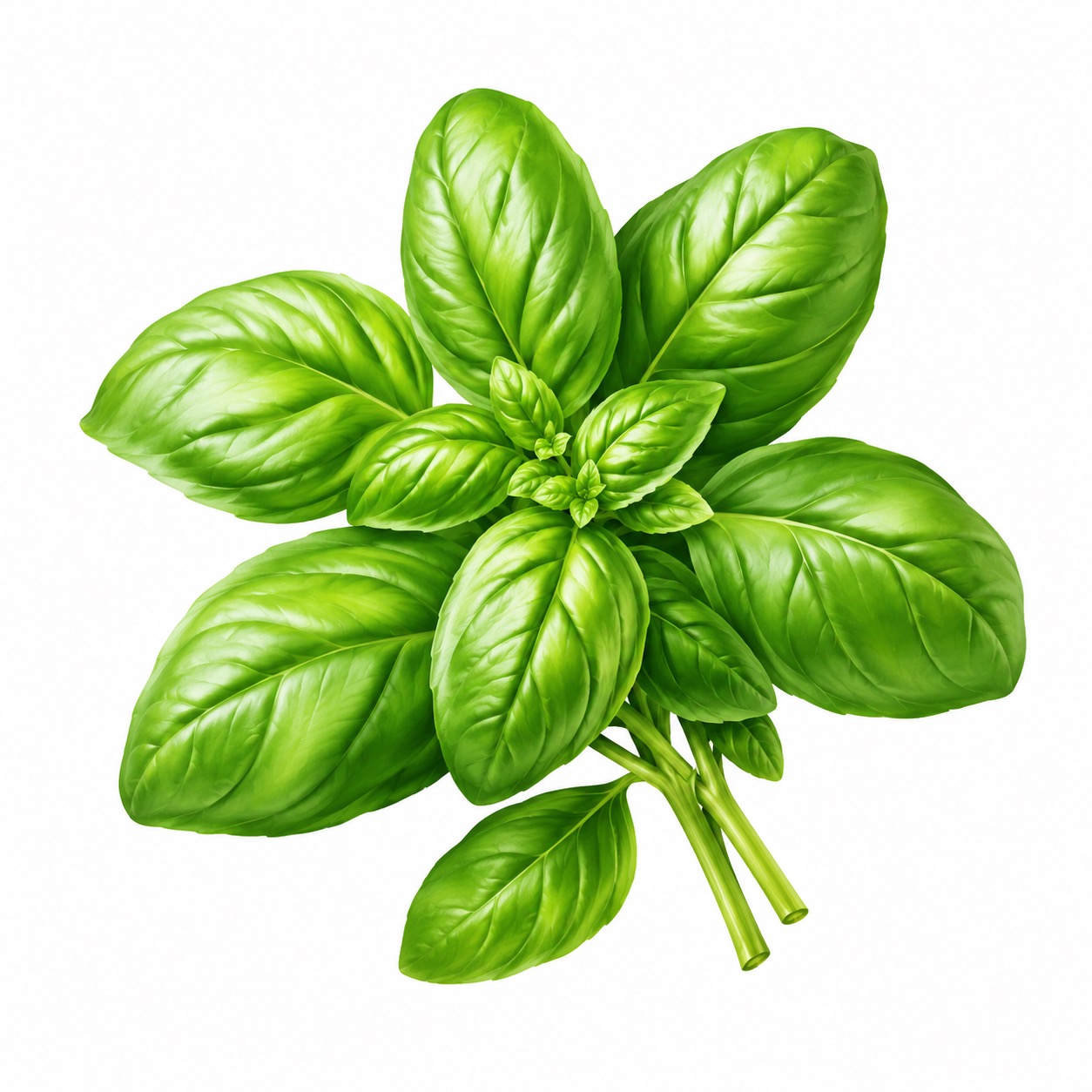 Fresh Basil — to taste · torn or chopped; source does not quantify amount
HERB-BASIL-FRESH-001
Fresh Basil — to taste · torn or chopped; source does not quantify amount
HERB-BASIL-FRESH-001
-
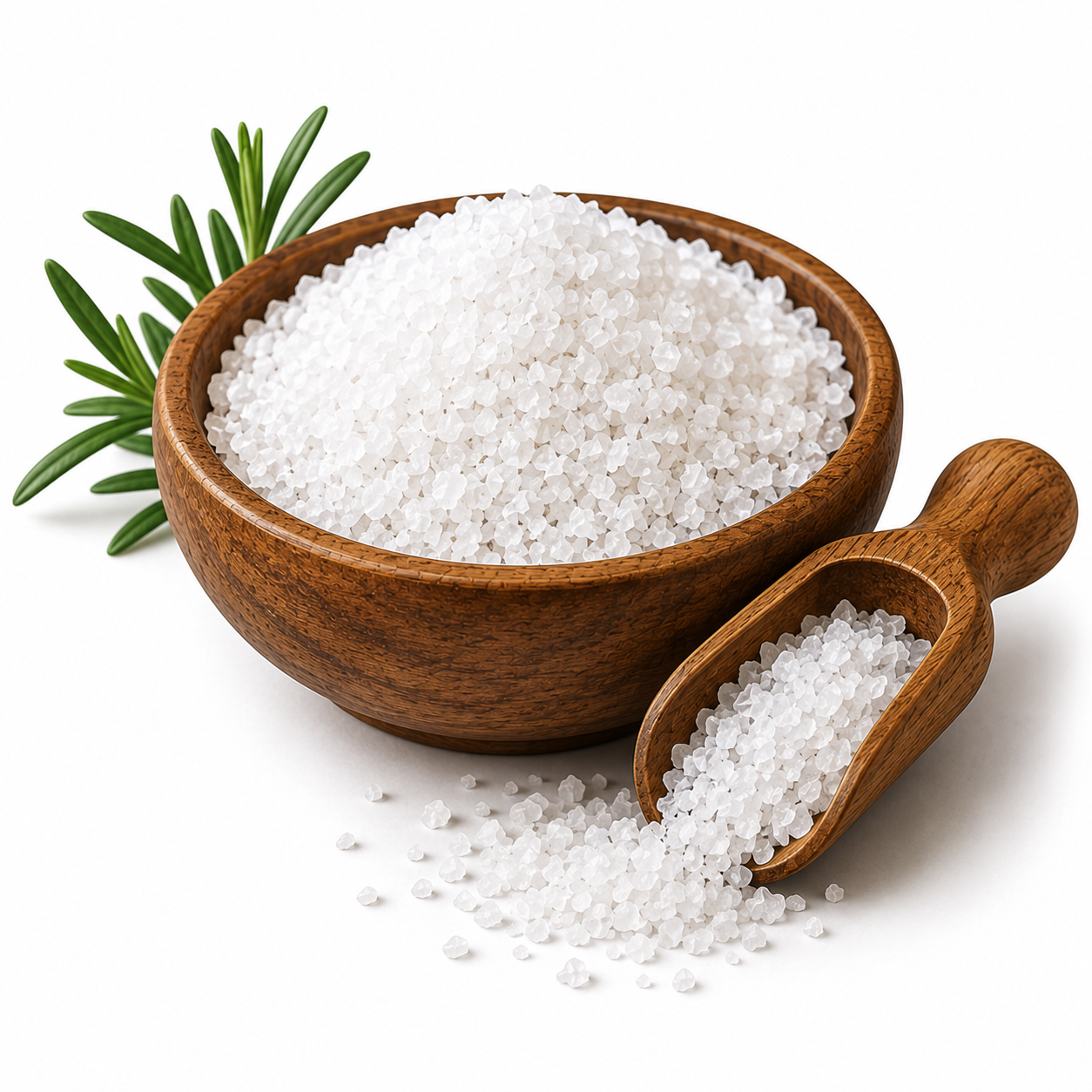 Sea Salt — to taste · to taste; source does not quantify amount
SPICE-SALT-0001
Sea Salt — to taste · to taste; source does not quantify amount
SPICE-SALT-0001
Preparation
- Bring a large pot of salted water to a boil. Add the Strozzapreti pasta and cook until al dente according to package directions.
- While the pasta cooks, warm the olive oil in a wide saute pan over medium heat. Add the halved cherry tomatoes, season lightly with sea salt, and cook 10-15 minutes until they soften and begin to melt into a light sauce.
- Stir in the Tuscan sausage ragout and simmer gently for a few minutes so the flavors marry and the ragout is hot.
- Drain the pasta, reserving a little cooking water. Add the Strozzapreti to the pan with the ragout and tomatoes. Toss with the Pecorino Romano, a drizzle of olive oil, and enough cooking water to create a silky coating. Finish with fresh basil and serve immediately with extra Pecorino at the table.
Service Suggestions
- Serve immediately after tossing so the Strozzapreti stays properly coated and al dente.
- Finish with fresh basil and offer extra Pecorino Romano at the table as described in the source recipe.
- Use reserved pasta water only as needed to create a silky coating.
Dietary / HACCP Notes
- Contains gluten, dairy and pork; the source identifies the recipe as nut-free.
- The Tuscan Sausage Ragout is a prepared component. Reheat, hold and cool it under the operation's validated HACCP procedure; the source recipe does not specify critical limits.
- Do not deduct basil or sea salt automatically because the source provides no quantified amount.
| Calories | 620 |
| Protein | 29 g |
| Carbohydrates | 55 g |
| Fat | 30 g |
| Fiber | 4 g |
| Cholesterol | Not specified |
| Sodium | 840 mg |