Authentic Italian Pizza Dough

A real Italian pizza dough formula with tipo 00 flour, hydration logic, same-day or cold-ferment schedule, and high-heat Forno Toscano baking guidance.

🍕 Pizza Dough🌾 Tipo 00 Flour💧 Hydration Calculator🔥 High-Heat Baking
🔥

Forno Toscano

Tradition • Fermentation • Fire • Handmade

Baked with time, passion and Tuscan soul.
🍞
Pane ToscanoBread & tradition
🫙
Lievito MadreNatural yeast · View recipe →
🫓
FocacciaSimple & authentic
🍕
PizzaFrom the stone oven
🥐
Dolci LievitatiSweet & festive
🍇
La Nostra TerraFlavors of Tuscany

Pizza Dough + Menu Builder Ready

This pizza recipe is wired with scalable ingredients, hydration logic, same-day and cold-ferment controls, temperature toggles, inventory mapping, wine pairing and search metadata.

🎥 Pizza Stretch Demonstration

🧠 Pizza Dough Knowledge Block

HydrationWater divided by flour by weight. This formula is high hydration and gives extensibility, lightness and oven spring.
Fermentation ChoiceSame-day dough is fast and practical. Cold ferment gives more aroma, better digestibility and deeper crust color.
Heat LoadA pizza stone or steel stores heat and helps blister the dough quickly before the toppings dry out.
MixHydrate flour
Knead20 min
Rest60 min
Ball250 g each
Bake500°F+

Italian Dough Heritage — Pizza, Pinsa & Mother Yeast

The Italian forno is built on several related dough traditions. Modern pizza dough can be developed with commercial yeast, a refreshed natural starter (lievito madre), or a pre-ferment such as biga or poolish. Each changes fermentation planning and dough behavior. Discover how Roman-style Pinsa and naturally fermented dough connect to this classic pizza recipe.

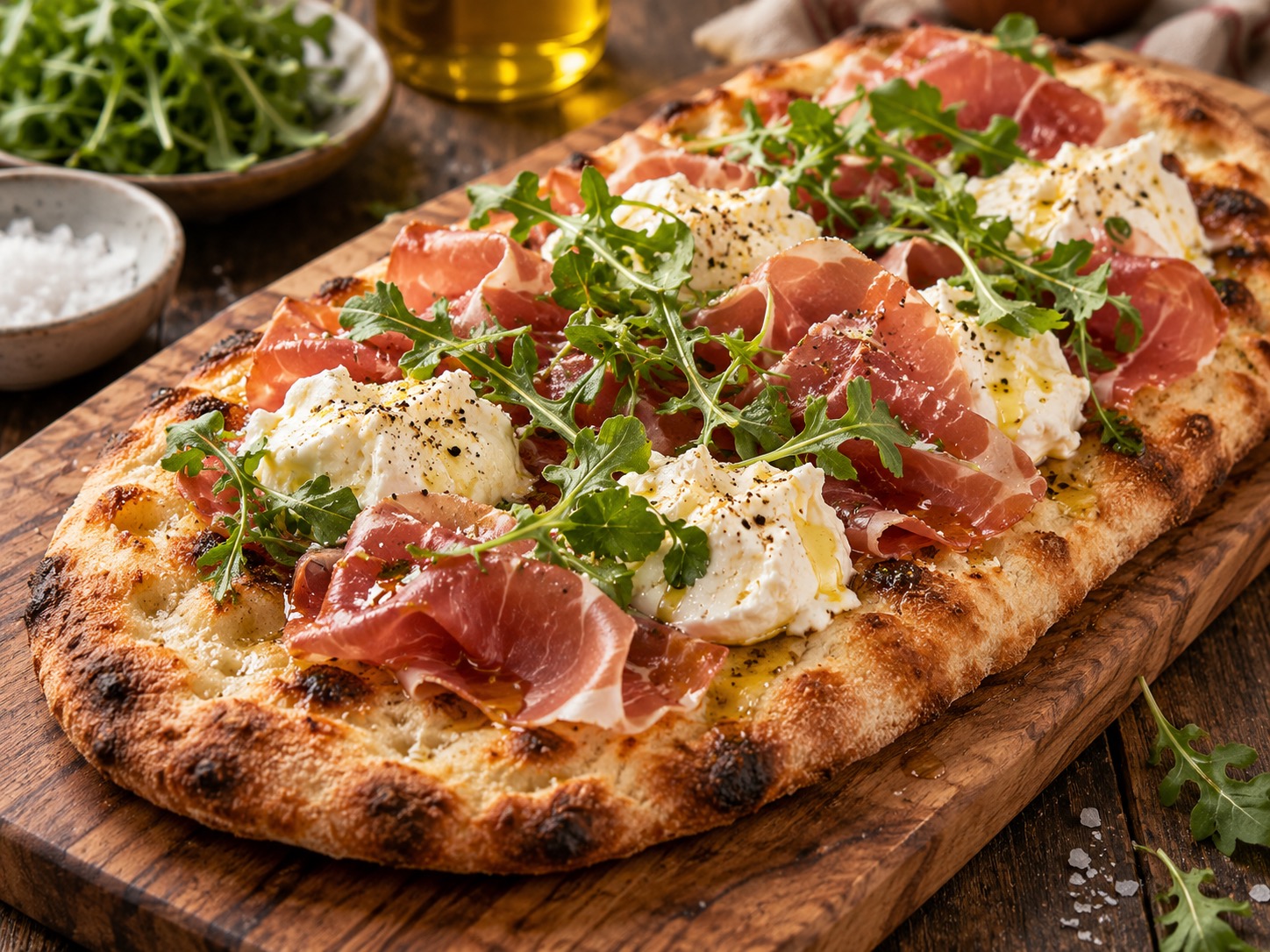
Pinsa Romana with a long-fermented, airy oval bread base

Pinsa Romana — History & Modern Dough

Introduced in 2001 by Corrado Di Marco, modern Pinsa Romana is a distinctive oval bakery preparation associated with a wheat, rice and soy flour blend, high hydration and long fermentation. A soft open interior contrasts with a delicate, crisp underside. Its technique and dough formula differ from ordinary pizza.

Explore Pinsa Recipe & History →
Lievito Madre natural starter used for artisan Italian bread and pizza dough

Lievito Madre — Natural Pizza Dough Fermentation

Using an active, regularly refreshed mother yeast introduces a living fermentation culture. Dough develops at a variable rate depending on starter strength, flour, temperature and time, with a potentially more complex aroma and acidity. Follow the Tuscany Cuisine Lievito Madre guide before adapting the pizza dough.

Study Lievito Madre & Its Preparation →

Poolish — A Liquid Pre-Ferment

A poolish typically contains equal weights flour and water, with a small amount of baker's yeast. After ripening, it is incorporated into the final dough. Its flour and water must be subtracted from the final mix to maintain target hydration. It can be adapted to pizza or some sandwich-bread styles after testing.

Compare with Italian Biga →

Practical Fermentation Adjustments

For lievito madre, account for the flour and water inside the starter; for poolish, account for both pre-fermented quantities. Reduce or replace commercial yeast appropriately, and monitor actual dough expansion rather than relying on the standard same-day or cold-ferment timer. These are alternative methods, not automatic additions to the current formula.

Start with Mother Yeast →
Chef's production note: This page's ingredient scaler, hydration calculator, yeast recommendations, inventory map and batch yield continue to describe the original direct-yeast pizza dough only. To produce a mother-yeast or poolish version, prepare and verify a separate formula and fermentation schedule before costing or using it for live inventory deduction.
Hand-stretched Italian pizza dough

Recipe Overview

This authentic Italian pizza dough is made with tipo 00 flour, water, sea salt and yeast. The page includes professional controls for scaling, hydration, unit conversion, oven temperature and fermentation style so the recipe can work for home cooks, chefs and future Menu Builder production.

Chef Notes

For best texture, mix until smooth and elastic, let the dough relax before balling, and bake on a fully heated stone or steel. Light toppings help the crust blister and stay crisp.

Linked Base Preparation

For more flavor and structure, explore Biga, Lievito Madre or liquid poolish as alternative dough-development methods. Each requires a recalculated flour, water and fermentation plan.

Ingredients + Dough Tools

Base 1× ≈ 7 dough balls at 250 g each.
Hydration: —Flour: —Water: —Salt: —

Hydration = water ÷ flour by weight. Adjust batch or units; hydration updates automatically.

Fermentation Plan:
Recommended ADY: —Recommended Fresh: —Adjust for room temp & fridge performance
  • Tipo 00 flour
  • Water, room temperature
  • Sea salt
  • Active dry yeast or use fresh yeast below
  • Fresh yeast use instead of dry

US values are approximate. For best accuracy, use metric weights.

Preparation

  1. In the mixer, dissolve the sea salt in the water. Add flour and yeast; mix until combined, then knead about 20 minutes until smooth and elastic.
  2. Rest the dough 60 minutes, covered. Scale into about 250 g dough balls. Rest again until relaxed for hand-stretching.
  3. Preheat with a stone or steel: 500°F+. If your oven allows, 550°F is ideal.
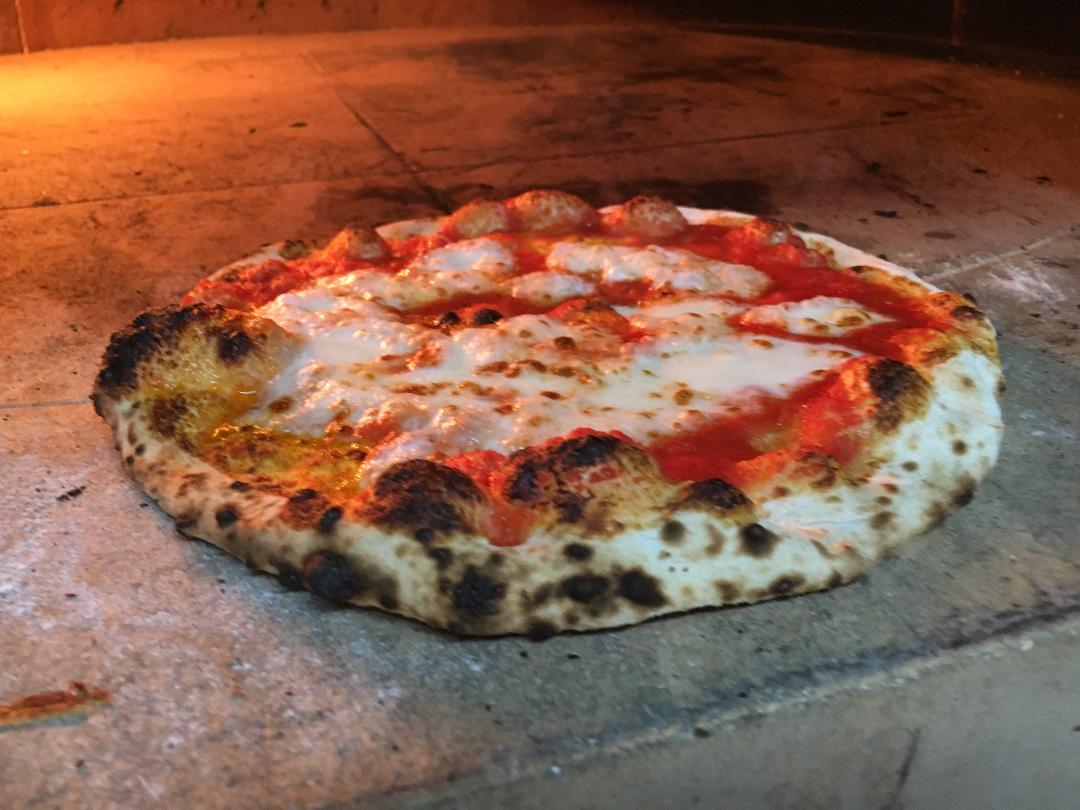
  4. Stretch by hand, top lightly and bake on the hot surface until blistered and cooked through, typically 6–9 minutes depending on oven and heat load.

Service Suggestions

  • Use light toppings to keep the crust crisp and blistered.
  • Finish with extra virgin olive oil and fresh basil after baking.
  • Use the Biga Starter for a deeper flavor variation.

Dietary / HACCP Notes

  • Contains gluten.
  • Dough is dairy-free and egg-free.
  • Keep dough covered during rest to prevent drying.
  • Refrigerate cold-ferment dough around 4°C / 39°F.
Nutrition (per slice, estimate)
Calories~240 kcal
Protein~7 g
Carbohydrates~46 g
Fat~1 g
Fiber~2 g
Cholesterol0 mg
Sodium~600 mg