
Introduction & Tradition
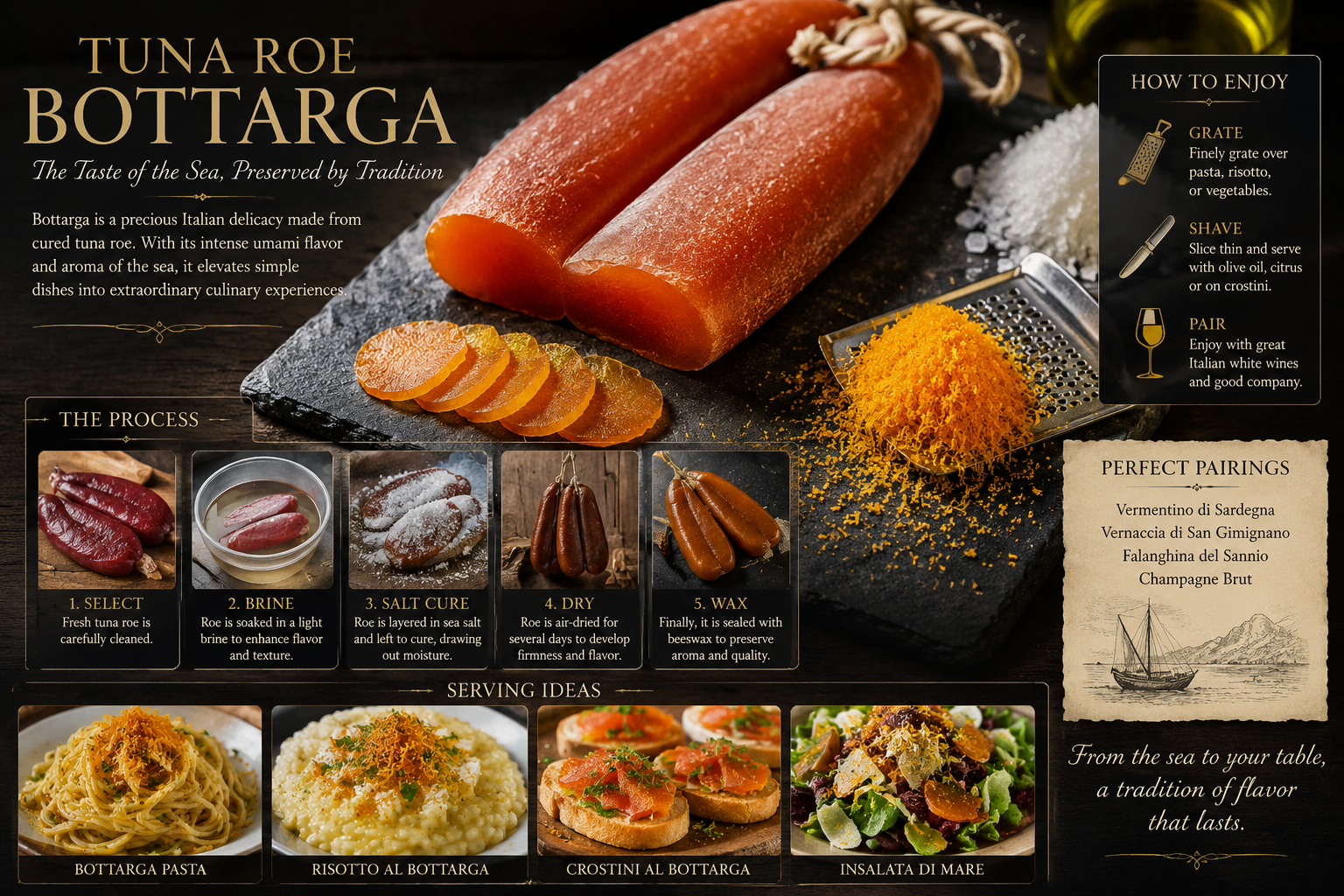
Bottarga is a coastal classic across the Mediterranean—roe sacs cured to a firm, sliceable delicacy. In Italy, tuna (tonno) and grey mullet (muggine) are most common. The technique here follows a pro kitchen workflow: overnight brine for even seasoning, a short dry cure for texture, then a wax seal for storage and clean slicing.
How Bottarga Is Made — A Secret Passed Down Through the Centuries
There are foods that tell a story more deeply than a book, and bottarga is one of them. In Sardinia, where mullet bottarga is known as sa butàriga, the tradition stretches back thousands of years, rooted in the brackish lagoons of Cabras and the Gulf of Oristano.
According to Sardinian producer Pino Spanu of Gusti Pregiati, the origins of bottarga likely date back more than 4,000 years, to the earliest settlements of Mediterranean seafaring civilizations. Phoenicians and other maritime peoples brought ancient preservation techniques based on salt, allowing fish roe to survive long journeys before refrigeration existed.
The lagoons of Cabras remain one of the most prized environments for the Mugil cephalus, the grey mullet traditionally used for bottarga. Fishermen harvest the roe carefully by hand, preserving the delicate egg sacs intact before processing begins.
Once removed, the roe is washed, salted, pressed, and slowly dried in ventilated rooms. The process can take weeks or even months depending on humidity, airflow, and the size of the roe sacs. Salt performs the true transformation through osmosis, drawing out moisture while concentrating flavor and preserving texture.
“The miracle is performed by the salt — expelling the moisture and transmitting the saline substance inside.”
— Pino Spanu, Gusti Pregiati
While mullet bottarga remains the most historic version, tuna bottarga developed later and is considered rarer and more difficult to produce. Tuna roe is larger, more delicate, and significantly more challenging to salt evenly due to its size and density.
Today, authentic artisan bottarga remains one of Italy’s great preservation traditions — deeply savory, rich in umami, naturally high in Omega-3 fatty acids, and prized for shaving over pasta, seafood, vegetables, risotto, and crostini.
Traditional Bottarga Characteristics
- Color: Deep amber to dark golden orange
- Texture: Firm, compact, sliceable
- Aroma: Sea breeze, cured seafood, mineral salinity
- Flavor: Intense umami, briny richness, slight bitterness
- Best Pairings: Olive oil, lemon, parsley, pasta, risotto, seafood, dry white wines
Batch Calculator
Enter the weight of your fresh roe. Toggle US/Metric—brine and salt amounts will scale automatically.
Ingredients (Scaled)
- 1 lb fresh tuna roe
- 1 cup water
- 1/2 cup iodized salt
- 4 oz sea salt
- Food-safe white wax, as needed
Method
- Surface-dry: Set roe on parchment in the refrigerator overnight.
- Brine (overnight): Dissolve iodized salt in the water; submerge roe and chill.
- Dry cure (overnight): Pat dry. Pack between sea salt layers; refrigerate.
- Seal: Brush off excess salt. Dip in melted food-safe wax to fully coat; cool.
- Store & serve: Keep chilled. Shave thinly over hot pasta, beans, salads, or crostini.
Chef Notes
- Use sea salt with a little natural humidity—it cures more gently.
- For mullet roe (muggine), use the same ratios; sacs are often slimmer—watch texture.
- After sealing, rest a couple of days before slicing for a cleaner cut.