
How Pappa al Pomodoro Became Famous
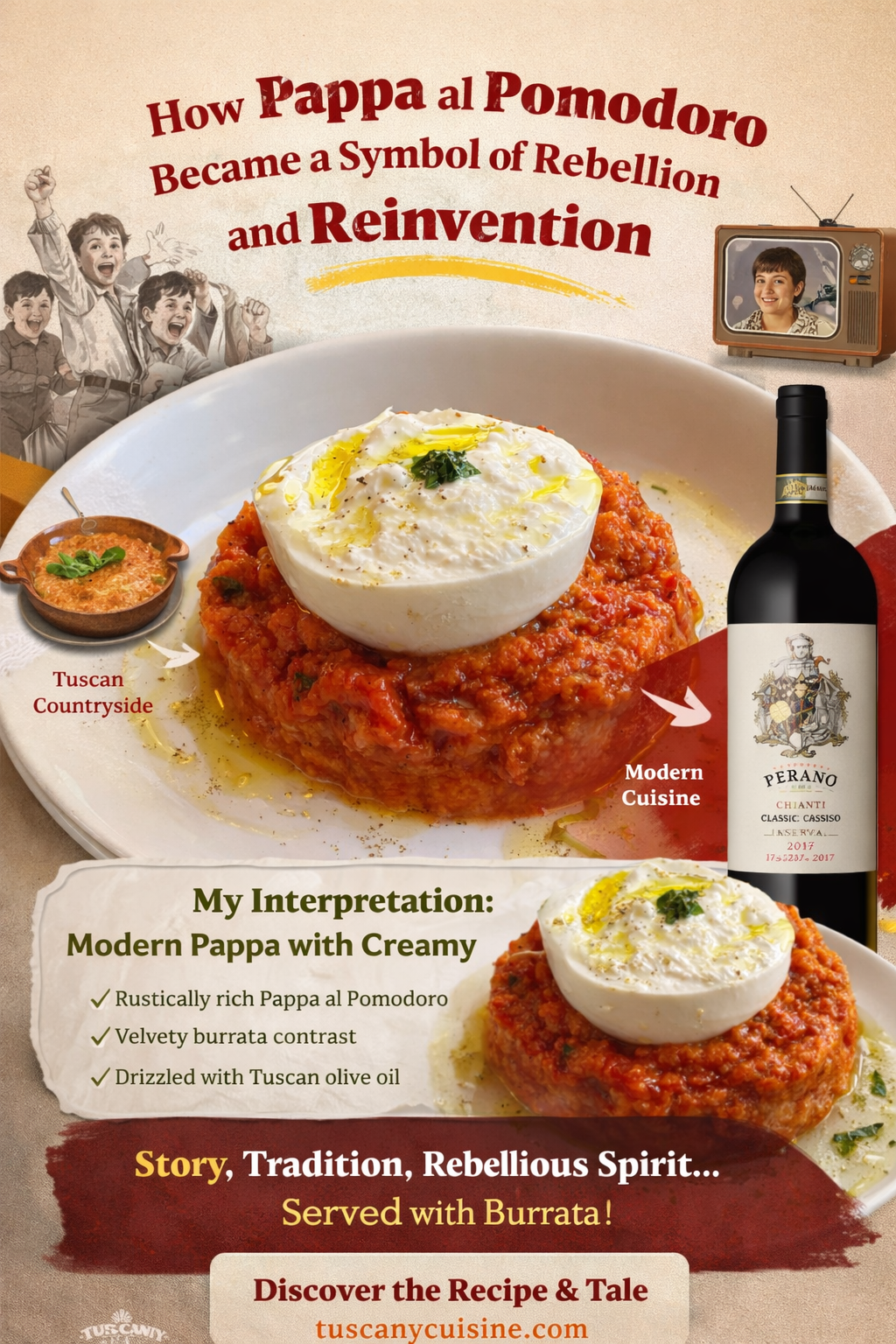
Pappa al pomodoro is more than a rustic Tuscan soup. It is a dish that traveled from the countryside into Italian cultural memory, becoming a symbol of comfort, rebellion, and the beauty of cucina povera.
Those famous words appeared in Il Giornalino di Gian Burrasca, written by Vamba (Luigi Bertelli). The students of the Pierpaoli boarding school in Florence were so eager for pappa al pomodoro that the dish became linked not only to hunger, but to joy, protest, and youthful rebellion.
Its fame grew even more in 1965, when the television adaptation and the song Viva la pappa col pomodoro, performed by Rita Pavone with music by Nino Rota, transformed this humble soup into a popular Italian symbol.
Chef David Giani’s Interpretation
This soup inspired me to serve it with fresh burrata cheese, bringing a modern contrast to one of Tuscany’s most humble and historic dishes. The warm, velvety tomato-bread base meets the cool creaminess of burrata, finished with extra virgin olive oil, basil, and black pepper.
It is still pappa al pomodoro at heart — rustic, nourishing, and rooted in peasant wisdom — but presented in a way that speaks to today’s plate with elegance and emotion.
Origins in the Tuscan Countryside
Pappa al pomodoro was born from necessity. Stale bread was too precious to waste, so it was softened with broth and tomatoes, then enriched with garlic, olive oil, and basil until it became a thick, deeply comforting soup. What began as practical peasant cooking became one of Tuscany’s most beloved dishes.
Why It Still Matters Today
The word “pappa” evokes both softness and nourishment, the kind of food that feels immediate, generous, and familiar. In summer it can be made with fresh tomatoes and basil; in colder months it becomes richer, warmer, and darker in tone. Its simplicity is exactly what gives it lasting power.
Recipe Overview
Pappa al pomodoro is one of the purest examples of Tuscan restraint. Nothing is wasted: day-old bread absorbs the tomato broth, basil lifts the aroma, and olive oil gives the soup its velvet body. The result is not a loose broth and not a mash, but a deeply comforting spoonable soup with rustic character and surprising elegance.
Why This Page Matters
This soup is a cornerstone of Tuscan identity and a perfect recipe to anchor the soup directory with a classic vegetarian preparation that scales beautifully for home service, catering, or event menus.
Connected Experience
The page is structured to fit your soup master template, connect to the Menu Builder, and support future live inventory reading through the embedded recipe metadata and ingredient map.
Ingredients
- 600 g day-old Tuscan bread, rustic and torn
- 1000 g ripe vine tomatoes, crushed
- 80 g extra-virgin olive oil
- 12 g whole garlic cloves, about 4 cloves
- 20 g fresh basil leaves
- 1500 g water, added gradually as needed
- 12 g sea salt, or to taste
- 2 g cracked black pepper, or to taste
Preparation
- Warm the extra-virgin olive oil in a pot and gently brown the garlic cloves until fragrant. Remove the garlic once it has perfumed the oil.
- Add the crushed tomatoes and water, then simmer gently until the tomatoes soften and break down into a rustic broth.
- Lightly toast the bread if desired, then tear or break it into rustic pieces.
- Add the bread and basil to the soup. Season with salt and cracked black pepper.
- Stir and crush gently while the bread absorbs the liquid, creating the thick, creamy consistency that defines pappa al pomodoro.
- Rest briefly before serving so the soup can settle and the texture can become full and velvety.
From Humble Bread to Signature Tuscan Bowl
This is the kind of soup that shows how deeply Tuscan cooking values economy, flavor, and memory. It belongs in a seasonal menu, a rustic lunch service, or any collection that celebrates true regional Italian cooking. On this page, it now also carries its cultural voice — and your own burrata interpretation.
Soup Technique
Bread is the thickener, not the filler. The secret is gradual absorption and gentle stirring so the soup becomes creamy without losing its rustic soul.
Service Notes
- Serve warm or at room temperature.
- Finish with extra virgin olive oil and fresh basil.
- For a modern interpretation, top with burrata just before service.
- Excellent for rustic plated menus or elegant starter service.
| Calories | 255 kcal |
| Protein | 5 g |
| Carbohydrates | 31 g |
| Fat | 12 g |
| Fiber | 3 g |
| Cholesterol | 0 mg |
| Sodium | 520 mg |