Identity and Characteristics
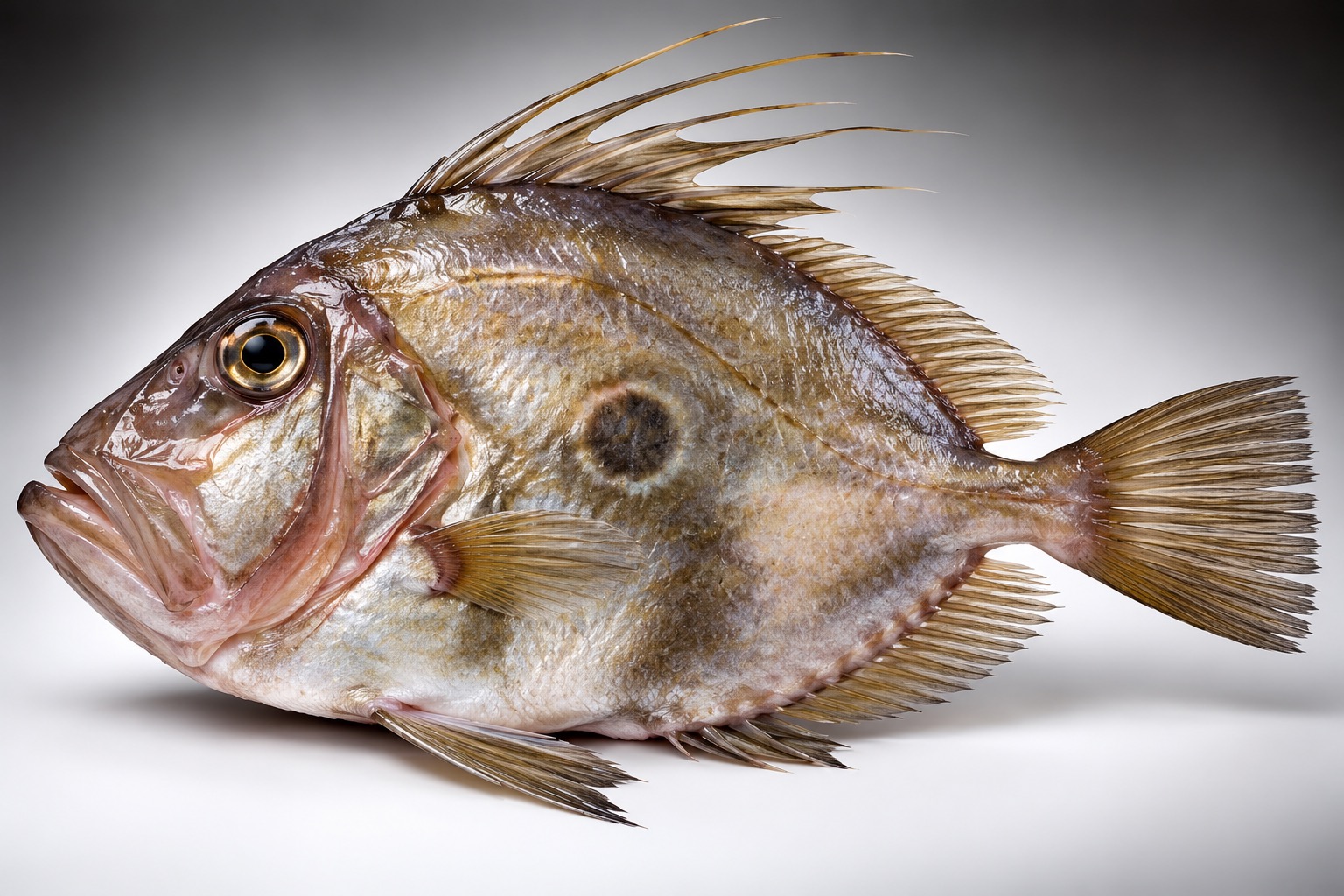
John Dory is instantly recognizable by its compressed oval body, large head, protruding mouth, long dorsal spines, and a round dark spot on each side. The flesh is lean, white, and fine-flaked, making it especially suited to controlled cooking where texture and purity of flavor matter.
- Scientific name: Zeus faber
- Italian name: Pesce San Pietro
- Common English name: John Dory
- Family: Zeidae
- Texture: delicate, fine-flaked, tender
- Flavor: mild, elegant, gently marine
Why It Is Called Pesce San Pietro
The Italian name Pesce San Pietro means St. Peter's Fish. According to a traditional legend, St. Peter pulled this fish from the sea and left a thumbprint on its body. The two dark spots — one on each side — became associated with those thumb marks. In reality the spots are a natural anatomical pattern, but the legend is deeply rooted in Mediterranean storytelling and helped shape the fish's devotional identity in Italy.
The English name John Dory has a less certain origin. Several explanations have been proposed, including connections to older European language forms and possible references to the fish's golden-olive tones. In culinary practice, however, the Italian name Pesce San Pietro is the one that most directly carries the historical and symbolic meaning of the fish.
Origin, Habitat, and Seasonality
Country and Sea Origin
John Dory is associated with the Mediterranean Sea and the eastern Atlantic, and it is also found in other temperate marine waters. In market language, the fish is often linked to Mediterranean and European coastal traditions rather than to a single national cuisine.
- Mediterranean basin
- Italian coastal markets
- Western and eastern Atlantic fisheries
- European seafood trade
- High-value restaurant fish in classical cuisine
Seasonality
Seasonality varies by region and fishery. In many Mediterranean markets John Dory is especially appreciated during the cooler part of the year, often from autumn through spring, though commercial sourcing can make it available at other times.
As with all seafood, exact seasonality and sustainability should be verified through local suppliers, fishery management, and market availability.
Nutrition Overview
John Dory is a lean fish with high-quality protein and a relatively light fat profile. Exact values can vary by catch, size, trimming, and preparation. The following figures are approximate raw values per 100 g edible portion.
| Nutrient | Approximate Value per 100 g | Why It Matters |
|---|---|---|
| Calories | 80–100 kcal | Light energy density for refined fish dishes |
| Protein | 17–20 g | Supports structure, satiety, and menu balance |
| Total fat | 1–3 g | Generally lean compared with oily fish |
| Omega-3 fats | Modest naturally occurring amount | Contributes to seafood nutritional value |
| Vitamin B12 | Present | Important for nerve and blood health |
| Selenium | Present | Supports antioxidant function |
| Phosphorus | Present | Supports bones and cellular function |
Culinary Usage
John Dory is favored in restaurants because its flesh is delicate enough for elegant plating yet substantial enough to roast or poach with precision. It responds well to gentle butter basting, white wine reduction, citrus, and refined vegetable accompaniments.
Classic Uses
- Butter roasting and pan-roasting
- Poaching in fumet or court-bouillon
- Steaming for delicate service
- Roasting on the bone for deeper flavor
- Fine plated fish secondi with seasonal vegetables
Best Flavor Partners
- Butter and extra virgin olive oil
- Lemon and mild citrus
- Rosemary, thyme, parsley, chervil
- Artichokes, potatoes, tomatoes, fennel
- Light white wine and gentle seafood sauces
Suggested Spices and Aromatics
Because the flavor is delicate, seasoning should remain measured. The most useful supporting elements are white pepper, fine black pepper in restraint, sea salt, thyme, rosemary, parsley, bay leaf, and light fennel or citrus accents.
Professional Buying and Handling
- Look for clear bright eyes, glossy skin, firm flesh, and a fresh ocean aroma.
- Whole fish should show intact fins and a resilient body with no soft breakdown.
- Fillets should be moist but not waterlogged, with a clean natural sheen.
- Because John Dory is delicate, careful trimming and precise cooking are important.
- Hold under proper refrigeration and cook promptly for best texture.
Connected Tuscany Cuisine Recipe
Butter Roasted John Dory Fish Filet
Explore the connected Secondi recipe using John Dory with butter, lemon, rosemary, Roma tomatoes, baby artichokes, and potatoes — integrated with Tuscany Cuisine labor, costing, inventory, and search systems.
Frequently Asked Questions
Why is there a dark spot on both sides of John Dory?
It is a natural species characteristic called an ocellus. In Mediterranean folklore it became associated with the thumbprint of St. Peter, which is why the fish is known as Pesce San Pietro.
Is John Dory a good fish for refined restaurant dishes?
Yes. Its delicate white flesh, elegant flavor, and striking identity make it highly suitable for plated seafood secondi and classical fine-dining presentations.
What vegetables and seasonings work best with John Dory?
Butter, lemon, rosemary, thyme, parsley, artichokes, potatoes, tomatoes, fennel, and restrained white-wine or light stock sauces are especially effective.