Common Cuttlefish
Sepia officinalis
The principal Mediterranean and eastern Atlantic reference species. FAO records it from northern European waters through the Mediterranean and south toward northwestern Africa.
Mediterranean referenceA professional guide to one of the Mediterranean kitchen’s most distinctive cephalopods—its species, origin, seasonal behavior, quality, fabrication, ink, nutrition and culinary technique.
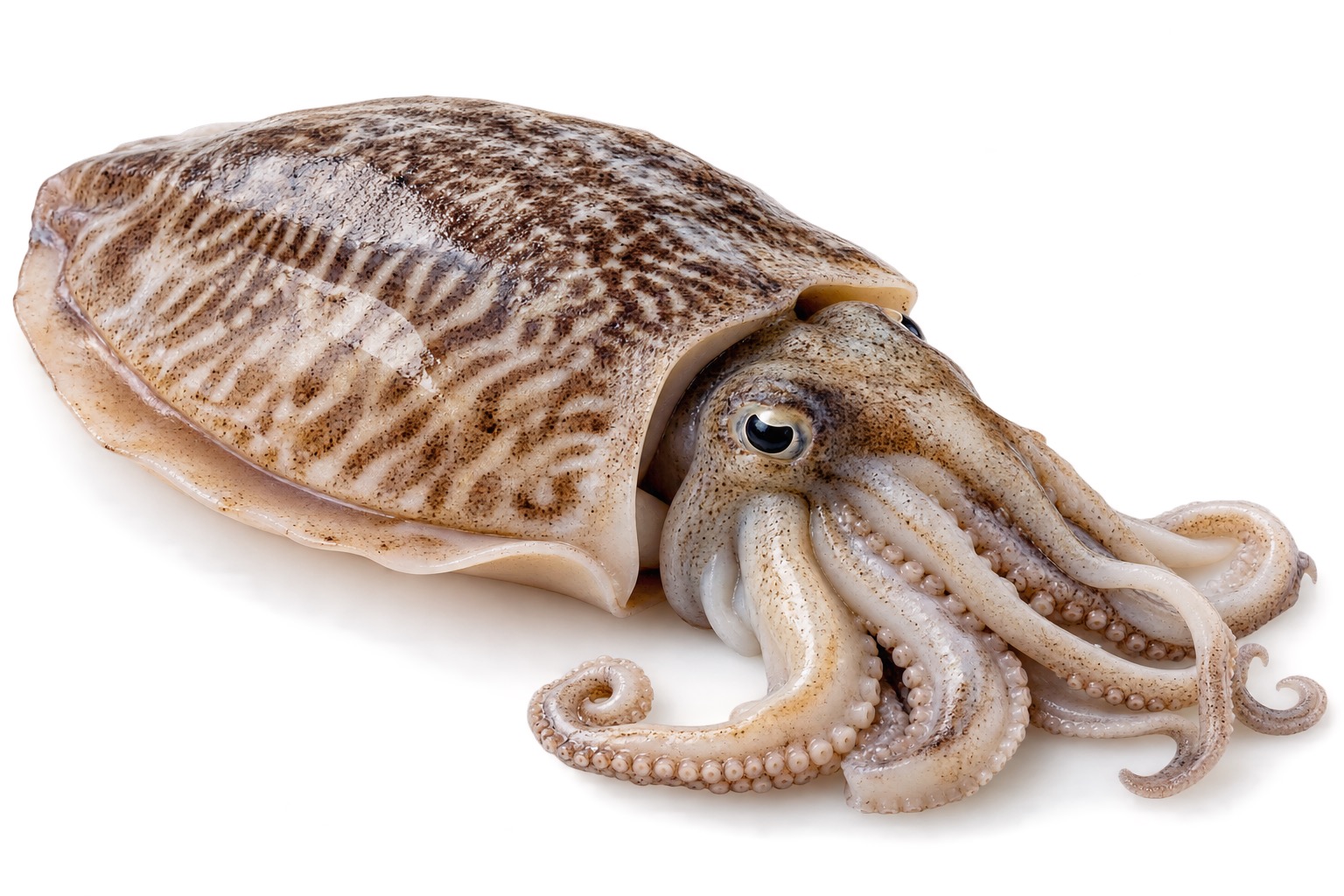
Cuttlefish are marine cephalopod molluscs in the family Sepiidae. They are close relatives of squid and octopus but are immediately distinguished by the broad mantle, continuous side fins and the internal mineralized cuttlebone. In Italian kitchens the ingredient is seppia; the plural is seppie.
The common cuttlefish, Sepia officinalis, is a classic eastern Atlantic and Mediterranean species. FAO references place it from the northeastern Atlantic through the Mediterranean and toward northwestern Africa. It is a demersal animal associated especially with sandy or muddy bottoms, seagrass areas and the continental shelf.
Its culinary importance comes from the fact that virtually the entire animal can contribute to a dish: the mantle and tentacles provide clean, sweet marine flesh, while the intact ink sac can become nero di seppia for sauces, risotto, pasta dough or Venetian-style preparations.
“Cuttlefish” is not a single species. Market identity should include the scientific species and origin whenever possible, especially for purchasing specifications and sustainability review.
The principal Mediterranean and eastern Atlantic reference species. FAO records it from northern European waters through the Mediterranean and south toward northwestern Africa.
Mediterranean referenceA smaller European and Mediterranean species recognized in FAO cephalopod catalogues and Mediterranean fishery records. It should remain species-specific when sold or purchased.
Regional speciesAnother European/Mediterranean cuttlefish appearing in FAO species and fishery records. It is distinct from common cuttlefish and should not be silently relabeled in a purchasing program.
Regional speciesAn important warm-water commercial cuttlefish across the western Indian Ocean and wider Indo-Pacific. FAO describes the flesh as thick, tender and suitable for human consumption.
Major Indo-Pacific fisheryA very large Australian species. FAO records adults exceeding 5 kg and notes regional market use for human consumption, although it is not the standard Mediterranean culinary reference.
AustraliaFAO catalogues many additional cuttlefish species across Africa, Asia and the Pacific. For professional purchasing, species, catch area, size grade, fresh/frozen state and processing should all be documented.
Global marketsSeasonality is fishery-specific rather than universal. For Sepia officinalis, FAO describes spring movement toward shallower inshore waters and autumn/winter movement toward deeper shelf grounds. In professional markets, frozen supply can make cuttlefish available year-round even when fresh local landings are seasonal.
Fabricate the animal while it is very cold, keep the work surface organized, and decide before opening it whether the ink will be reserved. The ink sac is fragile and stains immediately when broken.
Hold the mantle firmly and pull the head and tentacles away from the body so the viscera come free with the head assembly.
If the recipe uses ink, identify the dark sac before cutting through the viscera. Lift it away carefully and place it in a small clean container.
Open the mantle cavity and slide out the hard, white internal cuttlebone. Remove remaining viscera and membranes.
Cut below the eyes to separate the tentacle crown. Push out and discard the hard beak from the center.
The thin mottled outer skin can be peeled from the mantle for a clean white presentation, though some preparations may retain part of the natural surface.
Rinse only as much as needed to remove residue, then dry very thoroughly. Excess surface water works against browning during high-heat cooking.
Cuttlefish has a clean, mildly sweet marine flavor and a dense, springy texture. The key is choosing the correct time-and-temperature strategy: cook it very quickly or give it enough gentle time to become tender.
Slowly braised cuttlefish finished with its ink. A classic northern Italian and Venetian flavor structure, often served with polenta.
Braise cuttlefish with aromatics, tomato and wine, then use the ink separately as a black sauce or integrate it into the braise.
Cuttlefish and ink create deep marine risotti. Build with a controlled seafood stock so the ink does not become aggressively salty.
Score or portion cleaned mantle and cook quickly over strong heat. Dry surfaces thoroughly and avoid lingering in the tough middle stage.
Cut mantle into strips or rings and fry quickly. Tentacles add shape and crisp texture to mixed cephalopod preparations.
Longer gentle cooking suits tomato, onion, garlic, white wine, bay leaf, olive oil and other Mediterranean aromatics.
Representative values below are for 100 g raw mixed-species cuttlefish from the USDA Standard Reference legacy record (FDC 174215). Exact values vary by species, size, origin and preparation.
| Nutrient | Per 100 g raw | Professional context |
|---|---|---|
| Protein | 16.24 g | Lean seafood protein before added oil, sauce or breading. |
| Phosphorus | 387 mg | One of the prominent minerals in the USDA record. |
| Potassium | 354 mg | Naturally present in raw cuttlefish. |
| Calcium | 90 mg | Representative mixed-species value. |
| Vitamin B12 | 3.0 µg | Representative raw mixed-species value. |
| Riboflavin | 0.91 mg | Representative raw mixed-species value. |
This page establishes one reusable identity for cuttlefish flesh across recipes, Live Inventory, purchasing, vendor records and ingredient-icon synchronization.
{
  "code": "SEA-CUTTLEFISH-SEPIA-001",
  "ingredient_id": "SEA-CUTTLEFISH-SEPIA-001",
  "name": "Cuttlefish",
  "italian_name": "Seppia",
  "inventory_id": "cuttlefish",
  "category": "Seafood",
  "subcategory": "Cephalopods / Cuttlefish",
  "station": "Fish / Seafood",
  "base_unit": "g",
  "icon": "/academy/culinary-foundations/fishes/Seppia.webp",
  "ingredient_page": "/academy/culinary-foundations/fishes/cuttlefish.html"
}
See the ingredient applied in a pasta with tomato, white wine and a separate black ink sauce.
Ingredient Knowledge Squid Ink / Nero di SeppiaLearn harvesting, processing, storage, culinary use and the separate platform identity for cephalopod ink.
Cephalopod Comparison Calamari / Squid / TotanoCompare species, market terminology, fabrication and cooking behavior with squid.
Species distribution, fisheries information and nutrition data should be reviewed periodically because stock status, trade, regulations and supplier specifications change.
Page prepared and reviewed October 4, 2026. Culinary education and operational guidance; not medical advice and not a substitute for a validated HACCP plan or current supplier specification.