Tuscany Cuisine Ingredient Library · Professional culinary knowledge by Chef David Giani
Dairy Ingredient · Culinary Foundation

Butter

Butter is one of the foundational fats of classical and modern cooking. Made by concentrating milk fat from cream, it brings flavor, aroma, richness, browning, texture, emulsification, tenderness, and finishing power to both savory and pastry kitchens.

Dairy Milk Allergen Cooking Fat Pastry Essential Emulsion Ingredient
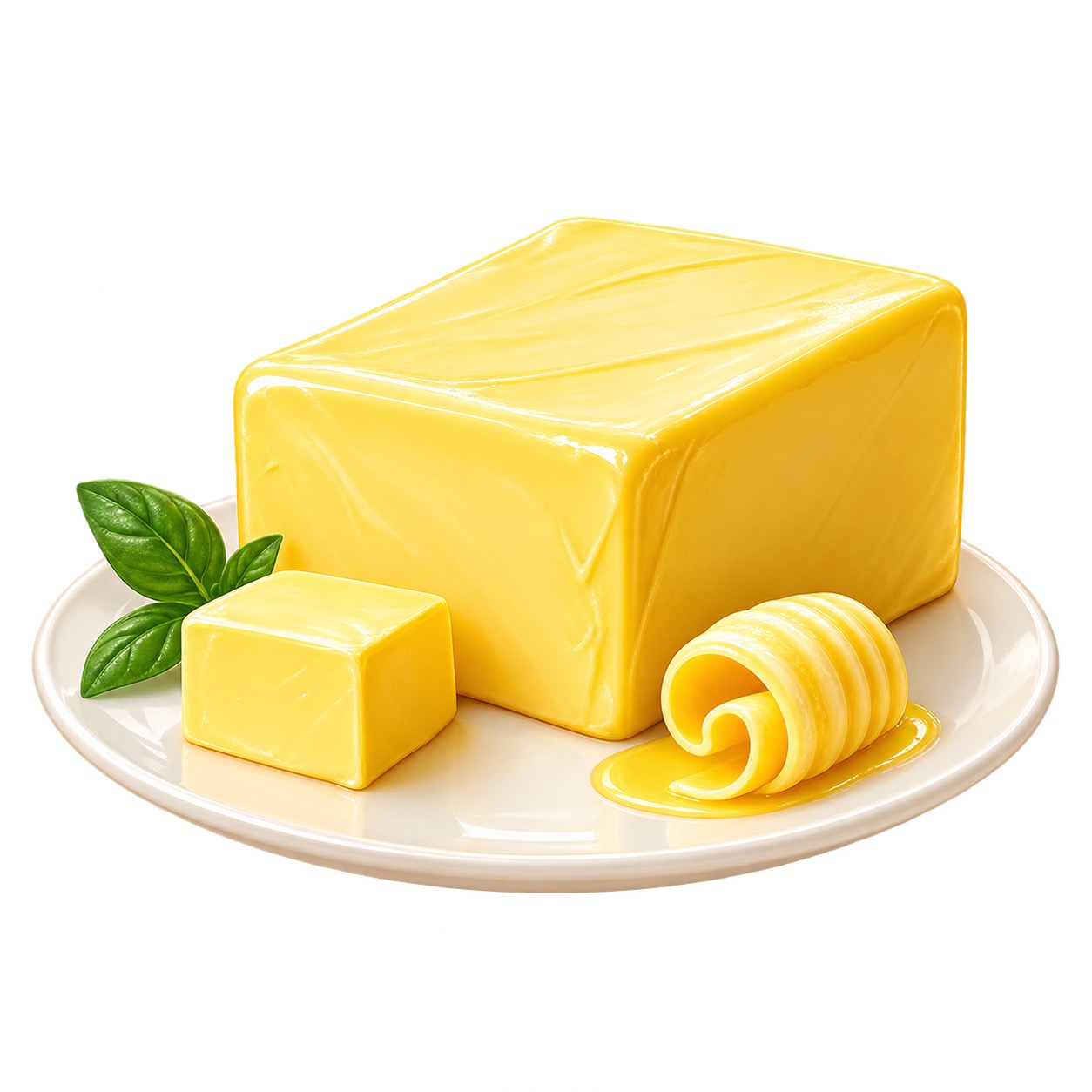
Butter ingredient icon showing golden butter
Category Dairy · Milk Fat Canonical ingredient identity: Butter
Primary Forms Salted & Unsalted Also cultured, clarified, whipped and compound.
Base Unit Gram (g) Preferred system unit for recipes, costing and inventory.
Allergen Milk Butter is a dairy ingredient and must remain allergen-visible.
Ingredient Identity

What Is Butter?

Butter is a water-in-fat dairy emulsion produced by separating and concentrating the fat phase of milk or cream. Churning disrupts the cream emulsion so fat globules join together, forming butter grains while buttermilk separates.

Composition & Character

Commercial butter is primarily milk fat, with smaller amounts of water and milk solids. The exact composition varies by country, standard of identity, producer, season and style.

Its flavor can range from sweet and creamy to tangy and cultured. Color varies naturally from pale ivory to deeper yellow depending in part on the animal's diet and the carotenoid content of the milk fat.

Why Chefs Depend on It

Butter is valuable because it is more than a cooking fat. Its milk solids can brown and create nutty aromas; its water content can produce steam and lift; and its solid-fat structure helps create tenderness, lamination and texture.

Professional principle: choose the form of butter according to the technique. The best butter for laminated pastry is not always the same choice as the butter used to mount a sauce or finish vegetables.
Culinary History

An Ancient Dairy Food

The exact origin of butter is unknown, but butter is an ancient dairy product associated with pastoral societies and early methods of processing milk and cultured or acidified cream.

Long before mechanical separators and refrigerated dairies, communities learned that agitating cream or fermented milk could separate concentrated milk fat from the liquid phase. Butter and related milk-fat foods developed in many dairy regions rather than from one single documented invention.

In northern and central Europe, butter became especially important as a table fat, cooking fat and preservation medium. In South Asia, butter and clarified butter developed into major culinary and cultural ingredients. Across the Mediterranean, olive oil remained dominant in many regions, while butter became increasingly important in northern Italian, Alpine and French cooking.

Modern butter production transformed in the nineteenth and twentieth centuries with centrifugal cream separation, controlled pasteurization, standardized churning, refrigeration, packaging and industrial quality control.

Production

How Butter Is Made

Modern butter making controls cream quality, temperature, churning and working so the final product has the desired moisture, texture, flavor and salt level.

1

Separate Cream

Cream is separated from milk, usually by centrifugal separation in commercial dairies.

2

Pasteurize & Condition

Cream is pasteurized and temperature-conditioned. Cultured butter also receives selected cultures.

3

Churn

Agitation breaks the cream emulsion and causes milk-fat globules to join into butter grains.

4

Work & Package

Buttermilk is drained, the butter is worked for texture and moisture distribution, then salted if required and packed.

Professional Selection

Salted, Unsalted and Other Butter Styles

The salt level, culture, fat percentage, moisture and physical form all affect how butter behaves in a professional recipe.

Style Characteristics Best Uses Chef Consideration
Unsalted Butter Butter without added salt; clean dairy flavor and maximum seasoning control. Pastry, baking, sauces, beurre blanc, finishing and recipe development. Preferred when precision matters because the chef controls the salt independently.
Salted Butter Butter with added salt; savory flavor and generally somewhat improved keeping quality. Table service, bread, vegetables, simple sautéing and everyday cooking. Salt concentration varies by brand, so recipes may need adjustment.
Cultured Butter Cream is fermented with selected cultures before churning, developing tangy and aromatic notes. Pastry, bread service, finishing, compound butter and flavor-forward sauces. Useful when the dairy flavor itself should be noticeable.
European-Style / Higher-Fat Butter Often made with a higher milk-fat percentage and correspondingly lower moisture than standard butter. Lamination, croissants, puff pastry, pastry production and finishing. Check the actual fat percentage rather than relying only on the marketing name.
Clarified Butter / Ghee Water and most milk solids are removed, leaving a more concentrated butterfat. Higher-temperature cooking, sautéing, sauces and specific regional cuisines. Flavor and remaining milk components vary by clarification method and product.
Whipped Butter Air is incorporated for a lighter, spreadable texture. Table service and spreading. Do not substitute by volume in precision formulas without accounting for incorporated air.
Global Dairy Production

Butter Production Around the World

Butter and related milk-fat products are made throughout major dairy regions. Production patterns differ because some countries consume most of their butter domestically while others are major exporters.

India The world's largest milk producer and an exceptionally important producer and consumer of butter and ghee. India represents one of the world's most important milk-fat markets.
European Union A major butter-producing region with strong dairy industries in countries such as Germany, France, Ireland, the Netherlands and others.
United States One of the world's major commercial butter producers, supported by a large milk supply and significant domestic demand.
New Zealand Globally important because its pasture-based dairy industry supplies substantial quantities of milk fat and butter to international markets.

Production rankings and volumes change by marketing year. This page therefore emphasizes major long-term production centers rather than hard-coding a live ranking.

Comparison

Butter vs. Margarine

Butter and margarine can perform similar jobs in the kitchen, but they are fundamentally different ingredients.

Characteristic Butter Margarine
Primary Source Milk or cream; predominantly milk fat. Usually an emulsion based primarily on vegetable oils/fats and water, depending on formulation.
Flavor Distinct dairy flavor; can be sweet-cream, cultured, browned or clarified. Flavor depends strongly on formulation, oils, salt and added flavorings.
Saturated Fat Naturally high in saturated fat. Varies widely. Products rich in liquid vegetable oils may contain less saturated fat; formulas using palm or coconut fats may contain more.
Trans Fat Contains small naturally occurring amounts from ruminant milk fat. Modern U.S. products should not rely on partially hydrogenated oils as they once did; always read the current label.
Pastry Performance Provides classic dairy flavor and predictable milk-solid browning. Performance varies by fat percentage and formulation; professional pastry margarines are engineered for specific tasks.
Allergen / Dietary Identity Dairy; contains milk components. May or may not contain dairy ingredients depending on product. Verify the label.
Health comparison: there is no single nutrition rule that makes every margarine automatically healthier than every butter. Compare saturated fat, trans fat, sodium, ingredient list and portion size. Margarines made mostly with unsaturated oils and low in saturated fat can differ substantially from firm products made with more saturated tropical fats.
Culinary Applications

Professional Culinary Uses

Butter changes flavor and texture depending on temperature and technique. Controlling those transformations is a fundamental culinary skill.

🍳

Sautéing

Butter provides flavor and milk-solid browning. For higher heat, chefs may combine it with another fat or use clarified butter.

🥄

Mounting Sauces

Cold butter whisked into a reduced liquid adds gloss, richness and body while helping form a temporary emulsion.

🥐

Laminated Dough

Butter creates separated layers in croissants and puff pastry. Plasticity and temperature are critical.

🍰

Baking & Pastry

Butter contributes tenderness, flavor, aeration, spread and structure depending on mixing method and temperature.

🌰

Beurre Noisette

Heating butter until the milk solids brown develops toasted, nutty aromas useful in sauces, vegetables, fish, pasta and pastry.

🌿

Compound Butter

Butter can carry herbs, spices, citrus, garlic and other aromatics for finishing meats, fish, vegetables and bread.

🥣

Roux & Thickening

Butter combines with flour to form roux, controlling flavor and thickening power according to cooking time.

🥔

Finishing Vegetables

A small amount of butter can round acidity, carry aromatics and create a glossy finish without overwhelming the ingredient.

🍞

Table & Bread Service

Salted, cultured or compound butter can become a deliberate part of the guest experience rather than a generic condiment.

Storage & Quality

Professional Handling

Storage

Keep butter refrigerated according to the manufacturer's label and local food-safety requirements. Protect it from air, light and strong odors because milk fat readily absorbs surrounding aromas and can oxidize over time.

For longer storage, properly wrapped butter may be frozen. Divide production butter into practical portions so only the amount needed for service is repeatedly handled.

Quality Evaluation

Professional butter should have a clean dairy aroma, even texture and flavor appropriate to its style. Reject product with rancid, oxidized, refrigerator-tainted or otherwise abnormal aromas.

For pastry, consistency and plasticity are as important as flavor. Butter that is too cold fractures; butter that is too warm smears into the dough and compromises lamination.

Nutrition & Health

Understanding Butter in the Diet

Butter is energy-dense and high in saturated fat. Nutrition decisions should consider total dietary pattern, portion size and the type of fat used throughout the day.

Nutrition Facts

Approximate reference · 1 tablespoon (about 14 g) salted butter

Calories about 100
Total Fat about 11–12 g
Saturated Fat about 7 g
Cholesterol about 30 mg
Sodium · salted commonly about 70–100 mg
Sodium · unsalted very low; brand dependent
Carbohydrate less than 1 g
Protein less than 1 g
Values are rounded educational estimates. Actual nutrition varies by butter style, salt level and manufacturer. For recipe nutrition calculations, use the current package label or the applicable USDA FoodData Central record.
Saturated fat: Butter is naturally rich in saturated fat. Portion size and the total amount of saturated fat consumed throughout the diet should therefore be considered.
Trans fat: Small amounts occur naturally in ruminant-derived foods including butter. Industrial trans fats historically associated with partially hydrogenated oils are a separate nutritional issue.
Practical culinary approach: Use butter when its flavor and technical properties add value, control the portion, and balance the menu with vegetables, grains, legumes, fish and foods containing unsaturated fats according to individual dietary needs.
Tuscany Cuisine Platform

Ingredient System Record

Butter is prepared as one canonical ingredient identity for the Tuscany Cuisine Ingredient Library, recipes, inventory, costing, purchasing and operational tools. Individual recipe descriptions may specify salted, unsalted, cultured or clarified butter as preparation or purchasing attributes without creating unnecessary duplicate ingredient identities.

🧾 Master Ingredient Registry Canonical name: Butter · Category: Dairy · Base unit: gram.
🧈 Ingredient Icon /academy/ibrary/dairy/butter.png
📖 Ingredient Page /academy/ibrary/dairy/butter.html
🍽 Recipe Library Recipes using butter can link directly to this ingredient identity and icon.
📦 Live Inventory Track quantity in grams and convert purchasing packs into the canonical base unit.
💲 Recipe Costing Ingredient cost flows from inventory purchase cost into recipe and menu calculations.
🚚 Purchasing & Receiving Dairy purchasing item with brand, pack size, butter style and storage requirements.
⚠️ Allergen System Milk allergen must remain attached to the canonical butter record and recipes using it.
👨‍🍳 Station Pick Lists Recipe quantities can aggregate into prep and station requirements through the shared identity.
System Field Butter Record
Canonical Name Butter
Category Dairy
Suggested Subcategory Butter & Milk Fat
Canonical Base Unit g
Primary Allergen Milk
Storage Zone Refrigerated Dairy
Ingredient Page /academy/ibrary/dairy/butter.html
Icon Path /academy/ibrary/dairy/butter.png
Registry API /MENUS1/api/inventory/ingredients/registry.php
Recipe Usage Count Dynamic / Registry Linked Do not hard-code the count on this page; allow the platform to calculate usage as recipes are connected.
One Ingredient · One Identity: this page should remain the main Butter identity. Recipe-specific requirements such as “unsalted butter,” “salted butter,” “cultured butter,” “clarified butter,” or “melted butter” should be expressed as attributes or preparation notes unless the Master Ingredient Registry intentionally defines a separate purchasable inventory item.

Sources & Further Study