
Connected ingredient system
One avocado record across the platform
The page publishes one canonical identity, icon path, base unit, aliases, yield, nutrition and dietary properties so every Tuscany Cuisine tool can recognize avocado consistently.
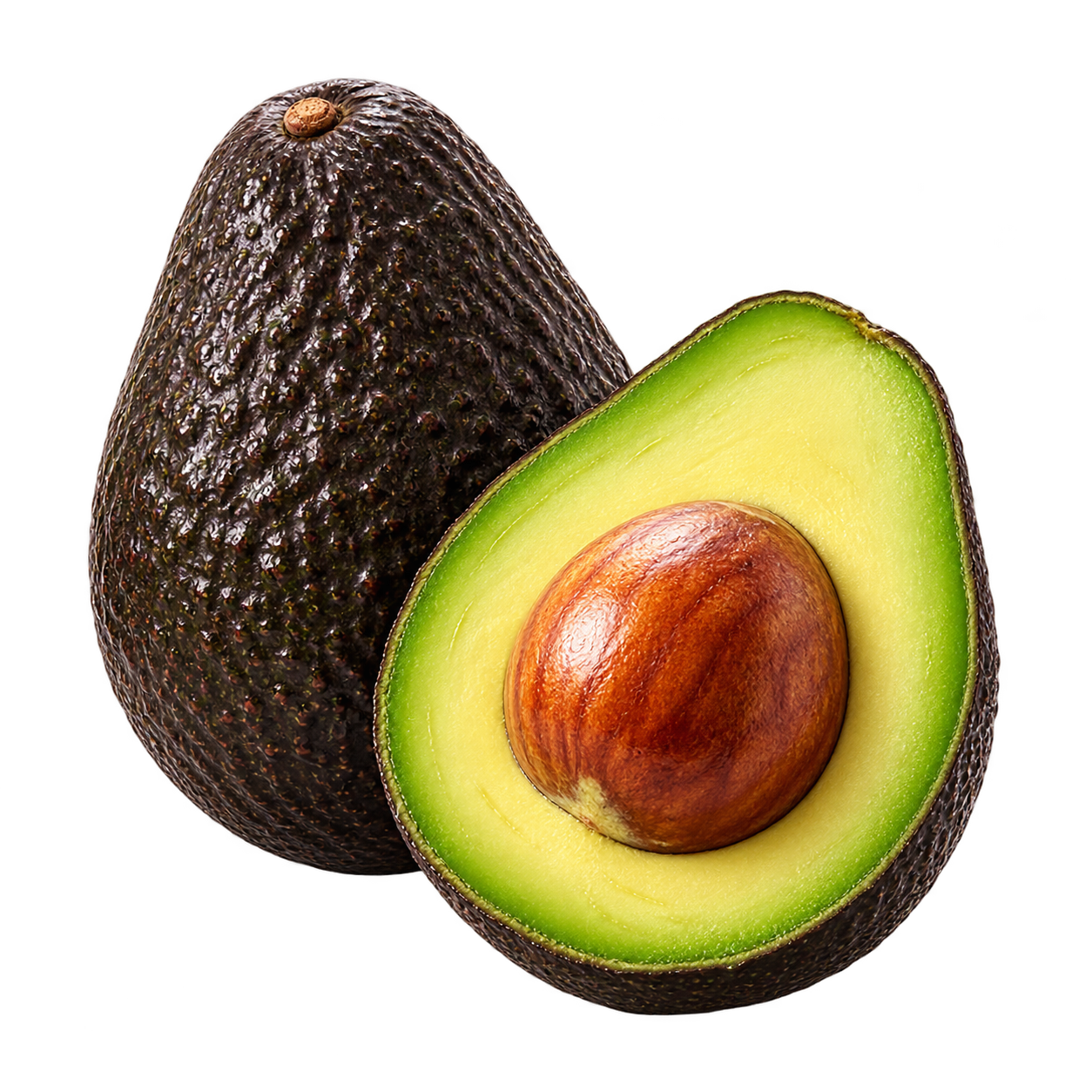
Avocado
- CategoryProduce → Fruit → Avocado
- Base unitgram (g)
- Count uniteach (variable weight)
- Icon/academy/ibrary/fruit/avocado.png
- Aliasesavocado, Hass, aguacate, palta
- Edible yield70% planning estimate
Checking the shared ingredient library…
Platform destinations
- No matching recipe catalog is stored on this device yet.
This page updates the browser-side shared ingredient catalog and sync queue. A server database still requires its normal API or database sync process.
From Mesoamerica to the modern kitchen
A fruit with an ancient culinary history
Wild avocado is associated with south-central Mexico; its long relationship with people began thousands of years before modern orchards.
Evidence indicates established cultivation in Mexico. The Nahuatl word āhuacatl later evolved through Spanish aguacate into “avocado.”
Spanish movement of plants and foods carried avocado beyond the Americas toward Europe and other warm growing regions.
Judge R. B. Ord successfully introduced Mexican avocado trees to Santa Barbara, helping establish the California industry.
Rudolph Hass patented the seedling that became the Hass variety. Its rich flavor, productivity and shipping durability reshaped world trade.
Avocado is cultivated across tropical, subtropical and Mediterranean climates, with Hass dominating international commerce and regional green-skin varieties preserving culinary diversity.
Cultivar guide
Choose the avocado for the technique
Cultivars differ in oil, moisture, texture, seed size, skin, season and browning rate. Green skin does not mean unripe: many cultivars stay green when ready to eat.
Hass All-purpose
Pebbled skin that darkens when ripe; creamy, high-oil flesh and nutty flavor. Excellent for guacamole, toast, purées, dressings and service by the half.
Fuerte Green skin
Smooth pear shape, thinner green skin and a lighter, nutty profile. A classic winter-to-spring cultivar suited to slices, salads and cold preparations.
Reed Summer
Large and round with thick green skin, a relatively small seed and rich, dense flesh. Holds attractive wedges and brings excellent late-season eating quality.
Pinkerton High yield
Elongated fruit with a small seed and generous flesh recovery. Creamy texture works well for high-volume prep where edible yield matters.
Bacon & Zutano Early season
Smooth green-skinned cultivars commonly harvested in cooler months. Milder and less oily than Hass; also important as pollinizer varieties in orchards.
GEM & Lamb Hass Hass type
Modern Hass-like selections with rich flesh and useful harvest windows. Availability is regional; both extend premium dark-skin choices beyond standard Hass timing.
Shepard Slow browning
Australian green-skin variety with firm, nutty flesh that is notably slow to brown after cutting. Best for clean slices, lunch boxes, platters and advance salad mise en place. It still oxidizes eventually.
Sharwil Hawaiian favorite
Small-seeded, green-skinned and richly flavored, with dense flesh and high oil. Especially valued in Hawaii and parts of Australia.
Tropical / West Indian Large fruit
Large, smooth, green fruit adapted to warm lowlands. Usually milder, more watery and lower in oil than Hass; useful in salads, juices and Caribbean preparations.
Production and harvesting
The global avocado relay
FAO data show Mexico as the leading producer. Multiple elevations, cultivars and opposite hemispheres create year-round supply, but the best flavor generally comes after fruit has reached strong physiological maturity and adequate dry matter on the tree.
| Origin / region | Typical commercial window | Quality and buying note |
|---|---|---|
| Mexico | Year-round | The global anchor for Hass supply; different blooms and elevations extend harvest through the year. |
| California, USA | Spring through summer / early fall | Local peak for Southern California buyers; look for California origin labels. Reed and Lamb Hass add later windows. |
| Peru | May into October; some programs into early November | Major Southern Hemisphere Hass source; strong summer overlap in the United States and Europe. |
| Colombia | Multiple crops; broadly year-round | Altitude and regional diversity support extended availability, especially for Hass exports. |
| Chile | Approximately September–February | Southern Hemisphere supply bridging autumn and winter markets. |
| Spain, Morocco & Israel | Approximately October–May | Mediterranean winter supply; includes Hass plus green-skin cultivars depending on region. |
| Kenya & South Africa | Primarily spring–autumn; varies by district | Important counter-seasonal supply for Europe, the Middle East and Asia. |
| Australia | Year-round across regions | Shepard is generally February–May; Hass generally May–January, with highest national volume March–November. |
| New Zealand | Typically late winter through summer | Premium regional Hass supply for domestic and Asian-Pacific markets. |
Windows are approximate and shift with latitude, elevation, flowering, weather, maturity standards and the crop year. Country of origin alone does not guarantee ripeness or eating quality.
Professional quality control
Buy maturity; manage ripeness
Select without bruising
Choose fruit heavy for its size, with intact skin and no sunken soft pockets. Use the palm and gentle even pressure—not repeated fingertip squeezing.
Read the cultivar
Hass commonly darkens as it ripens. Fuerte, Reed, Shepard, Bacon and Zutano remain green, so color is not a universal ripeness test.
Stage the ripening
Ripen firm fruit at room temperature. A paper bag with an apple or banana concentrates natural ethylene. Refrigerate when the target firmness is reached.
Control edible yield
Use 70% edible flesh only as an initial purchasing estimate. Record actual case weight, pit and skin loss by size and supplier to improve food cost.
Chef’s ideal quality specification
- Uniform gentle yield from stem to blossom end
- Clean green-to-gold flesh without gray areas
- Creamy texture with no rubbery or watery zones
- Fresh, nutty aroma without fermented notes
- No rancid flavor, mold, deep bruising or stringy breakdown
- No forced ripening beyond the production need
- Firm-ripe for slicing; soft-ripe for mash and emulsions
- First-in, first-out rotation by ripeness stage—not arrival date alone
Nutrition and health
Richness built from unsaturated fat and fiber
Avocado is energy-dense compared with most fruit, yet it provides mostly unsaturated fat, substantial fiber and micronutrients. Portion still matters when balancing calories.
Nutrition Facts
USDA reference values; cultivar, maturity and growing conditions cause natural variation.
Avocado is especially rich in oleic acid. Replacing saturated fat with unsaturated fat can support a heart-healthy dietary pattern.
About 6.7 g per 100 g supports digestive health, fullness and steadier meal composition.
Potassium contributes to normal fluid and nerve function; folate supports DNA synthesis and cell division.
The fruit’s fat can help the body absorb fat-soluble carotenoids from vegetables served in the same meal.
Culinary applications
Protect the texture and build contrast
Raw & chilled
Slices, dice, tartare, crudo garnish, salads, poke, toast, crostini and chilled soups. Pair richness with citrus, vinegar, tomato, chile, herbs, alliums and toasted seeds.
Mashed & emulsified
Guacamole, sandwich spreads, vinaigrettes, green sauces, aioli-style dressings, smoothies and dairy-free creams. Add acid early and limit air incorporation.
Brief heat
Quick grilling, tempura, eggs, warm tacos and late additions to soup can work. Prolonged heat may flatten fresh flavor or produce bitterness, so cook with restraint.
Color preservation
Why cut avocado turns brown
Cutting breaks cells and exposes phenolic compounds and polyphenol oxidase to oxygen. The resulting enzymatic reactions create brown pigments. The surface may still be safe when lightly browned, but flavor and appearance decline over time.
Food safety
Wash the skin before the knife crosses it
Safe preparation
- Wash hands and rinse the whole avocado under running water before cutting—even though the peel is discarded.
- Do not use soap, detergent or unapproved produce wash.
- Use a clean knife and board; prevent contact with raw meat and seafood tools.
- Refrigerate cut avocado and prepared guacamole promptly.
Discard when quality becomes spoilage
- Reject mold, fermented or rancid odor, slime, leaking fruit or extensive dark breakdown.
- Minor surface oxidation is different from microbial spoilage, but do not serve it when quality is unacceptable.
- Avoid using water immersion as a routine cut-avocado storage method; a direct food-safe surface barrier is cleaner and easier to control.
- Record time, temperature and batch information for commercial production.
Questions chefs ask
Avocado FAQ
Which avocado is best for guacamole?
Hass is usually the strongest all-purpose choice because of its high oil content, creamy texture and rich flavor. Use fully ripe fruit that yields evenly. Shepard can be used, but it produces a firmer, less buttery mash.
Which avocado browns the least after opening?
Shepard avocado is notably slow to brown and is the leading choice when color retention matters. It remains green-skinned when ripe and is typically available in Australia from February through May. It still benefits from acid, direct surface protection and refrigeration.
What is the best avocado season in Southern California?
California-grown avocado supply is generally strongest from spring through summer and may continue into early fall. UC Cooperative Extension notes a much broader possible tree-harvest window for Hass, but annual commercial timing and volume depend on crop conditions.
Can green-skin avocados be ripe?
Yes. Fuerte, Reed, Shepard, Bacon and Zutano stay green when ripe. Test for a gentle, even yield to light pressure instead of waiting for the peel to turn black.
Is avocado a fruit or a vegetable?
Botanically it is a fruit—specifically a large single-seeded berry. In the kitchen it is treated more like a vegetable or culinary fat because of its savory uses, low sugar and creamy lipid-rich flesh.
Research foundation
Selected sources
Seasonality changes with each crop year. These sources support the educational record and should be reviewed when future live purchasing specifications are updated.
- USDA FoodData Central — Avocados, raw, all commercial varieties
- Harvard T.H. Chan School of Public Health — Avocados
- UC Cooperative Extension — Harvesting Avocados
- UC Riverside Avocado Variety Collection
- California Avocado Commission — Avocado History
- California Avocado Commission — California Season
- Australian Avocados — Hass and Shepard seasons, selection and storage
- Avocado Guide — Shepard slow-browning cultivar profile
- Our World in Data using UN FAO data — Avocado production
- Peruvian Avocado Commission — Export harvest window
- U.S. FDA — Selecting and Serving Produce Safely
- American College of Allergy, Asthma & Immunology — Latex-food cross-reactivity