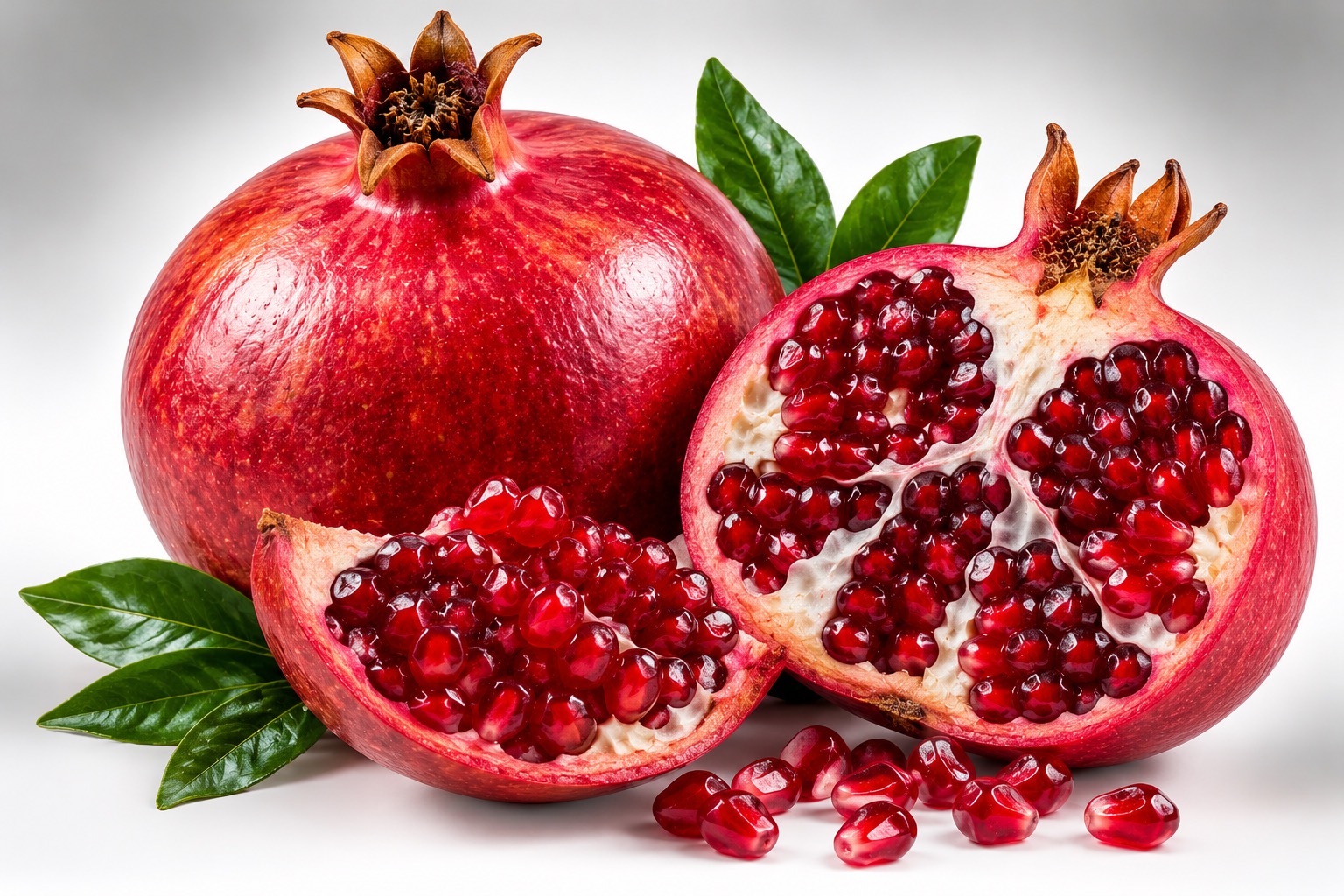
Ingredient Profile
Origin, History & Culinary Tradition
Punica granatum has been cultivated for thousands of years and is deeply embedded in the food traditions, mythology, and symbolism of the Mediterranean, Middle East, and Central and South Asia. Kew lists its native range from northeastern Türkiye through parts of Iran, Afghanistan, Pakistan, the Caucasus, and neighboring regions.
The fruit traveled widely with trade and cultivation and became established throughout Mediterranean cooking. In Italy the plant is known as melograno, while the fruit is also commonly called melagrana. The ruby arils have long symbolized abundance, fertility, renewal, and celebration in many cultures.
Flavor Profile
Fresh arils are juicy, tart-sweet, and lightly tannic. Juice becomes more concentrated and wine-like as it reduces. Long cooking softens fresh acidity and emphasizes darker fruit, caramelized sweetness, and savory depth.
Culinary Usage
Use as garnish on salads, roasted vegetables, grains, cheese, yogurt, desserts, braised meats, and finished sauces.
Use in dressings, marinades, cocktails, sorbets, granitas, sauces, and braising liquids.
Reduce carefully for glazes, gastriques, plate sauces, and sweet-savory finishes.
Pair with pork, lamb, duck, game, beef, onions, warm spices, and bitter greens.
Combine with apple, onion, citrus, chile, vinegar, herbs, or spices.
Use in gelée, panna cotta, semifreddo, sorbet, fruit sauces, cakes, and plated desserts.
Excellent Pairings
Pork, lamb, duck, game, chicken, eggplant, fennel, beets, mustard greens, spinach, chicories, apple, pear, citrus, walnut, pistachio, hazelnut, goat cheese, feta, yogurt, mint, parsley, rosemary, thyme, cinnamon, clove, coriander, cumin, chile, honey, balsamic vinegar, and red wine.
Cooking Applications
- Glazing: reduce pomegranate juice with stock, wine, vinegar, or sweetener until glossy. Avoid scorching as sugars concentrate.
- Pan sauce: deglaze with wine or stock, add pomegranate juice, reduce, and mount with butter if appropriate.
- Braising: use the juice as part of the braising liquid for pork, lamb, duck, or game.
- Roasted vegetables: finish squash, carrots, onions, beets, or cauliflower with pomegranate reduction and fresh arils.
- Cold applications: use fresh arils where their crunch, color, and acidity remain intact.
- Desserts: strain juice for smooth sauces, gelées, sorbets, and granitas; fold arils in only when texture is desired.
Nutrition — Raw Pomegranate Arils
Approximate reference values per 100 g edible portion:
| Nutrient | Amount |
|---|---|
| Energy | ~83 kcal |
| Protein | ~1.7 g |
| Total fat | ~1.2 g |
| Carbohydrate | ~18.7 g |
| Dietary fiber | ~4.0 g |
| Total sugars | ~13.7 g |
| Potassium | ~236 mg |
| Vitamin C | ~10 mg |
| Folate | ~38 µg |
| Vitamin K | ~16 µg |
Nutrition note: Values are approximate and vary by cultivar, ripeness, growing conditions, and database record. For recipe costing or nutrition labeling, use the exact production ingredient and verified database record.
Seasonality & Market Availability
Pomegranate is a warm-climate fruit with a late-summer and fall harvest pattern. University of California production guidance notes that major California fruit commonly matures in late September and October, while some early cultivars begin in August. Refrigerated storage extends availability beyond the harvest window.
Best quality: choose fruit that feels heavy for its size with firm skin and no active mold, leaking juice, or severe soft spots. Skin color varies by cultivar and is not by itself a reliable maturity indicator.
Preparation & Storage
- Wash and dry the whole fruit before cutting.
- Score the rind rather than cutting deeply through the arils.
- Separate sections and loosen arils from the white membrane.
- Remove excess pith, which can taste bitter.
- Refrigerate removed arils in a covered container and use promptly.
- For juice, press gently enough to avoid extracting excessive bitterness from rind and membrane.