Texture
Soft-crisp when raw, becoming more aromatic and lightly crunchy after gentle toasting.
Delicate, buttery edible pine seeds with a centuries-old place in Mediterranean cooking. From pesto and pasta to vegetables, fillings, pastries and regional sweet-savory dishes, pinoli add richness, aroma and texture in very small quantities.
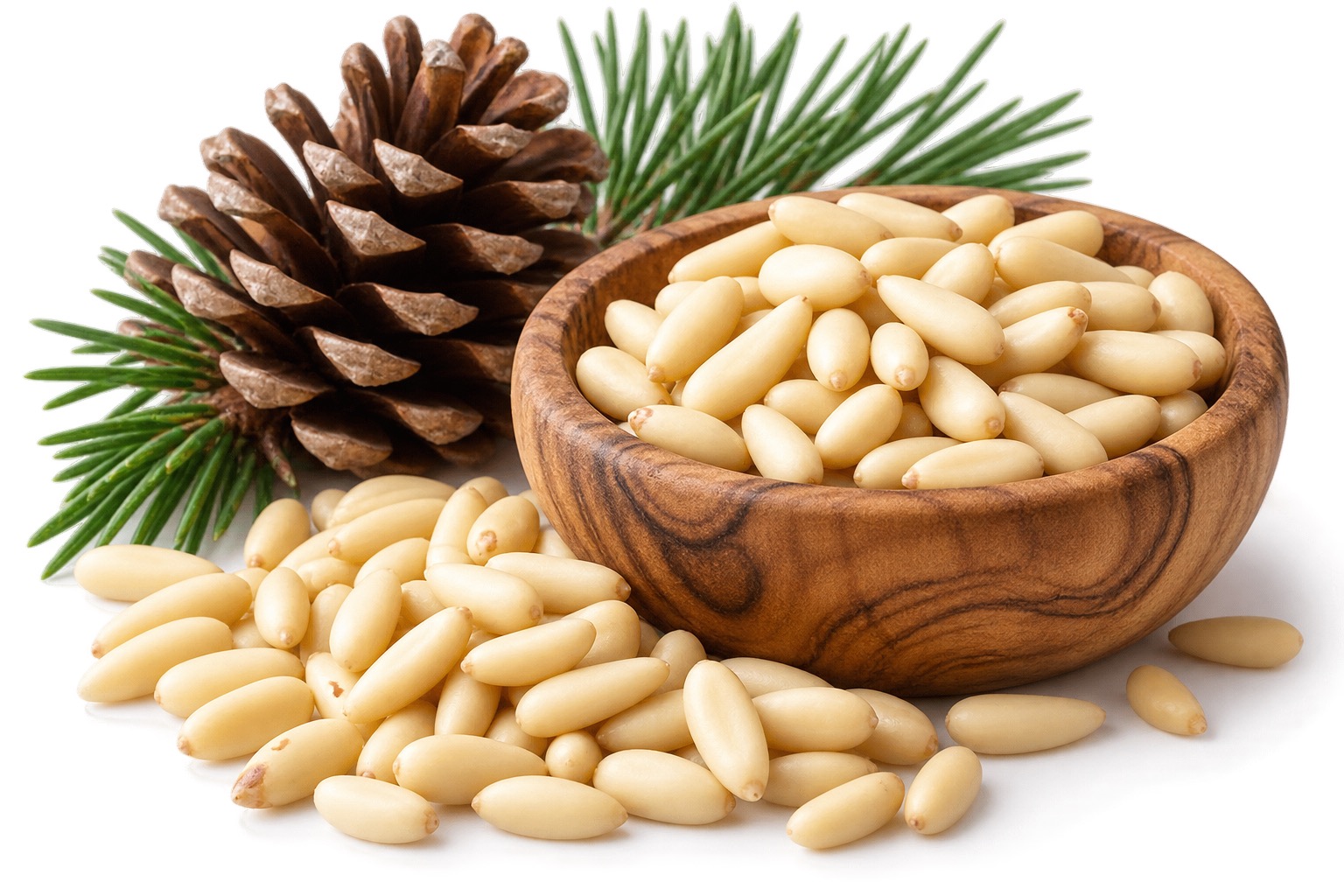
Pine nuts are the edible kernels found inside the seeds of selected pine species. Although many pines produce seeds, only a smaller group produces kernels large and flavorful enough to be important foods. In Italy, the name pinoli most strongly refers to the pale, elongated kernels traditionally associated with the Mediterranean stone pine, Pinus pinea.
The stone pine has been valued around the Mediterranean for thousands of years. Its cones require roughly three growing seasons to reach maturity. After harvest, the cones are dried or opened, the hard seeds are removed, and the inner ivory kernels are shelled for culinary use.
Soft-crisp when raw, becoming more aromatic and lightly crunchy after gentle toasting.
Mildly sweet and buttery with a subtle pine-resin character that intensifies with heat.
A finishing nut, sauce ingredient, garnish, filling component and textural contrast in savory and sweet dishes.
Mediterranean stone pine cones mature in the autumn of their third year. Harvest timing varies by climate and producing region, but mature cones are commonly gathered from late fall through winter and into early spring. After collection, cones are dried so that they open and release the seeds, which are then shelled to obtain the kernels.
Shelled pine nuts are sold year-round because the kernels are dried and stored after harvest. For chefs, the important distinction is between harvest season and commercial availability: the ingredient is a year-round pantry item even though the cones have a seasonal collection period.
“Pine nut” is a culinary name covering edible seeds from several pine species. Flavor, size, shape and texture vary by botanical source and growing region.
| Common Culinary Type | Botanical Species | Typical Region | Culinary Character |
|---|---|---|---|
| Mediterranean / Italian stone pine | Pinus pinea | Southern Europe & Mediterranean basin | Elongated ivory kernel; delicate, buttery and classic for Italian sauces and pastry. |
| Korean pine | Pinus koraiensis | China, Korea and northeast Asia | Generally plumper kernels with a rich, full nut flavor; important in international trade. |
| Chilgoza / Gerard pine | Pinus gerardiana | Afghanistan, Pakistan and northwest India | Distinctive elongated kernels used as dry fruit, snack food and in regional cooking. |
| Siberian pine | Pinus sibirica | Siberia and northern Eurasia | Smaller edible kernels important in northern Eurasian food traditions. |
| North American pinyon | Pinus edulis and related species | Southwestern United States & northern Mexico | Regional food with deep Indigenous culinary history; commonly eaten roasted or ground. |
Edible pine nuts are produced across Europe, Asia, the Near East and North America. Different regions rely on different pine species, so “country of origin” can also signal differences in shape, size and flavor.
These Mediterranean countries have long traditions with stone pine (Pinus pinea). Spain and Portugal contain extensive stone-pine landscapes, while Italy and Türkiye maintain important regional culinary and harvesting traditions.
China is a major international source and processing center for pine nuts. Korean pine (Pinus koraiensis) is among the important large-seeded edible species associated with northeast Asia.
The chilgoza pine (Pinus gerardiana) grows in dry temperate mountain regions. Its kernels are prized locally and traded as a high-value dry fruit.
Pinyon pine species have supported Indigenous foodways for generations. The seeds are consumed roasted, ground, or incorporated into regional dishes and remain an important seasonal food.
Values are approximate, calculated from USDA FoodData Central data for pine nuts. Exact values vary by species, origin and processing.
Pine nuts are energy-dense because they are naturally rich in oil. Most of their calories come from fat, with meaningful amounts of protein and several minerals.
Their richness means a small amount can contribute significant flavor and texture to a finished dish.
Pinoli work especially well where a dish benefits from gentle richness without the heavier flavor of walnuts or almonds. Toasting should be controlled carefully because their small size and high oil content allow them to brown quickly.
Toast pine nuts in a dry sauté pan over low to medium-low heat, moving them frequently, or roast them briefly in a moderate oven. Remove them as soon as they become lightly golden; residual heat continues the browning process. For pesto and other raw-emulsion sauces, untoasted kernels preserve a sweeter and more delicate flavor.
Choose kernels that look plump, intact and evenly ivory to pale cream. Avoid nuts with excessive dark spotting, shriveling or a stale/oily odor.
Because pine nuts contain a high proportion of oil, they are more vulnerable to rancidity than many dry pantry ingredients. Keep them sealed away from heat, air and light. Refrigerate after opening, and freeze for longer storage.
Canonical reference record for recipe linking, ingredient-library search, kitchen education, and future inventory or purchasing integration.
Pine nuts are edible seeds harvested from selected pine species. The classic Mediterranean pine nut used in Italian cooking is associated with the stone pine, Pinus pinea.
The cones mature in autumn of their third year. Depending on location, mature-cone collection generally takes place from late fall through winter and can continue into early spring.
No. Commercial pine nuts come from several species, including Pinus pinea, Pinus koraiensis, Pinus gerardiana, Pinus sibirica and regional pinyon species.
Common uses include pesto, pasta sauces, vegetable dishes, stuffings, agrodolce preparations, pignoli cookies, cakes, pastry and regional recipes pairing pine nuts with raisins and breadcrumbs.
Store them airtight, protected from heat and light. Refrigeration is useful after opening, and freezing is appropriate for longer storage because their natural oils can become rancid.
This page combines culinary practice with botanical, agricultural and nutritional references. Nutrition varies by species and processing, so values should be treated as reference averages.
Page reviewed: October 4, 2026