
Antipasti
Toast lightly and pair with fresh vegetables, Pecorino Toscano, pears, grapes, honey, or extra virgin olive oil.
Tuscany Cuisine Ingredient Knowledge System
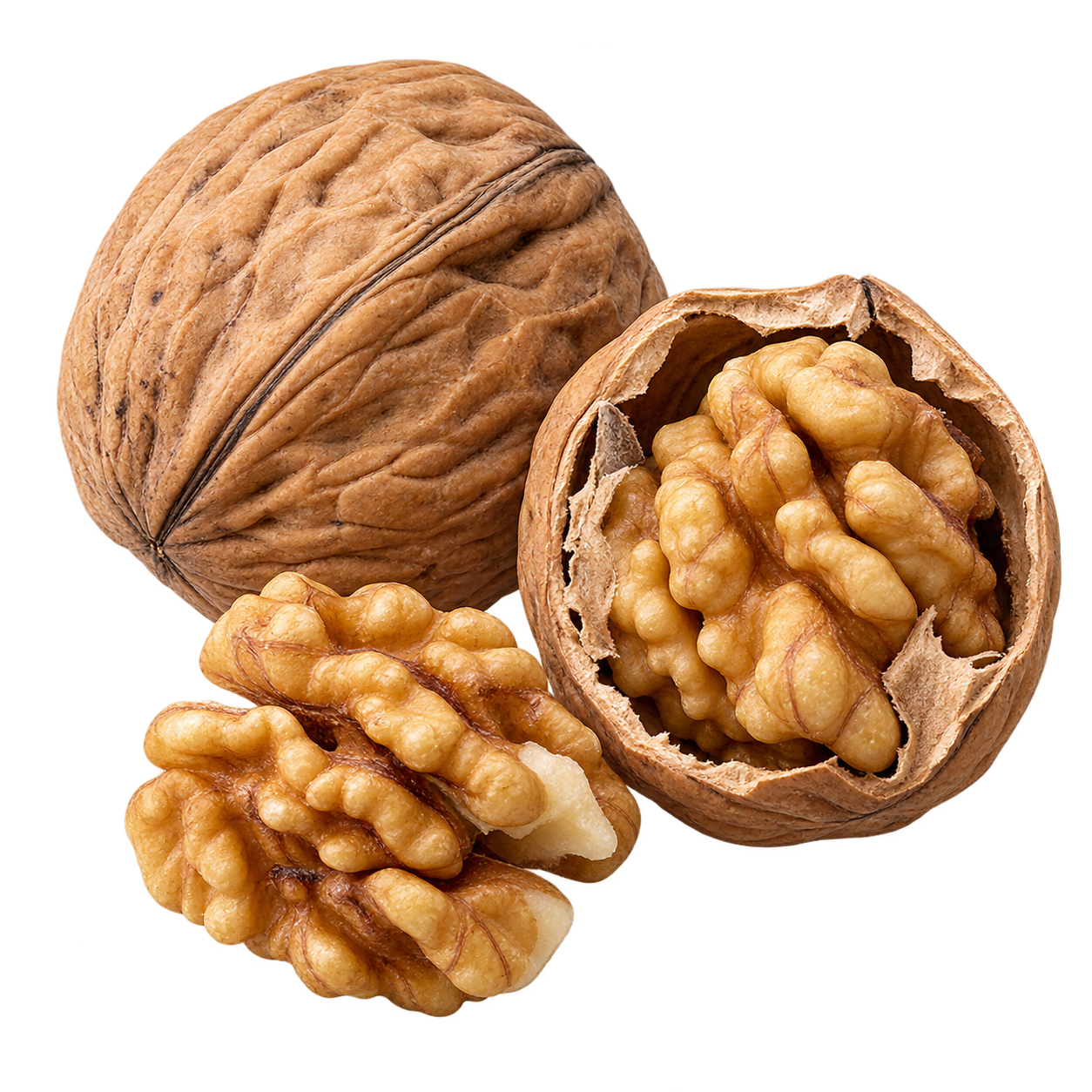
Noci · Juglans regia
A richly aromatic tree nut used in Tuscan savory dishes, breads, pastries, cheese pairings, and the celebrated green-walnut liqueur called Nocino.
Tuscan table
Walnuts bring earthy sweetness, gentle bitterness, and crisp texture to Tuscan cooking. They can be served simply with Pecorino and honey, toasted into salads and antipasti, folded into bread and pastry, or ground into fillings and rustic sauces.
Toast lightly and pair with fresh vegetables, Pecorino Toscano, pears, grapes, honey, or extra virgin olive oil.
Use chopped kernels in stuffing, grain dishes, fresh pasta fillings, vegetable preparations, and textured sauces.
Walnuts enrich cakes, biscotti, breads, crostate, gelato, brittle, preserves, oils, and traditional homemade liqueurs.
History & cultivation
Juglans regia has a broad native range from southeastern Europe through western and central Asia toward the Himalayas. Long cultivation, seed exchange, and trade spread desirable walnut trees well beyond wild populations and made the kernel part of Mediterranean and European food culture.
Wild and cultivated walnut populations developed across a wide Eurasian corridor.
Selection favored trees with larger kernels, thinner shells, and easier cracking.
The nut, timber, oil, green hull, and family liqueur traditions gave the tree practical value.
Chefs purchase kernels, pieces, meal, paste, oil, green walnuts, and finished Nocino.
Walnut history is complex because human cultivation altered its distribution. Botanical range maps and archaeological evidence should be interpreted separately from legends about a single point of origin.
Receiving & purchasing
Mature walnuts are harvested in autumn and sold in-shell or shelled year-round. Green walnuts for Nocino are purchased much earlier—traditionally around the feast of San Giovanni in late June—while the inner shell can still be cut.
| Checkpoint | What to look for | Kitchen meaning |
|---|---|---|
| In-shell | Heavy for size, intact, dry shell, no holes, mold, or rattling emptiness | Better protection and longer storage potential |
| Kernels | Plump, crisp-looking, light tan to golden, not shriveled or unusually dark | Cleaner flavor and better plate appearance |
| Aroma | Sweet and nutty; never paint-like, stale, soapy, or sharply bitter | Off aromas indicate oxidation or rancidity |
| Packaging | Sealed barrier package with clear lot and allergen information | Supports traceability and reduces oxidation |
| Storage | Airtight, cool, dark, and dry; refrigerate or freeze shelled nuts for longer holding | Slows rancidity and protects flavor |
Professional preparation
Derived products & kitchen forms
Walnuts enter the kitchen in forms with different costs, yields, oxidation rates, allergen risks, and culinary purposes. Purchase the form that matches production volume and storage capacity.
Maximum physical protection and attractive seasonal presentation; recipe costing must account for shell waste.
Standard bakery and pantry forms for cheese boards, salads, stuffing, breads, pastries, and garnish.
Stronger aroma and crisper texture; cool fully, label the toast date, and hold airtight.
Ground kernels for cakes, cookies, fillings, bread, coatings, and gluten-free formulations.
Delicate finishing oil with pronounced nut aroma; protect from light and heat and avoid aggressive high-temperature cooking.
Used in sauces, pastry creams, gelato, fillings, spreads, and plant-forward preparations.
Sweet crisp garnish for desserts, salads, cheese plates, and seasonal gift products.
Immature walnuts are processed before shell hardening for sharp, tannic-sweet condiments.
Green walnuts macerated with food-grade alcohol, sugar, and optional restrained spices, then filtered and aged.
Traditional derived product
Nocino is made from whole immature walnuts while the green hull and developing shell are still soft enough to cut. Its best-documented Italian tradition is associated with Modena and Emilia-Romagna, but household variations are made in other regions, including Tuscany. The dark color develops naturally during maceration and aging.
Tradition links the harvest to the feast of Saint John the Baptist on 24 June. The calendar is a guide, not a substitute for checking maturity: the center should still be gelatinous and the hard wooden shell should not yet be formed.
Nutrition & benefits
Walnuts are energy-dense and naturally rich in fat, most of it unsaturated. They are especially notable among commonly eaten nuts for alpha-linolenic acid (ALA), a plant omega-3 fatty acid. A measured portion is important when calculating menu nutrition.
Approximate values for 1 ounce / 28 g of English walnuts, calculated from USDA FoodData Central reference data. Supplier products, portion sizes, roasting, coatings, salt, and recipe yield change the final nutrition record.
Walnuts supply polyunsaturated and monounsaturated fats and can replace ingredients higher in saturated fat within a balanced menu.
ALA is an essential fatty acid. Walnuts provide a concentrated plant source, though ALA is not identical to the marine omega-3 fats EPA and DHA.
The same oils that make walnuts flavorful also make them calorie-dense. Weigh portions for consistent nutrition, cost, and allergen control.
Food allergy & operational safety
Walnut is included in major tree-nut allergen systems. Identify it by its specific common name on recipe, menu, production, purchasing, receiving, and service records. A tiny amount can cause a serious reaction in a person with walnut allergy.
Use cleaned and sanitized work surfaces, dedicated or verified utensils, labeled containers, clean gloves, and a controlled garnish station. Toasting does not make walnuts safe for an allergic guest.
Walnut oil, meal, paste, pesto-style sauces, pastry fillings, flavored spirits, and Nocino all require review. Do not assume a clear liquid or refined-looking garnish is allergen-free.
If a guest reports a walnut allergy, follow the operation’s approved allergen procedure and local regulations. This educational page does not replace medical advice, emergency treatment, supplier specifications, or jurisdictional labeling rules.
Ingredient identification
The word “walnut” covers multiple species and forms. Purchasing records should name the species or commercial type whenever flavor, yield, or processing depends on it.
| Record | Identity | Kitchen use |
|---|---|---|
| English or Persian walnut | Juglans regia; the standard commercial walnut in Europe and California | Mild, buttery kernel for pastry, savory dishes, oil, and classic Italian pantry use |
| Black walnut | Usually Juglans nigra, native to eastern North America | Darker, stronger, more aromatic flavor; supplier yield and recipe balance differ |
| Green walnut | An immature walnut harvested before the shell hardens, not a separate species | Nocino, pickles, preserves, and specialized infusions |
| Walnut kernel | The edible seed removed from mature shell and inner partitions | Whole halves, pieces, chopped, toasted, ground, pressed, or puréed |
| Allergen record | Declare the specific walnut ingredient and tree-nut category | Controls apply to kernels and walnut-derived foods, including Nocino |
Choose untreated green walnuts from a trusted food source at the correct developmental stage. A mature dried walnut cannot be substituted because the hard shell prevents the same whole-fruit extraction.
Connected recipe system
The page carries the canonical walnut record used by recipes, search, Menu Builder, production, inventory, purchasing, receiving, station pick lists, nutrition, and allergen controls. This initial audit confirms one connected master recipe; the record can grow as more directories are integrated.
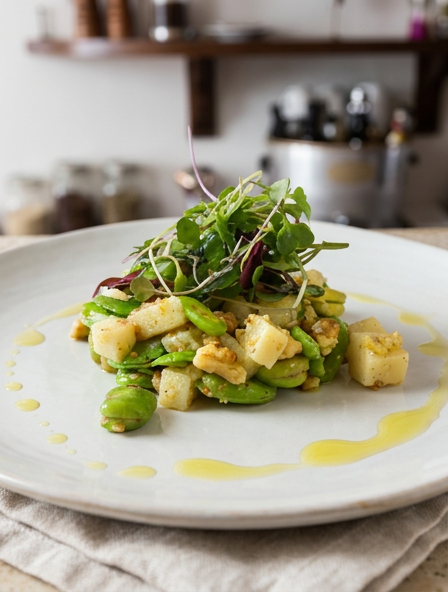
Uses 60 g toasted walnuts in the base recipe with fresh double-peeled fava beans, diced Tuscan Pecorino, extra virgin olive oil, salt, and freshly ground black pepper.
Open connected recipeTC-NUT-WALNUT-001 with inventory ID walnuts. Recipe aliases include toasted walnuts, walnut halves, walnut pieces, and noci.
Every linked recipe must inherit tree nuts: walnut so menus, production sheets, station pick lists, and guest-facing notices remain aligned.
Return to the Ingredients Library to browse connected food records.
Research sources