White Quinoa
The mildest and most delicate of the three. It generally cooks softer and fluffier, making it ideal for salads, pilaf-style preparations, breakfast bowls, fillings and applications where a gentle flavor is preferred.
Quinoa (Chenopodium quinoa Willd.) is an ancient Andean seed used in the kitchen much like a cereal grain. Its mild nutty flavor, quick cooking, natural gluten-free status and useful texture make it an excellent foundation for salads, soups, warm bowls, vegetable preparations, stuffings and modern plant-forward menus.
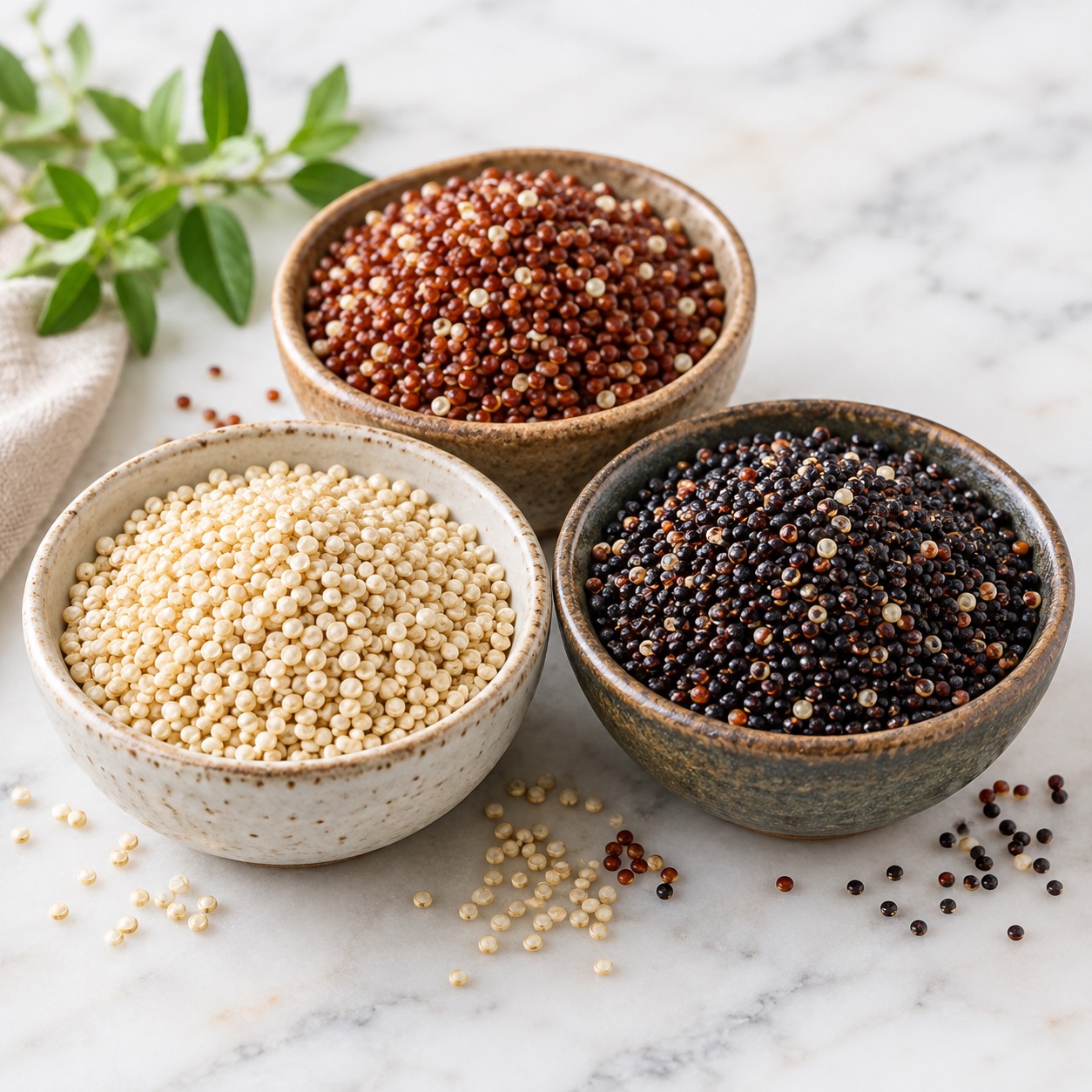
Color influences appearance, flavor intensity, texture and how well the seed holds its shape after cooking.
The mildest and most delicate of the three. It generally cooks softer and fluffier, making it ideal for salads, pilaf-style preparations, breakfast bowls, fillings and applications where a gentle flavor is preferred.
Slightly earthier and firmer than white quinoa. It holds its shape well after cooking, which makes it especially useful in composed salads, buffet service, vegetable bowls and recipes where distinct grains are desirable.
Typically the firmest and most pronounced in flavor, with a deeper earthy-nutty character. It adds dramatic visual contrast and works well in mixed-grain salads, vegetable plates and contemporary garnishes.
Quinoa is native to the Andean region of South America, with major centers of origin and diversity in Peru and Bolivia. FAO describes quinoa as one of the principal foods of Andean peoples before the Incas and notes its long relationship with Indigenous agricultural knowledge. Archaeological and historical research places quinoa cultivation thousands of years into the past, and FAO identifies the Lake Titicaca region of Peru and Bolivia as especially important in its domestication history.
The United Nations declared 2013 the International Year of Quinoa, recognizing the crop's cultural importance, nutritional value, genetic diversity and adaptability.
Scientific name: Chenopodium quinoa Willd.
Botanical use: Seed / pseudocereal.
Culinary use: Prepared like a grain, but quinoa is not a true cereal grass.
Platform location: Tuscany Cuisine currently organizes this page in the /academy/ibrary/legumes/ directory for operational continuity, while the culinary taxonomy identifies quinoa as a pseudocereal.
Typical values per 100 g cooked quinoa. Values vary slightly by variety, brand and cooking method.
1. Inspect the quinoa and rinse under cool running water when the product is not clearly labeled pre-rinsed.
2. For a fluffy salad texture, begin around 1 part dry quinoa to 1.75–2 parts liquid, adjusting for the brand, variety and desired finished texture.
3. Bring to a gentle simmer, cover, and cook until the liquid is absorbed and the seed is tender, commonly about 14–18 minutes.
4. Remove from heat and rest covered about 5 minutes. Fluff with a fork rather than compressing the grains.
5. For cold salads, spread in a shallow pan to release heat efficiently, then refrigerate promptly before final assembly.
Flavor: mild, nutty, earthy, slightly grassy.
Texture: tender but lightly chewy, with a small pop when correctly cooked.
Best balance: bright acids, fresh herbs, tomatoes, cucumber, roasted vegetables, citrus, olive oil, mushrooms, legumes, nuts and seeds.
Chef's objective: keep the grains separate, seasoned and light. Overcooked quinoa becomes dense and loses the clean texture that makes it useful in composed salads.
Quinoa moves easily between cold, warm, savory and plant-forward menu applications.
Combine with tomato, cucumber, herbs, citrus, vinaigrettes, roasted vegetables, legumes or grilled vegetables.
Use beneath vegetables, mushrooms, seafood, poultry or braised preparations as a lighter alternative to rice.
Add cooked quinoa to vegetable soups, stuffed peppers, squash, cabbage or composed vegetarian fillings.
Cook gently with milk or plant-based beverages and finish with fruit, spices, nuts, seeds or honey.
Use contrasting red or black quinoa to introduce color, texture and visual definition to contemporary plates.
Blend white, red and black quinoa for a more complex appearance and a balance of fluffy and firm textures.
Operational standards for restaurant, catering and professional kitchen use.
| Stage | Quality Standard | Kitchen Guidance |
|---|---|---|
| Purchasing | Dry, clean seeds with even color and no stale or rancid aroma | Choose intact packaging; for gluten-sensitive service, use a verified gluten-free product. |
| Receiving | No moisture, pests, damaged packaging or off odors | Record lot/vendor as required by purchasing and receiving procedures. |
| Dry Storage | Cool, dry, sealed and protected from humidity | Rotate stock FIFO and follow manufacturer best-by guidance. |
| Cooked Storage | Cool promptly and hold refrigerated | Use shallow pans for efficient cooling and follow the operation's food-safety time/temperature controls. |
| Service | Loose, separate grains with clean flavor | Dress cold salads close enough to service to preserve vegetable and herb texture. |
cooked_quinoa remains valid until the permanent quinoa identity is approved and synchronized.
The Ingredient Library record now has a direct culinary use case inside the Salad Station.
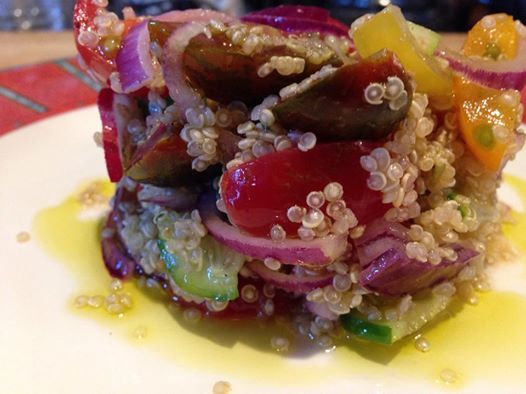
Cooked quinoa with baby heirloom tomatoes, Persian cucumber, red onion, celery, basil, red wine vinegar and extra-virgin olive oil.