A professional ingredient page for frisée—the finely frilled, pleasantly bitter chicory prized for crisp texture, pale tender hearts, elegant salad volume and classic garde-manger applications.
🥬 Chicory Family❄️ Cool-Season Green🥗 Salad Station🌿 Pleasant Bitterness🔗 Live Ingredient Record
Frisée is a curly-leaved form of cultivated endive. It develops narrow, deeply cut leaves with crisp texture and a pleasantly bitter flavor that becomes milder toward the pale inner heart.
The ingredient is frequently confused with other chicories, but professional kitchens value frisée for its distinctive frilled structure, light volume and ability to carry vinaigrette without collapsing quickly. Young or small heads are often marketed as baby frisée.
Origin and history
Endive and related chicories have a long history around the Mediterranean and across Europe. Over centuries, growers selected forms for leaf shape, bitterness, tenderness and blanching response. Frisée developed as the finely curled or deeply cut form of endive and became especially established in French and western European salad traditions.
Its culinary identity grew from a practical winter-green role into a classic restaurant salad ingredient. The pale center, created naturally by the plant’s tight growth or enhanced through blanching, is prized for tenderness and reduced bitterness.
Frisée and the chicory family
Frisée belongs to the broader chicory group but is not the same as Belgian endive, radicchio or escarole. Escarole generally has broader, flatter leaves, while frisée has much narrower, more deeply divided leaves.
For platform accuracy, Tuscany Cuisine keeps frisée as its own ingredient identity because its yield, texture, flavor and salad applications differ from other leafy greens.
Cultivation and blanching
Frisée is a cool-season leafy crop. It performs best when temperatures are moderate, soils are fertile and moisture remains even. Excessive heat can increase bitterness, accelerate bolting and reduce quality.
Production stage
Professional growing note
Establishment
Seed may be direct-sown or started as transplants, depending on climate and production system.
Vegetative growth
Consistent soil moisture supports tender leaves and reduces stress.
Head development
Plants form open to semi-compact heads with increasingly pale interior leaves.
Blanching
Outer leaves may be tied or covered so the center receives less light, producing a paler, more tender and less bitter heart.
Harvest
Cut when leaves are crisp and the center has developed the desired pale color and tenderness.
Market forms and types
Baby Frisée
Young, smaller heads or tender leaves with fine texture; ideal for delicate composed salads and garnish work.
Mature Frisée
Larger heads with stronger bitterness and more pronounced green outer leaves; useful for classic bistro salads and warm dressings.
Blanched Frisée
Heads intentionally light-excluded near maturity to create a pale-yellow heart with milder flavor and softer texture.
Mixed Chicory Packs
Commercial salad blends may combine frisée with radicchio, escarole or other greens for bitterness, color and volume.
Seasonality
Frisée is strongest as a cool-weather crop. Fall through spring is the traditional quality window in many temperate regions, while protected agriculture and modern distribution can make it available year-round.
Cool conditions generally support crisper texture, better color contrast and a more balanced bitterness.
Best quality standards
Choose heads with crisp, springy leaves and a clean pale-yellow to cream center. Outer leaves should be fresh green without slime, heavy browning, wilt or excessive dehydration.
The cut base should look fresh rather than dark or dried. Avoid heads with severe decay, collapsed texture or excessive field grit trapped deep in the leaves.
Storage and professional handling
Store frisée cold and humid, protected from crushing and dehydration. Keep it unwashed until production when possible. Once washed, dry thoroughly because trapped moisture shortens shelf life and weakens vinaigrette adhesion.
For service, trim the base, separate leaves, wash carefully in cold water and spin dry. Hold under refrigeration with minimal compression.
Flavor management
Frisée’s bitterness works best when balanced rather than hidden. Fat, salt, acidity and mild sweetness all help shape its flavor. Eggs, bacon, mustard, citrus, vinegar, nuts, cheese, apples and pears are classic companions.
Warm vinaigrettes can soften the outer leaves slightly while leaving the pale center crisp, creating a useful temperature and texture contrast.
Nutrition overview
Frisée is low in calories and contributes dietary fiber, folate, vitamin A carotenoids, vitamin K and potassium. Like other dark and bitter leafy greens, it can provide substantial micronutrient value with very little energy.
~17 kcalEnergy / 100 g raw
~1.3 gProtein
~3.4 gCarbohydrates
~3.1 gFiber
Nutrient
Approximate amount
Professional note
Vitamin K
High
One of the more notable micronutrients in endive-family greens.
Folate
~140 µg
Supports the strong nutrient density of leafy greens.
Potassium
~310 mg
Useful mineral contribution in vegetable-forward menus.
Vitamin A activity
Meaningful
Provided largely through carotenoids in the greener leaves.
Nutrition values are approximate and can vary with cultivar, maturity and growing conditions.
Professional culinary uses
Frisée is primarily used raw in composed salads, mixed greens and garnish. Its structure provides height and volume without requiring large weight. It is especially effective with mustard vinaigrettes, citrus dressings, eggs, bacon, roasted vegetables, goat cheese, blue cheese and nuts.
A classic French direction is frisée with lardons, a poached egg and warm vinaigrette. Modern applications include seafood salads, root-vegetable salads and refined small plates.
Usage in Carrot & Celery Root Salad
In Recipe 350, baby frisée functions as the finishing bitter green. The soft bitterness lifts the sweet carrot, earthy celeriac and lemon-Dijon vinaigrette while adding vertical structure and freshness to the plate.
The base production uses 160 g frisée for 4 servings, washed and dried before service.
Ingredient record in the Tuscany Cuisine platform
Frisée is now established as a dedicated Ingredient Library identity so the same record can be used across recipe pages, Live Inventory, Salad Station, search, purchasing and future menu-costing systems.
This identity replaces the neutral fallback previously used for Baby Frisée in Recipe 350 and provides a consistent ingredient code, inventory ID, icon and education page for future salad recipes.
Connected Recipe 350
Carrot & Celery Root Salad uses frisée as its fresh finishing green alongside julienned carrots, celeriac, parsley and lemon-Dijon vinaigrette.
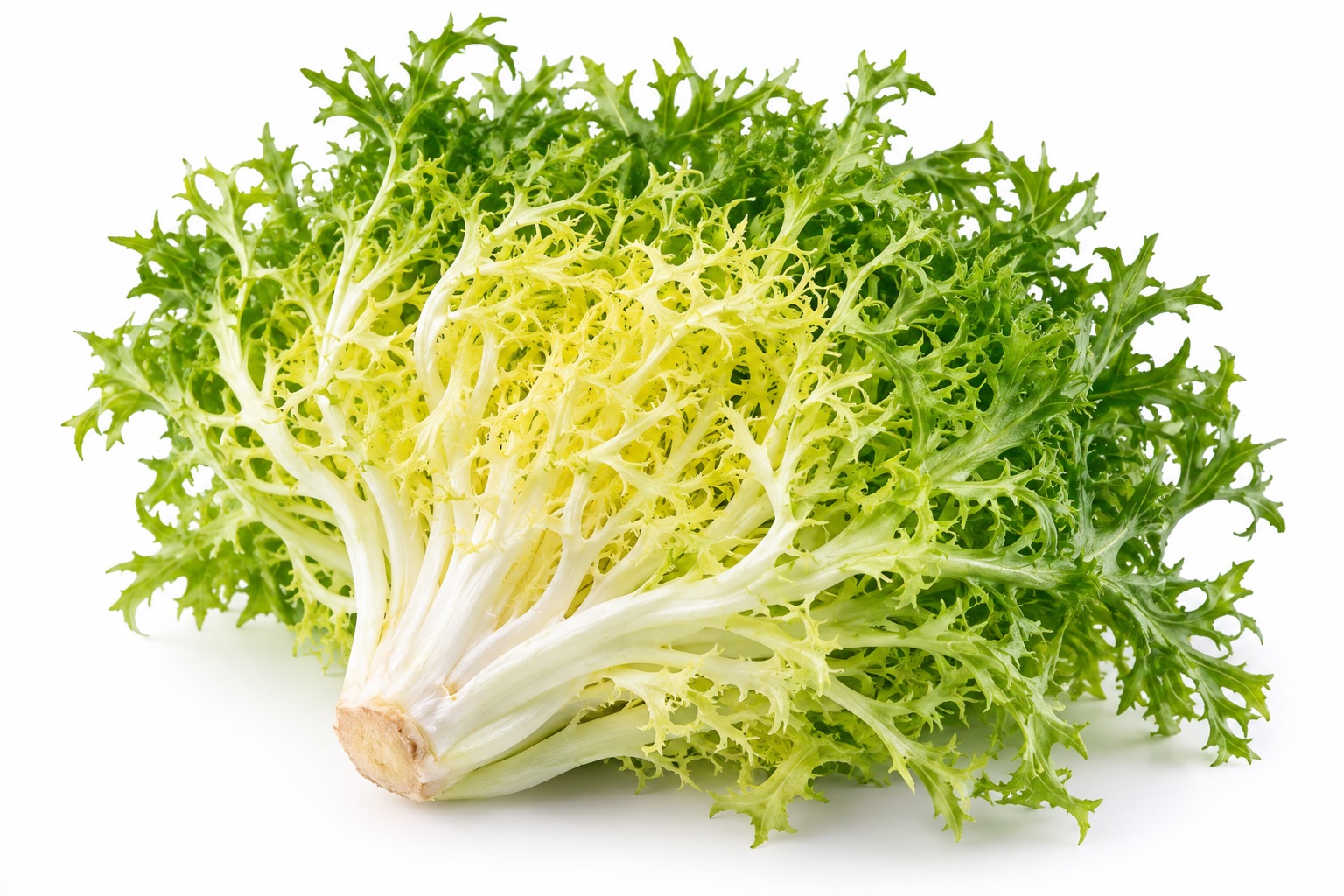 Frisée / Curly Endive Ingredient Icon