Connected ingredient system
Permanent Mizuna identity
This record is designed to replace the temporary `mizuna_leaves` fallback used by current salad recipes while preserving that inventory ID for continuity.
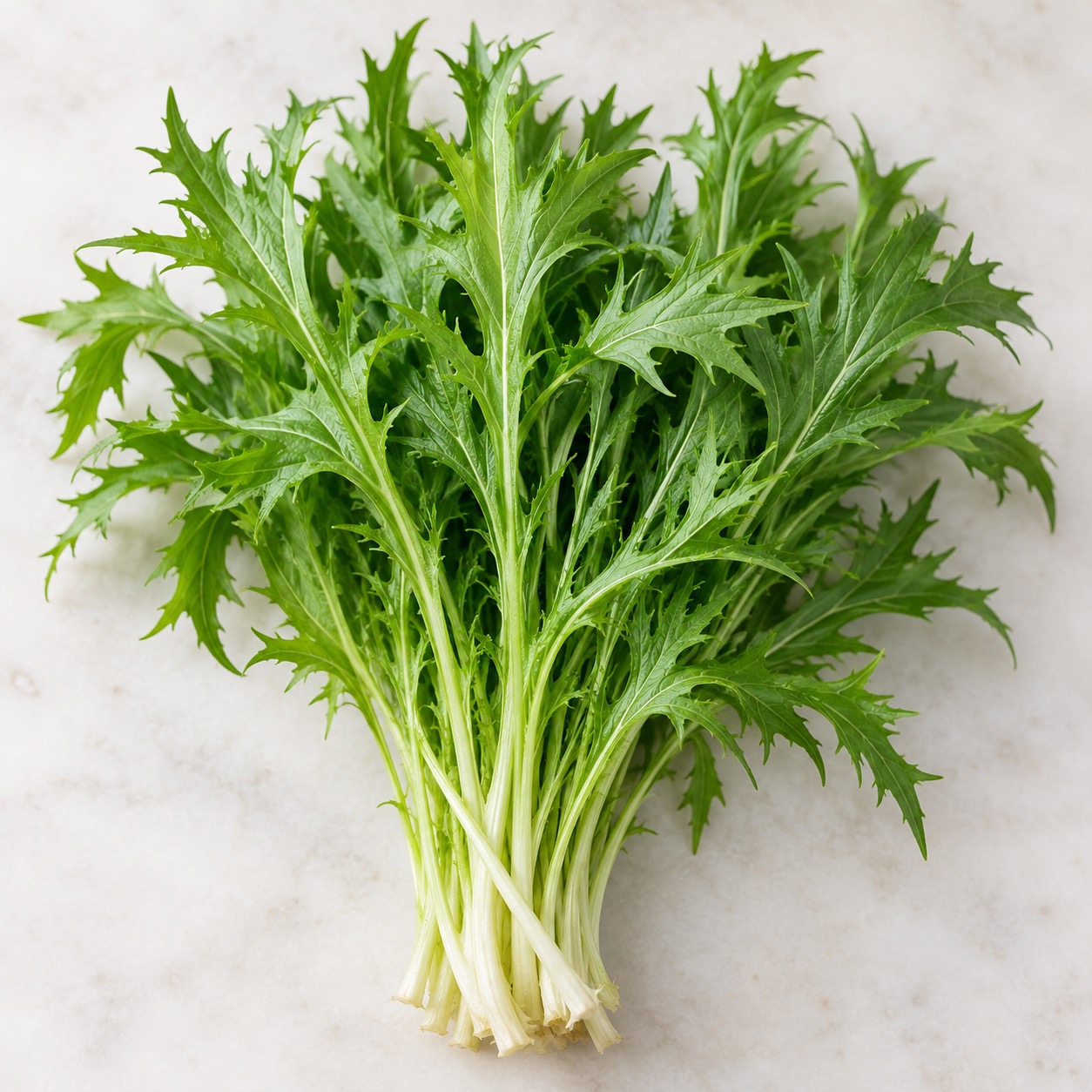
Mizuna Leaves
VEG-LEAF-MIZUNA-001
Vegan
Vegetarian
Gluten-free ingredient
Dairy-free ingredient
Leafy green
- Ingredient IDmizuna_leaves
- Inventory IDmizuna_leaves
- Master codeVEG-LEAF-MIZUNA-001
- Icon IDTC-ICON-LEAF-MIZUNA-001
- Icon/academy/ibrary/lettuces/mizuna.webp
- Page/academy/ibrary/lettuces/Mitzuna.html
- CategoryProduce → Leafy Greens → Mizuna
- Base unitgram (g)
- StationProduce / Salad Station
Platform destinations
Recipe pagesReady · icon + ingredient page
Salad StationReady · prep and garnish mapping
Menu BuilderReady · leafy-green identity
Live InventoryReady · mizuna_leaves
Purchasing & ReceivingReady · bunch / case / gram workflow
Ingredient icon systemReady · mizuna.webp
Master SearchReady · aliases + flavor + nutrition
Culinary AcademyReady · Japanese greens reference
The permanent code is VEG-LEAF-MIZUNA-001. Keeping mizuna_leaves as the inventory ID means existing recipes can be upgraded without breaking current Live Inventory mapping.
Origins & Japanese tradition
A deeply Japanese leafy-green tradition
Mizuna belongs to the Brassica rapa complex. Kew treats older names such as Brassica mizuna as synonyms within Brassica rapa, while Japanese food-composition references identify Mizuna under the Brassica rapa Japonica Group.
- Botany
Mizuna is a Brassica related to turnips, bok choy and other members of the broad Brassica rapa species complex.
- East Asia
Modern horticultural sources describe Mizuna as an Asian green thought to have originated in China, while its strongest culinary identity developed in Japan.
- Japan
Mizuna has been grown in Japan for centuries. Its Japanese name is commonly translated as “water greens,” reflecting its historical agricultural association.
- Kyoto
Mizuna is associated with Kyoto vegetable traditions and appears among the greens connected with the cultural identity of Kyoyasai.
- Today
It is now grown widely as a baby salad green, bunching green and cool-season specialty vegetable for restaurants and home kitchens.
Seasonality
Best when the weather is cool
Mizuna is naturally suited to cool conditions, making spring and fall its strongest open-field seasons in many temperate regions.
Spring
Excellent quality. Cool temperatures support tender leaves, crisp stems and moderate pepperiness.
Summer
Possible with shade, succession planting and protected production, but heat can increase stress and speed quality decline.
Fall
Prime season. Light frost tolerance and slow bolting make Mizuna especially reliable for autumn harvest.
Winter
Available in mild climates, tunnels, greenhouses and protected systems; growth slows as temperatures fall.
Purchasing & quality
Look for tension, color and crisp stems
Crisp leaves
Choose leaves that stand with natural tension rather than collapsing or appearing limp.
Clean green color
Avoid excessive yellowing, blackened edges, slimy tissue or translucent breakdown.
Firm pale stems
Stems should be crisp, juicy and intact without mushiness, deep bruising or splitting.
Dry surface
Excess surface moisture accelerates decay. Receive and store greens cold, clean and as dry as practical.
Preferred receiving standard
- Bright green, deeply serrated leaves
- No slime, mold, decay or strong off-odor
- Minimal yellowing and minimal mechanical damage
- Crisp stems with no dehydration collapse
Kitchen sorting
- Baby leaves: salads and garnish
- Medium leaves: salads, sandwiches, light wilting
- Mature leaves: sautéing, soup, broth and stir-fry
- Trim tough or bitter stem ends when necessary
Flavor profile
Gentler than mustard greens, livelier than lettuce
The character changes with age and temperature. Young Mizuna is delicate; mature leaves carry more mustard personality.
PrimaryMild mustard · fresh green · lightly peppery
SecondaryTangy · vegetal · faintly earthy
TextureCrisp stems · tender frilly leaves · good salad structure
Heat effectCooking softens pepperiness and brings out a sweeter brassica note
Nutrition
Very low calorie, unusually nutrient-dense
The values below come from Japan’s official Standard Tables of Food Composition for raw Mizuna leaves.
Nutrition Facts
Reference values per 100 g raw edible portion
Calories23
Water91.4 g
Protein2.2 g
Total Fat0.1 g
Total Carbohydrate4.8 g
Dietary Fiber3.0 g
Potassium480 mg
Calcium210 mg
Iron2.1 mg
Vitamin C55 mg
Vitamin K120 µg
Folate140 µg
Beta-carotene1300 µg
55 mg per 100 g in the Japanese food-composition reference, making fresh Mizuna a strong vitamin C contributor.
210 mg per 100 g in the same reference table, unusually notable for a leafy green.
Raw Mizuna supplies both vitamin K and folate, two nutrients commonly associated with green leafy vegetables.
The official table reports beta-carotene, while current Brassica research also tracks carotenoids and other phytonutrients across Mizuna cultivars.
Nutrient values can vary with cultivar, maturity, growing conditions and harvest stage. Baby-leaf and microgreen values should not be assumed identical to mature-leaf values.
Professional culinary usage
Built for both raw and lightly cooked applications
Raw salads
Use baby or tender leaves for composed salads, mixed greens, fruit salads and seafood salads where the frilly shape adds volume and visual movement.
Seafood
Excellent with shrimp, tuna, scallops, crab and white fish because the gentle mustard note adds freshness without masking delicate proteins.
Citrus & fruit
Pairs naturally with mango, pear, apple, citrus, melon and stone fruit; fruit sweetness softens Mizuna's mild peppery edge.
Wilted greens
Toss into warm dressings, sauté briefly in olive oil, or wilt under hot proteins. Minimal heat preserves shape and color.
Japanese preparations
Use in soups, broths, noodle bowls, hot pot, stir-fries, pickled preparations and simple dressed greens.
Garnish & plating
Its serrated leaves create height and texture on modern plates. Use smaller leaves where delicacy matters.
Chef pairing map
Acids
Lemon, yuzu, rice vinegar, white wine vinegar, Champagne vinegar.
Fats
Extra-virgin olive oil, avocado oil, sesame oil, nut oils in restrained amounts.
Aromatics
Shallot, chervil, basil, mint, ginger, scallion, sesame, mild chile.
Storage & shelf life
Cold, dry and protected from crushing
Mizuna is tender enough for salad service but sturdier than many delicate lettuces. Quality still depends heavily on cold-chain control and moisture management.
| Condition | Handling | Tuscany Cuisine guidance |
|---|---|---|
| Whole / bunch Mizuna | Refrigerate promptly. Keep lightly vented and protect from dehydration. | Use a 5–7 day professional quality target; inspect daily. |
| Washed Mizuna | Spin or air-dry thoroughly before storage. Excess free water accelerates decay. | Use sooner than unwashed product; date and rotate FIFO. |
| Baby leaves | Store cold with minimal compression and careful humidity control. | Best used rapidly for maximum texture and visual quality. |
| Cooked Mizuna | Cool rapidly, cover and refrigerate. | Use according to your approved cooked-vegetable holding plan. |
Penn State notes that properly refrigerated Mizuna may keep for more than a week after harvest. Tuscany Cuisine uses the more conservative 5–7 day kitchen quality target above for operational rotation.
Chef FAQ
Working with Mizuna
Is Mizuna a lettuce?
No. Mizuna is a Brassica, not a true lettuce. It belongs to the same broad plant group as turnips, bok choy and many mustard-type greens.
Is Mizuna spicy?
Usually only mildly. Baby leaves are fresh and gently peppery, while mature leaves can develop a stronger mustard note.
Can Mizuna replace arugula?
Often yes when you want a milder peppery green with more frilly texture. Mizuna is usually less assertive than arugula and can be more forgiving in delicate seafood salads.
Can Mizuna be cooked?
Yes. It works especially well with quick sautéing, light wilting, stir-frying, soups and hot pots. Avoid overcooking if you want to preserve color and structure.
Research foundation
Selected sources
- Royal Botanic Gardens, Kew — Brassica mizuna synonymy and Brassica rapa taxonomy
- Penn State Extension — Mizuna origin, Japanese tradition, flavor, growing season, harvest and storage
- Japan Ministry of Education, Culture, Sports, Science and Technology — Standard Tables of Food Composition: raw Mizuna leaves
- University of Illinois Extension — Mizuna flavor and use as a fall salad green
- PubMed — Mizuna cultivar research on minerals, carotenoids, vitamin C and vitamin K