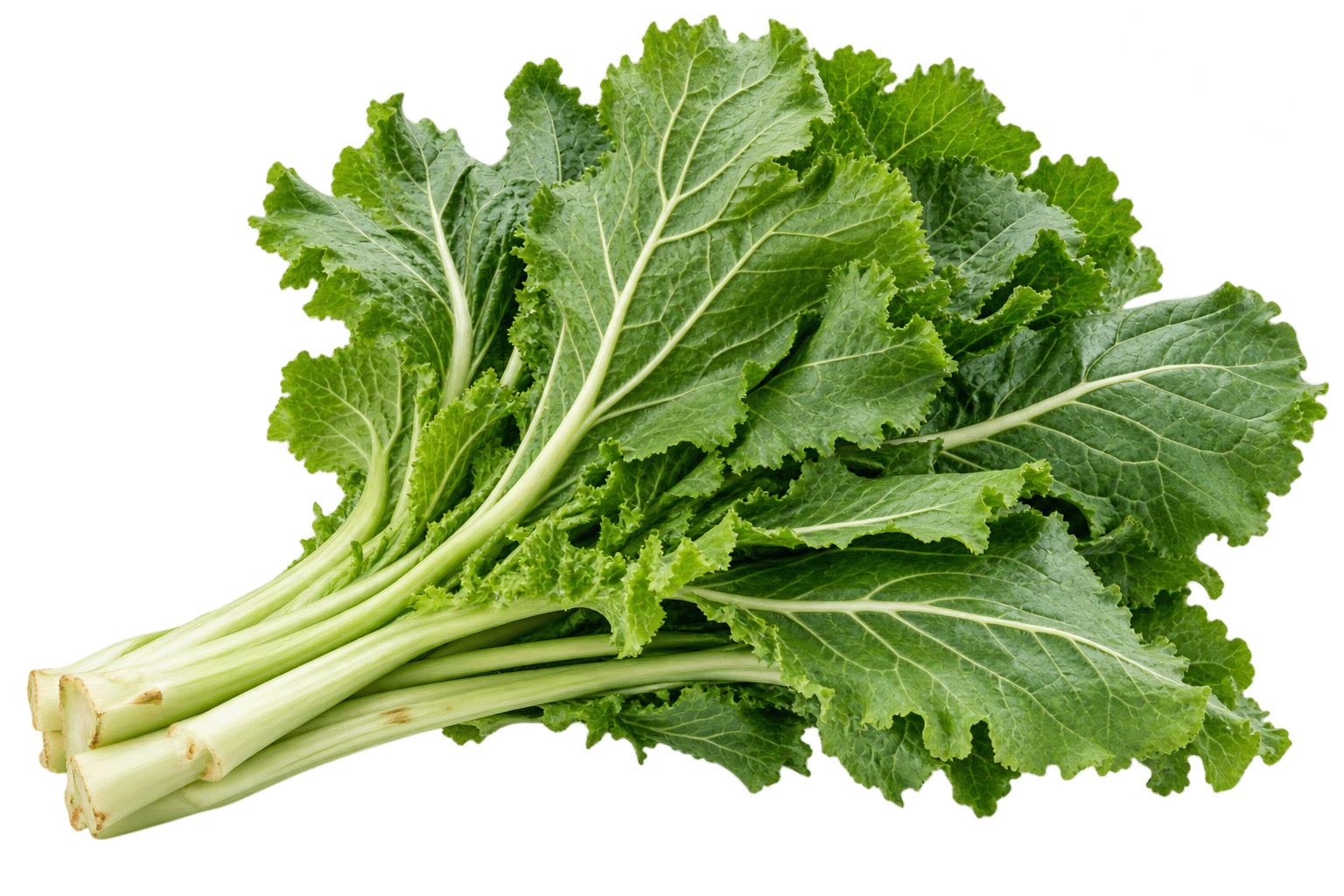
Ingredient Profile
History & Culinary Background
Mustard greens belong to the broad mustard and cabbage family. Culinary and agricultural records associate Brassica juncea with long cultivation in Asia and Europe, where both the leaves and seeds became valuable foods. Today, mustard greens appear in many food traditions, including South and East Asian cooking, Mediterranean-influenced vegetable cookery, and the Southern United States.
The USDA notes that mustard greens have been grown for both their seeds and edible leaves. Their strong flavor made them especially useful in soups, stews, braises, and combinations with sweeter vegetables. Young leaves can also be eaten raw.
Flavor Profile
Raw mustard greens can taste sharp and spicy. Heat softens their pungency, while longer braising rounds the flavor and emphasizes earthy, savory notes. Younger leaves are typically milder and more suitable for salads.
Culinary Uses
Cook quickly with olive oil, garlic, chili, or shallot. Finish with lemon or vinegar.
Slow-cook with stock, aromatics, pork, pancetta, sausage, or legumes.
Add toward the latter part of cooking so the leaves retain structure and color.
A gentle method that softens the greens while preserving a clean vegetable character.
Use small, young leaves raw; mature leaves are generally more enjoyable cooked.
Pair with ginger, garlic, sesame, soy, fermented flavors, or chilies.
Excellent Pairings
Pork shank, pork shoulder, sausage, bacon or pancetta, beans, lentils, chickpeas, potatoes, sweet potato, onions, garlic, apples, squash, corn, chili, lemon, vinegar, olive oil, butter, and aged cheeses.
Preparation & Chef Technique
- Choose crisp, vibrant leaves without yellowing, decay, or excessive wilting.
- Separate leaves and wash thoroughly; curly varieties can trap soil and grit.
- Trim very thick or fibrous lower stems if the recipe requires a tender texture.
- For sautéing, keep the greens slightly wet after washing; the residual water helps create steam.
- For braising, add enough liquid to soften the greens without drowning their flavor.
- Balance bitterness with acidity, sweetness, fat, or naturally sweet vegetables.
Nutrition — Raw Mustard Greens
Approximate USDA values per 100 g raw edible portion:
| Nutrient | Amount |
|---|---|
| Energy | 27 kcal |
| Protein | 2.86 g |
| Carbohydrate | 4.67 g |
| Dietary fiber | 3.2 g |
| Total fat | 0.42 g |
| Calcium | 115 mg |
| Iron | 1.64 mg |
| Potassium | 384 mg |
| Vitamin C | 70 mg |
| Vitamin A | 151 µg RAE |
| Vitamin K | 257.5 µg |
Nutrition note: Values vary with variety, maturity, storage, and cooking method. Cooking changes weight and nutrient concentration, so use a cooked-food record when calculating a finished recipe.
Seasonality, Selection & Storage
Season: Mustard greens are cool-season vegetables. In many regions, spring and fall provide the best field conditions; winter harvest is also possible in mild climates or protected production.
Selection: Look for fresh, crisp leaves with strong color and minimal insect damage, discoloration, or coarse, damaged stalks.
Storage: Refrigerate the greens dry and unwashed, loosely wrapped or in a breathable produce bag. Wash shortly before use. For professional kitchens, rotate by delivery date and discard leaves showing slime, decay, or strong dehydration.