Classic Green Romaine
Long, upright green leaves with sturdy pale ribs; a reliable choice for Caesar salads, chopped salads and sandwiches.
Crisp, elegant and versatile — the story of Lactuca sativa Cos Group, from classical tables to contemporary professional kitchens.
History · Seasonality · Varieties · Sizes · Nutrition · Culinary Applications
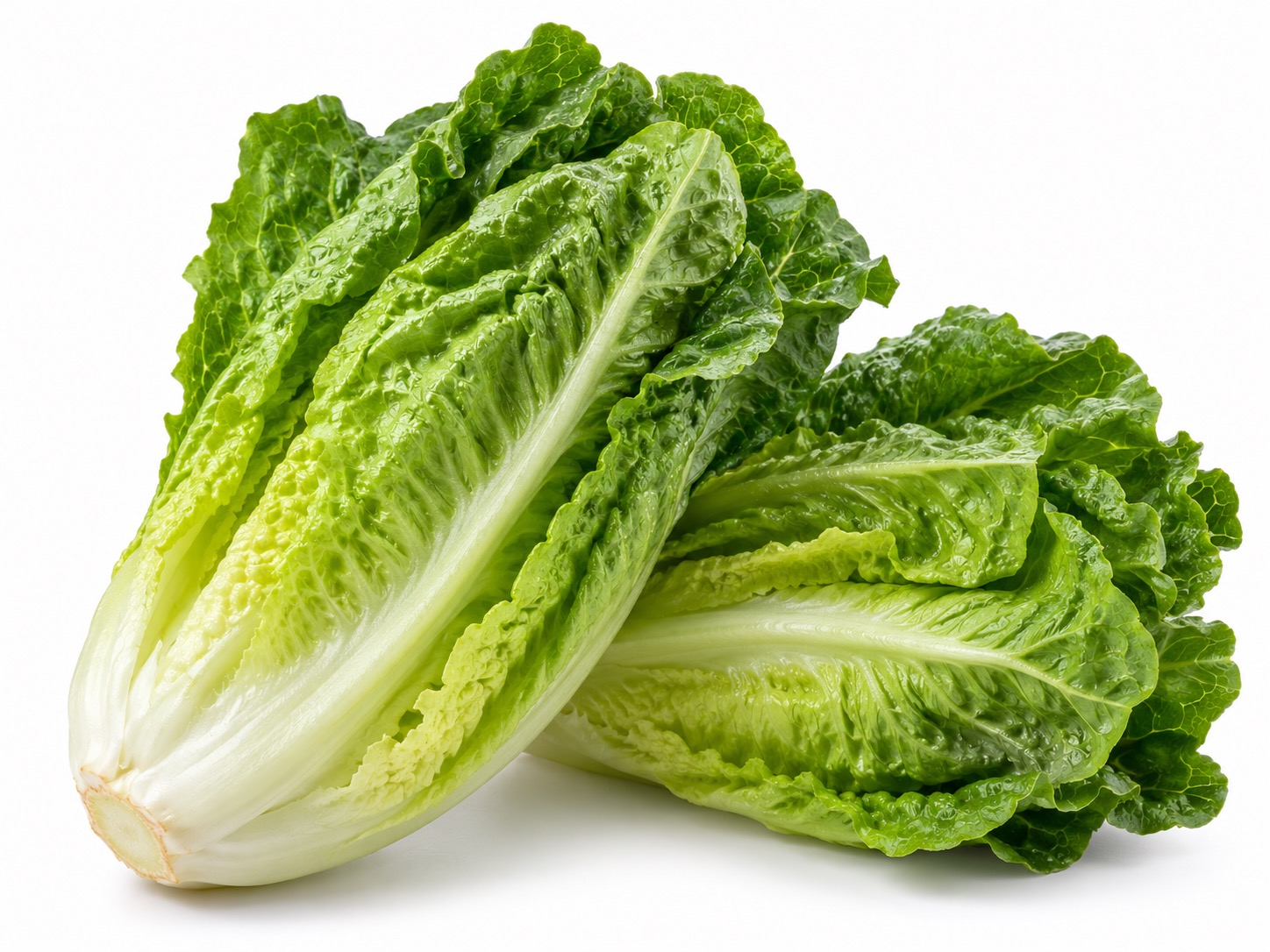
Romaine, also called Cos lettuce or lattuga romana, forms upright heads with long, sturdy leaves and prominent crunchy midribs. The outer leaves bring deeper green color and more assertive vegetal flavor; inner hearts are tender, sweet and notably crisp.
Romaine is best known as the foundation of Caesar salad, but its structure also makes it an excellent lettuce for composed salads, sandwiches, wraps, lightly grilled preparations and plated appetizers.
Lettuce has a long history of cultivation in the Mediterranean region and beyond. Ancient societies valued it as a food crop, and generations of selection produced the modern categories of heading, leaf, butterhead and upright Cos or romaine types.
The common names Cos and romaine reflect historical geographic associations, but they do not establish a single verified birthplace for this particular cultivated type. Romaine became deeply established in Mediterranean and European food traditions and subsequently spread through commercial cultivation to the Americas and other continents.
Romaine's dense upright growth, strong midrib and pleasant bitterness made it useful in both everyday and refined dishes. In the twentieth century it became internationally associated with Caesar salad, traditionally credited to restaurateur Caesar Cardini in Tijuana, Mexico, in 1924.
SpringAutumnMild winter regions
Romaine is generally a cool-season crop. Mild days and cool nights support tender leaves and desirable texture. Hot conditions can encourage bolting and increased bitterness; some cultivars tolerate warmth better than others.
Often year-round in U.S. commerce
Commercial growing regions and staggered production contribute to year-round supply in many markets. Exact local seasons depend on climate, elevation, water availability and growing methods.
Choose upright, well-hydrated leaves with crisp ribs, healthy coloration and intact edges. Avoid slimy tissue, strong off-odors, extensive browning or damaged heads. A freshly trimmed base should look moist rather than heavily desiccated.
Baby leaves can be cut early; full heads are harvested when the plant achieves the target size and firmness for its market. Maturity varies by cultivar and local conditions, often spanning roughly 55–80 days from sowing for full-size heads, rather than a universal fixed schedule.
Romaine describes a lettuce type, not one single cultivar. Seed lines and commercial selections differ in height, leaf shape, color, maturity, resistance traits and suitability for production methods.
Long, upright green leaves with sturdy pale ribs; a reliable choice for Caesar salads, chopped salads and sandwiches.
Trimmed compact inner portions of mature romaine heads. Sweet, densely layered and ideal for halving or grilling.
Small, compact lettuces often used as individual portions. Little Gem is usually marketed as a small Cos/romaine-like type, but classifications and cultivars vary.
Selected types with red or bronze anthocyanin pigmentation, useful for colorful plated salads.
Young, tender leaves harvested before full head development; useful in mixed greens and fine-dining garnishes.
Breeding selections marketed for improved warm-weather performance, though quality still depends on climate and handling.
Examples include Parris Island Cos, Little Gem, Jericho, and Rouge d'Hiver. Availability and the classification of individual seed lines vary by supplier.
| Market form | General description | Chef applications |
|---|---|---|
| Full-size whole head | Complete mature upright head, outer leaves retained | Caesar salads, large salads, slicing and chopping |
| Romaine heart | Compact central portion, usually trimmed | Grilled halves, wedge-style salads, refined plating |
| Mini romaine / Little Gem | Smaller, tight heads; size varies by cultivar | Individual appetizer portions, leaf cups, grilling |
| Baby romaine leaves | Immature leaves, tender texture | Salad blends, delicate garnish, composed dishes |
| Pre-cut / chopped | Ready-prepared leaves; package specifications vary | High-volume service and standardized prep |
Head heights, weights, and case counts differ widely by farm, cultivar, season and distributor. Use actual vendor pack specifications and receiving weights for recipe costing rather than a universal average.
Romaine is a water-rich, low-energy leafy vegetable that contributes vitamin K, provitamin A carotenoids, folate and some vitamin C. Exact values depend on cultivar, cultivation and portion size. Nutritional content can vary between darker outer leaves and pale hearts.
Pronounced crunch in the central rib; flexible, tender leaf tips.
Fresh, mild, slightly sweet, and gently bitter in mature outer leaves.
Hydrating leafy greens with vitamins A and K and folate; naturally low in calories.
Allergen note: Plain romaine is not a major U.S. food allergen; dressings and toppings may contain eggs, fish, milk, wheat, sesame or nuts. Validate the complete dish.
Use cold, thoroughly dried leaves. Dress shortly before service with Caesar dressing and finish with Parmigiano Reggiano and croutons, as appropriate to the recipe.
Halve hearts lengthwise, keeping the core intact; dry, oil lightly and sear briefly cut-side down until lightly charred but still crisp.
Use well-shaped inner leaves as edible vessels for vegetables, seafood or other prepared fillings.
Cut across ribs into even pieces to balance crunch with tender tips. Keep chilled and avoid dressing far ahead of service.
Firm romaine leaves deliver moisture and crisp contrast while keeping their form better than many soft lettuces.
Quickly braise or wilt mature leaves in a pan, or add at the end of a hot preparation to preserve color and texture.
Standardized culinary record for the Tuscany Cuisine ingredient icon library and future Live Inventory matching.
Ingredient ID / slug: romaine-lettuce
/academy/ibrary/lettuces/Romaine-lettuce.webp/academy/ibrary/lettuces/Romaine.htmlRomaine is commonly served raw, so supplier controls, washing, clean equipment and temperature management are essential. Washing reduces some surface contamination but cannot guarantee removal of pathogens. Do not rely on washing to make recalled or contaminated lettuce safe.
For fresh heads that are not marked prewashed, rinse under running potable water; keep raw produce separate from raw meat, poultry and seafood. FDA guidance says commercially packaged ready-to-eat or prewashed greens do not require rewashing.
Restaurant storage: Cut leafy greens are time/temperature-control-for-safety foods under the FDA Food Code. Maintain at 41°F (5°C) or below in foodservice, and follow the applicable local food code, date marking and recall procedures. For home refrigeration, FDA recommends 40°F (4°C) or below.
Continue exploring the Tuscany Cuisine Ingredient Library and the Recipe Directory.
Reference resources: UC Davis Postharvest — Romaine and Loose-Leaf Lettuce · NC State Extension — Lettuce · FDA — Selecting and Serving Produce Safely · FDA — Cut Leafy Greens Temperature Control.