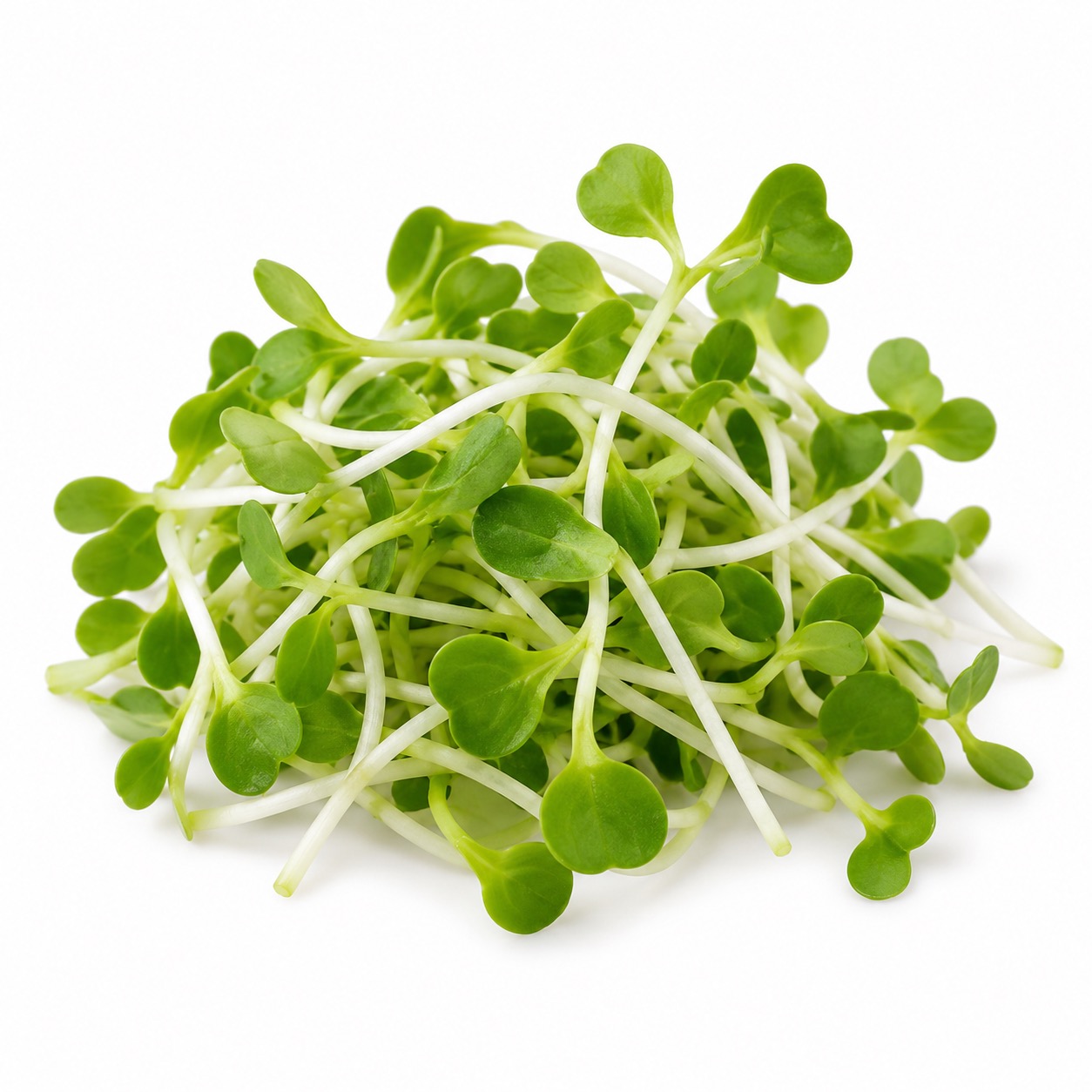
Tender young edible shoots used for freshness, height, color and delicate texture in salads,
composed plates and professional garnish work. This page connects their culinary history,
cultivation, quality, nutrition, food safety and exact Tuscany Cuisine system identity.
Sprouts are seeds that have begun germinating and are harvested at a very early stage of plant development.
The edible portion may include the young stem, cotyledons, root and sometimes remnants of the seed. The term
can refer to many species, including alfalfa, clover, radish, broccoli, mustard, sunflower and several beans.
On Tuscany Cuisine, Green Sprouts is a practical mixed-garnish identity for tender green shoots
used on finished dishes. It is intentionally separated from the White Bean Sprouts / mung-bean-sprout identity
already used elsewhere in the Ingredient Library. When a recipe depends on one exact sprout species, that species
should receive its own ingredient identity rather than being hidden inside this general garnish record.
History of Sprouted Foods
Germinating seeds for food is an ancient technique that long predates the modern restaurant garnish.
Humans have eaten germinated seeds for thousands of years. Historical and scientific reviews describe long-standing
traditions of sprouted seeds and grains in Eastern food cultures, while modern Western interest expanded strongly in
the twentieth century as sprouts became associated with fresh-food, vegetarian and health-oriented cooking.
The contemporary fine-dining use of young shoots and microgreens grew from the same principle—harvest the plant at an
early stage when texture is tender, color is vivid and flavor is concentrated. Today, chefs use young greens not only
as decoration but also as a deliberate flavor and texture component of a plated dish.
Sprouts vs. Microgreens
They are related, but they are not the same production stage.
Sprouts
Sprouts are usually produced by soaking and germinating seed in a warm, humid environment and are harvested very early.
The entire young seedling is often consumed. Depending on species and system, harvest may occur in only a few days.
Microgreens
Microgreens are grown longer, normally until the cotyledons are fully developed and sometimes until the first true
leaves appear. They are generally harvested by cutting the shoot above the growing medium. Many microgreens are ready
within roughly one to three weeks depending on species and conditions.
Tuscany Cuisine naming rule: the Green Sprouts record is reserved for the recipe-facing mixed garnish.
A supplier product that is specifically labeled broccoli sprouts, radish sprouts, alfalfa sprouts or a microgreen mix should
be recorded precisely in purchasing whenever that distinction affects recipe identity, allergen review, nutrition or flavor.
Cultivation & Germination
Fast growth, moisture control, clean seed and sanitation determine both quality and safety.
Seed selection: begin with food-grade seed intended for sprouting or edible young-green production.
Hydration: seeds absorb water and metabolic activity resumes.
Germination: warmth and moisture encourage the radicle and shoot to emerge.
Light management: depending on the desired product, shoots may be exposed to light so cotyledons green and flavor develops.
Harvest: sprouts are harvested very young; microgreen-style shoots are cut later, often after cotyledons expand.
Cooling: rapid refrigeration after harvest helps preserve crisp texture and slows deterioration.
Commercial production can use drums, trays, hydroponic systems or growing media. Uniform germination, clean irrigation water,
good drainage and careful sanitation are essential because young seedlings are delicate and highly perishable.
Common Green Sprout Families
The exact flavor and nutritional profile depends heavily on the seed species.
Alfalfa & Clover
Mild, delicate and tender; commonly used in salads, sandwiches and fresh garnish applications.
Radish
Fresh, peppery and more assertive; useful when a chef wants visual height plus a mild horseradish-like bite.
Broccoli & Brassica
Green, vegetal and lightly pungent; suited to salads, egg dishes, poultry, seafood and vegetable plates.
Mustard & Cress
Sharper and more spicy; best used in smaller quantities as an intentional seasoning garnish.
Sunflower Shoots
More substantial and succulent with a mild nutty-green character; often used as a young shoot or microgreen.
Mixed Green Sprouts
A chef or supplier blend selected for balanced color, tenderness and flavor. This is the closest match to the Tuscany Cuisine Green Sprouts identity.
Quality Selection & Purchasing
Purchase sprouts as a highly perishable ready-to-eat produce item.
Quality point
Look for
Avoid
Color
Fresh bright green cotyledons or species-appropriate color
Yellowing, browning or dark wet patches
Texture
Crisp, turgid stems and leaves
Collapsed, slimy or waterlogged shoots
Aroma
Clean, fresh, green aroma
Sour, fermented, musty or sulfurous off-odors
Package
Cold, clean, intact package with traceable lot information
Warm product, damaged packaging or excess free liquid
Supplier
Approved supplier with food-safety controls and traceability
Unverified source or poor temperature control
Nutrition
Green sprouts are generally light, water-rich foods, but exact nutrient values vary substantially by species and harvest stage.
General Nutritional Character
Many sprouts are low in calories and fat while contributing fiber, vitamins, minerals and plant phytochemicals.
During germination, seed metabolism changes rapidly, altering carbohydrates, proteins, organic acids and bioactive compounds.
Different seed families can produce very different final nutrient profiles.
Why This Page Does Not Use One Fixed 100 g Panel
A generic “green sprouts” mix is not one botanical species. Alfalfa, radish, broccoli, clover and mustard sprouts do not
share identical calorie, vitamin or mineral values. For menu nutrition, Tuscany Cuisine should calculate from the exact
supplier/species record whenever precise nutrient data is required.
Nutrition-system principle: keep this page as the mixed garnish identity, but connect exact USDA FoodData Central
data to future species-specific identities so nutrition calculations remain accurate instead of assigning one species' values to every sprout.
Food Safety & Professional Handling
Raw sprouts require more caution than ordinary garnish greens.
Important: warm, humid sprouting conditions can also support rapid growth of harmful bacteria if contamination is
present on seed or in the production environment. Washing alone should not be treated as a guarantee that raw sprouts are safe.
Use approved suppliers, refrigeration, traceability and your applicable food code or company HACCP procedures.
Receive sprouts cold and verify package condition, lot information and use-by date.
Store refrigerated in a clean ready-to-eat produce area and protect from raw proteins and cross-contamination.
Use clean gloves, tongs and sanitized containers during plating.
Keep service batches small and return reserve product promptly to refrigeration.
Discard sprouts showing slime, strong off-odors, discoloration or temperature abuse.
Follow current public-health guidance for guests at increased risk from foodborne illness.
Professional Culinary Uses
Use sprouts for freshness and flavor—not merely as decoration.
Salads
Fold lightly into tender greens or place on top at service to preserve loft and crispness.
Composed Plates
Create height and a fresh visual focal point on poultry, seafood, vegetable and grain preparations.
Sandwiches & Tartines
Add moisture, texture and clean green flavor to breads, crostini and open-faced preparations.
Eggs & Brunch
Finish omelets, poached eggs, frittatas and savory breakfast plates just before service.
Soups & Bowls
Use as a last-minute topping so heat softens them slightly without destroying their fresh character.
Flavor Pairings
Citrus, olive oil, sesame, soy sauce, mild vinegars, chicken, fish, eggs, avocado, tomato, cucumber and fresh herbs.
Ingredient Icon & Platform Identity
The new icon gives Green Sprouts an exact recipe, inventory and library identity instead of a neutral fallback.
Green Sprouts Identity
This dedicated icon is designed to replace the neutral system fallback currently used by Recipe 351 and future recipes.
It provides one recognizable visual identity for the mixed green sprout garnish across recipes, search, Menu Builder,
Salad Station, Live Inventory and purchasing systems.
TC-SPROUT-GREEN-001 • TC-ICON-SPROUT-GREEN-001
Ingredient ID:green_sprouts Inventory ID:green_sprouts Icon path:/academy/ibrary/lettuces/greensprout.webp Ingredient page:/academy/ibrary/lettuces/greensprout.html Category: Produce • Subcategory: Sprouts / Garnish Base unit: g
Tuscany Cuisine Ingredient Record
Green Sprouts now has a dedicated platform-ready record that can replace the last neutral fallback ingredient on
Chicken Salad with Seasonal Vegetables once greensprout.webp and this page are uploaded to the live site.