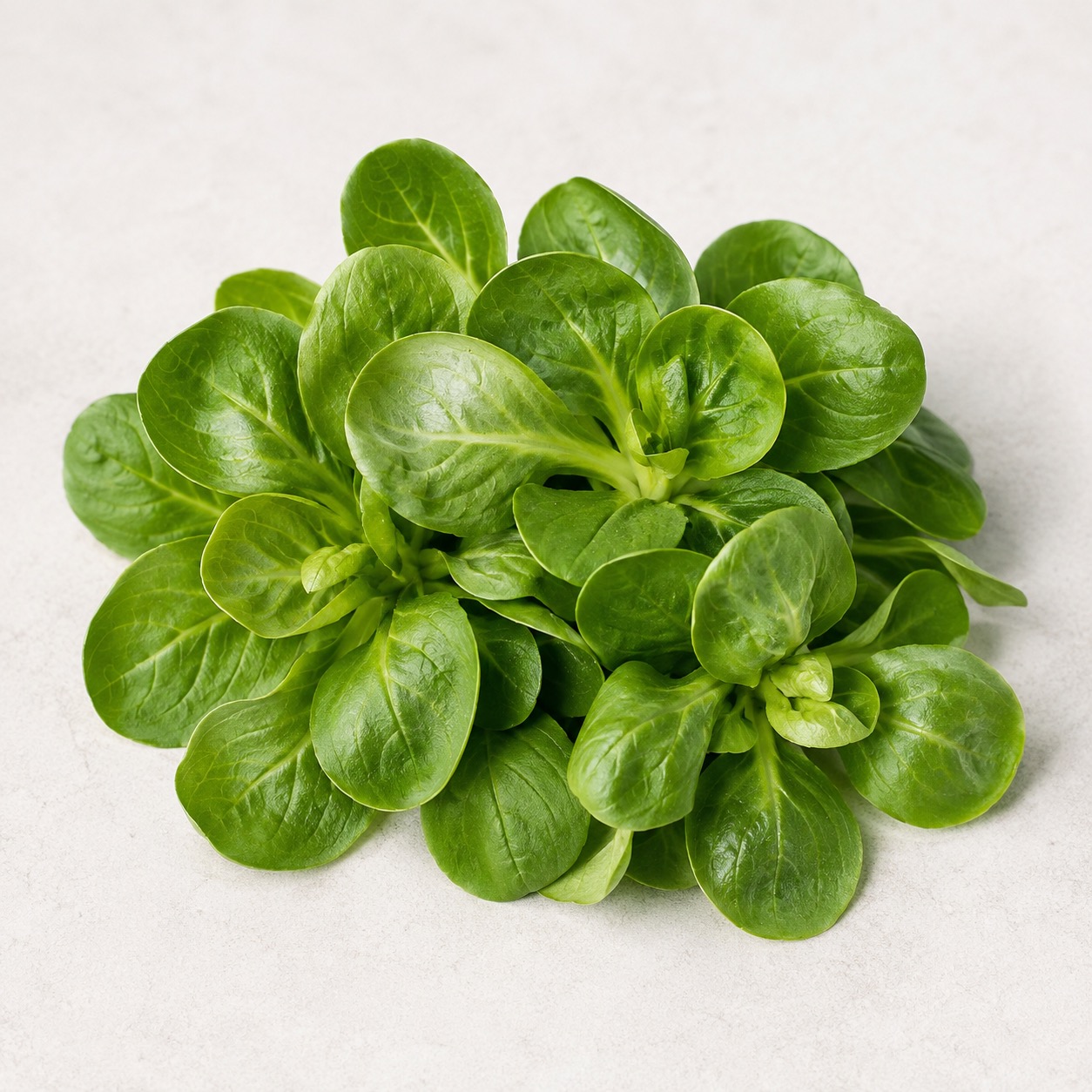
A tender cool-season green with small spoon-shaped leaves, a delicate nutty flavor
and a long European tradition in winter salads, composed appetizers and refined garnish work.
Mâche is a small-leaved salad green usually harvested as a compact rosette.
Its leaves are tender, smooth and rounded, with a mild, slightly nutty flavor
that is softer and less peppery than arugula. Although it is commonly grouped
with lettuces in culinary markets, mâche is not a true lettuce of the genus
Lactuca. Its accepted botanical name is Valerianella locusta.
In professional kitchens, mâche is valued for its elegant appearance and delicate
texture. It is especially suited to composed salads and appetizers where the leaves
can remain visually intact rather than being chopped or heavily dressed.
Origins & Culinary History
A modest field plant that became a prized cool-season salad green.
Mâche is native across parts of Europe, western Asia and North Africa and has long grown
naturally in fields and cultivated ground. Its English name “corn salad” reflects its
historical association with cereal fields, where it could appear among grain crops.
The name “lamb's lettuce” refers to the small, soft leaves and compact rosette form.
Over time the plant moved from a gathered field green into market gardening and
commercial salad production. It became especially associated with European winter
salads, including French mâche, Italian valerianella or songino,
and German Feldsalat. Modern protected cultivation and refrigerated distribution
allow it to be marketed well beyond its traditional field season.
Cultivation & Seasonality
Mâche performs best under cool conditions and is traditionally associated with autumn, winter and early spring.
Autumn
Excellent sowing and harvesting period in many temperate regions.
Winter
Traditional peak season; flavor and leaf quality are excellent in cool weather.
Early Spring
Strong quality before increasing heat encourages rapid growth and bolting.
Summer
More difficult outdoors in hot climates; protected or controlled production may be used.
Growing Conditions
Mâche prefers cool temperatures, fertile well-drained soil and even moisture.
It is commonly direct-seeded and harvested either as whole young rosettes or as
tender leaves, depending on market specification.
Protected Production
Tunnels, greenhouses and other protected systems can extend the season and improve
cleanliness and consistency. Commercial salad production may also use carefully
managed baby-leaf systems.
Professional purchasing:
choose compact, vibrant green rosettes with crisp stems and leaves. Avoid yellowing,
excessive moisture, bruising, sliminess or crushed leaves.
Professional Culinary Uses
Use mâche where tenderness and visual refinement matter more than aggressive flavor.
Composed Salads
Excellent with restrained vinaigrettes, nuts, apples, pears, citrus, beets,
potatoes, mushrooms and mild cheeses.
Appetizer Garnish
Whole rosettes create a refined green element beside terrines, pâtés,
charcuterie and vegetable preparations.
Warm & Cold Contrast
Pair with warm potatoes, mushrooms, poultry or seafood while dressing the leaves
only at the last moment.
Egg Dishes
Works well with poached eggs, soft eggs, omelets and breakfast-style composed plates.
Cheese Pairings
Its mild flavor allows goat cheese, fresh cheeses and aged cheeses to remain prominent.
Finishing Green
Use untreated or very lightly dressed leaves as a fresh finishing element on plated dishes.
Cleaning, Storage & Handling
Mâche is delicate and can trap soil near the base of the rosette. Separate and inspect the
clusters carefully, wash in cold water as needed, then dry thoroughly. A salad spinner can
be useful when operated gently.
Store refrigerated and protected from crushing. Excess surface moisture accelerates decay,
while overly dry conditions cause wilting. In professional operations, keep washed mâche
cold, well drained and covered, and dress it immediately before service.
Service principle:
mâche should be handled as a fragile finishing green. Heavy dressing and long holding
times quickly reduce volume, gloss and visual quality.
Nutrition Context
Like many tender leafy greens, mâche is low in energy density and contributes water,
fiber, carotenoids, folate and other micronutrients. Exact values depend on variety,
growing conditions, harvest maturity and serving size.
Characteristic
General profile
Energy
Low-calorie leafy green
Water
High moisture content
Fiber
Contributes dietary fiber
Micronutrients
Provides a range of vitamins and minerals typical of leafy greens
Culinary impact
Best preserved by minimal cooking or raw service
Names & Similar Salad Greens Around the World
Mâche has many regional names and several culinary relatives, although not all are botanically related.
France · Mâche
A classic winter salad green, often served with simple vinaigrettes and seasonal produce.
Italy · Valerianella / Songino
Common in mixed salads and delicate plated preparations.
Germany & Central Europe · Feldsalat
Widely appreciated as a cool-season salad leaf.
United Kingdom · Lamb's Lettuce / Corn Salad
Used as a tender baby leaf in salads and garnish mixes.
Related Valerianella Species
Other species of Valerianella occur in Europe, Asia, North Africa and elsewhere,
although V. locusta is the best-known cultivated salad type.
Culinary Alternatives
Baby spinach, watercress, miner's lettuce, purslane and tender arugula can occupy a similar
menu role, but each has a different botanical identity and flavor profile.
Important classification note:
mâche is commonly sold beside lettuce, but it is not a true lettuce. Tuscany Cuisine keeps it
under Produce / Lettuces & Greens for operational organization while preserving
its correct botanical identity.
Tuscany Cuisine Platform Ingredient Record
Mâche now has a dedicated ingredient identity so the same record can be reused across
recipes, Live Inventory, purchasing, receiving, station preparation and future analytics.
Canonical name
Mâche / Lamb's Lettuce
Ingredient code
mache_lambs_lettuce
Inventory ID
mache_lambs_lettuce
Icon ID
TC-ICON-MACHE-LETTUCE
Category
Produce
Subcategory
Lettuces & Greens
Base unit
g
Icon path
/academy/ibrary/lettuces/mache.png
One Ingredient · One IdentityProduceLettuces & GreensLive InventoryRecipe ConnectionAntipastiSalad Station
Current Recipe Usage
The Chicken & Mushrooms Terrine uses 60 g of mâche in the base 4-serving recipe as
the fresh salad component served with the sliced terrine, tomato and balsamic glaze.
This identity can now be reused anywhere mâche appears in future salads, appetizers,
vegetable preparations or garnish specifications. The ingredient code and inventory ID
should remain unchanged so recipe scaling, ingredient icons and Live Inventory all refer
to the same canonical record.