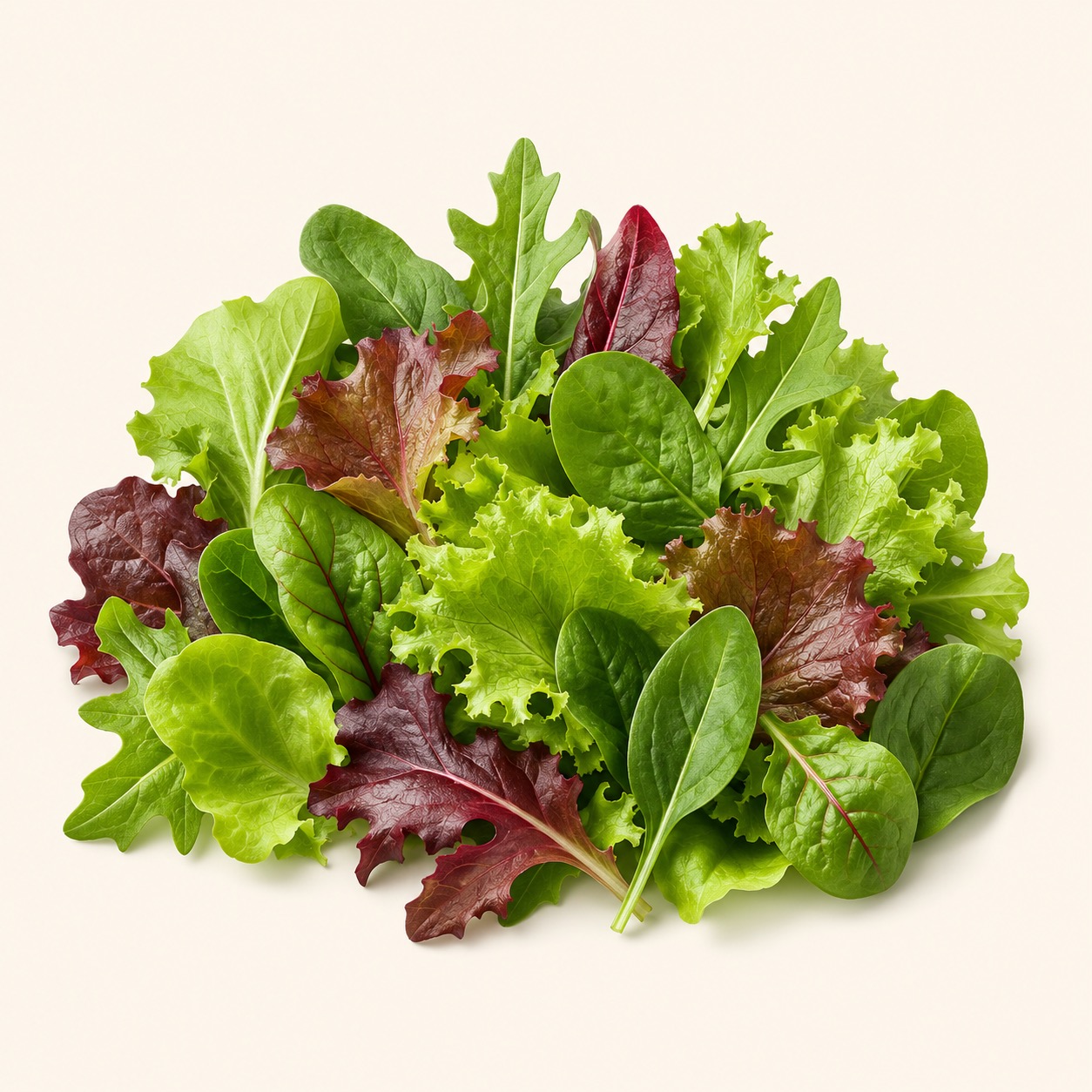
A flexible blend of tender salad leaves selected for color, texture and flavor balance.
Mixed greens can range from mild baby lettuces to peppery arugula, tender spinach,
bitter chicories and red-leaf accents.
Spring MixMesclunBaby Leaf MixTender Mixed GreensSalad Mix
What Are Mixed Greens?
Mixed greens are a culinary blend rather than a single botanical ingredient.
The mix is assembled from two or more tender salad leaves to create a balanced
combination of color, texture, bitterness, sweetness, pepperiness and visual volume.
The exact composition can change with season, supplier, growing region and kitchen specification.
A professional mix may include baby lettuces, arugula, baby spinach, tender chard,
mustard greens, mizuna, frisée, radicchio or other young leafy vegetables.
Tuscany Cuisine treats Mixed Greens as one operational ingredient identity
when a recipe calls for a prepared blend, while individual leaves maintain their own
separate identities elsewhere in the Ingredient Library.
From Mesclun to Modern Spring Mix
A mixed-leaf idea that moved from seasonal garden greens into global professional foodservice.
The French culinary term mesclun traditionally refers to a mixture of young salad greens.
Classical and regional mixes varied according to what was tender and available, often combining
mild leaves with more assertive or bitter greens. The concept is important: a successful blend
should taste more complete than any one leaf alone.
Modern commercial spring mix follows a similar principle but is often standardized for
large-scale production, refrigerated distribution and consistent visual presentation.
Depending on the supplier, a case may contain several baby-leaf varieties chosen for color,
shelf performance and seasonal availability.
Chef principle:
“mixed greens” is not a fixed recipe. Always evaluate the actual leaves in the case before
deciding how much acidity, fat, salt and garnish the salad needs.
Typical Leaves in a Professional Mix
The exact composition varies; these are common culinary components rather than a required formula.
Baby Green Lettuce
Mild, tender leaves provide volume, sweetness and a neutral base for stronger greens.
Red Leaf / Oak Leaf
Burgundy and bronze tones bring contrast, softness and a refined visual character.
Arugula / Rucola
Adds peppery flavor and elongated leaf shapes. Use proportionally when a delicate mix is desired.
Baby Spinach
Smooth, darker leaves add body and a mild mineral character.
Frisée / Chicory
Curly texture and gentle bitterness create volume and complexity.
Radicchio & Red Chicories
Contribute bitterness, crunch and deep red-purple color in small amounts.
Mizuna
Fine serrated leaves can add texture and a mild mustard-like note.
Baby Chard
Tender leaves and colored stems bring visual interest and a soft earthy flavor.
Seasonal Specialty Greens
Suppliers may include additional baby brassicas, mustards or tender local leaves as availability changes.
Seasonality & Supply
Individual leaves have their own seasons, while modern mixed-green programs can be supplied year-round.
Spring
Excellent natural season for many tender baby leaves and delicate salad varieties.
Summer
Available through regional rotation and protected production; heat can shorten field-leaf quality.
Autumn
Cooler weather supports excellent texture, color and flavor in many salad greens.
Winter
Chicories and cool-season leaves can perform very well; protected growing extends supply.
Foodservice Purchasing
Purchase by specification rather than name alone. Compare leaf size, red-to-green ratio,
degree of bitterness, stem length, moisture, usable yield, washed or unwashed status
and the supplier's expected shelf life.
Chef-Customized Mix
For signature salads, build the blend in-house from individual greens.
This gives better control over flavor, color, cost and plate identity and makes it easier
to adjust seasonally without changing the finished dish concept.
Professional Culinary Uses
Mixed greens work best when the dressing and garnish respect the tenderness of the leaves.
Composed Appetizers
Use as a fresh counterpoint to cured fish, terrines, charcuterie, cheeses and vegetable preparations.
Salad Courses
Dress lightly with vinaigrette or citronette and build contrast with vegetables, fruit, nuts or cheese.
Seafood
Excellent with cured salmon, tuna, shrimp, crab, scallops and delicate white fish preparations.
Warm & Cold Contrast
Pair with warm mushrooms, roasted vegetables, potatoes or proteins while keeping the leaves cool and crisp.
Plated Garnish
A small, intentionally dressed tuft can add height, freshness and color without overwhelming the main component.
Tasting Menus
Choose smaller tender leaves and restrained dressing for precise, elegant portioning.
Dressing Strategy
Because a mixed blend contains leaves with different surface textures, a dressing that is perfect
for one variety may be too heavy for another. Start with less dressing than you think you need,
toss gently, evaluate gloss and seasoning, then adjust.
Blend character
Dressing direction
Very tender baby lettuces
Light citronette or delicate vinaigrette; dress immediately before service.
Arugula-forward
Fruit, balsamic, lemon, Parmigiano or olive-oil-driven dressings can balance pepperiness.
Chicory / radicchio-forward
Slightly richer dressings, nuts, cheese or sweet-acid components help balance bitterness.
Spinach-forward
Can accept a little more body, but baby spinach still wilts quickly after seasoning.
Seafood accompaniment
Keep acidity bright and the quantity controlled so the greens refresh rather than dominate.
Cleaning, Storage & Handling
Mixed greens are highly perishable because the blend contains young, tender leaves with different
moisture and bruising tolerances. Inspect every case for crushed leaves, yellowing, excess moisture,
sliminess, decay and off odors.
If the product is not labeled ready-to-eat, wash according to your operation's food-safety procedure
and dry thoroughly. Keep greens refrigerated, protected from crushing and away from standing water.
Use shallow containers when practical and avoid compressing the leaves under heavy product.
Professional service rule:
hold the greens cold and dry, then dress as close to service as possible.
Salt and acidic dressing rapidly pull moisture from delicate leaves and reduce volume.
Nutrition Context
Mixed greens are generally low in energy density and contribute water, fiber and micronutrients,
but exact nutrition varies significantly because the product is a blend. A mix rich in spinach,
chicory or deeply colored leaves will not have the same nutrient profile as a mix dominated by
pale baby lettuce.
Characteristic
General profile
Energy
Generally low-calorie before dressing and garnishes
Water
High moisture content
Fiber
Contributes dietary fiber
Micronutrients
Varies with the proportion of lettuce, spinach, chicories, brassicas and other leaves
Finished salad nutrition
Often influenced more by dressing, cheese, nuts, cured meats and other garnishes than by the greens themselves
Mixed Greens, Spring Mix & Mesclun
These names overlap in the marketplace, but the recipe specification should always define the desired result.
Mixed Greens
Broad culinary term for a combination of salad leaves. It may be very simple or highly varied.
Spring Mix
Common modern retail and foodservice term for pre-blended young salad leaves; composition varies by supplier.
Mesclun
Culinary term associated with a mixture of young tender greens, traditionally selected for contrasting flavors and textures.
Baby Leaf Mix
Often emphasizes harvest stage and leaf size rather than a specific flavor formula.
Chef's Mix
An in-house blend built to the restaurant's own specification and seasonal requirements.
Microgreens Are Different
Microgreens are harvested at a much earlier growth stage and should remain a separate ingredient identity from mixed salad greens.
Important classification note:
Mixed Greens has no single botanical species. Tuscany Cuisine stores it under
Produce / Lettuces & Greens as an operational blend while preserving
separate ingredient identities for the individual leaves when recipes call for them specifically.
Tuscany Cuisine Platform Ingredient Record
Mixed Greens now has a dedicated ingredient identity so the same icon, inventory ID and recipe
connection can be reused across recipes, Live Inventory, purchasing, receiving, station preparation
and future analytics.
Canonical name
Mixed Greens
Ingredient code
mixed_greens
Inventory ID
mixed_greens
Icon ID
TC-ICON-MIXED-GREENS
Category
Produce
Subcategory
Lettuces & Greens
Base unit
g
Icon path
/academy/ibrary/lettuces/mixedgreen.png
One Ingredient · One IdentityProduceLettuces & GreensLive InventoryRecipe ConnectionAntipastiSalad Station
Current Recipe Usage
The Cured Salmon Salad uses 60 g of tender mixed greens in the base 2-serving recipe.
The greens are arranged with cucumber and grappa-cured salmon, then finished with lemon citronette.
This identity can now be reused anywhere a recipe specifically calls for a prepared mixed-green blend.
When a recipe instead specifies arugula, mâche, spinach, microgreens or another individual leaf,
continue using that ingredient's dedicated identity rather than substituting the Mixed Greens record.