Lombardy · Cremona · Sweet + Pungent

Mostarda di Cremona

A jewel-like Italian condiment of mixed fruit, traditionally candied whole or in large pieces and immersed in a sweet syrup sharpened with mustard. The result is one of northern Italy's most distinctive contrasts: fruit sweetness followed by a clean, aromatic heat.

Cremona · Lombardia Candied Mixed Fruit Mustard-Scented Syrup Bollito Tradition Pantry Ingredient
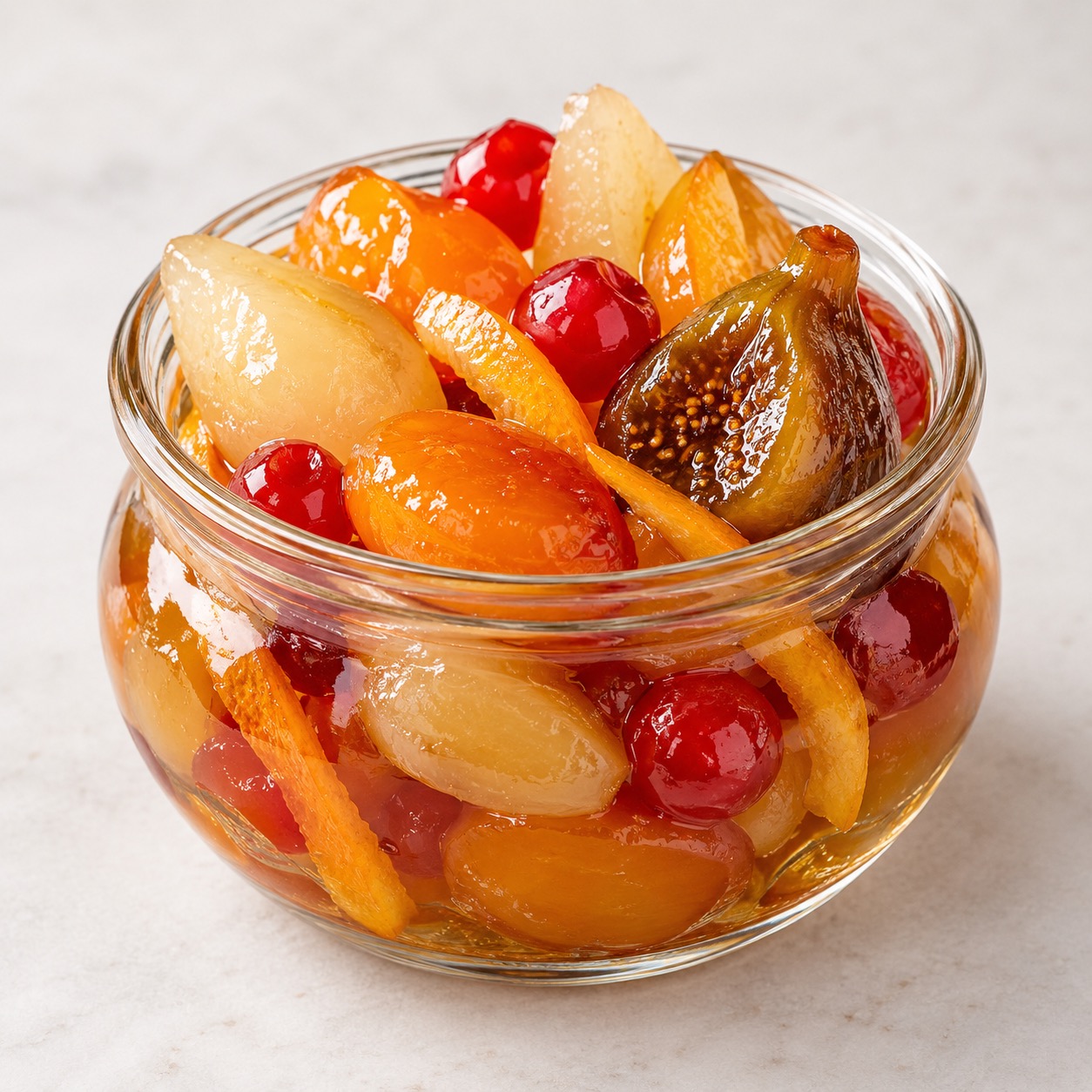
Mostarda di Cremona made with glossy mixed candied fruit in syrup
Mostarda di Cremona · mixed candied fruit with mustard-scented syrup
Ingredient Identity

What Mostarda di Cremona actually is

Not a jam, not a chutney, and not ordinary prepared mustard. Its identity comes from preserved fruit plus mustard pungency.

The Cremonese style

Mostarda di Cremona is distinguished by mixed fruits that remain whole or in conspicuously large pieces. They are candied slowly and then held in a sugar or glucose syrup scented with mustard. The fruit remains visually recognizable, which is part of the product's traditional appeal.

The defining contrast

The first impression is sweet, glossy fruit. The finish brings mustard's volatile, nasal heat. That sweet-pungent duality is what makes Mostarda especially effective beside rich meat, salumi and full-flavored cheeses.

Important: Mostarda is a family of regional Italian preparations. “Mostarda di Cremona” identifies the Cremonese/Lombard style; recipes, fruit blends and mustard intensity vary among artisan and commercial producers.
History & Tradition

From preserved fruit and grape must to a Cremona symbol

The history is broader than a single city, but Cremona developed one of the most recognizable forms of the tradition.

Medieval roots
In Lombard food history, mostarda is connected with techniques for preserving fruit beyond its season. Regional sources describe early preparations based on cooked grape must, later sharpened with mustard.
1397
A well-known documentary reference records a fruit mostarda from Voghera requested for the Visconti court. This is important evidence for the wider Lombard tradition; it should not be read as proof that Cremona invented all forms of mostarda.
Cremona tradition
Cremona became strongly identified with brightly colored mixed fruit, kept whole or in large pieces, candied and packed in mustard-scented syrup. The condiment became a classic companion to the region's bolliti, meats and festive tables.
19th century
Cremona's historical recipe culture includes nineteenth-century manuscripts describing methods used by local confectioners for refined mostarda and fruit candying, evidence of an established specialist craft.
Today
Mostarda remains one of Cremona's signature food traditions, celebrated locally and produced in artisan and industrial forms, with classic seasonal fruits joined by additional modern fruit selections.
Etymology

Why is it called “Mostarda di Cremona”?

The name tells two stories: the older word mostarda, and the particular Cremonese style that became famous.

“Mostarda” and mosto

Italian dictionaries connect mostarda with mosto, grape must. Lombard culinary tradition often explains the older idea through the Latin expression mustum ardens, “burning must,” describing sweet must made pungent by mustard. Over time, the word came to identify several regional mustard-flavored preserves and condiments.

“di Cremona”

The geographic qualifier identifies the Cremonese interpretation: a colorful mixture of candied fruits, usually kept whole or in large pieces, immersed in syrup and perfumed with mustard. That appearance and texture distinguish it from other Italian mostarde that may be sliced, chopped, cooked down or made from one dominant fruit.

Fruit Selection

Which fruits are used?

There is no single fixed mix. Traditional composition follows season, local availability, producer style and the desired balance of color, firmness and sweetness.

Pears & ApplesFirm texture; absorb syrup while keeping recognizable shape.
CherriesBright color and high visual impact; frequently associated with classic mixed jars.
FigsDense sweetness and a rich, seed-studded texture.
Apricots & PeachesPerfumed stone-fruit character and soft golden color.
PlumsSweet-tart balance and deeper fruit tone.
Orange, Mandarin & CitronCitrus aroma, peel bitterness and bright acidity.
Melon & White WatermelonTraditional regional fruit that carries syrup well and adds pale translucent color.
PumpkinA historic northern Italian preserve ingredient with firm texture and excellent sugar absorption.
Modern VariantsSome contemporary producers also use pineapple or other fruits; these should be treated as producer-specific rather than universal.
Chef's principle: the best fruit for mostarda is not simply the sweetest fruit. It needs enough structure to survive candying, enough aroma to remain identifiable after preservation, and enough acidity or bitterness to balance the syrup.
Fabrication

How Mostarda di Cremona is made

This is the traditional production logic. Exact syrup formulas, timings and mustard strength vary by producer.

Select and prepare the fruit

Fruit is chosen at a stage of ripeness that provides flavor but still has enough structural integrity for candying. Depending on the fruit, it may remain whole, be peeled, seeded or cut into large pieces.

Begin the candying process

The fruit is immersed in heated sugar syrup. Water gradually leaves the fruit while sugar moves into its tissues. The process is deliberately slow so the pieces remain bright, firm and recognizable.

Increase syrup concentration

Regional production guidance describes candying over several days, commonly about 4 to 10 depending on the fruit, with the sugar concentration progressively increased. The objective is preservation and texture, not simply surface sweetness.

Drain and prepare the packing syrup

Once the desired candied texture is reached, the fruit is transferred to the syrup used for storage and service. Commercial formulations frequently use sugar and glucose syrup for consistency and stability.

Add the mustard character

The characteristic pungency is introduced during the final “senapatura” stage, traditionally close to packaging. Modern production may use mustard essence or essential oil. Because concentrated mustard flavorings are potent, professional production must follow the supplier's food-use directions and local regulations.

Pack, mature and protect

The fruit is packed so it stays protected by syrup. With time, the sharp mustard note can become rounder while the fruit aroma remains central. Clean handling and correct post-opening storage are essential.

Flavor Profile

Sweet fruit first, aromatic heat second

The pleasure of Mostarda is the tension between preserved fruit and mustard's volatile pungency.

Sweetness

Candying concentrates sweetness and gives the fruit a glossy, almost jewel-like texture.

Fruit identity

A well-made jar should still taste of pear, cherry, fig, citrus or stone fruit rather than only sugar.

Mustard heat

The pungency should rise aromatically through the nose and finish cleanly rather than burying the fruit.

Seasonality

Traditionally made from late summer into autumn

Mostarda was born as preservation: seasonal fruit could be transformed into a condiment for colder months and festive meat service.

Production season

Official Cremona tourism material describes the traditional production window as the end of summer through autumn, when many local fruits, melons, pumpkins, apples and pears are available for preserving.

Service season

The finished preserve is used year-round, but it has an especially strong association with autumn and winter tables, Christmas and New Year meals, bollito, cotechino, cheeses and rich festive foods.

Culinary Usage

Where Mostarda di Cremona belongs in the kitchen

Think of it as an acid-free sweet-pungent counterpoint: a small portion can lift rich foods and reset the palate.

ApplicationWhy it worksProfessional use
Bollito misto / boiled meatsSweetness and mustard pungency cut through gelatin, fat and long-cooked beef flavors.Serve in controlled spoonfuls beside sliced meat; do not flood the platter.
Cotechino and sausagesFruit sweetness balances salt and richness while mustard sharpens the finish.Excellent on holiday plates and tasting portions.
Roasts and braisesCreates contrast against browned meat and concentrated jus.Use whole fruit pieces as garnish and a small amount of syrup as accent.
Cheese courseEspecially effective with creamy, aged or blue cheeses.Pair one or two fruit types with Taleggio, Gorgonzola, Provolone, goat cheese or other assertive cheeses.
Salumi / charcuterieSweet-pungent fruit brings brightness to cured fat and salt.Use sparingly on antipasti boards so mustard does not overwhelm delicate salumi.
Modern savory platingProvides color, texture and aromatic contrast in one ingredient.Dice selected fruit, use restrained syrup, or create a small garnish beside poultry, pork, game or terrines.
Regional Context

Mostarda is not one single Italian recipe

Regional names can describe substantially different textures and fruit treatments.

StyleTypical characterWhat distinguishes it
CremonaMixed candied fruit, whole or in large pieces, in mustard-scented syrupColorful, jewel-like mixed fruit and strong sweet-pungent contrast
VogheraCandied whole fruit in a mustard-flavored preserveHistorically important in Lombardy; a 1397 document records a fruit mostarda from Voghera
MantovaOften sliced fruit or regional single-fruit preparationsStrongly linked with Mantuan cooking and, in some recipes, tortelli di zucca
VicenzaTraditionally more puréed or jam-like, often associated with quince and pearTexture differs markedly from Cremona's large intact fruit pieces
Quality, Receiving & Storage

Professional standards for a high-quality jar

Mostarda is a preserved ingredient, but quality still depends on fruit integrity, clean flavor and correct handling.

Receiving

Verify the product name, fruit mix, mustard ingredient, net and drained weight, seal integrity and best-before information. Reject leaking, swollen or compromised containers.

Quality

Look for glossy syrup, intact fruit, clear color and recognizable fruit aroma. Avoid uncontrolled fermentation, mold, off-odors, excessive mushiness or dull rancid notes.

Storage

Store unopened product according to the manufacturer's label. After opening, keep fruit protected by syrup, use clean utensils, refrigerate when directed and follow the producer's date-marking guidance.

Allergen note: Mostarda contains mustard. Ingredient labels and service communication should identify mustard clearly, especially for guests or markets where mustard is a regulated allergen.
Tuscany Cuisine System

Ingredient identity and operational connection

The page is ready to connect the culinary reference with Live Inventory, recipes, purchasing and station production.

Mostarda di Cremona ingredient icon
Ingredient
Mostarda di Cremona
Ingredient code
mostarda_di_cremona
Inventory ID
mostarda_di_cremona
Icon ID
TC-ICON-MOSTARDA-CREMONA
Base unit
g
Purchase form
Jar / kg / case
Primary station
Pantry
Connected recipe
Traditional Beef Bollito · Recipe 404
Costing rule: when purchased as a finished commercial product, Mostarda di Cremona should normally draw cost from Live Inventory. If Tuscany Cuisine later produces a house-made Mostarda recipe, that house version should instead become a prepared component with its own finished-yield cost.
Research Sources

Historical and production references

The educational sections distinguish documented regional history from broader culinary interpretation.

Culinary production methods vary by manufacturer. This page explains traditional and professional principles rather than prescribing a commercial formulation.

↑