Ingredients Library · Spices & Seasonings

Saffron / Zafferano

Few ingredients carry the history, labor, aroma and prestige of saffron. The spice is made from the dried red stigmas of Crocus sativus, an autumn-flowering crocus cultivated for centuries across the Mediterranean, Iran, Kashmir and other carefully selected growing regions. Used with restraint, saffron gives food a luminous golden color, a complex floral-hay aroma, gentle bitterness and a character unlike any other spice.

🌺 Crocus sativus Autumn Harvest Premium Spice Mediterranean & Asian Traditions ISO 3632 Quality Framework
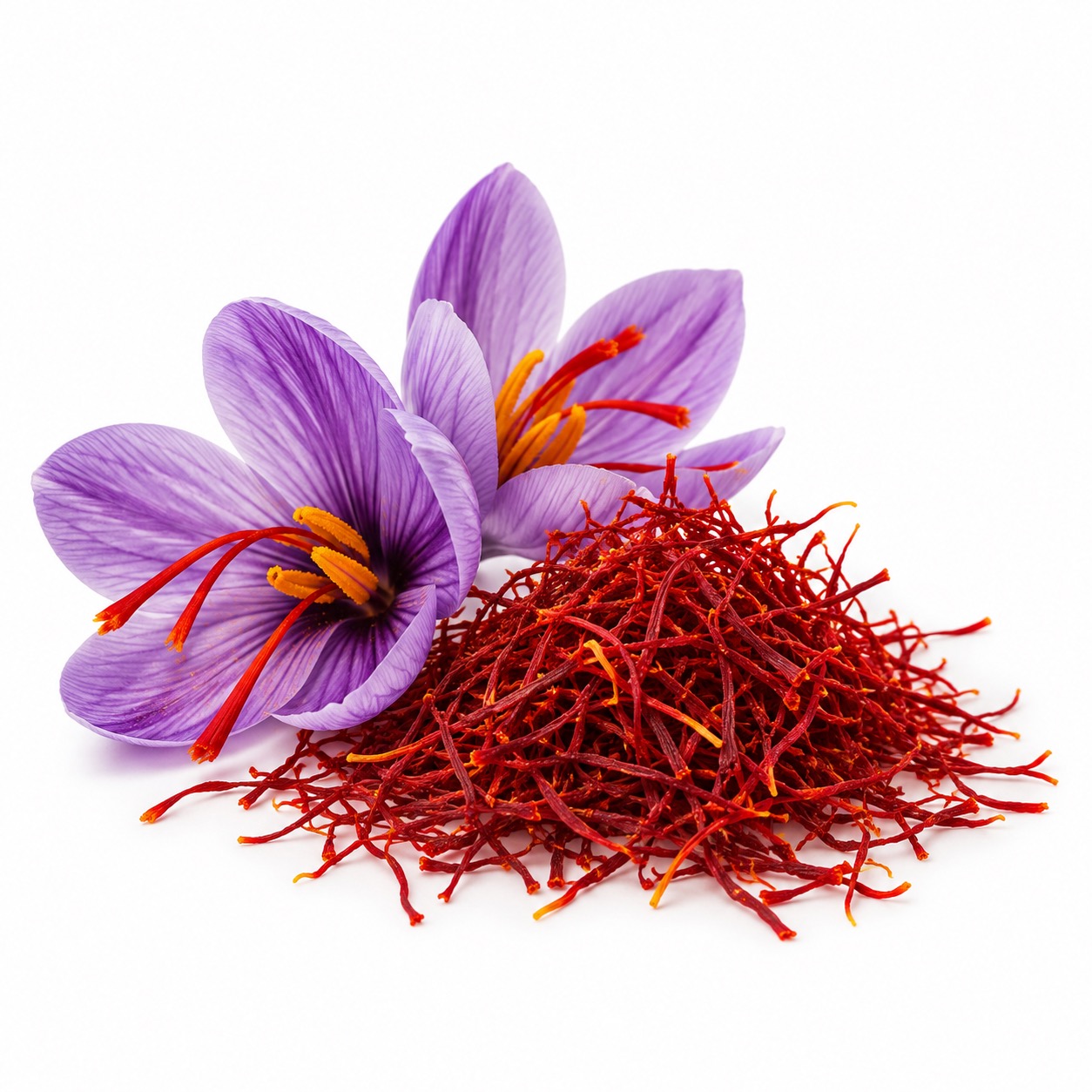
Saffron threads with purple Crocus sativus flowers
Scientific nameCrocus sativus L.
Edible portionDried red stigmas
Primary harvestAutumn
Inventory unitGram (g)

History & Civilization

From Bronze Age flower to “red gold”

Saffron is one of the oldest prestige spices associated with human civilization. Modern botanical and genetic research places the origin of cultivated Crocus sativus in the Greek/Aegean world, most likely arising from the wild Crocus cartwrightianus. Bronze Age art from the Aegean preserves some of the earliest clear imagery of people gathering crocus flowers, demonstrating how deeply the plant was already woven into ritual, medicine, color, fragrance and food culture.

Bronze Age Aegean

Minoan and Aegean imagery documents saffron gathering more than three millennia ago. The crocus became associated with color, fragrance, medicine, status and sacred symbolism.

Ancient Greece & Rome

Classical writers referred to crocus and saffron, while Mediterranean trade carried the spice between regions. Its intense color and aroma gave it value far beyond ordinary seasoning.

Persia and the Iranian plateau

Saffron became deeply rooted in Persian agriculture and cuisine. Iran later developed into the dominant modern producer and remains central to the global saffron economy.

India & Kashmir

Kashmir developed one of the world's most celebrated saffron traditions. Pampore became particularly associated with the crop, and Kashmir Saffron is now protected by an Indian Geographical Indication.

Arab and Mediterranean transmission

Trade, agriculture and Islamic-era food culture helped saffron move through the Mediterranean. Spain developed a particularly strong saffron tradition, especially in La Mancha.

Modern professional kitchen

Today saffron remains a bridge between civilizations: Persian rice, Indian biryani and desserts, Spanish paella, Italian risotto, French seafood dishes and North African preparations all use the spice in distinct culinary ways.

Botany & Identity

A flower cultivated for three red threads

Crocus sativus belongs to the Iridaceae family. The plant grows from a corm and flowers in autumn. Each blossom carries three red stigmas. Those stigmas are separated from the flower and carefully dried; the finished dried stigma is the saffron used by chefs.

Cultivated saffron is sterile and is propagated vegetatively by dividing corms rather than by ordinary seed production. This helps explain why geography, soil, climate, drying method and local handling traditions create meaningful differences in aroma, appearance and strength even though the culinary spice comes from the same species.

Chef's distinction: when the market speaks about saffron “varieties,” many names actually refer to origin, commercial grade, stigma cut or processing tradition, not to completely different culinary species.
Origins, Styles & Commercial Grades

One species, many regional identities

Iran

Iranian saffron

Iran is the center of the modern global saffron trade. Commercial terms such as Negin, Sargol, Pushal and Bunch/Dasteh generally describe how much red stigma versus yellow style is present and how the threads are selected and presented.

India

Kashmir saffron

Kashmiri saffron is prized for deep color, intense aroma and long regional tradition. Market terms such as Mongra and Lacha describe local presentations. Kashmir Saffron is a registered Indian GI product.

Spain

Azafrán de La Mancha

La Mancha saffron has a protected European PDO. Its identity is tied to regional cultivation, thread preparation and roasting/drying traditions. Spain's culinary culture makes saffron inseparable from classic rice preparations such as paella.

Greece

Krokos Kozanis

Greek saffron from Kozani carries PDO protection and continues a long Hellenic relationship with crocus cultivation. It is valued for strong color and aroma and for tightly controlled regional production.

Italy

Italian zafferano

Italy maintains respected regional saffron traditions, including central Italian production. In Italian cuisine saffron is especially famous for risotto alla Milanese, but it also appears in pasta, seafood, breads, sauces and desserts.

Morocco & Mediterranean

North African saffron

Moroccan and other Mediterranean producers contribute distinctive terroir and drying traditions. Saffron may appear in tagines, couscous, rice, broths, festive dishes and aromatic beverages.

Seasonality & Harvest

A very short flower season and a very long day of labor

Saffron is an autumn crop. Exact flowering dates depend on altitude, latitude, temperature and local growing conditions, but harvest is generally concentrated into a short window in fall. Producers must move quickly because the flowers are delicate and quality begins with careful handling immediately after picking.

Flowering

Purple crocus flowers emerge during the autumn flowering period.

Hand picking

Flowers are collected carefully, traditionally during the cooler part of the day before they deteriorate.

Stigma separation

The three red stigmas are separated from the rest of the flower. This labor-intensive step is a major reason for saffron's cost.

Drying or roasting

The stigmas are dried under controlled conditions. Drying develops stability, concentrates aroma and determines much of the finished quality.

Resting, grading and packing

Finished saffron is protected from moisture, light and contamination, then graded and packed for trade.

Flavor Profile

Color, perfume and controlled bitterness

ColorGolden yellow to deep amber infusion; associated largely with crocin pigments.
AromaFloral, warm, hay-like, honeyed and slightly earthy; safranal is a major aroma compound.
TasteDelicate bitterness with floral depth; picrocrocin contributes characteristic taste.

Saffron should not taste aggressively bitter or chemical. The best culinary effect is achieved when the spice is allowed to perfume a liquid and support the food rather than dominate it.

Global Culinary Usage

India, Persia, Spain, Italy and the Mediterranean

Region / CuisineClassic UsesCulinary Role
India & Kashmir Biryani, pulao, kheer, kulfi, milk preparations, sweets, festive rice Perfume, golden color, celebration and luxury. Often bloomed in warm milk or liquid before use.
Iran / Persian cuisine Saffron rice, tahdig, zereshk polo, chicken, sweets and drinks One of the defining aromatic signatures of Persian cooking, especially in rice and ceremonial dishes.
Spain Paella, rice dishes, fish and seafood stews Provides perfume and golden color. Traditional Valencian paella includes saffron threads.
Italy Risotto alla Milanese, seafood, pasta, breads, sauces, desserts Zafferano brings color and aroma while remaining elegant enough for refined first courses.
France / Mediterranean Bouillabaisse, fish soups, shellfish sauces Supports marine flavors with warm floral aroma and color.
North Africa & Middle East Tagines, couscous, rice, broths, festive dishes and sweets Used as both fragrance and color in savory and sweet preparations.
Paella: Spain's official tourism recipe for Valencian paella specifically includes saffron threads. Saffron should perfume the stock and rice, not simply color the finished dish.

Professional Culinary Technique

Bloom the threads before they reach the dish

Best method

Lightly crush or separate the saffron threads and steep them in a small quantity of warm water, stock or milk. Allow the liquid to extract color and aroma, then add both the infusion and threads to the preparation.

Avoid excessive heat

Do not burn saffron in a dry pan or fry it aggressively in hot fat. High heat can flatten the aroma and turn a costly ingredient into bitterness without fragrance.

Use small amounts

Saffron is powerful. Professional recipes should record it by weight whenever possible. “A pinch” is useful in narrative recipes but grams give better costing, purchasing and batch consistency.

Build around the infusion

For risotto or paella, infuse saffron into part of the hot cooking liquid. For pastry or Indian sweets, warm milk can carry the aroma. The liquid becomes the vehicle for even distribution.

Market, Purchasing & Quality

A global luxury spice where authenticity matters

Iran is the dominant producer in today's saffron market and supplies more than 90% of world production according to FAO reporting. The spice's high value has always made authenticity important. Modern professional purchasing should focus on traceability, clean threads, proper drying, origin, packaging and laboratory quality rather than relying only on marketing terms such as “premium.”

The current international specification ISO 3632-1:2025 covers dried saffron in filaments, cut filaments and powder forms. ISO testing is used internationally to evaluate purity and key quality characteristics associated with saffron's color, aroma and taste.

  • Prefer whole threads when possible because visual inspection is easier than with powder.
  • Look for predominantly red stigmas appropriate to the stated style or grade.
  • Avoid product with excessive yellow style, foreign material, dust or suspicious artificial-looking color.
  • Buy from traceable vendors with clear origin, lot identification and realistic pricing.
  • Protect saffron from humidity and light; both degrade premium spice quality.
  • For high-value restaurant purchasing, use supplier documentation and quality testing when appropriate.

Storage & Shelf-Life Control

Protect aroma as carefully as cost

Keep saffron in an airtight container in a cool, dry, dark location away from steam, heat and strong odors. Because saffron is normally used in very small amounts, purchasing too much at one time may reduce quality before the product is consumed. Restaurant par levels should reflect actual menu usage and turnover.

Inventory principle: saffron should be controlled by gram weight, lot and vendor. Its high unit cost makes portion discipline and receiving verification important even when recipe quantities appear very small.