Ingredient Overview
Table beets are cultivated forms of Beta vulgaris, the same species complex that also includes Swiss chard, fodder beet and sugar beet. In the kitchen, the swollen root and the young greens are edible. Red and golden beets share the same basic botanical identity, but their pigments create different color behavior, visual impact and practical advantages in composed plates.
History, Origins & Domestication
From Sea Beet to the Table Beet
The cultivated beet family descends from wild beet populations associated with the Mediterranean, Near East and adjoining Atlantic coasts. Ancient cultures used beet leaves and stalks long before the large rounded roots familiar today became the main culinary focus.
Selection over centuries produced distinct crop groups: leaf beet and chard for foliage, table beet for tender edible roots, fodder beets for livestock and, much later, sugar beets bred specifically for high sucrose accumulation.
European Root-Beet Development
By the Renaissance, European agriculture increasingly selected beets for enlarged roots. Historical accounts place edible root-beet development in continental Europe during the sixteenth century, after which the vegetable became especially useful in regions where durable cool-season roots could be stored, boiled, pickled and preserved.
That long European history explains why beet traditions today stretch from Italy and the Mediterranean into Central, Northern and Eastern Europe.
Italian Tradition · Barbabietola
Barbabietola Rossa & Gialla
In Italy, table beet is commonly called barbabietola or barbabietola rossa. It is often boiled, steamed or roasted, then dressed simply with extra-virgin olive oil, vinegar or lemon, salt, parsley, onion or other fresh aromatics. Golden beets can be used in the same preparations when a milder visual profile or cleaner plate color is preferred.
Chioggia · Veneto Heritage
Chioggia is an old Italian heirloom table beet named for the Venetian lagoon town of Chioggia. When sliced across the root, it shows distinctive red-pink and white concentric rings. It is also known as Candystripe, Bassano or Barbabietola di Chioggia and remains an important example of Italy's historic beet diversity.
Red Beet & Golden Beet Ingredient Identities
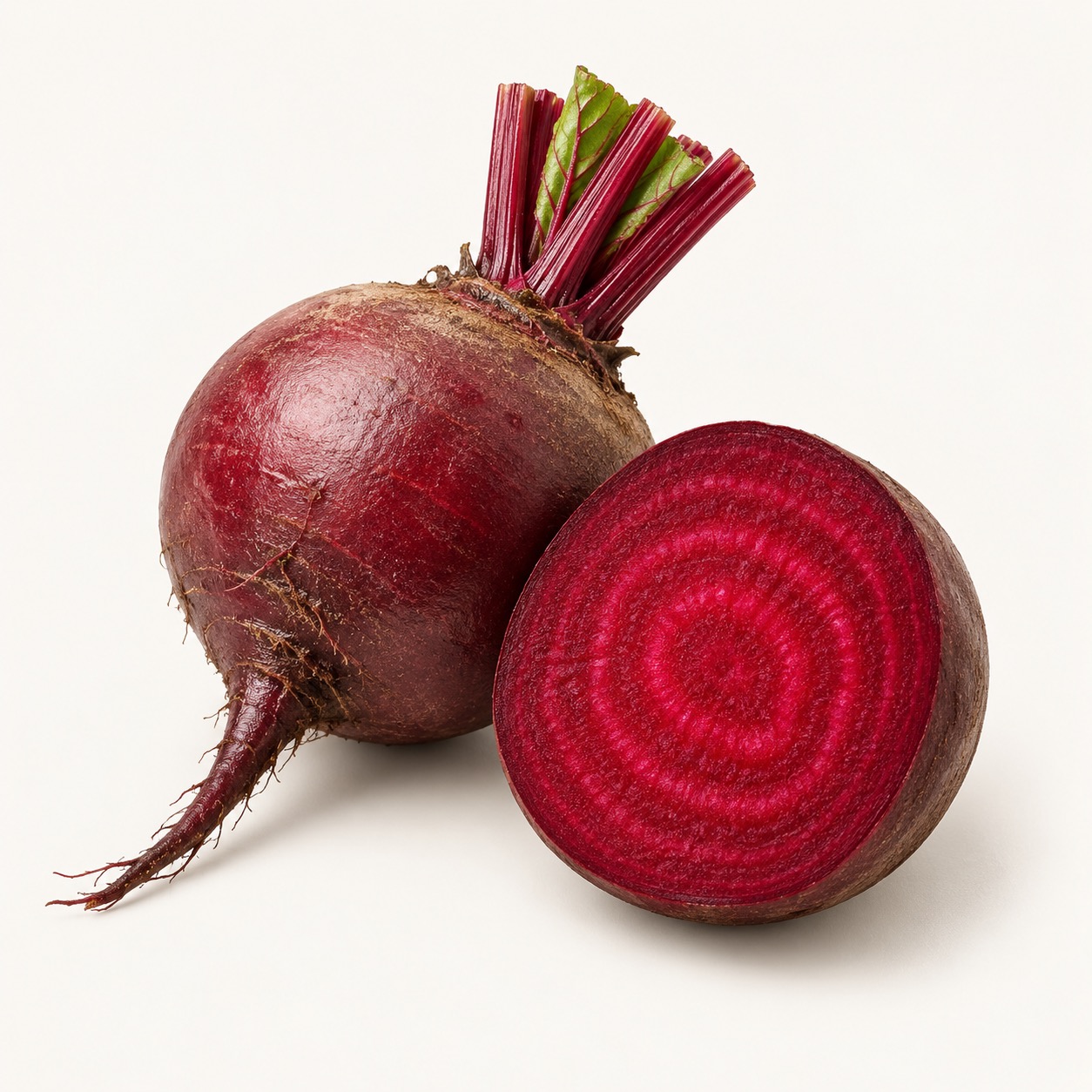
Red Beet
Classic red beets range from ruby red to deep burgundy. Their color is driven primarily by red-violet betalain pigments called betacyanins, especially betanin. Red beets have an earthy-sweet profile and can visibly stain cutting boards, hands, sauces and neighboring ingredients—useful when color is part of the presentation, but a reason to prep them separately in multicolor dishes.
Ingredient code: red_beetInventory ID: red_beet
Icon: /academy/ibrary/veggies/redbeet.png
Page: /academy/ibrary/veggies/Beets.html#red-beet
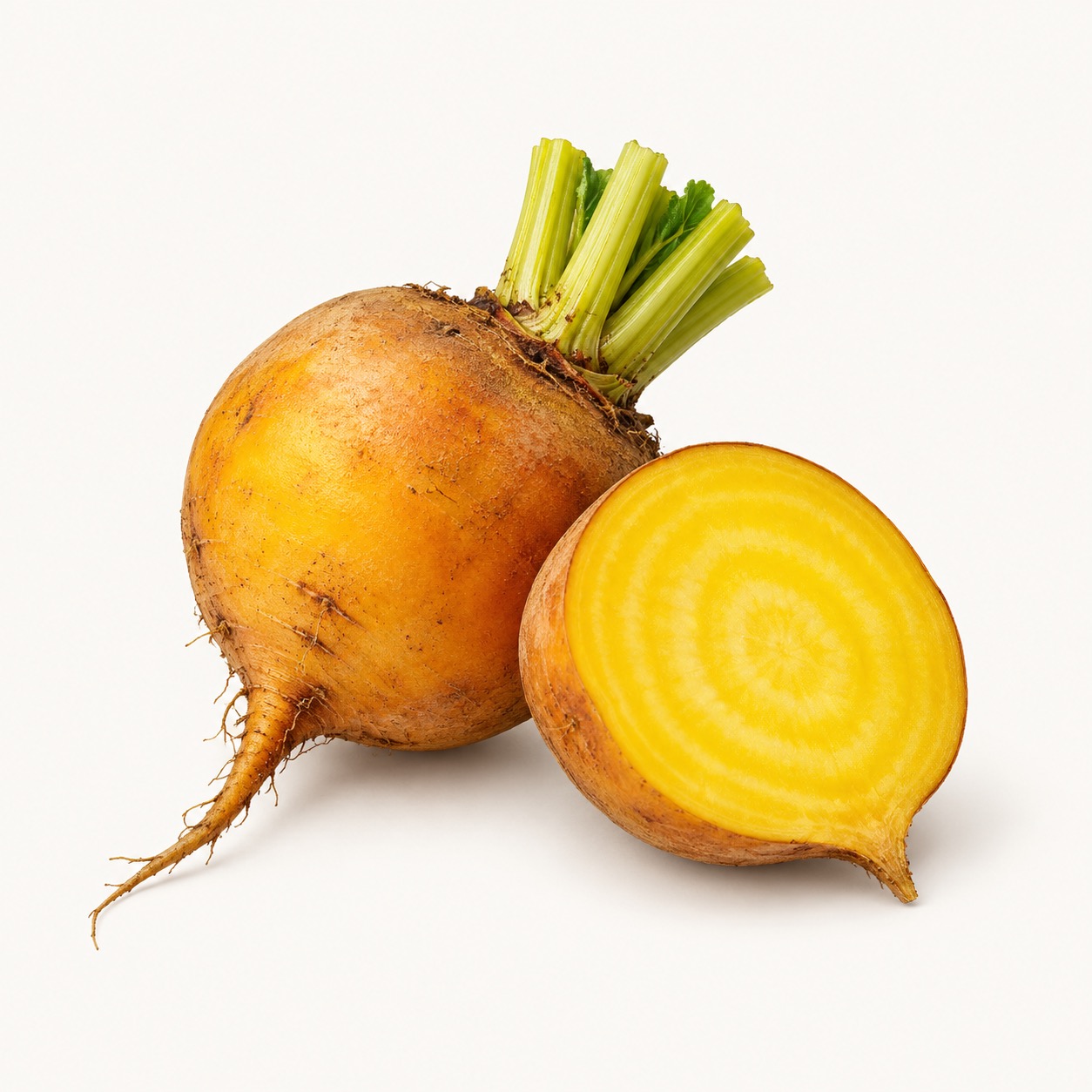
Golden / Yellow Beet
Golden beets have yellow to orange flesh and a sweet, mild beet character. Yellow-orange betalain pigments, including betaxanthins, contribute to the color. Golden beets are especially useful in refined plated dishes because they generally create less dramatic red staining than red beet and preserve a warm golden visual identity beside cheeses, greens and other vegetables.
Ingredient code: yellow_beetInventory ID: yellow_beet
Icon: /academy/ibrary/veggies/yellowbeet.png
Page: /academy/ibrary/veggies/Beets.html#yellow-beet
Table Beet vs. Sugar Beet
Table beet and sugar beet are not unrelated vegetables—they are specialized crop types within the same Beta vulgaris species complex. Their differences come from centuries of breeding for different end uses.
| Characteristic | Table Beet | Sugar Beet |
|---|---|---|
| Primary purpose | Culinary root and greens | Industrial sucrose extraction |
| Typical appearance | Red, golden, striped, white or specialty colored roots | Usually large, pale to white, tapered roots |
| Selection priority | Tender texture, flavor, color, shape and eating quality | High root yield and high sucrose concentration |
| Kitchen role | Roast, boil, steam, pickle, shave, juice, purée, salads | Not normally purchased as a restaurant table vegetable |
| Historical development | Vegetable forms predate the modern sugar-beet industry | Developed from fodder-beet material in Europe during the 18th–19th centuries |
| Sugar concentration | Sweet but selected primarily for eating quality | Modern breeding raised sucrose concentration to roughly 18% or more in commercial roots |
Why the Difference Matters to a Chef
A red or golden table beet is a culinary ingredient. A sugar beet is an agricultural processing crop. Although both belong to the same species, substituting one for the other ignores the traits each crop was bred to deliver.
Seasonality & Growing Calendar
Beets are cool-season vegetables. They perform best in the mild temperatures of spring and fall, and commercial production can extend availability well beyond those traditional peaks. In coastal California, the season can be especially long because winter temperatures are comparatively mild.
General culinary pattern: fall through spring often provides strong cool-season quality. Exact harvest periods vary by production region, cultivar, planting date and local climate. Beets commonly reach harvest in roughly 50–70 days under suitable conditions.
Varieties & Market Types
Classic round, deep-red table beet with smooth roots; a widely recognized standard type.
Round red cultivar valued for uniform roots and reliable eating quality.
Early red beet with useful greens and slightly flattened round roots.
Long cylindrical red beet that produces efficient, uniform slices for restaurant fabrication.
Italian heirloom with concentric pink-red and white rings; mild, sweet and visually distinctive.
Golden-yellow heirloom type with mild sweetness and a color that works beautifully in salads and roasted vegetable compositions.
Golden table beet with sweet flavor and mild greens, useful for modern specialty-produce programs.
Dark red heirloom valued both for its root and deep burgundy leaves, especially at baby-leaf stage.
Less common specialty types such as Blankoma demonstrate the broad color diversity within table beets.
Purchasing, Storage & Mise en Place
Purchasing & Receiving
- Choose roots that feel heavy and firm for their size.
- Prefer smooth skin with minimal shriveling, soft spots or decay.
- Small to medium roots generally cook more evenly and can be more tender.
- If greens are attached, look for fresh, crisp leaves rather than severe wilting.
- Keep red and golden lots clearly identified for plating and inventory accuracy.
Storage & Prep
- Refrigerate promptly after receiving.
- Remove tops before longer root storage, leaving a short stem to reduce moisture loss.
- Store roots unwashed until prep when practical.
- Cook red and golden beets separately when preserving distinct colors is important.
- Wear gloves and protect boards when working with large quantities of red beet.
- Beet greens can be washed and cooked like other tender leafy greens.
Flavor & Culinary Behavior
Chef's Flavor Profile
Table beets combine natural sweetness with earthy, mineral and vegetal notes. Roasting concentrates sweetness and produces a denser texture; steaming and boiling retain a cleaner, juicier profile; acid brightens the root and balances sweetness. Red beet brings the most dramatic color, while golden beet provides a warmer, gentler visual effect.
Roast whole or cut beets until tender; peel after cooking when appropriate. Excellent for salads, sides and composed plates.
Reliable for even tenderness. Cook colors separately when maintaining visual separation.
Acid, sugar, salt and aromatics turn beets into a durable garnish, antipasto or salad component.
Very thin slices can be used for carpaccio-style plates, salads and crunchy garnish.
Blend cooked roots for purées, sauces, spreads and plate accents; red beet creates intense color.
Fresh beet juice contributes color, sweetness and earthiness to beverages, gels, sauces and creative preparations.
Butter, stock, citrus or vinegar reductions produce a polished side dish or garnish.
Pair with citrus, apples, pears, nuts, herbs, bitter greens, goat cheese, ricotta, feta or Mozzarella di Bufala.
Young leaves and stems can be sautéed, wilted, blanched or used as a secondary vegetable component.
Culinary Traditions Around the World
Italy & the Mediterranean
- Boiled or roasted beet salads with olive oil and acid
- Parsley, onion, citrus, vinegar and herb dressings
- Chioggia beet for decorative raw or lightly cooked presentations
- Modern pairings with fresh cheese, bitter greens and nuts
Central, Northern & Eastern Europe
- Beet soups including the broad borscht tradition
- Pickled and preserved beets for winter tables
- Potato, herring, root-vegetable and sour-cream salads
- Roasted roots, relishes and fermented preparations
Nutrition Reference — Raw Table Beets, per 100 g
| Nutrient | Amount |
|---|---|
| Energy | 43 kcal |
| Protein | 1.61 g |
| Carbohydrate | 9.56 g |
| Total Sugars | 6.76 g |
| Dietary Fiber | 2.8 g |
| Total Fat | 0.17 g |
| Potassium | 325 mg |
| Folate | 109 µg |
| Vitamin C | 4.9 mg |
| Iron | 0.8 mg |
| Magnesium | 23 mg |
| Sodium | 78 mg |
USDA-style raw table-beet reference values per 100 g. Red and golden cultivars have broadly similar macronutrient profiles, but exact nutrient and pigment levels vary by cultivar, growing conditions, maturity and storage. Red-violet betacyanins and yellow-orange betaxanthins are natural betalain pigments; their relative proportions help create the visual differences among beet colors.
Dietary & Menu Positioning
Connected Tuscany Cuisine Recipe
Bufala Mozzarella Vegetable Mosaic
Base recipe usage: 50 g cooked Red Beet + 50 g cooked Golden / Yellow Beet for 2 servings. The two colors are prepared separately so the vegetable mosaic remains visually clean.
Ingredient Record History in the Tuscany Cuisine Platform
red_beet and yellow_beet as operational ingredient identities, but both used the neutral system fallback because dedicated beet icons had not yet been published.redbeet.png and yellowbeet.png graphics were created and uploaded to /academy/ibrary/veggies/.Sources & Culinary Reference Notes
USDA APHIS — Beta vulgaris crop background · USDA ARS — Sugar beet breeding history · UC Davis — Sugar Beet Origin & History · Texas A&M AgriLife — Growing Beets · UC IPM — Growing Beets · Iowa State Extension — Beet Varieties & Harvest