A professional ingredient page for one of the world’s essential root vegetables—valued for sweetness, crunch, color, beta-carotene, year-round versatility and wide application across garde manger, soups, purees, roasting and menu production.
🥕 Root Vegetable❄️ Cool-Season Crop🌍 Global Ingredient🥗 Salad Station🔗 Live Ingredient Record
The cultivated carrot is the enlarged taproot of Daucus carota, selected over centuries for tenderness, sweetness, shape and color. Although orange carrots dominate today’s commercial market, historical and modern strains also include purple, yellow, red and white roots.
Carrots are important in professional kitchens because they cross categories: they are raw garnish, salad component, aromatic vegetable, roasting vegetable, puree base, soup base and sweet element in pastry or baking. Their natural sugar content and pectin structure make them especially useful for balancing acidity and adding body.
Origins and history
Wild carrot ancestors were known around Eurasia and the Mediterranean, but the edible cultivated carrot developed through selection in Central Asia and adjacent regions. Early domesticated carrots were often purple or yellow rather than orange. Orange carrots became strongly associated with later European selection and eventually became the dominant modern commercial type.
Over time the carrot moved through trade, agriculture and culinary tradition into nearly every major cuisine. It became foundational not only as a vegetable served on its own, but also as part of flavor bases such as soffritto and mirepoix.
Tradition in the kitchen
In Italian cooking, carrots are central to vegetable stocks, soffritto, braises, salads and vegetable contorni. In modern restaurants they also appear shaved raw, juiced, roasted whole, glazed, pureed, lacto-fermented or cut into refined knife shapes for composed plates.
Because carrots are inexpensive, stable and visually attractive, they are valuable both for everyday menu production and for high-end plating. They also pair especially well with citrus, mustard, herbs, yogurt, butter, olive oil, cumin, coriander, fennel, ginger and nuts.
Main carrot types and varieties
Nantes
Cylindrical, sweet, tender and relatively coreless. Excellent for fresh eating, salads and general market use.
Imperator
Long, slender roots common in supermarkets. Good appearance and versatile kitchen use.
Chantenay
Shorter, broader shoulders and strong carrot flavor. Useful for roasting, heavy soils and processing.
Danvers
Classic conical shape with good adaptability and dependable performance in cooking.
Baby carrots
Either true immature carrots or cut-and-peeled processing carrots. Used for snacks, buffets and side dishes.
Rainbow / heirloom carrots
Purple, yellow, red and white roots used for color contrast, specialty menus and heritage appeal.
Best quality standards
Look for roots that are firm, crisp, smooth-skinned and brightly colored. Good carrots feel heavy for their size and show little dehydration. Avoid roots that are limp, badly cracked, split, sprouting, slimy or severely green at the shoulder.
If tops are attached, they should look fresh and lively, but in storage the tops should generally be removed because they continue to draw moisture from the root. Uniform size improves even cooking and portion control.
Seasonality
Carrots are a cool-season crop. In many temperate regions, peak eating quality is associated with fall, winter and spring. Cooler conditions often improve sweetness because sugar development is favored and growth stress is lower.
Commercially, carrots are available year-round thanks to staggered production, storage and multiple growing regions. Even so, chef buyers often notice especially good flavor in cool-weather harvests.
Major producing countries
Carrots are grown globally. Major producing countries and regions commonly associated with large commercial output include China, Uzbekistan, the United States, Russia, Ukraine, the United Kingdom, Poland, Germany, France and Japan. Production patterns shift over time, but these countries are among the names chefs and buyers regularly encounter in global agricultural references.
Region / Country
General role
Notes
China
Very large-volume producer
Broad domestic use and industrial processing capacity.
Uzbekistan & Central Asia
Historic and important production region
Linked to the deeper historical story of carrot domestication.
United States
Fresh-market and processing producer
Important for whole carrots, cut carrots and baby-carrot processing.
Europe
Broad regional production
UK, France, Germany and Poland are notable carrot-growing markets.
Nutrition overview
Carrots are best known for beta-carotene, the orange pigment converted by the body into vitamin A. They also contribute fiber, potassium, vitamin K1 and various antioxidants. For chefs and menu planning, carrots offer a strong nutrient story with low calories and good satiety value.
41 kcalEnergy / 100 g
0.9 gProtein
9.6 gCarbohydrates
2.8 gFiber
Nutrient
Approx. per 100 g raw
Professional note
Vitamin A activity
High (from beta-carotene)
Supports the carrot’s strong nutritional identity.
Potassium
About 320 mg
Useful general mineral contribution.
Vitamin K1
Modest amount
Relevant in balanced vegetable menus.
Natural sugars
About 4.7 g
Help explain carrot sweetness and roasting performance.
Culinary usage
Use carrots raw in slaws, shaved salads, crudite and pickles; cooked in soups, braises and vegetable medleys; or finished as puree, glaze or juice. They work well with acids and aromatic herbs and can bridge savory and slightly sweet flavor profiles.
Purchasing and storage
Buy for firmness, cleanliness, color and size uniformity. Store cold with high humidity. Remove leafy tops for longer shelf life. Avoid storing close to ethylene-sensitive items only when tops are attached and quality is already weak.
Processing notes
Carrots may be peeled or scrubbed depending on finish quality. Common cuts include rondelle, julienne, batonnet, brunoise and shredded. Overcooking reduces texture and can mute fresh flavor, while roasting and glazing deepen sweetness.
Ingredient record in the Tuscany Cuisine platform
The carrot identity is now established in the Tuscany Cuisine Ingredient Library so it can synchronize with recipe pages, search, station prep, Live Inventory and future purchasing and deduction logic. The dedicated icon for this ingredient is carrot.webp.
Ingredient Code: TC-VEG-CARROT-001Inventory ID: carrotIcon ID: TC-ICON-VEG-CARROT-001Category: ProduceSubcategory: Root Vegetables / CarrotsStation: Produce / Salad Station
This record is appropriate for recipe scaling, ingredient icon synchronization, salad station planning, nutrition-oriented search and future menu-costing connections across the Tuscany Cuisine platform.
Connected recipe
Carrot & Celery Root Salad already uses carrot as a core ingredient and is a natural page connection for this library record.
This page connects well with other root and salad-support ingredients such as celery root / celeriac, parsley, lemon, Dijon mustard and extra-virgin olive oil.
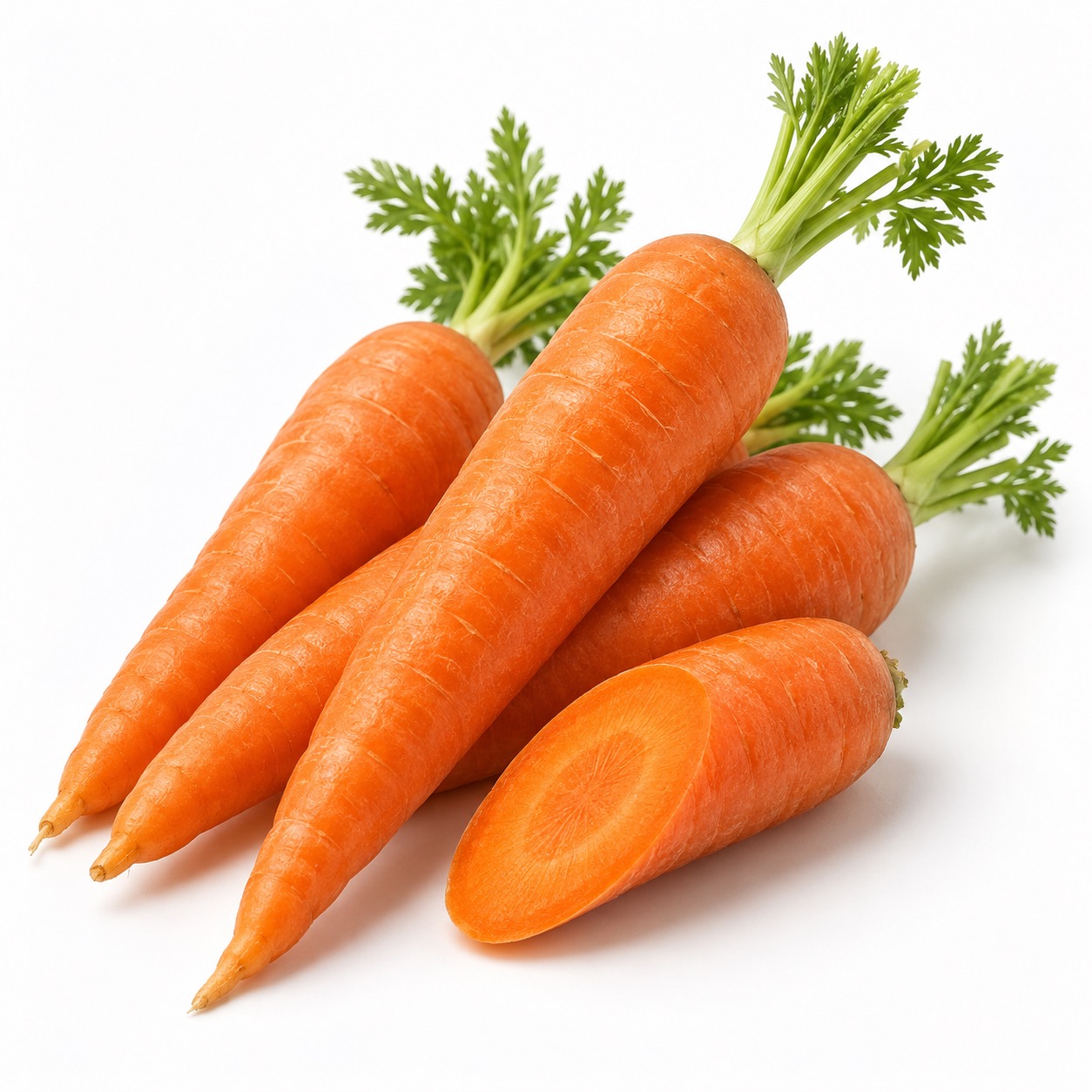 Carrot Ingredient Icon