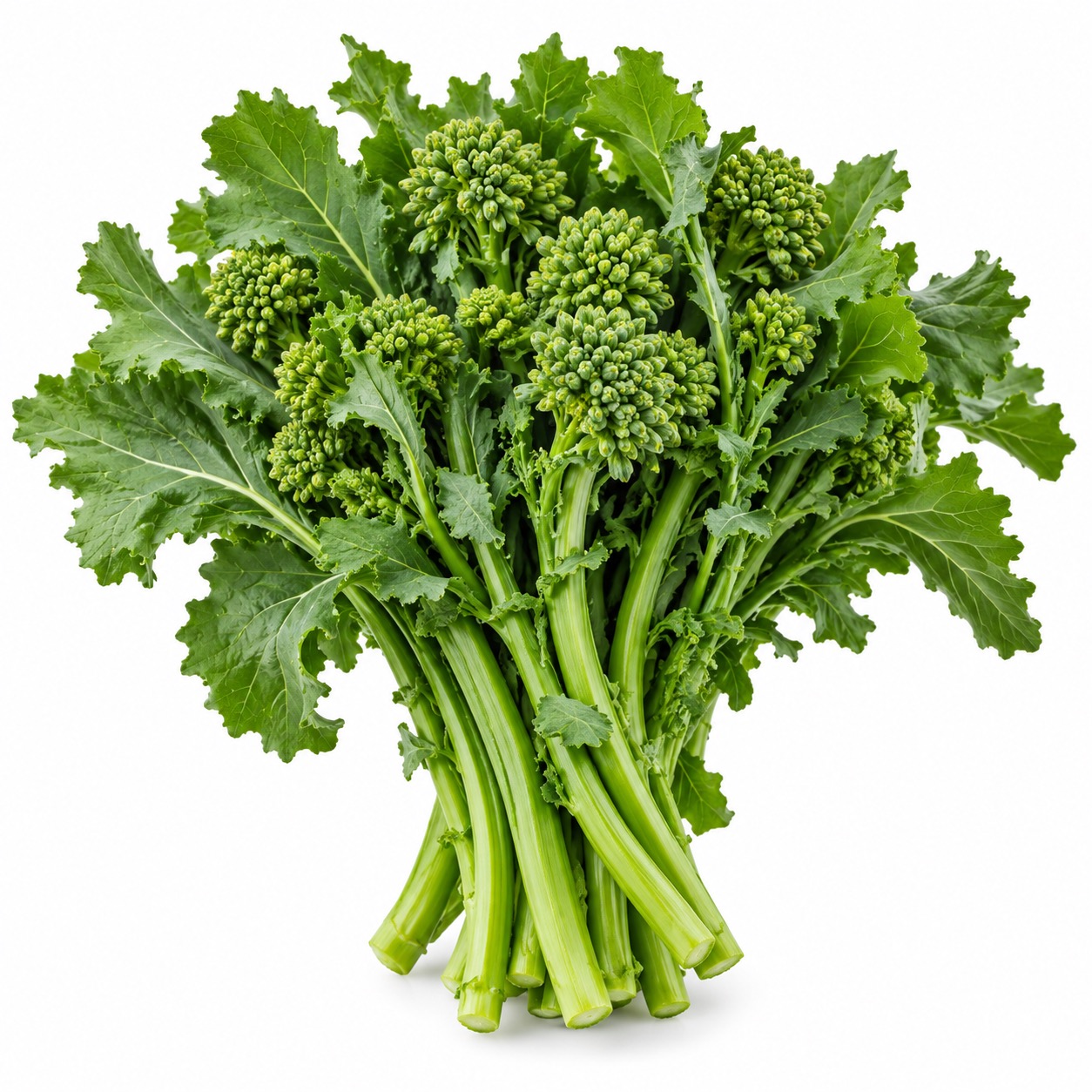
Identity, Origin & Culinary History
Rapini belongs to the mustard family and the Brassica rapa complex. Modern culinary rapini is strongly associated with Europe and the Mediterranean, while the broader species has a complex domestication history spanning Europe, the Mediterranean, the Near East and Asia. For the chef, the important distinction is that rapini is not standard heading broccoli: it is a leafy, bitter brassica harvested for its young leaves, succulent stems and compact flower buds.
Its flavor—green, mustard-like, pleasantly bitter and slightly pungent—became deeply rooted in Italian regional cooking. In southern Italy it appears under several names, most famously cime di rapa. Its affinity with durum-wheat pasta, garlic, extra-virgin olive oil, chile, anchovy, legumes and pork makes it one of the clearest examples of how bitter greens are used to balance fat, salt and starch in Mediterranean cooking.
Common Culinary Names
- Rapini
- Broccoli rabe / broccoli raab
- Cime di rapa
- Broccoletti
- Italian broccoli
- Rabe / rape
Edible Parts
- Tender leaves
- Young stems
- Tight flower buds
- Small yellow flowers when still tender
Cultivation & Seasonality
Rapini performs best as a cool-season vegetable. It prefers fertile, moist but well-drained soil and full sun to light shade. The crop grows quickly and is commonly planted for spring or fall harvest. Heat encourages bolting and more advanced flowering, which can increase toughness and bitterness.
Quality, Receiving & Storage
Look For
- Deep green, fresh-looking leaves
- Crisp stems that bend without feeling hollow or woody
- Tight green flower buds
- Minimal yellowing
- Clean, fresh brassica aroma
Avoid or Trim
- Slime or excessive moisture damage
- Heavy yellowing
- Dried leaf edges
- Very woody stem bases
- Advanced flowering when a tender preparation is required
Refrigerate promptly and protect the bunches from dehydration. For best kitchen quality, keep rapini unwashed until preparation, trim the base as needed, and process quickly after receiving. Commercial shelf life should follow the operation's validated receiving and produce-storage standards.
Nutrition Profile
Rapini is a nutrient-dense, low-energy vegetable. It is particularly valued for vitamins K, C and A, while also contributing folate and minerals including calcium, iron and potassium. Actual nutrient values vary with cultivar, portion, maturity and whether the vegetable is raw, blanched, boiled or sautéed.
| Vitamin K | Rapini is notably rich in vitamin K, a nutrient involved in normal blood clotting and bone metabolism. |
|---|---|
| Vitamin C | Provides vitamin C, an antioxidant nutrient involved in collagen formation and iron absorption. |
| Vitamin A activity | Green leaves contribute carotenoids that support vitamin A activity. |
| Folate | Leafy brassicas contribute folate, important in normal cell division. |
| Minerals | Rapini can contribute calcium, iron and potassium as part of a varied diet. |
| Kitchen note | Blanching and boiling can change water-soluble nutrient levels; sautéing changes the final nutrition according to added oil and seasonings. |
Nutrition information is educational rather than medical advice. USDA FoodData Central should be used when exact nutrient values are required for a production or nutrition calculation.
Professional Culinary Usage
Rapini is at its best when the cook respects its bitterness instead of trying to eliminate it. Blanching softens the strongest mustard notes, while sautéing in extra-virgin olive oil develops a deeper, rounder flavor. Garlic, peperoncino, anchovy, sausage and aged cheeses are classic partners because fat, salt and umami balance the bitter greens.
Italian Techniques
- Blanch, drain and sauté with garlic and olive oil
- Finish with peperoncino or anchovy
- Toss with orecchiette or other short pasta
- Cook with fresh Italian sausage
- Add to soups, beans and braised vegetable dishes
Chef Applications
- Warm antipasti and contorni
- Pasta sauces and pan-finishing
- Pizza and focaccia toppings
- Stuffings and vegetable farce
- Grain bowls and composed vegetable plates
Recipe Connection — Orecchiette with Rapini and Sausage

Recipe 230 · Primi Station
Handmade semolina orecchiette with rapini, Italian sausage and Pecorino foam.
The recipe uses 2 bunches of rapini for 8 servings and now shares
the same rapini inventory identity and rape.webp icon published on this page.
Sources & Further Study
- UC Master Gardener Program — Rapini (Broccoli Raab)
- NC State Extension — Broccoli Rabe, Brassica rapa Ruvo Group
- USDA FoodData Central
- Canadian Food Inspection Agency — Biology of Brassica rapa
Botanical origin within Brassica rapa is complex, so this page distinguishes the culinary identity of modern rapini from broader theories about the domestication history of the species.