
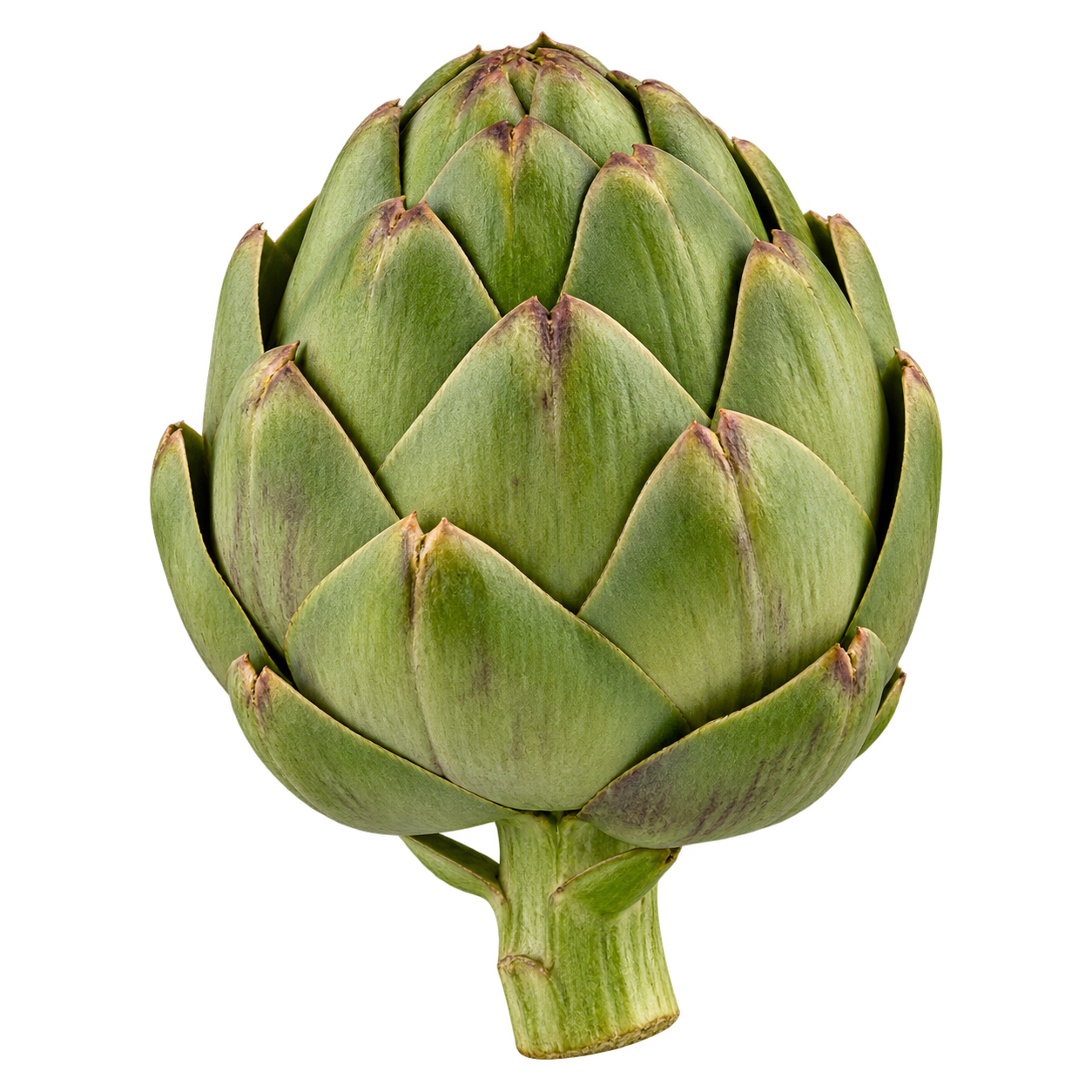
Mediterranean cardoon populations supplied the genetic foundation for cultivated cardoon and globe artichoke.
Mediterranean history
From wild cardoon relatives to a cultivated flower bud
The globe artichoke belongs to the Cynara cardunculus complex, which also includes cultivated cardoon and wild cardoon relatives. Domestication and selection in the Mediterranean favored larger, fleshier, less spiny flower buds. Written references and archaeological interpretation show a long relationship with Greek, Roman, North African, Iberian, Italian, and later European food cultures, although the precise sequence of domestication remains an active scientific subject.
Classical Mediterranean sources describe edible thistle-like plants, but modern botanical identity must be interpreted carefully.
Regional ecotypes developed around climate, color, thorniness, bud form, earliness, and local cooking traditions.
Perennial and seeded annual systems now extend availability well beyond the traditional winter–spring season.
Tuscan perspective: in Italian the singular is carciofo and the plural is carciofi. Tuscany uses artichokes raw when very young, braised, fried, roasted, preserved in oil, added to savory pies and pasta, or presented whole as an antipasto.
Ingredient anatomy
What the kitchen is actually preparing
A market artichoke is an unopened flower head. Understanding its structure prevents waste and determines whether it should be served leaf by leaf, quartered, turned to the heart, or opened as a cavity for filling.
Bracts—“leaves”
The overlapping bracts protect the flower. On cooked medium and large artichokes, the fleshy lower inside surface is edible; the fibrous upper portion is normally discarded.
Heart and stem
The receptacle at the base is the prized heart. The peeled stem is a continuation of that tissue and can be tender and flavorful rather than automatic trim waste.
Choke
The fuzzy immature flower structure develops above the heart. Remove it from mature medium and large buds before filling or serving the heart.
Oxidation control: cut artichoke surfaces darken quickly. Work efficiently and hold trimmed pieces in acidulated water or rub cut surfaces with lemon when appropriate to the recipe.
Purchasing specification
Baby, medium and large are size records—not complete variety names
Commercial carton counts work in reverse: fewer buds per standard carton means a larger artichoke. UC California guidance describes 18-count buds above 4.5 inches, 24-count buds around 4–4.5 inches, 36-count buds around 3.5–4 inches, 48-count buds around 3–3.5 inches, and 60-count buds around 2.75–3 inches.
Baby / small
Approximately 1–2.75 inches in the UC loose-pack range. Usually smaller secondary or tertiary buds, not a different species. Tender examples may have little developed choke.
Best for: trimming to tender halves or quarters, braising, sautéing, roasting, frying, pasta, salads, and preserving.
Medium
Commonly around 3–4 inches, spanning commercial 48- to 36-count specifications. Balanced yield, plate size, and cooking time.
Best for: steaming for leaf service, halving, grilling, roasting, braising, or medium-size stuffing.
Large
About 4 inches and larger, generally 24-count or 18-count. A substantial heart, deep central cavity, and broad leaves make the size ideal for a composed appetizer.
Current recipe: one whole large artichoke per serving; four artichokes minimum.
Ordering language: specify both size and cultivar/type when it matters—such as “large Green Globe, 24-count” or “Romanesco violet, minimum 10 cm primary head.” Never rely on “artichoke” alone for a filled presentation.
Cultivars & regional types
Green Globe, seeded varieties and Romanesco violet
| Type | Appearance and production | Culinary profile | Best uses |
|---|---|---|---|
| Green Globe | Classic large green perennial type strongly associated with California coastal production. | Firm fleshy bracts, pronounced vegetal character, gentle bitterness, and a nutty-sweet heart when fresh. | Whole steaming, leaf service, stuffing, gratin, roasting, and hearts. |
| Seeded green types | Commercial examples include Imperial Star, Desert Globe, Emerald, Big Heart, and Green Globe Improved. | Flavor and texture vary by cultivar, maturity, climate, and harvest handling; seeded annuals help extend the supply calendar. | Fresh market, foodservice sizing, processing, and scheduled seasonal production. |
| Romanesco del Lazio IGP | Spherical green-to-violet heads with rounded, generally spineless bracts. Official types include Castellammare and Campagnano. | Tender, fleshy regional type with refined artichoke bitterness and a gently sweet, nutty heart; color alone does not define flavor. | Carciofi alla romana, whole braising, frying, local fresh service, and regional menus. |
| Violet regional artichokes | Purple or violet pigmentation appears in multiple Mediterranean cultivars; shape, spines, size, and season differ. | Often selected for tenderness and distinctive regional character, but freshness and maturity remain critical. | Raw young slices, braising, frying, grilling, antipasti, and preserves. |
Romanesco identity: the official Italian production specification describes heads as spherical, compact, green with violet shading, and harvested in defined Lazio areas. Primary heads must be at least 10 cm across; the harvest window runs from January through May.
Seasonality & menu planning
Spring is the classic peak, but production systems extend supply
Artichokes are a cool-season crop. California’s central coast can produce perennial artichokes throughout the year, with peak perennial volume in spring. Annual plantings and desert production fill other market windows. In Lazio, the protected Romanesco harvest begins in winter and continues through May.
| Production window | Typical timing | Menu implication |
|---|---|---|
| California perennial central coast | Year-round availability; peak around March–May, with especially strong March–April production | Best seasonal pricing, volume, and quality often align with spring menus. |
| California annual coastal/valley | Common harvest from approximately April–October depending on planting date and region | Supports summer and early-autumn continuity; confirm cultivar and size. |
| California desert annual | Approximately December–April | Extends winter supply before the main coastal spring peak. |
| Romanesco del Lazio IGP | January–May; early and late types differ | Ideal for regional winter–spring menus and traditional Roman preparations. |
For the filled-artichoke recipe: order large compact buds during the strongest local season whenever possible. Build the menu price from count-per-case, trim loss, steaming yield, and one whole piece per guest.
Receiving & storage
Compact, heavy, fresh and correctly sized
Bud quality
Choose artichokes heavy for size with compact bracts, fresh green or variety-appropriate color, and a firm stem. Avoid slimy decay, deep bruising, mold, excessive shriveling, or widely spreading bracts.
Maturity
Harvest should occur near full size before the bud opens and the central flower structure becomes prominent. Overmature buds become more fibrous, bitter, and woody.
Cold holding
UC guidance recommends storage near 33°F / 1°C with 90–95% relative humidity. Protect from freezing, dehydration, crushing, and ethylene-heavy mixed storage.
Receiving record: capture supplier, country or state of origin, cultivar/type when known, size/count, case weight, quantity, unit cost, lot code, temperature, and condition. “Large” should be verified against the physical case, not only the invoice description.
Professional preparation
Match the cooking method to size, maturity and final presentation
- Trim.
Remove damaged or very tough outer bracts, shorten the stem as needed, peel usable stem tissue, trim the top, and snip sharp tips for whole service. - Control browning.
Rub cut surfaces with lemon or hold trimmed pieces in acidulated water without washing away all flavor through prolonged soaking. - Cook to the format.
Steam whole for leaf service or filling; braise quarters; roast or grill halves; fry thin pieces; turn baby buds to tender hearts. - Test the base.
A knife should enter the heart with little resistance. Whole leaves should release cleanly, but the structure must remain intact for stuffing.
Baby
Trim generously, halve or quarter, and use for quick braises, sautéing, roasting, frying, pasta, salads, and preserves.
Medium
Steam, boil, roast, grill, halve, or fill. Manage the developed choke before serving the heart.
Large
Steam upright, open the center, remove the inner leaves and choke, then fill the natural cavity and finish by baking or gratinating.
Interactive table service
Artichoke leaves are edible at the fleshy base—and made for dipping
A steamed or boiled whole artichoke becomes a slow, social appetizer. Each guest removes one bract, dips its tender base, places the fleshy side against the lower teeth, and pulls outward to scrape away the edible pulp. The fibrous remainder is discarded. Once the leaves are finished, remove the choke and serve the heart.
Lemon & olive oil
Extra virgin olive oil, fresh lemon, parsley, salt, and black pepper preserve the clean artichoke flavor.
Garlic aioli
A restrained garlic emulsion gives body and acidity; declare egg when made with traditional mayonnaise.
Brown butter & lemon
Nutty butter complements the sweet heart; declare milk and keep the sauce warm, not greasy.
Salsa verde
Parsley, capers, lemon, garlic, and olive oil create a bright savory dip; verify anchovy if included.
Service control: provide a separate discard bowl and ample napkins. Dipped or guest-handled leaves never return to production. Identify sauce allergens clearly and use individual portions when cross-contact is a concern.
Famous derived beverage
Cynar: artichoke leaves transformed into a bittersweet aperitivo
Cynar is a commercial artichoke-based bittersweet liqueur. Its formula is proprietary, so a culinary reference should explain the disclosed production logic without pretending to reproduce the secret recipe. Campari Academy identifies artichoke leaves as the characteristic botanical within an infusion of thirteen herbs and plants.
Disclosed production sequence
The botanicals undergo a two-stage infusion process. They are charged into a percolator and continuously infused with an alcohol-and-water mixture, then filtered. The extract rests for at least one month before final blending.
Finishing and flavor
The botanical extract is balanced with water, sugar, and caramel, producing a dark amber-brown liqueur with woody, herbaceous, artichoke, caramel, and bittersweet notes.
Aperitivo and cocktail use: Cynar can be served with soda as a pre-dinner drink and used in long drinks or as a bittersweet modifier in cocktails. Keep the beverage record separate from fresh-artichoke inventory because it is a branded alcoholic product with its own purchasing unit, cost, proof, and responsible-service requirements.
Ingredient icon roadmap
One artichoke family, four precise visual identities
The active icon represents the large green globe artichoke used by the filled-artichoke recipe. Future icons should not overwrite it; each size or cultivar needs its own filename and recipe/inventory identity.
Large Green Globe
Whole large compact bud for steaming, leaf service, filling, baking, and gratin.
artichoke.pngBaby Artichoke
Several small buds showing tender scale and a distinct batch ingredient identity.
artichoke-baby.pngMedium Artichoke
Balanced whole-steam and halving size for general restaurant production.
artichoke-medium.pngRomanesco Violet
Spherical green-to-violet head with regional Roman identity and separate flavor notes.
artichoke-romanesco-violet.pngTuscany Cuisine ingredient master registry
Artichoke usage across the platform
One permanent identity connects this artichoke page and icon to recipe quantity, Menu Builder, Antipasti Station, labor planning, live inventory, purchasing, receiving, vendor orders, search, and future nutrition controls. The first confirmed recipe specifies four large whole artichokes.
1confirmed recipe
4 eachbase quantity
Largerecipe size
1station
Producecategory
Nonemajor allergen
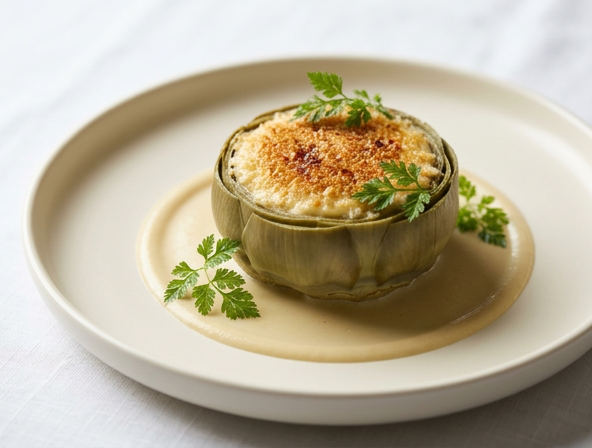
APP-ARTICHOKE-0151 · Antipasti Station
Steamed Artichokes with Parmesan-Egg Brûlée
Uses 4 large whole globe artichokes in the minimum batch. Each artichoke is steamed, opened, cleaned of its choke, filled with savory cheese-and-egg custard, and finished with panko gratin.
Open connected recipeRecipes
One master appetizer is confirmed.
ConnectedMenu Builder
Ingredient identity is ready for menu scaling.
ReadyProduction & Labor
Four-piece minimum and labor profile are connected.
ConnectedStation Pick Lists
Assigned to Antipasti Station.
ConnectedLive Inventory
Inventory ID fresh_artichoke is registered.
ReadyPurchasing & Receiving
Large size/count specification is available.
ReadyCanonical match order: ingredient code TC-VEG-ARTICHOKE-001 → inventory ID fresh_artichoke → approved aliases. Future baby, medium, and Romanesco records must not replace the active large-artichoke identity.
Sources & editorial notes
Primary and specialist references
- University of California Agriculture and Natural Resources — Artichoke Production in California: varieties, production regions, seasonality, harvest maturity, carton sizes, and postharvest storage.
- Annals of Botany — The Domestication of Artichoke and Cardoon: From Roman Times to the Genomic Age: botanical history and domestication.
- Gazzetta Ufficiale della Repubblica Italiana — Carciofo Romanesco del Lazio IGP production specification: cultivars, morphology, production areas, size, color, and harvest calendar.
- Campari Academy — A Guide to Cynar and How to Serve: disclosed botanicals, infusion, resting, blending, and service information.
- California Artichoke Advisory Board — Artichoke Basics: consumer and foodservice preparation guidance.
- USDA FoodData Central — Artichoke food search: reference nutrition records for raw and cooked forms.
Season, size, storage life, flavor, and trim yield vary by cultivar, region, weather, maturity, supplier, and handling. The Cynar section describes publicly disclosed commercial information and does not reproduce a proprietary formula. Alcohol is for adults of legal drinking age and should be served responsibly.