Broccoli
Broccoli is a cool-season green vegetable of Brassica oleracea var. italica, valued for its compact flower buds, tender stems, fresh vegetal sweetness and excellent versatility in the professional kitchen. It can be blanched, steamed, roasted, sautéed, stir-fried, grilled, puréed or folded into pasta, soups, frittate, grain bowls and composed salads.
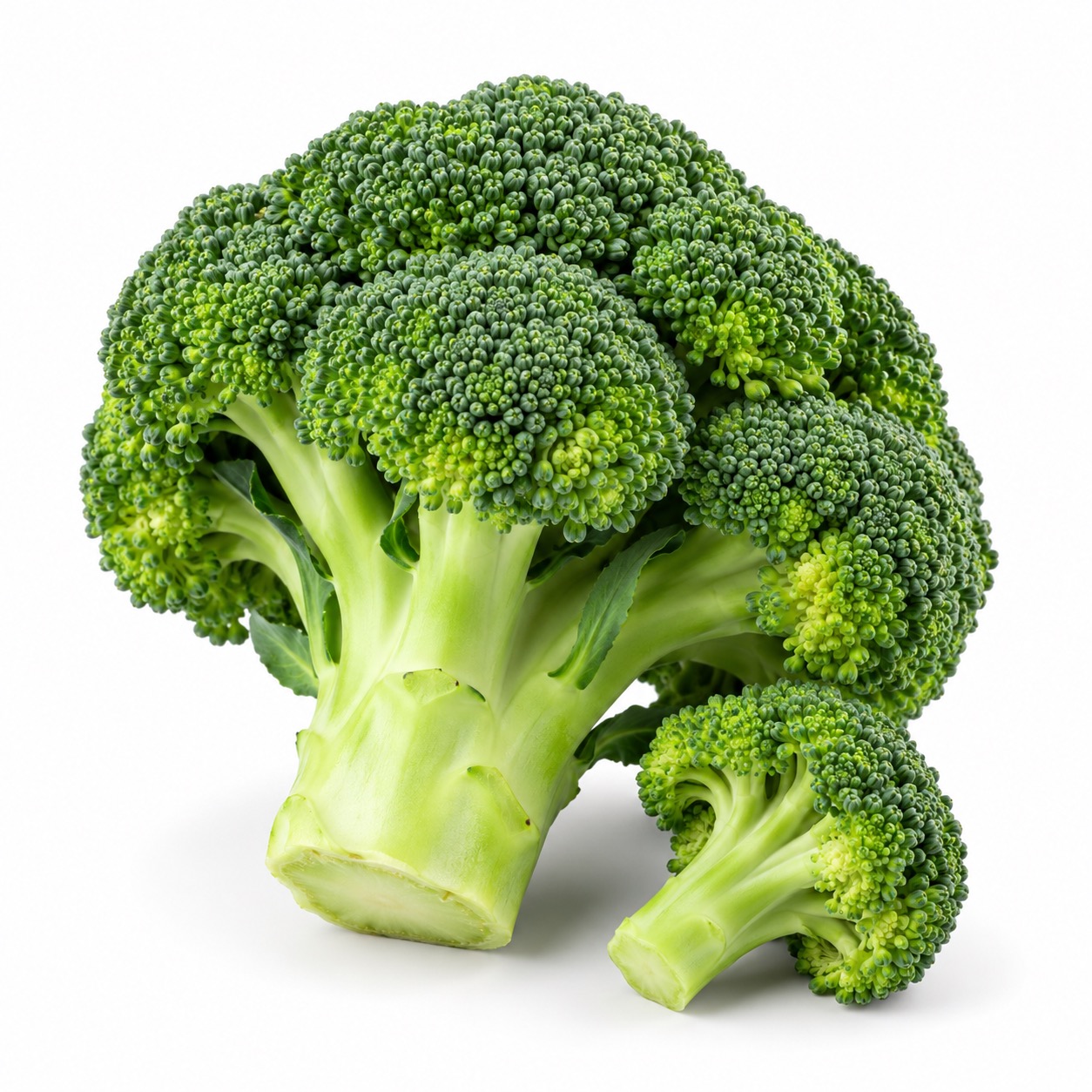
What is broccoli?
Broccoli is a cultivated form of cabbage grown for its enlarged green flower head, branching stems and edible stalk. The most common market form is the large-headed type often called Calabrese broccoli, although sprouting forms and newer commercial selections are also sold.
In culinary use, both the florets and peeled stalks are valuable. The buds cook quickly and absorb flavor well, while the stems provide sweetness and structure when sliced, shaved, blanched or roasted. Because it combines nutrition, recognizable form and flexible cooking behavior, broccoli is a staple ingredient in home kitchens and professional foodservice.
Italian roots and global popularity
Mediterranean heritage
Broccoli belongs to the large cabbage family and is considered an Italian development from the wild cabbage complex of the Mediterranean. Its name is linked to the Italian word broccolo, meaning the flowering crest or sprout of a cabbage-like plant.
For centuries, Italians cultivated and cooked heading and sprouting broccoli in regional cuisines. It became established as a practical winter and spring vegetable appreciated for both peasant cooking and refined preparations.
Modern culinary spread
Broccoli later spread widely outside Italy, especially through seed development, commercial farming and immigrant food traditions. In the United States, broccoli became especially important through California production and is now a year-round mainstream vegetable.
Today it appears across classical Italian, Mediterranean, French, American and Asian-influenced menus. Its broad acceptance comes from its visual appeal, perceived health value and compatibility with roasting, high-heat cooking, steaming and modern vegetable-forward cuisine.
Important broccoli categories
| Type | Typical character | Culinary advantage |
|---|---|---|
| Calabrese broccoli | Large central head with thick stalk and branching side shoots; the standard supermarket type. | Most versatile choice for blanching, steaming, roasting, salads, pasta and general prep. |
| Sprouting broccoli | Many smaller shoots rather than one dominant head; often tender and delicate. | Beautiful for refined plating, sautéing and quick cooking. |
| Purple sprouting broccoli | Cool-season sprouting type with purple-green stems and buds. | Elegant color and tender texture; excellent in spring vegetable menus. |
| Romanesco | Lime-green, pointed fractal heads; related but visually distinct. | Outstanding visual presentation with firm texture and mild flavor. |
| Broccolini | Hybrid of broccoli and Chinese kale with small florets and long tender stems. | Ideal for grilling, sautéing and whole-stem service. |
Identity note: broccoli rabe / rapini is a separate ingredient and should not be confused with heading broccoli. It belongs to a different species group and has a more bitter leafy character.
Flavor, texture & kitchen behavior
Selection, maturity & defects
Choose
- Tight compact buds.
- Deep green to blue-green color.
- Firm stalks and crisp feel.
- Fresh attached leaves, if present.
- Uniform heads when consistent portioning matters.
Avoid
- Yellowing buds or open flowers.
- Softness, slime or decay.
- Strong off-odor.
- Excessive dryness or shriveling.
- Major bruising or broken florets when appearance is important.
Chef specification
- Small to medium florets for faster even cooking.
- Tender stems for full-product usage.
- Uniform head size for batch roasting or buffet production.
- Freshly harvested product for best color and sweetness.
Best season and handling
Season
Broccoli is a cool-season crop. In many regions it performs best in fall, winter and spring, when temperatures are moderate and the heads stay firm and compact. High heat can cause looser heads and faster flowering.
Commercial distribution makes broccoli available most of the year, but peak quality often aligns with cooler growing periods.
Storage
Store broccoli under refrigeration, protected from dehydration and excess ethylene exposure. Keep it cold, clean and well ventilated, and use promptly for best sweetness, color and texture.
In the professional kitchen, avoid long room-temperature holding. Once cut into florets, containerize and refrigerate promptly, and blanch only as needed for service to preserve color and bite.
Preparation & cooking methods
| Method | Recommended approach | Result / best use |
|---|---|---|
| Blanch & refresh | Cook briefly in salted boiling water, then shock in ice water if holding for later. | Preserves color and tenderness for salads, gratins and final reheat service. |
| Steam | Steam only until tender-crisp. | Clean flavor and excellent nutrient retention for healthy preparations. |
| Roast | Coat lightly with oil and roast at high heat until edges brown. | Concentrated sweetness and caramelized flavor for sides and grain bowls. |
| Sauté / stir-fry | Use small florets and sliced stems; cook quickly over high heat. | Bright texture and fast service-line execution. |
| Grill | Par-cook or blanch large pieces first, then grill for char. | Smoky notes for composed plates and antipasti. |
| Purée / soup | Cook gently, blend smooth and finish carefully. | Velvety soups and green purées; avoid overcooking for fresher color. |
Raw broccoli — per 100 g edible portion
Broccoli is valued nutritionally for its low calorie density, fiber, vitamin C, vitamin K, folate and green plant compounds. It is widely used in wellness menus, vegetable-forward meal plans and balanced professional recipes.
Nutrition reference basis: standard USDA reference values for raw broccoli per 100 g edible portion. Actual values vary with cultivar, maturity, handling and preparation method.
Classic culinary pairings
Restaurant applications
Italian & Mediterranean applications
- Broccoli sautéed with garlic, olive oil and chili
- Pasta with broccoli, anchovy or sausage
- Vegetable minestrone and soups
- Frittata and baked vegetable preparations
- Contorni with lemon and olive oil
- Gratin or oven-baked vegetable casseroles
Contemporary applications
- Warm composed salads and grain bowls
- Roasted sheet-pan vegetable assortments
- Stir-fry and Asian-inspired vegetable dishes
- Purées, green soups and wellness menus
- Steamed banquet vegetable garnish
- Crudité or lightly blanched appetizer service
Suggested platform mapping
This block is formatted to support clean alignment across recipe pages, the Master Ingredient Registry, live inventory, nutrition search, purchasing and future menu-cost systems. It can also support recipe references that use the more specific inventory form broccoli_florets.
broccolibroccoli, broccoli_florets/academy/ibrary/veggies/broccoli.webp/academy/ibrary/veggies/broccoli.htmlBroccoli questions
What is the difference between broccoli, broccolini and broccoli rabe?
Standard broccoli is the common large-headed vegetable with compact florets. Broccolini is a hybrid with long slender stems and smaller florets. Broccoli rabe, or rapini, is a different vegetable entirely and has a more bitter leafy character.
Can broccoli stems be used?
Yes. Peel the tougher outer layer and slice or julienne the stems for soups, stir-fry, salads, slaws and vegetable medleys. They are sweet and useful, and using them reduces waste.
Why does broccoli turn yellow?
Yellowing generally indicates age, heat stress or the beginning of flowering. It is still sometimes usable if sound, but the freshest culinary quality comes from deep green compact heads.
What cooking method gives the best flavor?
Roasting and grilling create more concentrated flavor and caramelized notes. Blanching and steaming preserve a cleaner greener taste and are often best when freshness and bright color are priorities.
Ingredient reference notes
This page combines professional culinary practice with general horticultural and food composition knowledge commonly used for produce education. Nutrition values are reference figures per 100 g raw edible portion, and seasonality, quality and storage guidance should always be adapted to the specific region, supplier and kitchen operation.