Butternut Squash
Butternut squash is a tan-skinned winter squash of Cucurbita moschata, prized by chefs for its dense orange flesh, small seed cavity, smooth purée texture and naturally sweet, nutty character. It adapts easily to roasting, soups, fillings, gnocchi, risotti, sauces, side dishes and modern vegetable-forward menus.
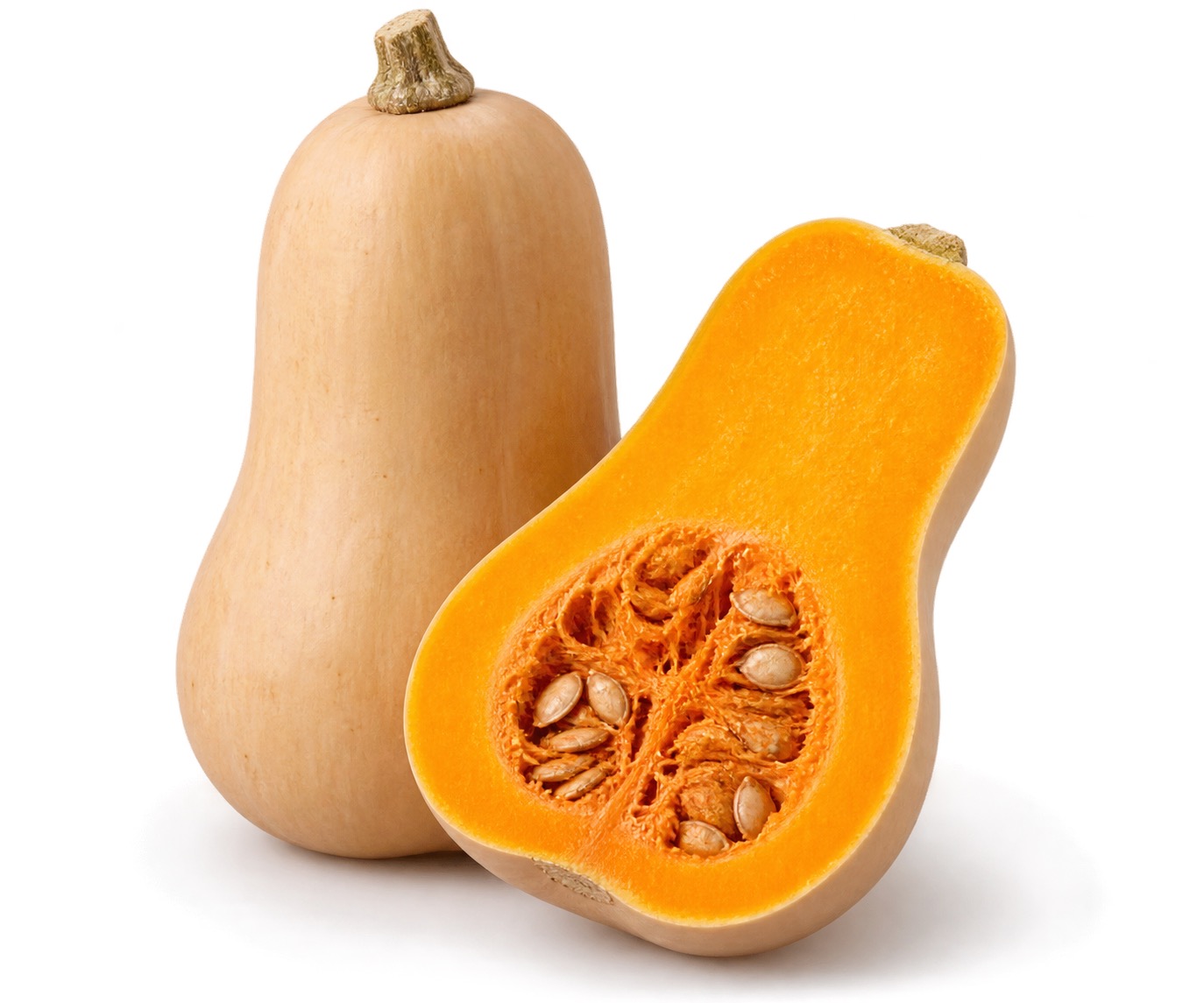
What is butternut squash?
Butternut squash grows on a warm-season vine but is called a winter squash because it is harvested fully mature, after the rind hardens enough for extended storage. The fruit is typically pear- or bell-shaped with a long solid neck and a rounded blossom end containing the seeds. Its flesh ranges from golden orange to deep orange as the fruit matures.
Botanically the edible squash is a fruit, but in the kitchen it is handled as a vegetable. Compared with many other winter squashes, butternut is especially practical for professional mise en place because the straight neck contains mostly solid flesh and produces clean, uniform cuts.
Ancient squash heritage, modern butternut form
Origins in the Americas
Domesticated squashes belong to one of the oldest food traditions of the Americas. Cucurbita moschata has deep pre-Columbian roots in the tropical Americas and became an important cultivated food long before the modern butternut shape existed.
The now-familiar butternut type is much more recent. An early modern butternut is associated with Charles Leggett of Stow, Massachusetts, in the 1940s. Later breeding and selection helped establish the dependable straight-necked, small-cavity forms now common in markets.
Italian & Tuscan culinary context
Italy has a much older culinary tradition around zucca in general than around the modern American butternut cultivar itself. Historic Italian cooking uses regional squash varieties in soups, risotti, gnocchi, filled pasta and contorni. Butternut has become a useful modern choice because its texture is smooth, its sweetness is consistent and its shape is efficient for restaurant prep.
In an Italian kitchen, butternut can stand in successfully for many sweet-fleshed winter squashes in vellutate, risotti, gnocchi di zucca, ravioli or tortelli fillings, roasted vegetable preparations and purées, while regional heirloom squashes remain distinct ingredients with their own traditions.
Important butternut selections
| Type | Typical character | Culinary advantage |
|---|---|---|
| Waltham Butternut | Classic large, tan, thick-necked butternut with deep orange flesh and a relatively small seed cavity. | Reliable all-purpose choice for roasting, soups, purées, banquet production and fabrication. |
| Honeynut | Compact personal-size butternut type with a darker, caramel-toned ripe rind and concentrated flavor. | Excellent for individual portions, roasting whole or halved, and refined plated presentations. |
| Brûlée | Mini-butternut developed for excellent eating quality with improved storability. | Small format, strong flavor and portion control for restaurant use. |
| Ponca / Ponca Baby | Smaller butternut types, generally with compact fruit and small seed cavities. | Useful when smaller portions or faster cooking are preferred. |
| Butterbush | Compact-growing butternut type producing smaller fruit. | Home-garden friendly; culinary use is similar to standard butternut. |
| Early Butternut / Zenith | Selected butternut cultivars bred for earliness, uniformity or yield. | Commercial consistency and predictable kitchen fabrication. |
Cultivar size, sweetness, dry matter and storage behavior vary with genetics, growing conditions and maturity at harvest.
Flavor, texture & kitchen behavior
Selection, maturity & defects
Choose
- Heavy fruit for its size.
- Firm, well-developed tan rind.
- Dry, intact stem with mature corking.
- Even shape when uniform cutting matters.
- Deep orange flesh when cut.
Avoid
- Soft or wet spots.
- Cracks, deep bruising or punctures.
- Blackened or shriveled wet stem tissue.
- Visible mold or decay.
- Strong green streaking that can signal immaturity.
Chef specification
- Long neck for higher solid-flesh yield.
- Similar size for batch roasting consistency.
- Firm flesh for brunoise or precise cuts.
- Fully mature fruit for deeper sweetness and color.
From harvest to professional kitchen
Season
Butternut is a mature winter squash associated most strongly with fall and winter. Commercial distribution often makes it available beyond its principal harvest season.
Unlike summer squash, it is harvested after the fruit matures and the rind becomes hard enough to protect the flesh during storage.
Storage
Whole mature winter squash keeps best in a cool, dry, well-ventilated environment. UC Davis postharvest guidance places optimum storage for pumpkins and winter squash around 12.5–15°C / 55–59°F with moderate relative humidity; temperatures that are too cold can cause chilling injury.
Once peeled or cut, wrap or containerize the squash, refrigerate promptly, protect from dehydration and cross-contact, and use according to the kitchen’s food-safety program.
Preparation & cooking methods
| Method | Recommended approach | Result / best use |
|---|---|---|
| Roast | Peel and cube, or roast halved; use moderately high dry heat until tender and browned. | Maximum caramelization for sides, salads, purées, soups and fillings. |
| Bake whole / halved | Split, remove seeds and bake cut-side down or season and bake cut-side up. | Easy bulk cooking with soft flesh for mash and purée. |
| Steam | Cook uniform pieces only until tender. | Clean flavor, bright color and minimal added fat. |
| Sauté | Use small uniform dice; begin covered if needed, then uncover to brown. | Good for hash, grain dishes, pasta garnish and vegetable medleys. |
| Purée | Roast or steam first; blend smooth and adjust moisture gradually. | Vellutate, sauces, plate purées, fillings and gnocchi bases. |
| Sous vide | Vacuum-seal seasoned uniform pieces and cook at vegetable-softening temperatures until tender. | Precise texture, controlled seasoning and efficient banquet mise en place. |
Raw butternut squash — per 100 g edible portion
Butternut squash is naturally low in fat and provides carbohydrate, dietary fiber, potassium, vitamin C and carotenoid pigments, including beta-carotene that contributes to its deep orange color.
Nutrition reference: USDA National Nutrient Database / FoodData Central legacy data for raw winter butternut squash (NDB 11485). Values are reference amounts and can vary by cultivar, maturity and preparation. The USDA legacy record lists approximately 16% refuse for seeds, rind and trimmings; actual professional kitchen yield depends on trim standards.
Classic culinary pairings
Restaurant applications
Italian applications
- Risotto alla zucca
- Gnocchi di zucca
- Ravioli and tortelli fillings
- Vellutata di zucca
- Roasted contorni with rosemary or sage
- Pasta sauces with Parmigiano or brown butter
Contemporary applications
- Ancient grain and composed salads
- Vegetable purées and swooshes
- Soups, bisques and veloutés
- Vegetable steaks, wedges and glazed portions
- Stuffings, gratins and savory tarts
- Plant-forward bowls and banquet sides
Suggested platform mapping
This block is structured so the ingredient can be mapped consistently across recipe pages, the Master Ingredient Registry, live inventory, purchasing, nutrition search and future menu-cost systems. It does not claim database synchronization until the registry entry is actually installed.
butternut-squash/academy/ibrary/veggies/butternut.webp/academy/ibrary/veggies/butternutsquash.htmlButternut squash questions
Is butternut squash a pumpkin?
Butternut is a winter squash in Cucurbita moschata, the same species that includes a number of squash and pumpkin types. Culinary naming varies by country; in Australia and New Zealand it is often called butternut pumpkin.
How do I know when butternut squash is mature?
Look for a firm, developed tan rind, a dry well-matured stem, substantial weight and good internal orange color. Immature fruit tends to have poorer eating quality and storage performance.
Can the skin be eaten?
The skin is technically edible when cooked, but the rind of a mature standard butternut can remain firm and chewy. For refined purées, precise cuts and most classical restaurant preparations, peeling is usually preferred. Small tender types may be served with the skin when appropriate.
What cooking method gives the strongest flavor?
Roasting usually gives the most concentrated flavor because moisture evaporates and the natural sugars brown. Steaming produces a cleaner, lighter profile and is useful when color and neutral flavor are priorities.
Ingredient reference notes
This page combines professional culinary practice with reference information from USDA FoodData Central / the USDA National Nutrient Database, UC Davis Postharvest Research and Extension Center, Cornell Cooperative Extension and university horticultural resources. Nutrition, storage and cultivar information should be treated as reference data and adjusted for the specific product, harvest maturity, vendor specification and preparation method used in the kitchen.