The edible curd of a cultivated brassica
Cauliflower belongs to the cultivated forms of Brassica oleracea. The Botrytis Group was selected for a large compact head of tightly crowded undeveloped flowering tissue—the structure chefs call the curd.
Selective breeding transformed wild cabbage
Cauliflower shares ancestry with cabbage, kale, broccoli and other forms of cultivated Brassica oleracea. Human selection emphasized the pale dense flowering head that defines modern cauliflower.
Wild cabbage becomes specialized crops
Selection of different plant structures eventually produced cabbage, kale, broccoli, kohlrabi, Brussels sprouts and cauliflower.
The curd becomes the crop
The cauliflower lineage was selected for a tight pale head rather than open flowers or leaf mass.
Recorded in European botany
A USDA Agricultural Research Service review notes a known European description of cauliflower published in 1559.
Cultivar diversification
Breeding produced different colors, maturity windows, self-blanching foliage and improved crop uniformity.
A global vegetable with regional personalities
Its mild flavor accepts many seasoning traditions, allowing cauliflower to move comfortably between Mediterranean, European, Middle Eastern, South Asian and modern American cooking.
Italy
Steamed or boiled with olive oil and lemon, fried in batter, baked, used in pasta, soups and vegetable dishes with anchovy, capers, breadcrumbs or cheese.
France & Europe
Velouté, gratin, purée, buttered cauliflower, soups, salads and baked preparations with béchamel or cheese.
India & South Asia
Widely cooked with potatoes, tomatoes, peas, ginger, chilies and aromatic spices in sautés, curries and fritters.
Modern kitchens
Whole roasting, cauliflower steak, charcoal grilling, vegetable purée and tasting-menu presentations have expanded its role.
A cool-season crop that rewards consistency
Cauliflower performs best in full sun with fertile, moist but well-drained soil. Excessive heat and water stress can reduce head quality, while many white cultivars benefit from shading the curd from sunlight.
Climate
Cool-season conditions support reliable head development and quality.
Light
Full sun supports strong vegetative growth.
Soil
Fertile, firm, moist but well-drained soil with good organic matter.
Water
Steady moisture is important; drought stress can damage yield and curd formation.
Blanching
Many white varieties are protected from sunlight by folding or tying leaves over the curd; self-blanching varieties need less handling.
Harvest
Harvest while the head is dense, compact and before florets begin to loosen.
Chef David's perspective
Cauliflower changes personality with heat. Gentle simmering gives a pale sweet soup. Roasting creates caramelized, nutty flavor. Grilling and frying add contrast. Choose the technique first, then season for that texture.
One vegetable, many textures
Professional results depend on controlling water and heat. Over-boiling can make cauliflower watery; roasting concentrates flavor; puréeing with controlled liquid creates a luxurious mouthfeel without heavy cream.
Steam or blanch
Clean flavor for salads, vegetable plates, pickling and preparations where pale color matters.
Roast or grill
High heat creates browning, toasted sweetness and firmer texture.
Soup and purée
Cook until tender, control liquid carefully and blend thoroughly for natural creaminess.
Strong pairings
Low energy density with useful vitamin C
Raw cauliflower is mostly water and naturally low in fat. USDA legacy values per 100 g provide about 25 calories, 2 g fiber and 48.2 mg vitamin C.
Raw cauliflower · 100 g
| Nutrient | Per 100 g raw | Culinary interpretation |
|---|---|---|
| Water | 92.1 g | High water content means excess cooking liquid can quickly thin a purée. |
| Energy | 25 kcal | Very low before butter, oil, cheese or sauce is added. |
| Fiber | 2.0 g | Contributes both dietary fiber and vegetable structure. |
| Vitamin C | 48.2 mg | Notable in raw cauliflower; cooking method affects retention. |
| Folate | 57 µg | Present in useful amounts in the raw vegetable. |
| Potassium | 299 mg | One of the more prominent minerals in the USDA legacy profile. |
Reference values are for raw cauliflower. Cultivar, storage and cooking can change nutrient content.
Compact curd, crisp leaves, no discoloration
Choose cauliflower that feels heavy for its size with a dense head and fresh leaves. Avoid brown spots, loose florets, slime, yellowing or decay.
Purchase
Dense compact curd, firmly attached fresh leaves, clean color and good weight.
Receiving
Inspect temperature, bruising, decay, discoloration, mold and excess moisture.
Storage
Keep refrigerated, dry and protected from condensation. Wash near prep time rather than before storage when practical.
Rotation
For best kitchen quality, plan approximately a one-week refrigerated rotation.
Preparation
Trim outer leaves and core, divide into uniform florets and wash under clean running water.
Yield
Track whole-head purchase weight and usable floret/stem weight separately for accurate food cost.
The permanent cauliflower identity
cavolfiore.webp replaces the old fallback graphic and gives cauliflower one reusable visual identity across recipes, inventory, production, purchasing, receiving and search.
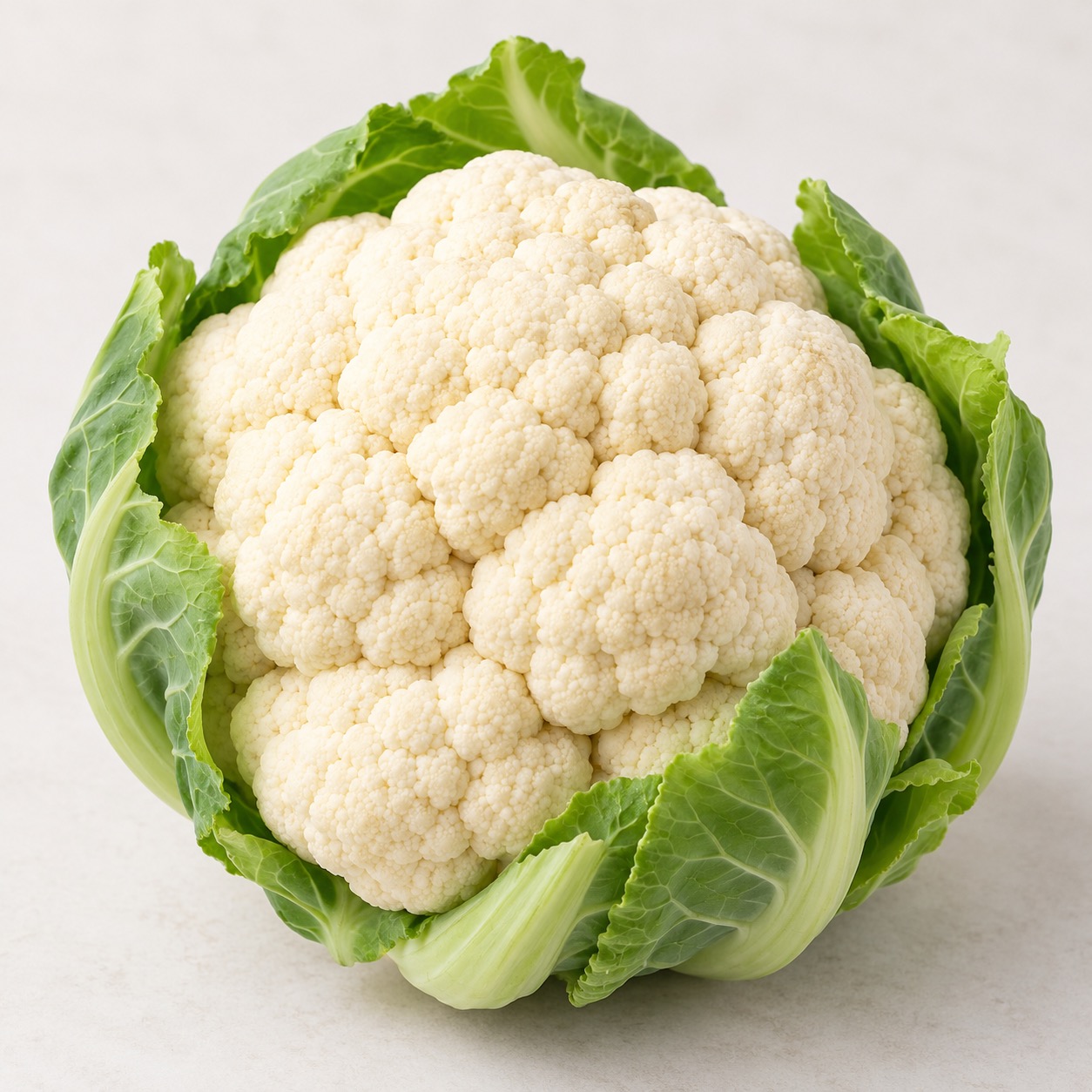 /academy/ibrary/veggies/cavolfiore.webp
- Canonical name
- White Cauliflower
- Italian name
- Cavolfiore
- Botanical identity
- Brassica oleracea Botrytis Group
- Ingredient code
- TC-VEG-CAULIFLOWER-001
- Inventory ID
- white_cauliflower
- Live Inventory #
- 93
- Icon ID
- TC-ICON-VEG-CAULIFLOWER-001
- Base unit
- g
- Purchase unit
- head
- Connected recipe
- /engine/zuppa/cauliflower.html
Botany, cultivation, history and nutrition
Reference sources supporting the factual foundation of this page.