Crisp and fibrous
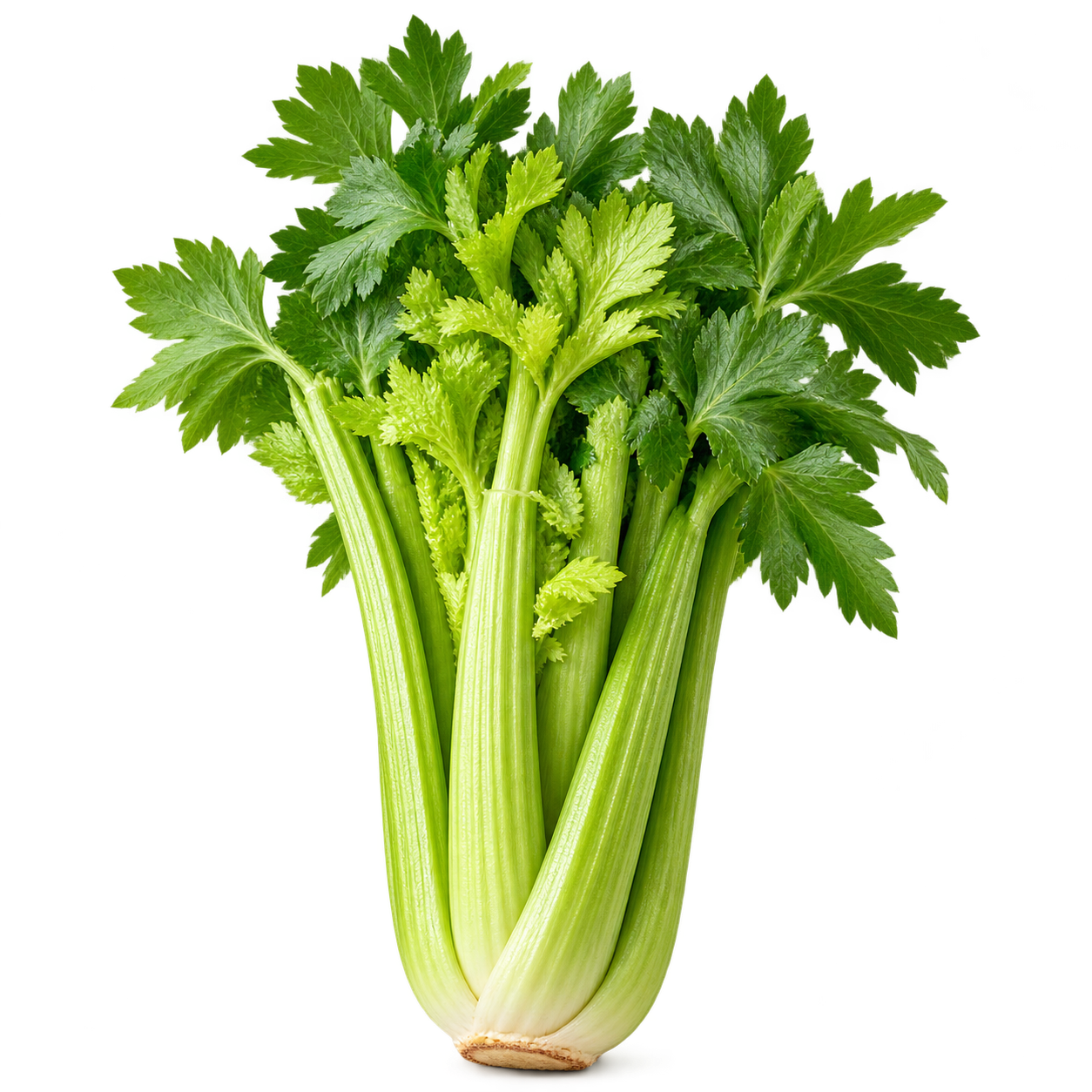
Firm ribs contain long vascular strands and abundant water. Tender inner hearts are finer; mature outer stalks are stronger and may need string removal for refined preparations.
Tuscany Cuisine Ingredient Library · Vegetables
Crisp, aromatic and quietly foundational. This professional guide separates stalk celery from celeriac, then follows celery from cultivar and field season to flavor, nutrition, purchasing, storage and the finished plate.
Ingredient identity
Apium graveolens is a biennial member of the parsley family. Culinary selection produced distinct forms: thick-stalked celery, slender leaf or Chinese celery, and the swollen stem base called celeriac. They are related, but they are not operationally interchangeable.
Firm ribs contain long vascular strands and abundant water. Tender inner hearts are finer; mature outer stalks are stronger and may need string removal for refined preparations.
Expect a cool vegetal aroma, light salinity, herbal pepperiness and gentle bitterness. Leaves and slender cutting celery are more concentrated than pale inner stalks.
Moist heat softens the fibers and rounds bitterness. Slow sweating in fat releases the aromatic base that supports soups, ragù, sauces, braises and stocks.
Varieties and market forms
Names vary by seed company and region. For kitchen records, the edible part and intended use matter more than the cultivar name.
| Group | Examples | Character | Best uses |
|---|---|---|---|
| Green / Pascal stalk celery | Utah, Tall Utah, Tango, Conquistador, Monterey, Command, Mission, Challenger, Matador | Broad, crisp green ribs; balanced bitterness and fresh celery aroma | Crudités, salads, mirepoix, soffritto, soups, braises, stock |
| Self-blanching / golden | Golden Self Blanching and related pale types | Paler, generally milder stalks; cultivated for tender hearts | Raw service, composed salads, light braises |
| Leaf or cutting celery | Chinese celery, smallage and regional leaf types | Slender stems, abundant leaves, concentrated herbal aroma | Stir-fries, broths, dumpling fillings, herb-like garnish |
| Celeriac | Celery root; A. graveolens var. rapaceum | Knobby swollen stem base; dense, earthy, nutty and celery-scented | Purée, rémoulade, gratin, soup, roast vegetables — separate ingredient record |
This page and celery.png represent stalk celery, its hearts and leaf/cutting forms. Recipe units include grams, bunches, heads, stalks and ribs.
The future celery-root.html and celery-root.png will represent the round, knobby root vegetable. Its yield, preparation, nutrition and recipe matches will remain separate.
Seasonality and quality
Celery develops best in cool, even conditions with dependable moisture. Heat, drought or interrupted irrigation can produce hollow, fibrous or strongly flavored stalks. Regional harvests overlap, so supermarkets can carry celery throughout the year even when the local field season is shorter.
Production around the world
Celery is cultivated across Europe, the Americas, Asia and Oceania. Production follows cool temperatures, fertile soils, reliable water and quick access to cooling. Global comparisons require care because statistical systems do not always separate stalk celery, leaf celery and celeriac—or may group them under broader vegetable categories.
| Region | Production pattern | Market character |
|---|---|---|
| United States | California’s south and central coastal districts form the principal measured supply, with seasonal production in other states. | Large, uniform green bunches for fresh market and foodservice; cold-chain cooling begins soon after hand harvest. |
| Mexico and Central America | Highland and irrigated winter districts support domestic demand and seasonal export trade. | Fresh-market bunches that complement North American winter supply. |
| Mediterranean and Western Europe | Spain, Italy, France, the Netherlands and the United Kingdom grow stalk celery under field and protected systems. | Green and self-blanching celery; important fresh, soup and aromatic-base markets. |
| Central and Northern Europe | Cool field conditions also favor celeriac, which may be more commercially prominent than stalk celery. | Storage roots for autumn and winter alongside limited stalk-celery production. |
| East and South Asia | China, India, Japan, Korea and neighboring markets cultivate thick-stalked and leaf/cutting forms. | Slender aromatic Chinese celery is common in stir-fries, broths and fillings. |
| Australia and New Zealand | Cool coastal and irrigated districts provide domestic fresh-market celery. | Year-round retail supply supported by regional scheduling. |
Data note: use current national statistics for procurement forecasts. USDA NASS publishes U.S. celery area, yield, production and value; FAOSTAT and Eurostat are useful broader references, but commodity definitions are not perfectly aligned.
Nutrition and dietary role
Raw celery is very low in energy and supplies water, fiber, vitamin K, folate and potassium. It is useful for crunch and volume, but no single ingredient replaces a varied diet.
Representative USDA reference values; actual values vary by cultivar, sample and database update.
Its high water content and crisp structure add bulk and refreshment with little energy. Whole celery retains fiber that strained juice does not.
Celery contributes vitamin K, which supports normal blood clotting and bone health. People managing vitamin-K-sensitive medication should follow their clinician’s advice about consistency.
Celery contributes modest amounts of folate and potassium as part of an overall balanced eating pattern.
Celery, celeriac and derived celery ingredients can cause allergy. Celery is a declarable allergen in the EU and UK. Follow local rules, label accurately and control cross-contact.
Culinary usage
Celery works as a featured vegetable, a textural accent and a background aromatic. Match the cut and cooking time to the result you want.
Slice thinly across the rib for salads, shave lengthwise for ribbons, or cut into batons for crudités. Inner hearts are naturally tender and mild.
Sweat diced celery with onion and carrot to build the aromatic base of ragù, soups, beans, sauces and braises. Keep the heat moderate to soften without scorching.
Outer stalks and clean trimmings give savory green aroma. Avoid excessive leaves in delicate stock, where their stronger bitterness may dominate.
Cut on the bias and cook quickly for lasting snap. Leaf celery and Chinese celery bring more concentrated fragrance.
Brining preserves crunch and acidity brightens celery’s mineral flavor. Use tested fermentation or canning procedures for food safety.
Tender leaves can finish salads, soups and salsa verde. Celery seed and celery salt are concentrated derivatives and should be identified separately in recipes and allergen records.
Receiving, storage and preparation
Tuscany Cuisine platform
This page publishes a machine-readable identity for recipe, inventory, purchasing and nutrition tools. It recognizes common names for stalk celery while deliberately excluding “celeriac” and “celery root.”
Recipe usage in this browser
No compatible stored recipe records currently reference celery.
The count is calculated from compatible Tuscany Cuisine recipe data saved in this browser. It does not represent the full public website database.
Editorial sources
Production and nutrient figures change over time. Consult the current edition of each source when making nutritional, agricultural or purchasing decisions.