Central Asian roots
Allium sativum began in a temperate region stretching from Central Asia toward northeastern Iran before becoming a cultivated food crop.
Ingredient Library · Vegetables & Alliums
Allium sativum L. · Aglio
One ingredient, hundreds of culinary personalities—from the sharp perfume of a freshly cut clove to the sweetness of slow roasting and the dark, balsamic depth of aged black garlic.
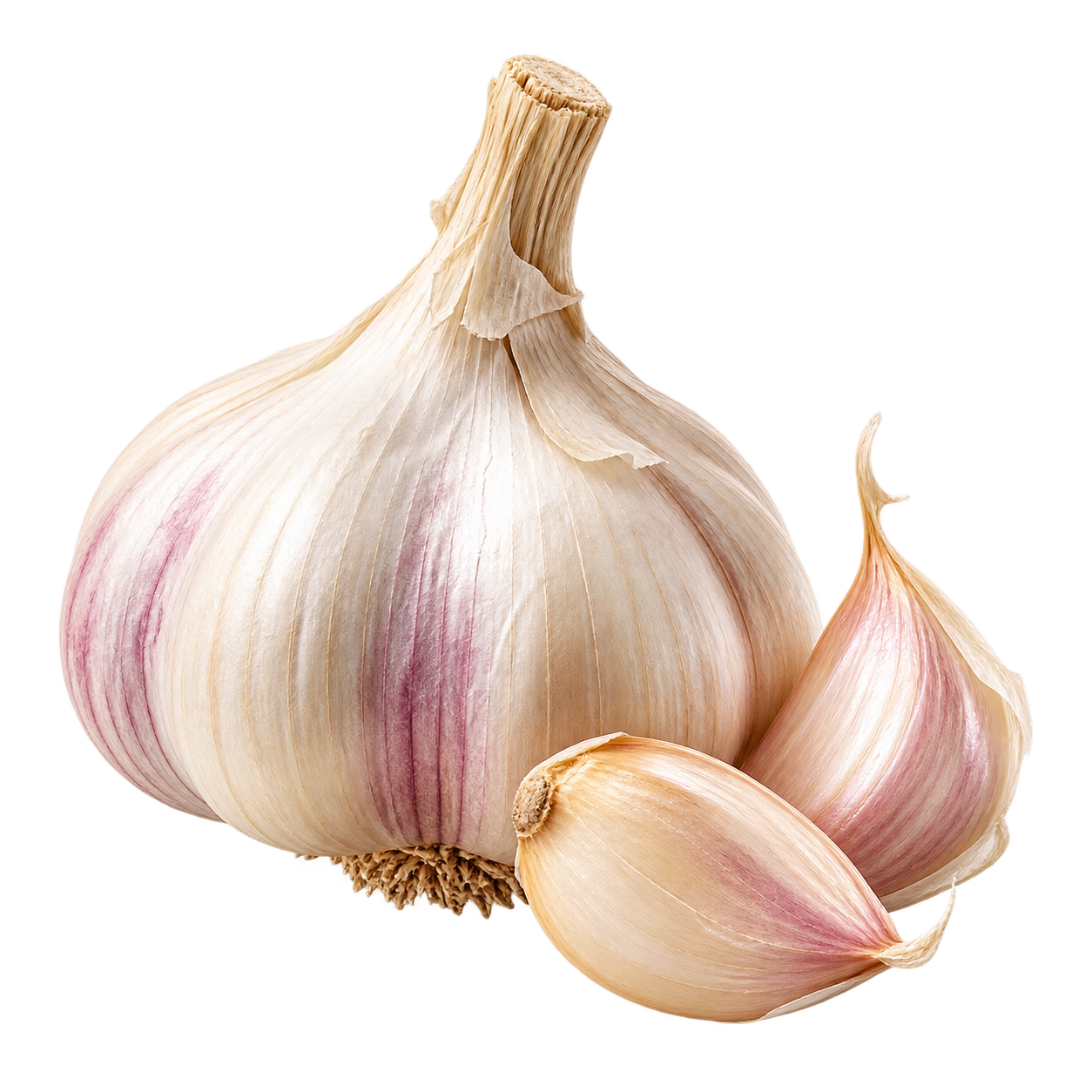
/academy/ibrary/veggies/garlic.pngFrom origin to kitchen
Kew identifies garlic’s native range as Central Asia to northeastern Iran. Cultivation and trade then carried it across continents, where cooks shaped it into one of the most universal foundations of flavor.
Allium sativum began in a temperate region stretching from Central Asia toward northeastern Iran before becoming a cultivated food crop.
Historical records place garlic in ancient Egyptian, Greek, Roman, South Asian and Chinese food traditions as well as traditional health practices.
Across Italy and the Mediterranean, garlic became a starting technique: infused in oil, crushed into sauces, roasted, preserved and paired with vegetables, grains, seafood and meats.
Climate, soil, cultivar and post-harvest handling create different clove sizes, wrapper colors, heat, sweetness, storage life and culinary value.
Types & qualities around the world
Garlic names can vary by farm and region. These major horticultural and culinary groups help chefs compare structure, flavor, seasonality and storage potential.
A hardneck group with a central scape, easy-peeling cloves and a rich, rounded garlic character prized for fresh cooking.
Hardneck families known for large cloves, firm texture and striking wrappers. Purple Stripe types often roast especially well.
Often identified by rose, red or purple clove skins. Creole selections favor warmer conditions and offer a clean, persistent flavor.
A softneck group with multiple layers of cloves, reliable yields and generally good storage—common in supermarkets and professional kitchens.
A firm softneck type with white wrappers and excellent keeping quality. Flexible stems make it the classic choice for braiding.
Early-maturing groups with bold appearance and flavors that can range from bright and direct to warm and lingering, depending on terroir.
Tuscan ingredient spotlight
Aglione is not simply a very large common garlic. The EU CAP Network identifies the traditional Valdichiana crop as Allium ampeloprasum var. holmense, a giant allium related more closely to elephant garlic than to Allium sativum.
It is treasured in southeastern Tuscany for its very large cloves, mild aroma and gentler, sweeter flavor. Its signature culinary expression is pici all’aglione: thick hand-rolled Tuscan pasta with tomato and slowly softened Aglione.
Transformation
Soft, dark cloves with sweet-sour, molasses, tamarind and balsamic notes.
Whole bulbs are held under controlled warm, humid conditions for an extended period. Heat-driven browning reactions change color, texture, aroma and flavor.
Chef’s note: Black garlic is often called “fermented garlic,” but its defining transformation is controlled thermal aging and non-enzymatic browning. Production parameters vary by maker.
Farm to dry store
Season and timing change with cultivar and climate. The plant itself provides the best readiness signals.
Begin checking when lower leaves turn brown while roughly half—or slightly more—of the upper leaves remain green.
Lift a sample. Cloves should fill their skins and remain enclosed by tight wrappers; split bulbs were left too long.
Loosen the soil and raise bulbs carefully with stalks attached. Bruising reduces market quality and storage life.
Place plants in a warm, dry, airy and shaded location for about three to four weeks until wrappers, roots and shoots dry.
After curing, trim roots close and cut hardneck stems above the bulb. Store with ventilation in a cool, dry, dark place.
Receiving standards
Good garlic should feel alive but dry: dense, firm and aromatic only after it is cut or bruised.
Professional storage: Keep whole cured bulbs dry, dark and ventilated. Do not wash before storage. Once peeled or cut, refrigerate in a covered food-safe container and follow the kitchen’s date-labeling policy.
Culinary behavior
Garlic’s aroma develops when cells are damaged. The finer the cut and the longer the raw contact, the more assertive the result; gentle whole-clove cooking moves the profile toward sweetness.
Mild, creamy and sweet. Ideal for purées, spreads, sauces, braises and vegetable preparations.
Controlled aromatic release. Use for aglio e olio, sautés, confit and gently infused sauces.
More immediate and assertive. Excellent in marinades, pestos, dressings, meat mixtures and pan sauces.
Maximum intensity. Add in small amounts to aioli, gremolata, salsa, bruschetta and finishing emulsions.
Connected culinary system
This record combines verified published recipe links with the Tuscany Cuisine recipe-ingredient catalog, recognizes garlic aliases and displays every connected dish without duplicate cards.
Canonical ingredient: garlic · aliases synchronized
TC_INGREDIENT_LIBRARY_V1 ↔ TC_RECIPE_INGREDIENT_CATALOG_V1
Editorial references
Authoritative botanical, agricultural, protected-origin, food-science and food-safety references used for this ingredient record.