Connected ingredient system
Permanent Fresh Chervil identity
This record upgrades the existing `fresh_chervil` inventory identity into a published Ingredient Library record without changing the Live Inventory key already used by recipes.
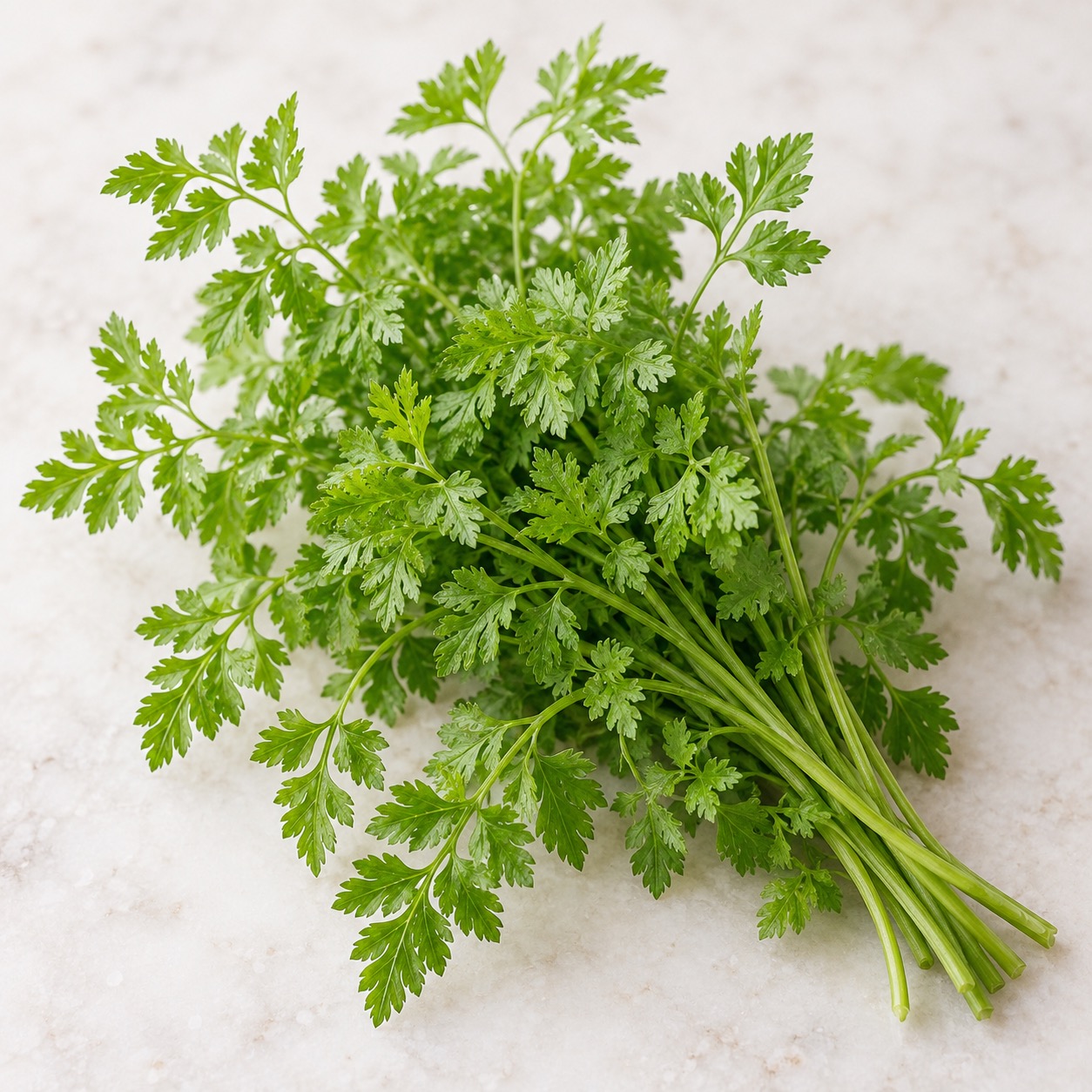
Fresh Chervil
HERB-CHERVIL-FRESH-001
Vegan
Vegetarian
Gluten-free ingredient
Dairy-free ingredient
Fresh herb
- Ingredient IDfresh_chervil
- Inventory IDfresh_chervil
- Master codeHERB-CHERVIL-FRESH-001
- Icon IDTC-ICON-HERB-CHERVIL-FRESH
- Icon/academy/ibrary/veggies/herbs/chervilo.webp
- Page/academy/ibrary/veggies/herbs/Chervil.html
- CategoryProduce → Fresh Herbs → Chervil
- Base unitgram (g)
- StationProduce / Salad Station
Platform destinations
Recipe pagesReady · icon + permanent page
Salad StationReady · garnish and herb prep
Menu BuilderReady · fresh-herb identity
Live InventoryReady · fresh_chervil retained
Purchasing & ReceivingReady · bunch / case / gram
Ingredient icon systemReady · chervilo.webp
Master SearchReady · aliases + flavor + nutrition
Culinary AcademyReady · herb technique reference
The permanent code is HERB-CHERVIL-FRESH-001. The existing fresh_chervil inventory ID remains unchanged so Recipe 355 and future recipes can switch to the permanent record without breaking inventory continuity.
Botany, origin & history
A temperate Eurasian herb refined by French cuisine
Kew accepts Anthriscus cerefolium as the botanical name and places its native range from east-central Europe through parts of western Asia to northern Iran. It belongs to the Apiaceae family alongside parsley, celery, carrot, dill and fennel.
- Native range
East-central Europe through the Balkans, Caucasus and western Asian regions toward northern Iran.
- Ancient use
RHS notes that chervil has been used since Roman times, showing a long culinary history in European herb culture.
- France
Chervil became especially important in French cooking, where its delicate fresh character suits sauces, eggs, fish and the classic fines-herbes style of seasoning.
- Global cultivation
Kew records the plant as introduced well beyond its native range, while horticultural sources describe it as widely grown as a culinary herb.
- Modern kitchens
Fresh chervil remains a specialty finishing herb because prolonged heat quickly reduces its subtle aromatic character.
Flavor profile
Parsley freshness with a whisper of anise
Chervil is intentionally delicate. It should season a dish without announcing itself as strongly as tarragon, fennel or licorice-forward herbs.
PrimaryFresh parsley · green herb · delicate
SecondaryMild anise · faint licorice · lightly sweet
TextureFine feathery leaves · tender stems · soft garnish
Heat behaviorAroma fades quickly with prolonged heat; add late
Seasonality
Cool conditions preserve the best leaf quality
Chervil is a short-lived cool-weather herb. Production can be extended through succession sowing, light shade and protected growing, but hot, dry weather encourages bolting.
Spring
Prime season for tender leaves and strong vegetative growth. Early sowing gives excellent quality.
Summer
Use partial shade, consistent moisture and repeated sowings. Heat can trigger rapid flowering and reduce leaf quality.
Fall
Excellent cool-season production. Late-summer sowings can provide fresh leaves through autumn.
Winter
Possible in mild climates, cold frames and protected greenhouse systems where freezing is avoided.
Cultivation
Fast-growing, shallow-sown and happiest out of the heat
Direct sow
Chervil develops a taproot and does not enjoy root disturbance. Direct sowing or careful early transplanting is preferable.
Light shade
RHS recommends a cool, lightly shaded position, especially in warmer weather, to delay premature flowering.
Moist, drained soil
Keep soil consistently moist but not waterlogged. Dry conditions encourage bolting and reduce tender-leaf production.
Succession sowing
Sow small batches regularly through the growing season to maintain a steady supply of young aromatic leaves.
Professional growing notes
- Seed can germinate quickly under suitable cool conditions.
- RHS suggests shallow outdoor sowing around 1 cm deep.
- Young leaves may be harvestable in roughly eight weeks.
- Harvest before flowering for the best culinary quality.
Common production risks
- Bolting in hot or dry conditions
- Loss of tenderness after flowering begins
- Root disturbance during transplanting
- Aphids, slugs and snails on tender growth
Nutrition
Fresh aromatic herb with vitamin C, folate and minerals
Fresh-chervil nutrient values below use the French Ciqual food-composition reference for fresh chervil (code 11002), as reported by current Ciqual-based data publications.
Nutrition Facts
Approximate values per 100 g fresh edible portion
Calories40
Protein3.72 g
Carbohydrate3.63 g
Dietary Fiber2.55 g
Sugars0.6 g
Total Fat0.6 g
Potassium597 mg
Calcium273 mg
Iron1.6 mg
Vitamin C37 mg
Folate (B9)220 µg
Fresh chervil provides vitamin C, but the herb is normally eaten in small amounts, so actual intake depends heavily on serving size.
Ciqual-based values report a notable folate concentration per 100 g, although typical garnish portions are much smaller.
Fresh chervil contains both minerals; again, culinary portions are generally modest.
Do not substitute dried-chervil nutrient values for fresh chervil. Drying concentrates nutrients and changes the composition per 100 g dramatically.
Nutrition values are composition references, not a claim that normal garnish portions deliver the full 100 g amount. Variety, moisture, growing conditions and analytical database version can change the reported values.
Professional culinary usage
A finishing herb for dishes that need finesse
Chervil's strength is restraint. It works best when freshness, elegance and a mild aromatic lift are more important than aggressive herbal intensity.
Salads & greens
Add whole tender leaves or finely chopped chervil to composed salads, tender lettuces, spring vegetables and seafood salads.
Fish & shellfish
Excellent with shrimp, scallops, white fish, crab and delicate shellfish because the mild anise note does not overwhelm the protein.
Egg dishes
A classic partner for omelets, scrambled eggs, poached eggs and egg-based sauces. Add at the end to protect aroma.
French-style sauces
Use in herb sauces, compound butter, beurre blanc-style finishes, vinaigrettes and fines-herbes mixtures.
Soups & vegetables
Stir into light soups, broths, peas, carrots, asparagus and spring vegetables immediately before service.
Garnish & plating
The fine, fern-like leaves are visually elegant and work well as a fresh green garnish on refined plates.
Chef pairing map
Proteins
Shrimp, scallops, white fish, chicken, eggs.
Vegetables
Asparagus, peas, carrots, potatoes, delicate lettuces, radish.
Flavor partners
Lemon, white wine, butter, cream, Dijon, shallot, tarragon, parsley, chives.
Purchasing & quality
Buy it bright, delicate and completely fresh
Bright green leaves
Avoid yellowing, black edges or dull gray-green foliage.
Fine leaf tension
Leaves should look airy and alive, not collapsed, slimy or crushed.
Clean aroma
Fresh chervil should smell green and gently anise-like, never sour, fermented or musty.
No flowering stems
For premium culinary use, choose plants harvested before bolting, when leaves remain tender and aromatic.
Storage & shelf life
Treat chervil as a highly perishable finishing herb
| Condition | Handling | Tuscany Cuisine guidance |
|---|---|---|
| Fresh bunch | Refrigerate immediately. Protect the fine foliage from crushing and dehydration. | 3–5 day professional quality target; inspect daily. |
| Washed chervil | Dry thoroughly before refrigerated storage. Free moisture accelerates breakdown. | Use as quickly as practical for garnish-quality leaves. |
| Picked leaves | Store cold in a covered, lightly humid environment without compressing the foliage. | Prioritize for same-day and next-day service. |
| Chopped chervil | Chop close to service to minimize aroma loss, oxidation and bruising. | Best used immediately. |
Chervil is more fragile than sturdy herbs such as rosemary or thyme. The 3–5 day window above is a Tuscany Cuisine operational quality target rather than a universal regulatory shelf life.
Chef FAQ
Working with fresh chervil
Is chervil the same as parsley?
No. Chervil is a different species in the Apiaceae family. Its leaves resemble fine parsley, but the flavor is more delicate and includes a subtle anise-like note.
Can chervil replace tarragon?
Sometimes, but it is much milder. Chervil is useful when you want a gentle anise note without the stronger intensity of tarragon.
Why should chervil be added at the end?
Its volatile aroma is delicate and fades with long cooking. Adding it during the final moments preserves freshness and fragrance.
Why is chervil difficult in hot weather?
Hot, dry conditions encourage bolting. Light shade, consistent moisture and succession sowing help maintain leaf production.
Research foundation
Selected sources
- Royal Botanic Gardens, Kew — Anthriscus cerefolium taxonomy, native range and classification
- Royal Horticultural Society — Chervil cultivation, harvesting, heat sensitivity and culinary handling
- Royal Horticultural Society — Anthriscus cerefolium botanical and cultivation profile
- North Carolina Extension — Chervil growth habit, propagation, flavor and culinary uses
- Current Ciqual-based fresh chervil nutrition data — ANSES Ciqual code 11002