Mediterranean basin
True culinary bay is native across parts of southern Europe, North Africa and the eastern Mediterranean, including Italy and its islands.
Ingredient Library · Herbs & Aromatics
Laurus nobilis L. · Alloro · Mediterranean Bay Laurel
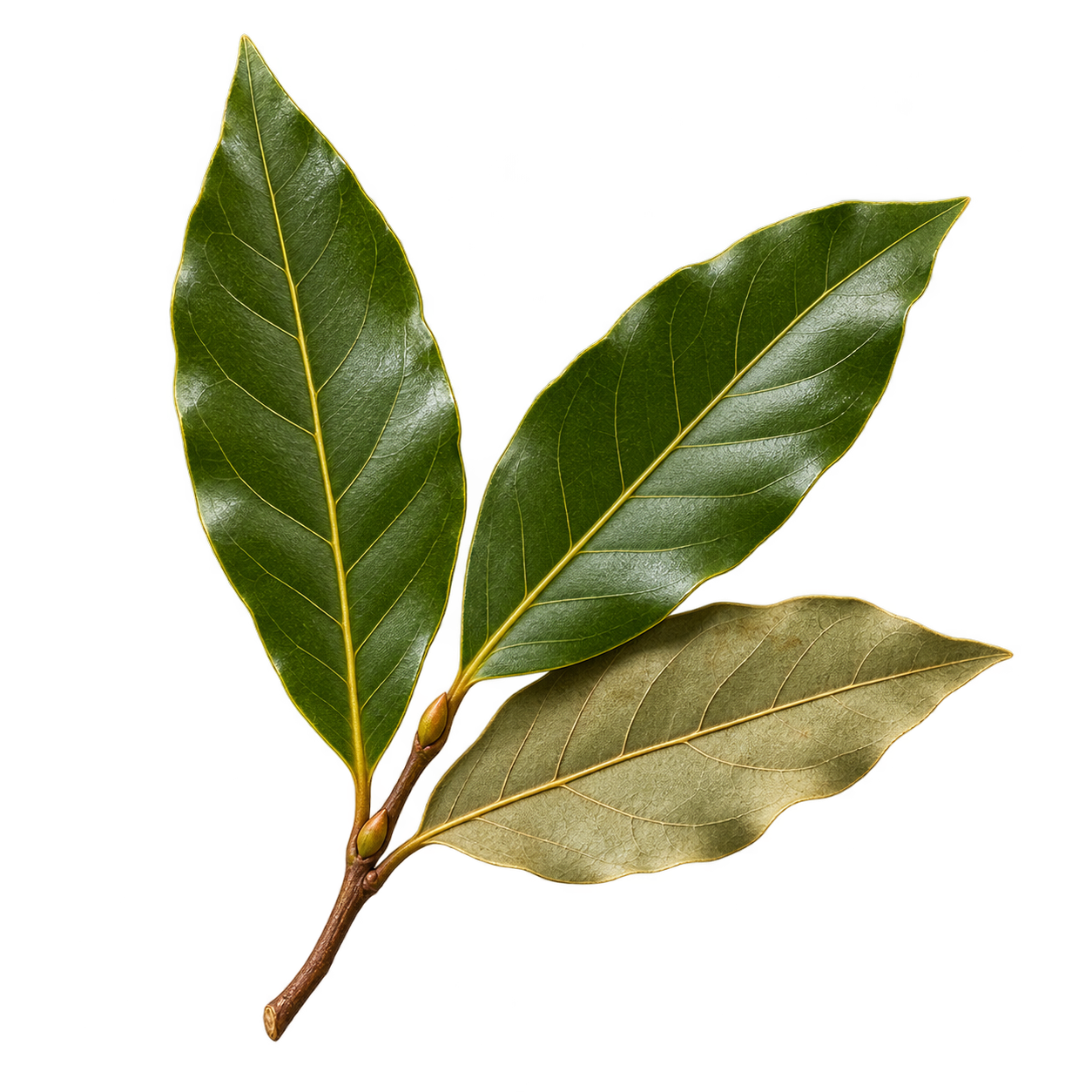
A quiet foundation of Mediterranean cooking: leathery aromatic leaves that release eucalyptus, resin, tea, floral and warm-spice notes slowly into stocks, soups, beans, braises, sauces and curing mixtures.
/academy/ibrary/veggies/herbs/bayleaf.pngMediterranean identity
Royal Botanic Gardens, Kew recognizes Laurus nobilis as a Mediterranean species. Its fragrant evergreen leaves became both a culinary aromatic and a symbol of honor whose legacy survives in the words “laureate” and “baccalaureate.”
True culinary bay is native across parts of southern Europe, North Africa and the eastern Mediterranean, including Italy and its islands.
Laurel wreaths became signs of distinction, poetry, achievement and victory in Greek and Roman culture.
Italian, French, Greek, Turkish and North African cooks use the leaf to build background aroma during moist, extended cooking.
A few intact leaves can structure a full stockpot or braise; dosage must follow leaf size, freshness, species and cooking time.
World leaf guide
Regional leaves may share a common name while belonging to different botanical species. They carry different aromas and should not be substituted one-for-one without tasting.
Laurus nobilis. The reference leaf for Italian and European kitchens: floral, resinous, tea-like and gently eucalyptus-scented.
Umbellularia californica. A separate species native from southwestern Oregon to northern Baja California, usually much more forceful and camphor-like.
Cinnamomum tamala. A cinnamon relative with three strong veins and warmer cinnamon-clove notes used in biryani, pulao, curries and spice blends.
Syzygium polyanthum. A different tropical tree used for savory depth in Indonesian cooking; its culinary identity is distinct from Mediterranean bay.
Purchasing rule: For Tuscany Cuisine recipes labeled simply “bay leaf,” buy food-grade Laurus nobilis. Confirm the botanical or supplier identity when receiving regional alternatives. Never use an unidentified ornamental “laurel.”
Flavor management
Fresh bay
Fresh leaves are pliable, glossy and immediate. Their eucalyptus and floral notes can feel brighter and sometimes more assertive.
Dried bay
Careful drying softens the raw green edge and concentrates a familiar warm, tea-like aroma suited to long, slow extraction.
Harvest and preservation
Bay is evergreen, so individual mature leaves can be harvested as needed. Clean handling, moderate drying temperatures and protection from light preserve the essential oils that give the leaf value.
Choose fully expanded, healthy leaves with good color. Avoid insect damage, disease, road dust and chemically treated ornamental plants.
Cut after surface moisture or dew has dried. Handle gently so aromatic oils remain in the leaf instead of being lost through bruising.
Rinse only when needed, then dry the surface completely. Remove stems, spotted leaves and foreign material.
Air-dry in a dark, dry, ventilated place or use a dehydrator at about 95–115°F (35–46°C) until leaves are crisp.
Cool fully, then store whole leaves in an airtight food-safe container away from heat and light. Label origin, lot and pack date.
Receiving standards
Bay leaf is inexpensive per portion, but stale leaves waste cooking time and create no aromatic return. Evaluate color, condition, origin and aroma—not price alone.
Inventory standard: Store whole dried leaves in a sealed, labeled container away from the range, steam and sunlight. Use first-in, first-out rotation and evaluate aroma during inventory counts.
Professional culinary use
The leaf is designed for infusion, not for visible garnish. Add it early enough to extract aroma, keep count, taste during production and remove it before service.
Add whole leaves to mirepoix-based stocks, fumet, consommé and poaching liquids for background structure.
Use with wine, tomato, aromatics and slow-cooked meats. Remove during finishing and sauce adjustment.
Infuse cooking liquid for beans, lentils, rice and farro; pair especially well with onion, garlic and peppercorn.
Combine with salt, peppercorn, juniper, citrus peel and other aromatics in validated brines, marinades and curing mixtures.
Connected culinary system
This record combines verified published recipe links with the Tuscany Cuisine recipe-ingredient catalog, recognizes common bay-leaf aliases and displays every connected dish without duplicate cards.
Canonical inventory key: bay_leaves · aliases synchronized
TC_INGREDIENT_LIBRARY_V1 ↔ TC_RECIPE_INGREDIENT_CATALOG_V1
Editorial references
Botanical and horticultural references used to distinguish true Mediterranean bay from other regional culinary leaves and to establish safe drying and service guidance.