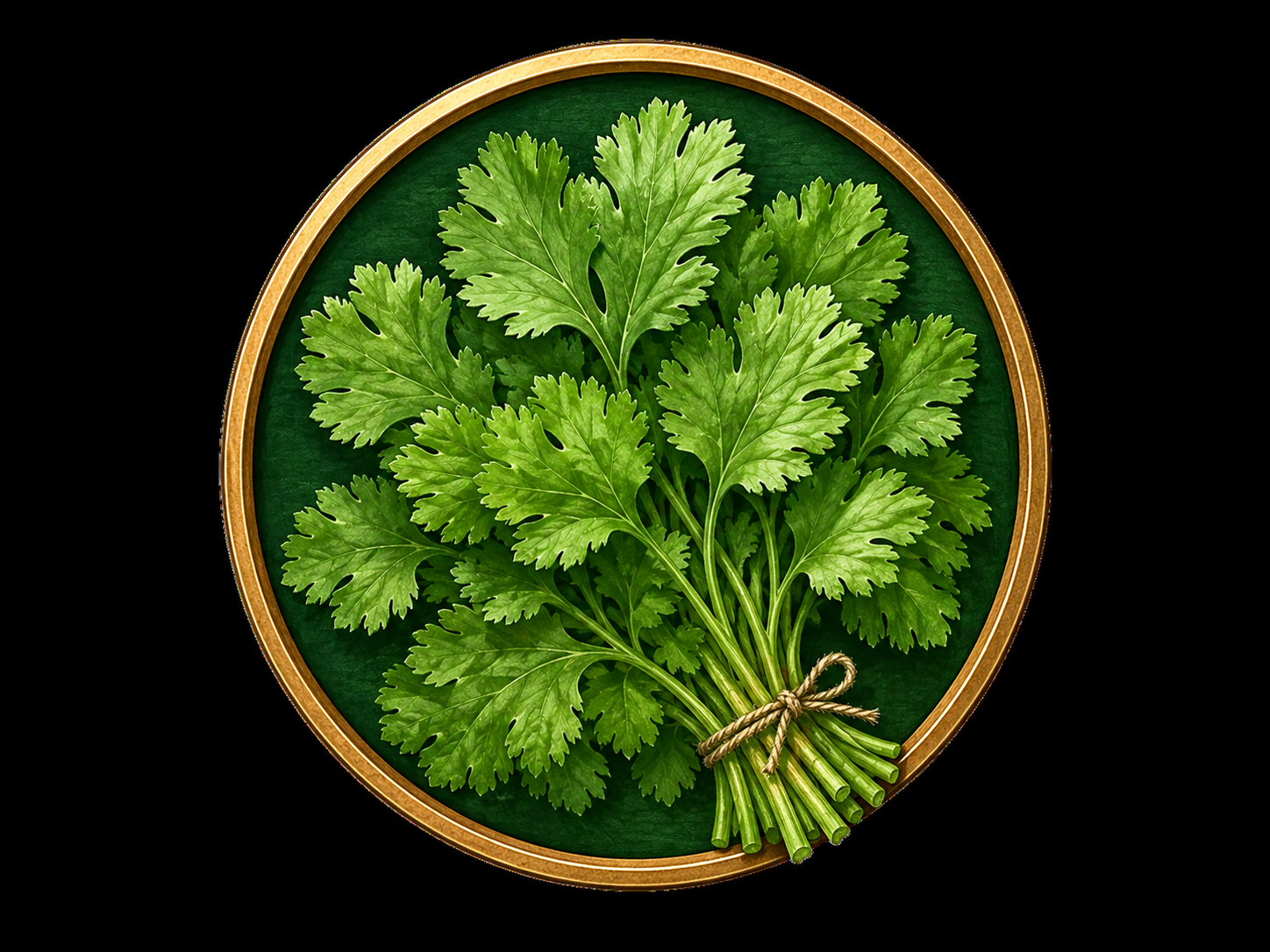
Cilantro
Cilantro is the fresh leafy portion of Coriandrum sativum, a highly aromatic herb used across Latin American, Mexican, South Asian, Southeast Asian, Middle Eastern and Mediterranean cuisines. Its bright citrus-like, green flavor makes it especially useful for fresh garnishes, sauces, salsas, marinades, seafood, vegetables and composed restaurant plates.
About Cilantro
Cilantro and coriander come from the same plant, Coriandrum sativum. In common North American culinary usage, the fresh leaves and tender stems are called cilantro, while the dried seeds are called coriander seeds.
In many other parts of the world, the leaves may simply be called coriander, fresh coriander or coriander leaf. In Italian, the plant is known as coriandolo.
Professional kitchens value cilantro because a relatively small amount can add freshness, aromatic lift and visual contrast to strongly flavored dishes. Both leaves and tender stems are edible and useful.
History & Global Culinary Tradition
Ancient Culinary Herb
Coriander is an old cultivated culinary plant with a history spanning parts of the Mediterranean, western Asia and neighboring regions. Over centuries it became important in food traditions far beyond its early cultivation areas.
Because both the leaves and seeds are useful, the plant developed a broad culinary role: the fresh herb provides bright green aroma, while the dried seed offers a warmer, citrusy and lightly spicy profile.
Modern Global Use
Fresh cilantro is central to many cuisines. It appears in Mexican salsas and tacos, Indian chutneys, Southeast Asian soups and salads, Middle Eastern herb preparations and many contemporary restaurant dishes.
Its global versatility makes it an important ingredient for chefs creating menus that combine fresh herbs, citrus, chile, vegetables, seafood, legumes and aromatic sauces.
Flavor & Aroma Profile
Leaves
Fresh, green, citrus-like and highly aromatic, with a distinctive character that is immediately recognizable.
Tender Stems
Similar in flavor to the leaves and often more concentrated. Tender stems can be minced into sauces, salsas and marinades.
Seeds
Coriander seeds have a different culinary personality: warmer, rounder, citrusy and lightly spicy, especially after toasting.
Forms & Culinary Identities
| Form | Kitchen Identity | Typical Use |
|---|---|---|
| Fresh cilantro leaves | Fresh herb | Garnish, salsa, salad, finishing, herb sauces |
| Tender cilantro stems | Aromatic herb stem | Marinades, sauces, curry pastes, salsas and stocks |
| Coriander seeds | Dry spice | Toasting, spice blends, marinades, sausages, pickling |
| Coriander root | Regional aromatic ingredient | Especially useful in selected Southeast Asian preparations |
These forms should remain distinguishable inside a professional inventory system. Fresh cilantro leaves and coriander seeds have different units, storage requirements, costs and culinary functions.
Seasonality, Growing & Harvest
Cilantro generally performs best in cool to mild growing conditions. High heat can accelerate flowering and seed production, a process commonly called bolting. In commercial agriculture, production regions and protected growing methods allow fresh cilantro to be available through much of the year.
| Growing Stage | Culinary Character | Best Use |
|---|---|---|
| Young leafy growth | Tender, aromatic and bright | Fresh garnish, salads, sauces |
| Mature leafy growth | More developed stems and stronger aroma | Salsas, marinades, chopped herb mixes |
| Flowering stage | Leaf production declines as plant bolts | Selected edible flower and seed production uses |
| Seed stage | Coriander seed develops | Dry spice production |
Harvest Quality
- Choose bunches with bright green leaves and crisp stems.
- Avoid extensive yellowing, blackened leaves or slimy tissue.
- Check the center of dense bunches for moisture damage.
- Use clean, fresh-smelling herbs without excessive decay.
Professional Culinary Uses
Classic with tomatoes, avocado, chile, onion, lime and fresh salsas.
Pairs well with tuna, white fish, shellfish, citrus and avocado.
Excellent in guacamole, salads, composed appetizers and vegetable dishes.
Useful in herb sauces, chutneys, green sauces and fresh purées.
Often used late in cooking or as a finishing herb to preserve aroma.
Small leaves and tender sprigs add freshness, height and bright green color.
Ingredient Pairings
Vegetables, Fruits & Pantry
- Avocado
- Tomato
- Onion and scallion
- Lime and lemon
- Chiles and peppers
- Garlic
- Cucumber
- Beans and lentils
- Sesame
- Extra virgin olive oil
Proteins & Main Components
- Tuna
- White fish
- Shrimp and shellfish
- Chicken
- Pork
- Beef
- Eggs
- Fresh cheese
- Tofu
- Rice and grains
Storage & Professional Kitchen Handling
Receiving
- Inspect color, aroma and stem condition.
- Reject bunches with heavy decay or slimy leaves.
- Keep the herb cool after receiving.
- Remove damaged leaves before storage.
Refrigerated Storage
- Keep refrigerated and protected from dehydration.
- Avoid excess free moisture around the leaves.
- Store loosely rather than crushing bunches together.
- Use FIFO rotation for best aroma and appearance.
Preparation Techniques
- Whole sprigs: use for final garnish when the leaves are small, fresh and visually attractive.
- Rough chop: useful for salsa, salads and casual garnish.
- Fine chop: useful for sauces, fillings and seasoning mixtures.
- Tender stems: chop into marinades, sauces, chutneys and curry pastes.
- Purée: blend into green sauces with citrus, chile, garlic, oil or other herbs.
- Late addition: add near the end of cooking when fresh aroma is the priority.
Nutrition & Culinary Wellness
Fresh cilantro is normally eaten in relatively small culinary portions. Like many fresh leafy herbs, it contributes plant compounds and micronutrients, but its most important role in a recipe is usually flavor, aroma, color and freshness.
It can help chefs build flavor without relying exclusively on heavy sauces, sugar or excess fat, especially when combined with citrus, vegetables and spices.
Food Safety & Handling
Cilantro is commonly served raw, so hygienic handling is important. Follow applicable food-service procedures for receiving, refrigeration, washing, cross-contamination prevention and ready-to-eat produce.
Wash or process fresh herbs according to the procedures required by your operation and local food-safety rules. Keep prepared cilantro refrigerated and protect it from contact with raw animal products.
Connected Tuscany Cuisine Recipe
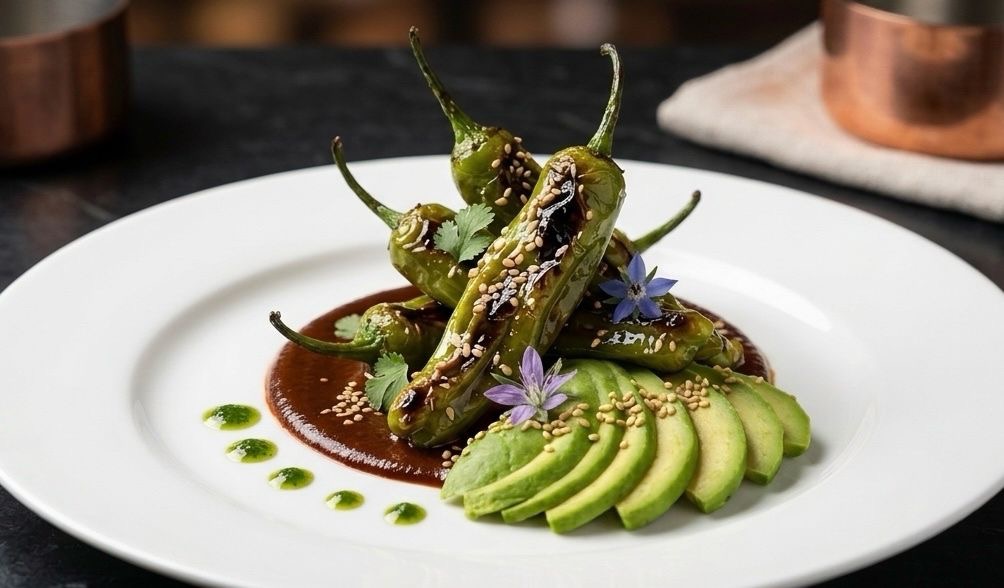
Blistered Shishito Peppers with Mole and Avocado
Fresh cilantro is used as a finishing garnish with blistered shishito peppers, mole sauce, avocado, toasted sesame seeds and borage flowers.
Open Connected Recipe →Tuscany Cuisine Master Ingredient Identity
This page establishes the published culinary-library identity for fresh cilantro. The same ingredient identity can be reused by recipes, Menu Builder, Production Dashboard, Live Inventory, station pick lists, vendor purchasing and receiving.
Recipe & Inventory Usage Record
Fresh Cilantro is ready to connect to recipe ingredient rows and operational systems using the same code, inventory ID, icon and ingredient-page path.
System status: Published ingredient-library identity ready for Master Ingredient Registry synchronization.