Ingredient Identity
Fresh red chili for the Italian kitchen
Peperoncino is the generic Italian culinary name for a hot chili pepper. For Tuscany Cuisine operations, this record represents a fresh, ripe, red, Italian-style hot pepper, primarily within the highly variable species Capsicum annuum. It is not intended to imply one fixed cultivar or one guaranteed Scoville level.
Botanical referenceCapsicum annuum L.
FamilySolanaceae
Italian namePeperoncino
Color standardFully red / ripe
Primary useControlled heat & aromatic seasoning
FlavorFresh · fruity · vegetal · pungent
HeatCultivar-dependent
Platform categoryProduce / Peppers / Hot Chile
Operational identity rule: when a recipe requires a specific cultivar—such as jalapeño, serrano, habanero, Calabrian cultivar, or a documented Scoville range—it should receive its own ingredient record rather than being silently merged into this general fresh peperoncino identity.
History
An American fruit that transformed Old World cooking
Chili peppers are native to the Americas. Archaeological research summarized by Kew places the domestication of Capsicum annuum at least 6,100 years ago. After European contact, seeds crossed the Atlantic and spread rapidly through Iberian and Portuguese trade networks.
Pre-Columbian Americas
Domestication and daily food culture
Capsicum peppers were cultivated and eaten in the Americas thousands of years before they reached Europe. Different communities selected peppers for flavor, shape, color and pungency.
1490s
Chili reaches Europe
Christopher Columbus encountered pungent Capsicum in the Caribbean and brought seeds back to Europe. The crop adapted readily and did not require the costly long-distance spice trade associated with black pepper.
16th century
From Spain into Italy
Peppers spread across Europe. The Italian botanist Pietro Andrea Mattioli described the plant in 1568, showing that it was already familiar enough to enter Italian botanical writing.
Southern Italian cooking
A natural partner for cucina povera
Because chili was inexpensive, easy to grow and powerful in small quantities, it became especially useful in modest kitchens where it could transform legumes, vegetables, preserved foods, pasta and simple sauces.
Modern Italian cuisine
Heat becomes part of regional identity
Peperoncino is now inseparable from many southern Italian traditions and appears throughout contemporary Italian cooking, from rustic home dishes to refined restaurant applications.
Italy & Calabria
The “red gold” of southern Italian food culture
Peperoncino is used throughout Italy, but its strongest cultural association is with Calabria. There it appears in sauces, preserved foods, salumi, vegetables, pasta and everyday condiments; strings of drying red peppers are also part of the region's visual food heritage.
Calabria
Peperoncino is strongly associated with regional identity and appears in foods such as spicy preserves, sauces and 'nduja. Diamante is known for an annual peperoncino festival.
Campania & Southern Italy
Fresh or dried chili supports tomato sauces, seafood, vegetables, soups and pasta preparations where heat is used as seasoning rather than as the sole flavor.
Central & Northern Italy
Use is generally more selective, but peperoncino appears in pasta, oils, sauces, legumes and modern restaurant cooking throughout the country.
2026 Calabria recognition process
An EU publication in 2026 documented the application for recognition of “Peperoncino di Calabria,” reflecting the product's established reputation and cultural connection to the region.
Heat & Capsaicin
Control pungency instead of guessing
Capsaicin and related capsaicinoids create the burning sensation of hot peppers. Heat is commonly expressed in Scoville Heat Units (SHU), but a generic “peperoncino” does not have one universal number because genetics, cultivar, maturity and growing conditions all affect pungency.
Where the heat actually comes from
The capsaicinoids are produced primarily in glands associated with the pale placental tissue inside the pod—the membrane structure that supports the seeds. The seeds themselves do not manufacture capsaicin, although their surfaces can pick it up through contact.
Chef control: removing only seeds is not the most effective way to reduce heat. Trim away part of the pale inner placenta/membranes, then taste the pepper and build the dish gradually.
Kitchen heat specification
Illustrative kitchen categories only—not a Scoville measurement. For repeatable production, specify cultivar and/or an agreed vendor heat range.
Cultivation
Warmth, sun and steady moisture
Chili peppers perform best with abundant sunshine and warm conditions. They are often treated as annual crops outside tropical climates, even though the plant can behave as a longer-lived shrub where frost is absent.
Temperature
Warm conditions support growth and fruiting. RHS guidance notes that plants grow better when nights stay above about 15°C / 59°F, while extreme heat above roughly 30°C / 86°F can reduce fruiting.
Light
Use the warmest, sunniest position available. Protected cultivation, sunny patios and greenhouse production can all work well.
Water
Maintain steady moisture without waterlogging. Irregular stress can influence growth, yield and pepper pungency.
Harvest color
For this Tuscany Cuisine identity, harvest or purchase fully red fruit. Colored chili peppers should show mature cultivar-appropriate color and firm texture.
Cultivar selection
Select for flavor and heat as well as yield. A kitchen that needs consistency should record cultivar or supplier specification.
Drying potential
Thin-walled hot peppers are well suited to drying. Dried peppers should be treated as a separate pantry identity because flavor, weight and intensity are concentrated.
Culinary Usage
Heat should support the dish
In Italian cooking, peperoncino is frequently used in small amounts to lift aroma and balance richness. The goal is usually not maximum heat: it is enough pungency to sharpen olive oil, tomato, garlic, legumes, vegetables, seafood or meat without destroying their identity.
Technique by application
Fresh sliced or minced
Add late for a bright, direct chili character. Excellent in seafood, salads, vegetables and finishing sauces when the cultivar is well controlled.
Bloomed in olive oil
Warm gently with garlic or aromatics so the fat carries the chili aroma through pasta, legumes, greens and soups. Avoid scorching the chili or garlic.
Long-cooked
Whole or chopped pepper can be simmered into tomato sauces, braises and soups for a more integrated background heat.
Classic pairings
Iconic Italian directions: spaghetti aglio, olio e peperoncino; arrabbiata-style tomato sauces; Calabrian-style preserved peppers; spicy legumes; sautéed greens; seafood sauces; soups and rustic vegetable dishes.
Fresh
Clean fruit character and direct heat. Best when the recipe can tolerate variation between individual pods.
Dried
More concentrated aroma and a different operational weight. Create or use a separate dried-peperoncino record for accurate costing.
Infused oil
Useful for finishing and portion control, but the infused oil should be tracked as its own prep/recipe identity rather than as raw pepper.
Chef David's flavor rule
Peperoncino should wake up the palate without making every bite taste only of chili. Start with the pepper's aroma, not with an assumed heat level. Taste the actual batch, adjust the placenta if necessary, and add it in the cooking stage that gives the effect you want—fresh, infused or integrated.
Nutrition
Small portions, concentrated vitamin C
Fresh hot red chili peppers are low in calories and can be rich in vitamin C. The table below uses the USDA legacy reference category “peppers, hot chili, red, raw”; actual values vary with cultivar, maturity and growing conditions.
Nutrition Reference
Hot red chili pepper · raw · 100 g
Calories40 kcal
Protein1.87 g
Carbohydrate8.81 g
Dietary fiber1.5 g
Total fat0.44 g
Vitamin A48 µg RAE
Vitamin E0.69 mg
Vitamin K14.0 µg
Reference category: USDA Standard Reference legacy “Peppers, hot chili, red, raw.” Fresh peperoncino is normally consumed in much smaller portions than 100 g.
| Nutrition / characteristic | Professional interpretation |
|---|
| Vitamin C | USDA's current pepper fact sheet describes chili peppers as an excellent source of vitamin C; content varies considerably by pepper type and serving. |
| Calories | Fresh chili contributes very little energy at normal seasoning portions. |
| Capsaicinoids | Responsible for pungency. Concentration is highly cultivar-dependent and is not represented by the basic nutrition panel. |
| Red pigments | Ripe red peppers develop carotenoid pigments as the fruit matures. |
| Portion reality | A recipe may use only a few grams per serving, so culinary impact is much greater than calorie impact. |
Nutrition data are reference information, not a medical recommendation. A specific Italian peperoncino cultivar may differ substantially from the generic USDA hot-red-chili category.
Purchasing & Storage
Firm fruit and a defined heat specification
The best fresh red peperoncino is firm, glossy and fully colored, with a clean fresh aroma and no shriveling or decay. For restaurant consistency, quality control should include heat specification—not appearance alone.
Purchase
Select bright, firm red pods with sound stems and cultivar-appropriate shape. Avoid shriveled, cracked, bruised or soft fruit.
Heat standard
If the menu requires repeatability, document cultivar, origin or an agreed mild/medium/hot specification with the vendor.
Receiving
Inspect color, firmness, mold, cracks, sunburn, softening, shrivel and decay. Taste or test representative fruit when heat consistency matters.
Storage
UC Davis identifies about 7.5°C / 45°F as the optimum commercial storage temperature for chile peppers, with very high relative humidity helping limit water loss.
Chilling risk
Fresh chiles can suffer pitting, decay, seed-cavity discoloration and excessive softening after overly cold or prolonged storage.
Prep safety
Capsaicin transfers easily to hands, eyes and sensitive skin. Use gloves for larger quantities or hotter lots, then wash tools and hands thoroughly.
Platform Integration
One peperoncino identity across Tuscany Cuisine
The new peperoncino.webp graphic replaces the fallback pepper image and gives fresh red peperoncino a permanent identity for recipes, Menu Builder, production stations, Live Inventory, Purchasing, Receiving and ExpertRec / my_result discovery.
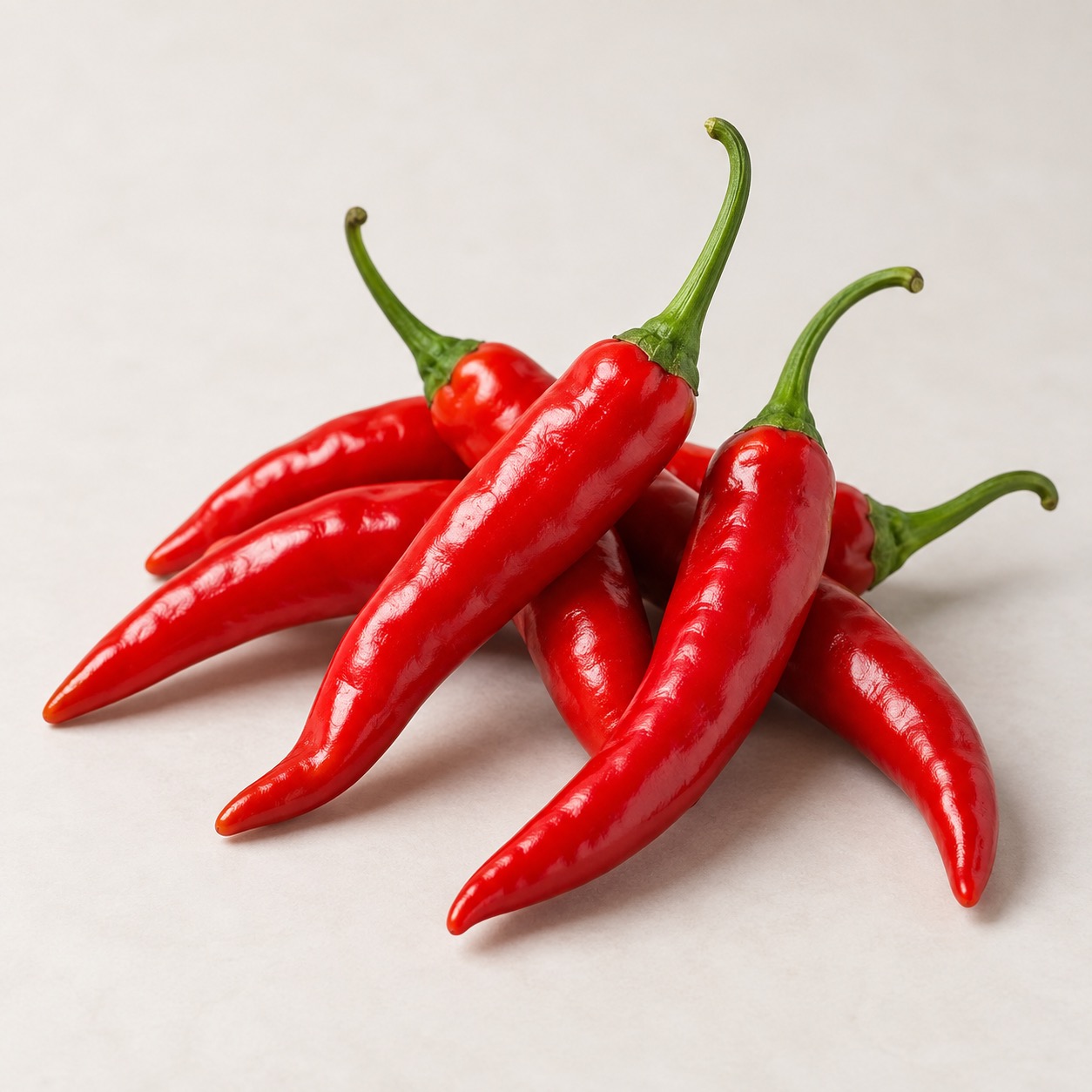 /academy/ibrary/veggies/peppers/peperoncino.webp
- Canonical name
- Fresh Red Peperoncino
- Italian name
- Peperoncino
- Botanical reference
- Capsicum annuum L.
- Ingredient code
- TC-VEG-PEPPER-RED-CHILI-001
- Inventory ID
- red_peperoncino
- Legacy recipe code
- red_peperoncino
- Icon ID
- TC-ICON-VEG-PEPPER-RED-CHILI
- Category
- Produce
- Subcategory
- Vegetables / Peppers / Hot Chile
- Base unit
- g
- Purchase unit
- lb
- Connected recipe
- /engine/zuppa/cecipastapatate.html
Status: Active · Ingredient icon sync ready · Live Inventory ready · Menu Builder ready · Purchasing/Receiving ready · Search discovery ready.
Recipes
Recipe rows can resolve the same fresh-peperoncino code, inventory ID, icon and canonical reference page.
Inventory
red_peperoncino remains the stock identity so existing recipe and Live Inventory mappings can migrate without losing the ingredient relationship.
Purchasing
Recipes scale in grams while purchasing can track pounds or cases and optionally capture cultivar / heat specification.
Search
Search can discover the ingredient through peperoncino, chili, red pepper, Capsicum, Calabria, capsaicin and the dishes that use it.
Research Sources
Botany, history, cultivation, heat and storage
These references support the factual foundation of the ingredient guide.
- Royal Botanic Gardens, Kew — Capsicum annuum · accepted botanical identity, American origins, domestication and global spread.
- Royal Horticultural Society — How to Grow Chilli Peppers · temperature, sunlight, protected cultivation and watering guidance.
- Accademia Italiana del Peperoncino — Storia · Italian historical context, Columbus, Mattioli and the development of peperoncino in Italian food culture.
- Italia.it — Calabria and Its Peperoncino · modern Calabrian cultural and culinary context.
- EUR-Lex — 2026 Peperoncino di Calabria publication · reputation, historical connection and regional identity associated with the PGI application.
- Iowa State University Extension — Growing Peppers · capsaicinoids, placenta, seeds and Scoville explanation.
- UC Davis Postharvest Research — Chile Pepper · quality indices, optimum temperature, humidity and chilling injury.
- USDA FoodData Central · food-composition reference system.
- USDA FoodData Central — Pepper Fact Sheet · capsaicin, Scoville and vitamin C context for chili peppers.
Peperoncino. Peperoncino rosso. Fresh red chili pepper. Italian chili pepper.
Capsicum annuum. Calabria peperoncino. Calabrian chili. Capsaicin. Scoville heat units.
Fresh hot pepper. Red pepper. Italian cooking. Aglio olio peperoncino. Arrabbiata.
Tomato sauce. Legumes. Chickpeas. Cannellini beans. Seafood. Pasta. Soup.
Chili infused olive oil. Fresh chili. Dried chili. Peperoncino history.
Tuscany Cuisine ingredient code TC-VEG-PEPPER-RED-CHILI-001.
Inventory ID red_peperoncino. Icon peperoncino.webp.
Connected recipe Pasta e Ceci Tuscan Chickpea Soup with Pasta and Potatoes.
Recipe, Menu Builder, Zuppa Station, Live Inventory, Purchasing, Receiving,
Vendor Dashboard and search discovery.