Tuscany Cuisine · Professional Culinary Ingredient Library

Ingredient Library · Vinegars

Champagne Vinegar

A pale, elegant wine vinegar prized for clean acidity, restrained fruit, gentle floral character and its ability to brighten a dish without overpowering delicate ingredients.

Delicate acidity Pale golden color Floral & wine-fruit notes Excellent for seafood Vinaigrette favorite
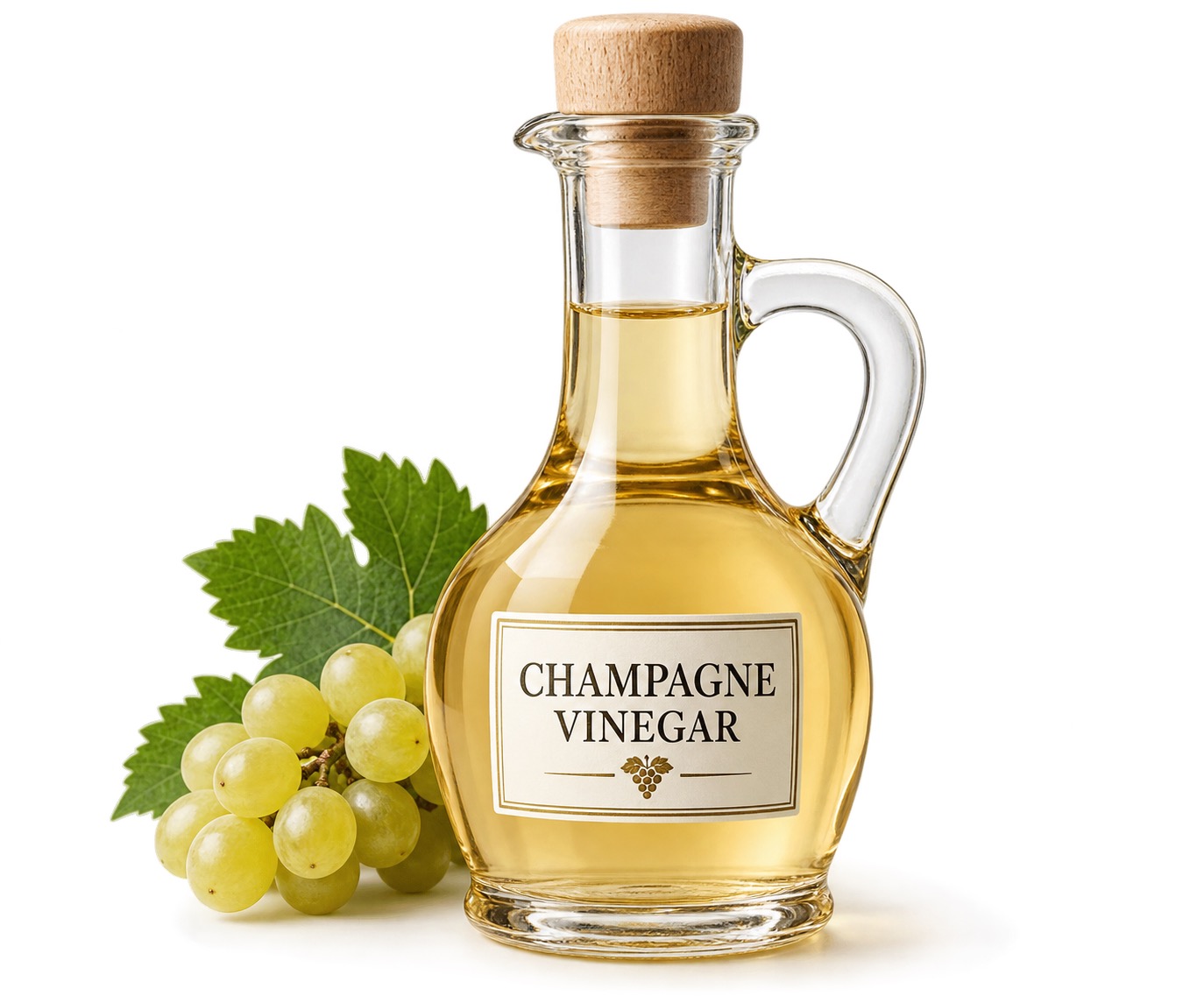
Champagne vinegar in a clear glass cruet with pale grapes
Tuscany Cuisine ingredient icon · champagneV.webp
Category Wine vinegar
Color Pale straw to light gold
Best role Brightening & finishing
Chef character Refined, clean, subtle

What Is Champagne Vinegar?

Champagne vinegar belongs to the wine-vinegar family. It is produced when a wine base undergoes acetic fermentation, converting alcohol into acetic acid. Compared with many red wine or strongly flavored vinegars, the Champagne style is valued for finesse: a light color, bright acidity and a relatively delicate aromatic profile.

Chef’s distinction: a bottle made from wine of the Champagne region has a specific geographic story. Products made from sparkling wine elsewhere may deliver a similar culinary style, but provenance should always be verified on the producer label.

In professional kitchens, Champagne vinegar is especially useful when the goal is to sharpen flavor while preserving the visual color and aromatic identity of vegetables, herbs, shellfish, white meats and delicate sauces.

History & Culinary Origins

Vinegar is one of the oldest fermented seasonings in the kitchen, historically developing wherever wine, beer or other alcoholic beverages were produced and exposed to acetic-acid bacteria. Champagne vinegar is part of that larger European wine-vinegar tradition: finished wine becomes the base for a second fermentation that creates vinegar.

Its modern culinary identity is closely associated with the refined profile of pale sparkling-wine bases and, in premium French examples, wine connected to the Champagne region. The resulting vinegar became particularly attractive for classic and contemporary preparations in which cooks wanted acidity with less color and less aggressive flavor than a robust red wine vinegar.

Today it appears in French-inspired vinaigrettes, oyster mignonette, seafood sauces, vegetable preparations, quick pickles and modern restaurant cooking around the world.

Types & Styles

Champagne-Region Wine Vinegar

Premium examples may be produced from wine originating in Champagne, France. Look for clear origin information and a transparent ingredient statement.

Sparkling-Wine Vinegar

Produced from sparkling wine outside Champagne. It can be very useful in the same culinary applications while having a different geographic origin.

Barrel-Aged Style

Aging can round sharp edges and add subtle complexity. Wood character should support, not mask, the vinegar’s delicate wine-derived profile.

Infused Chef Variations

Champagne-style vinegar can be infused with shallot, tarragon, citrus peel, herbs or spices for vinaigrettes, seafood condiments and finishing applications.

How to Evaluate Quality

  • Provenance: verify where the wine and vinegar were produced when Champagne origin is important.
  • Ingredient list: a focused wine-vinegar base is a useful sign of a clean product. Check for added flavorings or sweeteners if you want a traditional profile.
  • Acidity: read the bottle. Commercial examples can vary, so the stated percentage should guide recipe development, pickling ratios and purchasing specifications.
  • Aroma: quality vinegar should smell clean and vinous, not musty, stale or solvent-like.
  • Balance: acidity should feel bright and persistent but not harsh enough to erase delicate flavors.
  • Color: expect a pale straw or light-gold tone, depending on the wine base and aging.
  • Finish: premium products often show a smoother, more integrated finish rather than a one-dimensional sour hit.
For standardized Tuscany Cuisine recipes, record the exact brand, declared acidity and purchasing unit in Live Inventory whenever the recipe depends on a precise acid balance.

Flavor Profile

Champagne vinegar is typically selected for brightness and finesse. The exact profile varies by producer, base wine and maturation.

Acidity
Fruit
Floral
Sweetness
Intensity

Common sensory descriptors include clean, crisp, bright, delicate, lightly fruity, floral and wine-like. Use these as tasting vocabulary rather than fixed specifications; each bottle should be evaluated on its own.

Culinary Uses

  • Vinaigrettes: excellent with butter lettuce, frisée, arugula, herbs, shaved vegetables and fruit-forward salads.
  • Mignonette: combine with minced shallot and cracked pepper for oysters and chilled shellfish.
  • Seafood: use to brighten scallops, shrimp, crab, lobster, white fish and poached preparations.
  • Pan sauces: deglaze lightly to lift fond and add controlled acidity without darkening the sauce.
  • Butter sauces: small amounts can sharpen emulsified sauces and counter richness.
  • Quick pickles: useful for shallots, radishes, cucumber, fennel and other vegetables when a lighter vinegar profile is desired.
  • Marinades: pair with olive oil, herbs, mustard, citrus zest or aromatics for vegetables, poultry and seafood.
  • Grain salads: adds definition to barley, farro, quinoa and ancient-grain preparations.
  • Finishing: a few drops can restore freshness to a sauce, soup or vegetable preparation just before service.

Chef Pairing Matrix

Seafood Oysters, scallops, shrimp, lobster, crab, branzino
Vegetables Asparagus, fennel, cucumber, radish, tomato, artichoke
Greens & Herbs Frisée, butter lettuce, arugula, parsley, chives, tarragon
Fats Extra-virgin olive oil, nut oils, butter, light truffle oil
Aromatics Shallot, chive, lemon zest, white pepper, mustard
Fruit Pear, apple, citrus, melon, grapes, stone fruit

Storage & Kitchen Handling

Keep Champagne vinegar tightly closed in a cool, dark, dry storage area away from direct heat and sunlight. Vinegar is highly shelf-stable, but aroma and visual quality are best protected by minimizing heat exposure and contamination.

Natural sediment or slight haze can occur in some traditionally made vinegars. For restaurant operations, follow the producer’s storage statement, maintain the original label or lot information, and use clean dispensing bottles when transferring product to the line.

Champagne Vinegar FAQ

What does Champagne vinegar taste like?

It is generally lighter and more delicate than many robust wine vinegars, with clean acidity, subtle wine-fruit character and possible floral notes.

Can I use it instead of white wine vinegar?

Often yes. Champagne vinegar is especially useful when you want a softer, more refined acid profile. Taste and adjust because acidity levels and flavor intensity vary by brand.

Is it good for oysters?

Yes. It is an excellent base for a delicate mignonette because its acidity complements shellfish without adding dark color.

What oil pairs well with it?

Extra-virgin olive oil is the most versatile choice. Walnut, hazelnut and other nut oils can work in small proportions, and a measured amount of truffle oil can create a more aromatic vinaigrette.

Does Champagne vinegar always have the same acidity?

No. Check the label or specification sheet for the product being purchased. This is particularly important for recipe standardization and pickling.