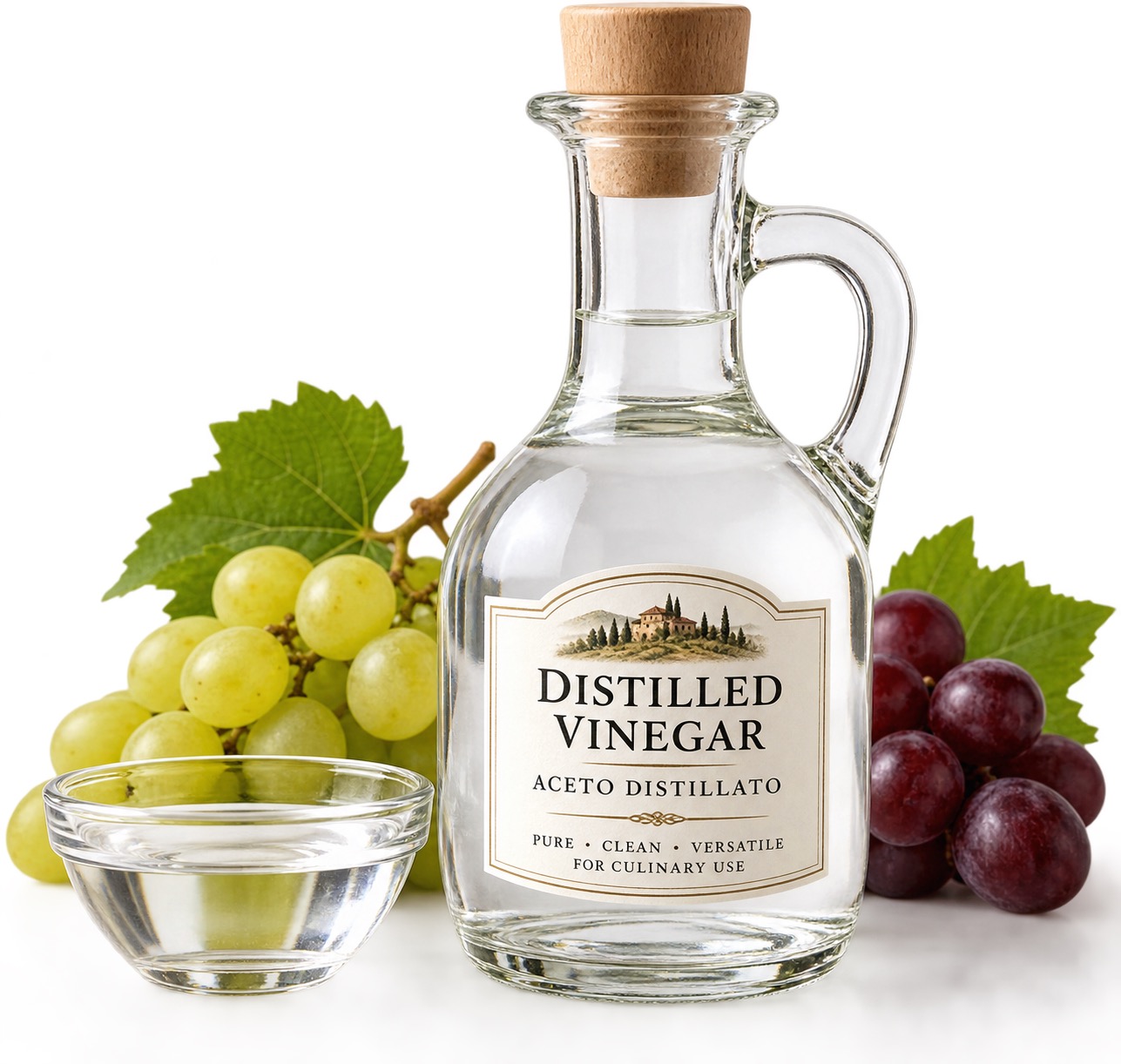
Origin & Culinary Identity
Vinegar is one of humanity's oldest acidic seasonings. Its name is historically connected
with the idea of “sour wine,” but distilled white vinegar developed into a more neutral
culinary acid because its starting alcohol can be highly refined before acetification.
Unlike wine, cider, sherry or balsamic vinegar, distilled white vinegar is valued not for a
complex aromatic signature, but for clarity, consistency and clean acidity.
This makes it particularly useful in professional production where a recipe needs precise
acid balance without additional fruit, oak, malt or wine character.
Flavor Profile
AcidityHigh, direct, clean
SweetnessVery low
AromaNeutral to sharp
ColorClear / colorless
Chef's sensory note
The first impression is immediate acidity. It should smell clean and sharp, with no stale,
musty or oxidized character. Because it contributes almost no color, it is excellent when
visual purity matters.
How Distilled White Vinegar Is Made
Commercial distilled white vinegar is commonly produced from a refined alcohol base.
That alcohol is diluted and exposed to acetic-acid bacteria in controlled acetification.
The bacteria convert ethanol into acetic acid. The finished vinegar is then clarified,
filtered and standardized to the desired food-use strength.
Step 1Produce or obtain refined food-grade alcohol
Step 2Dilute to an appropriate fermentation strength
Step 3Acetify with acetic-acid bacteria and oxygen
Step 4Filter, standardize and bottle
Important: “Distilled” usually refers to the refined alcohol used to make
this style of vinegar. The defining culinary result is a clear, neutral vinegar with
standardized acidity.
Nutrition & Dietary Notes
Plain distilled white vinegar contributes very little energy at normal culinary usage
levels. It contains essentially no meaningful fat or protein and only negligible
carbohydrate in a typical serving.
| Component | Typical Culinary Character |
|---|
| Calories | Very low |
| Fat | 0 g |
| Protein | 0 g |
| Carbohydrate | Negligible |
| Sodium | Naturally very low unless formulated otherwise |
Allergen note
Pure distilled white vinegar does not inherently contain the major food allergens.
For institutional or highly controlled allergen programs, always verify the actual
manufacturer's ingredient statement, processing source and facility declaration.
Quality Selection
- Choose a clearly labeled food-grade vinegar.
- For general culinary work, 5% acidity is a common benchmark.
- Look for a clean, bright aroma without foreign or stale notes.
- Choose consistent acidity when recipes are standardized for restaurant production.
- For pickling or preservation formulas, use the exact acidity specified by the tested recipe.
- Avoid substituting cleaning vinegar in food preparation.
Professional Culinary Uses
Dressings & Vinaigrettes
Use when the goal is clean acidity without coloring a pale vinaigrette, slaw dressing,
mustard base or fruit-forward condiment.
Fruit Mustards & Condiments
Distilled vinegar is particularly useful in preparations such as
Raspberry Mustard,
where the chef wants the fruit color and aroma to remain dominant.
Pickling
Excellent for quick pickles and standardized brines because its flavor is direct and
neutral. When preserving for shelf stability, follow a tested formulation and required
acidity rather than improvising the acid level.
Deglazing & Sauce Correction
Small amounts can sharpen sauces, pan reductions and marinades when wine vinegar would
add too much aroma or color.
Vegetable Preparation
Useful for onions, cabbage, cucumbers, peppers, legumes and other preparations that
benefit from a clean acid backbone.
Kitchen Production
Its consistency makes it valuable for high-volume recipes, commissary work and batch
production where the same acidity needs to be repeated from one preparation to the next.
Storage & Handling
Store tightly closed in a cool, dry pantry away from heat and direct sunlight. Because of
its acidity, distilled vinegar is highly stable, but good storage protects flavor quality
and prevents contamination from improper dispensing.
- Keep in the original food-safe container or an approved labeled kitchen bottle.
- Protect from unnecessary heat and evaporation.
- Use clean measuring utensils.
- Label secondary containers with ingredient name and date according to kitchen policy.
Compared with Other Vinegars
| Vinegar | Color | Flavor | Best Culinary Role |
|---|
| Distilled White | Clear | Clean, sharp, neutral | Pickling, neutral dressings, production |
| White Wine | Pale gold | Wine-like, rounded | Seafood, sauces, vinaigrettes |
| Red Wine | Ruby to amber | Robust, vinous | Tomatoes, legumes, meats |
| Apple Cider | Amber | Fruity | Slaws, pork, autumn flavors |
| Balsamic | Dark brown | Sweet-sour, complex | Finishing, cheese, fruit, meats |
Tuscany Cuisine Ingredient Record
This page is prepared to connect distilled white vinegar with the Master Ingredient Registry,
recipe ingredient icons, live inventory, purchasing and receiving, recipe search, and station
production workflows.
Ingredient Code
VINEGAR-DISTILLED-WHITE-001
Inventory ID
distilled_white_vinegar
Icon ID
TC-ICON-VINEGAR-DISTILLED
Icon File
Daceto.webp
Category
Vinegars
Primary Station
Garde Manger
Platform Status
Ready for Registry
Search Identity
Distilled White Vinegar