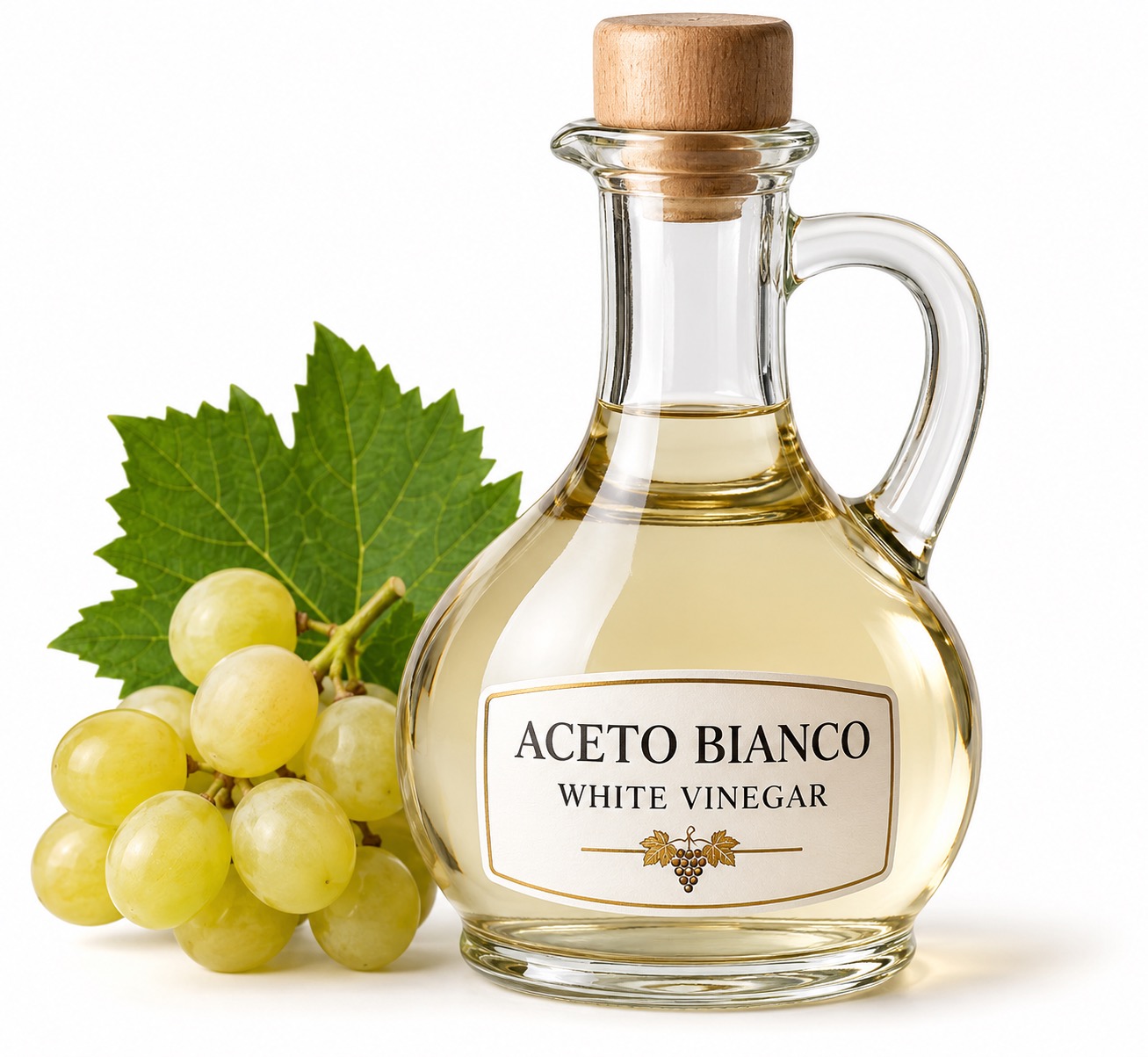
What Is White Wine Vinegar?
White wine vinegar is a grape-based vinegar made from wine. In the United States, FDA guidance describes wine or grape vinegar as the product of alcoholic and subsequent acetous fermentations of grape juice. That distinction matters: authentic wine vinegar is not simply diluted acetic acid. It contains the acidity of acetic acid together with smaller wine-derived aroma and flavor compounds that give it a more rounded culinary character.
White Wine Vinegar
Made from white grape wine. It generally has clean acidity, mild fruit and wine aromas, and a lighter color than red wine vinegar. It is especially useful when a chef wants acidity without adding dark color.
Not Distilled White Vinegar
Distilled white vinegar is typically produced from distilled alcohol and has a sharper, more neutral profile. White wine vinegar retains more of the character of its grape and wine origin, making it better suited to many refined sauces and dressings.
Origin & History
Vinegar has been known since antiquity because alcoholic beverages naturally become acidic when exposed to oxygen and acetic acid bacteria. Wine-growing cultures of the Mediterranean developed extensive culinary uses for wine vinegar. Rather than having one single birthplace, white wine vinegar belongs to the broader history of grape cultivation, wine production and the practical preservation of wine through acetification.
Mediterranean Tradition
Greek and Roman food traditions used wine vinegar as a condiment, preservative and ingredient. Across Italy, France, Spain and other wine-producing regions, local wines naturally became the raw material for regionally distinctive vinegars.
From Wine to Culinary Acid
Historically, vinegar makers learned to encourage contact between wine, oxygen and the surface culture known as the “mother of vinegar.” Modern production controls temperature, oxygen, bacterial activity, filtration and final acidity much more precisely.
Production: Wine → Vinegar
Vinegar production is a two-stage biological process. First, yeast converts fermentable grape sugars to ethanol during winemaking. Then acetic acid bacteria use oxygen to oxidize ethanol into acetic acid. UC Davis notes that acetic acid bacteria can convert ethanol to acetic acid and require oxygen, which explains why oxygen management is central to vinegar production.
Grape Selection
White wine grapes or finished white wine provide the base. The grape and wine style influence aroma, residual flavor and final delicacy.
Alcoholic Fermentation
Yeast converts grape sugars into alcohol, creating the wine that will become the vinegar substrate.
Acetic Fermentation
Acetic acid bacteria oxidize ethanol into acetic acid in the presence of oxygen.
Maturation
The vinegar may rest to allow aromas to integrate and harsh volatile notes to soften.
Clarification
Commercial vinegar may be filtered and sometimes pasteurized for stability and clarity.
Acidity Standardization
Final acid strength is checked and declared according to the product and market requirements.
Acidity & Quality
FDA labeling guidance states that natural vinegars normally contain more than 4 grams of acetic acid per 100 mL, and vinegar diluted with water should not be below 4 percent acid strength. Many culinary white wine vinegars are sold around 5 percent acidity, while specialty products may be stronger. Always verify the label when precise pickling, preservation or production acidity is important.
Professional Quality Markers
- Clean, bright acidity without solvent-like off aromas
- Fresh wine/grape character appropriate to style
- Balanced pungency rather than raw harshness
- Clear labeling of vinegar type and acidity
- No unwanted haze, sediment or spoilage unless intentionally unfiltered
Mother of Vinegar
Traditional or unfiltered vinegar may contain a cellulose-rich bacterial culture called the “mother.” Its presence is not the same as spoilage. Commercial filtered vinegar is usually clear and free of visible culture.
Vinegar Variety Cards
White Wine Vinegar
Grape WineClean AcidActive IdentityLight color, wine-derived aroma and versatile acidity. Ideal for delicate sauces, seafood, vinaigrettes and vegetable preparations.
Champagne Vinegar
DelicatePremiumA refined wine-vinegar style made from sparkling-wine base materials or wines from related grapes. Usually softer and more aromatic.
Red Wine Vinegar
RobustRed WineMore assertive color and tannic fruit character. Excellent for marinades, braises, hearty salads and meat preparations.
Sherry Vinegar
AgedNuttySpanish wine vinegar with oxidative, nutty and complex flavors. Excellent in sauces, soups, beans, roasted vegetables and reductions.
Distilled White Vinegar
NeutralSharpTypically made from distilled alcohol. Clean and strong but less wine-like; common for pickling, preservation and utility applications.
Apple Cider Vinegar
AppleFruit AcidMade from fermented apple juice or cider. Offers fruity aroma and works well with pork, slaws, legumes, chutneys and rustic dressings.
Nutrition
Plain vinegar contributes very little energy, fat, protein or carbohydrate at normal culinary serving sizes. Exact values vary by producer and whether the vinegar contains residual sugars or flavorings. USDA legacy data for plain distilled vinegar show approximately 3 calories per tablespoon and essentially no fat or protein; wine vinegar is similarly low in macronutrients, but always check the product label for a specific brand.
| Nutrient | Per 1 Tbsp (~15 g) | Per 100 g |
|---|---|---|
| Calories | ~3 kcal | ~18–21 kcal |
| Fat | 0 g | 0 g |
| Protein | 0 g | 0 g |
| Carbohydrate | ~0–0.1 g | Trace |
| Sugars | Trace | Trace |
| Sodium | Trace | Very low |
Professional Culinary Usage
Cold Applications
- Vinaigrettes and emulsified dressings
- Seafood and shellfish dressings
- Vegetable marinades and quick pickles
- Apple, pear, fennel and cucumber preparations
- Mustard sauces, relishes and mostarda-style condiments
Hot Applications
- Pan deglazing
- Gastriques and sweet-sour sauces
- Reduction sauces
- Braises and stews requiring clean acidity
- Balancing rich butter, cream or olive-oil sauces
Flavor Pairings
Produce & Herbs
- Apples, pears, grapes and citrus
- Cucumber, fennel, celery and onions
- Tomatoes and roasted peppers
- Parsley, tarragon, chives, dill and thyme
Proteins & Pantry
- Tuna, shellfish and white fish
- Chicken, pork and veal
- Dijon mustard and mustard extract
- Extra-virgin olive oil
- Honey, sugar and fruit reductions
Storage & Shelf Life
Commercial vinegar is highly acidic and shelf-stable when handled correctly. Keep it tightly closed in a cool, dark place away from excessive heat and direct sunlight. Refrigeration is generally unnecessary for plain commercial vinegar. Quality can slowly change over time, particularly in unfiltered or artisanal products, but high acidity provides strong microbial stability.
Storage Guidelines
- Store tightly capped
- Keep away from heat and sunlight
- Use clean utensils and avoid contamination
- Follow manufacturer guidance for infused or flavored vinegars
Kitchen Purchasing Notes
- Confirm stated acidity
- Choose wine-derived vinegar for refined flavor
- Compare bulk cost against aroma and finish quality
- Keep one exact SKU identity in inventory to avoid duplicate deduction records
Tuscany Cuisine Ingredient Record
This identity is ready to replace the generic White Wine Vinegar placeholder currently used by connected Tuscany Cuisine recipes.