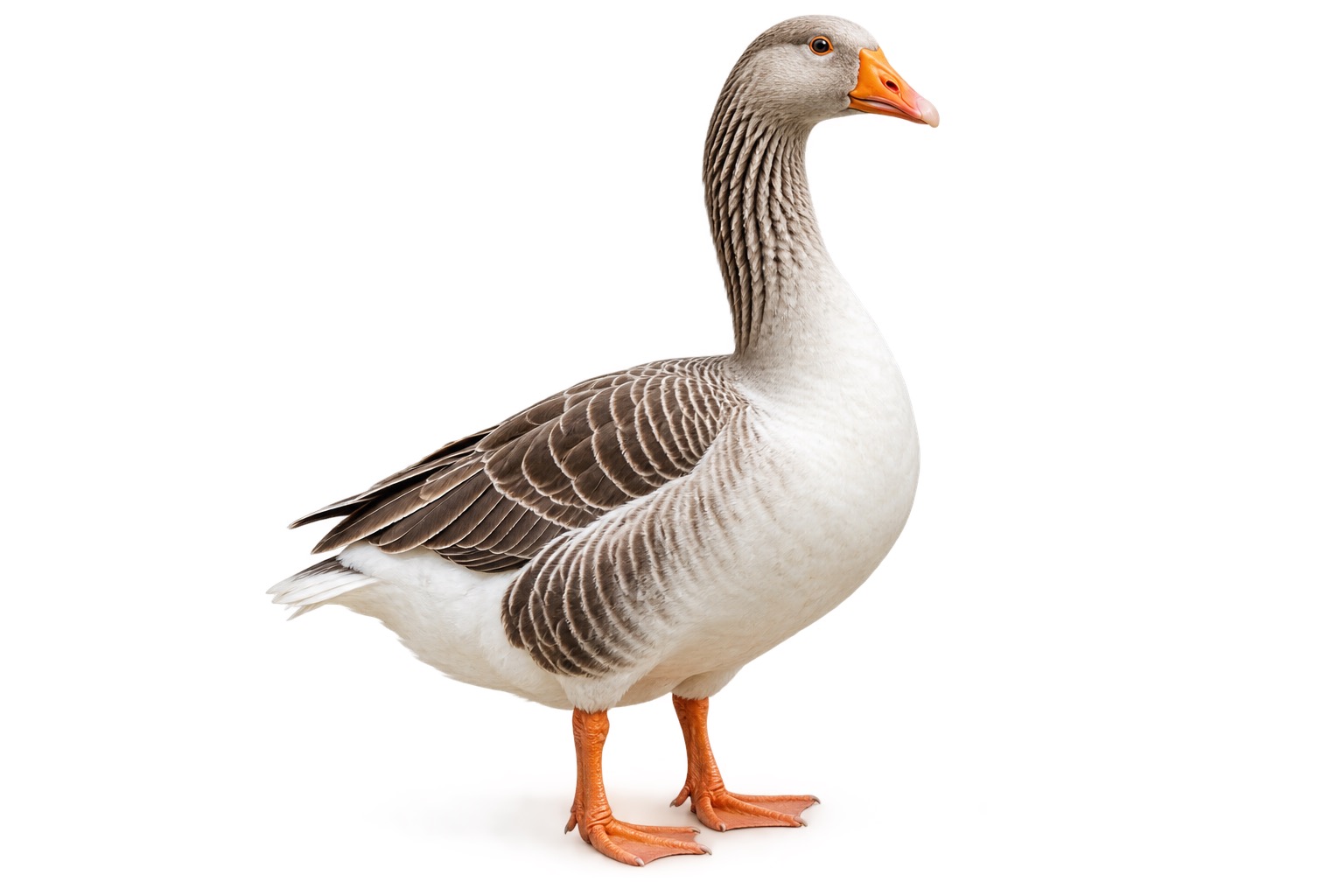
Understand the bird
Four parts, four different jobs
Duck should not be treated as a single uniform protein.
Tender breast, active legs, fat-rich skin and the frame
each ask for a different technique.
1
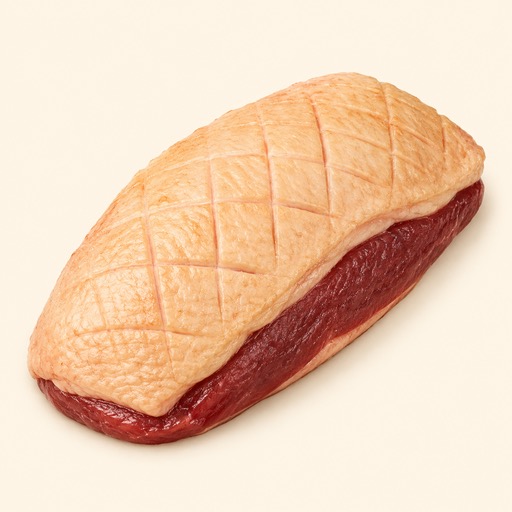
Breast · Magret
Tender, deeply flavored meat beneath a generous layer
of skin and fat. Duck breast benefits from progressive
fat rendering, precise temperature control and proper
resting before slicing.
Score the skin and fat in a shallow crosshatch without
cutting into the meat. Begin skin-side down over moderate
heat so the fat renders slowly, then turn briefly or
finish in the oven depending on thickness.
Pan-roast
Grill
Sous vide
Cure
2
Leg & thigh
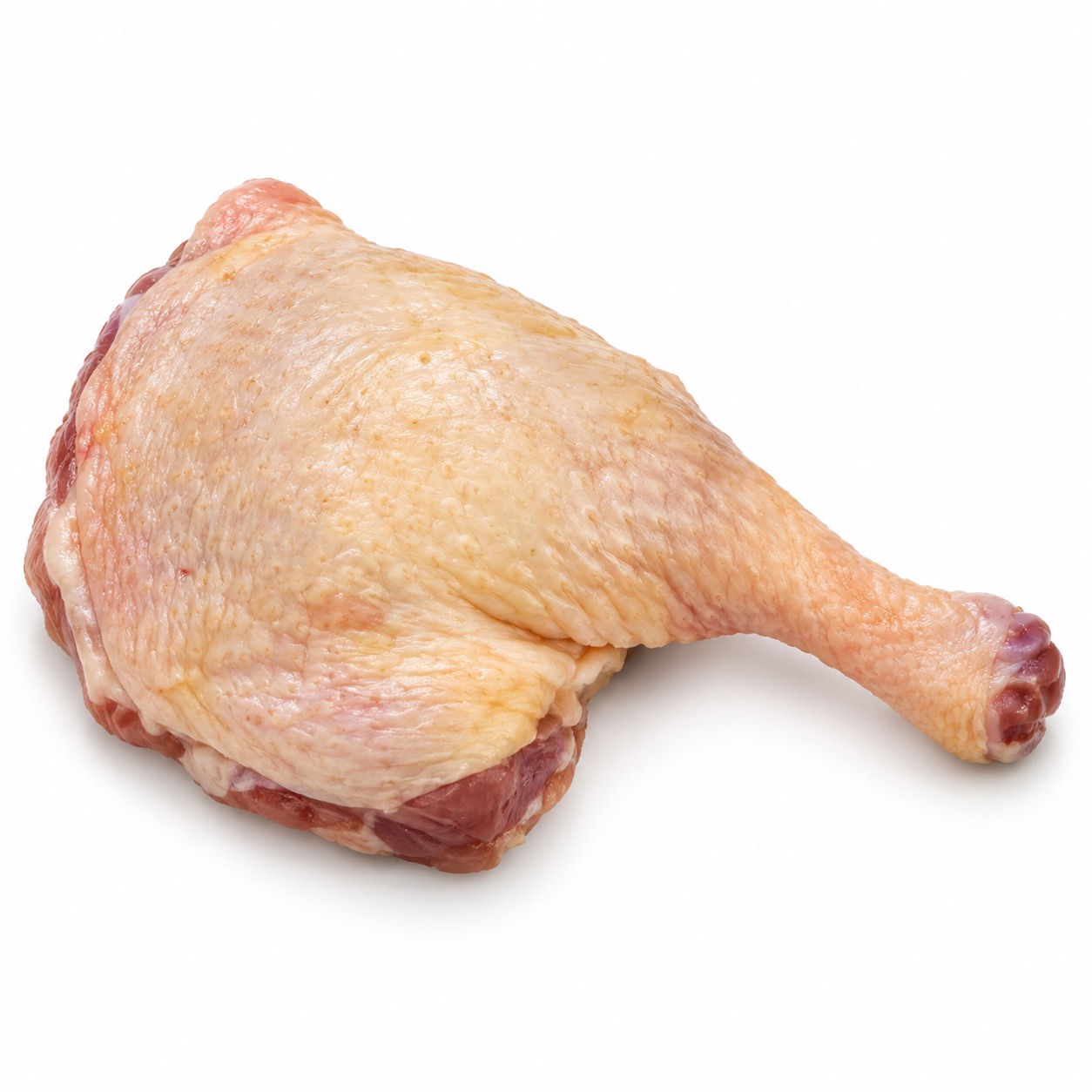
More connective tissue and working muscle make the leg
ideal for long, moist or fat-based cooking. Time converts
collagen and builds the silky texture expected from
confit or ragù.
Confit
Braise
Slow roast
3
Skin & fat
The skin protects the meat while the subcutaneous fat
renders. Dryness, shallow scoring, gradual heat and a
final hot finish create the contrast between crisp skin
and juicy meat.
Render
Crisp
Baste
4
Frame, wings & giblets
The frame and wing tips produce stock; the neck enriches
ragù; the heart and gizzard suit confit or sautéing.
Handle liver separately and cook or preserve with
method-specific controls.
Stock
Jus
Ragù
From wetlands to world cuisines
A short culinary history of duck
Most domestic breeds descend principally from mallard lines
associated with domestication in southern China; Muscovy ducks
were domesticated independently in Latin America. Their value
spread through farming systems, market cookery and festive tables.
Origins and domestication
Wetland ecology made ducks useful for meat, eggs and
integrated agriculture. The FAO notes that most domestic
breeds descend from mallard ducks, while the Muscovy follows
a separate American lineage.
East and Southeast Asia
Duck became important in rice-growing regions and urban
cuisines. Chinese roast-duck traditions emphasize skin
preparation; braised, salted and tea-smoked preparations
show how one bird adapts to many preservation and cooking systems.
Europe and the Mediterranean
French kitchens codified magret, confit, rillettes,
stock and duck-fat cookery. In Italy, anatra appears
roasted, braised and in ragù—especially satisfying with
broad pasta such as pappardelle.
Modern professional kitchens
Today chefs combine classical rendering and confit with
temperature probes, controlled curing, sous vide, HACCP
records and whole-animal utilization.
Purchasing and mise en place
Choose quality before choosing the method
Freshness
Look for clean aroma, intact moist flesh, dry—not sticky—skin
and packaging without leaks. Keep raw duck at 40°F / 4°C
or below and prevent contact with ready-to-eat food.
Breed and size
Pekin is common and well balanced; Muscovy is leaner and
meatier; Moulard is valued for larger breasts and fat.
Size changes timing, fat yield and the best final application.
Traceability
Ask about producer, origin, processing date, chilling,
animal husbandry and whether any product was previously
frozen. For specialty liver, verify legality and production standards.
Food-safety baseline
USDA guidance recommends 165°F / 74°C for all poultry,
including whole duck, pieces and ground duck. For a whole
bird, measure the thickest breast and the innermost thigh
and wing areas without touching bone.
Seasoning from the beginning
Brining for moisture, texture and balanced flavor
Brining can improve seasoning and water retention, but the
formula must match the cut and the next technique.
Keep all brining refrigerated and discard used brine.
| Preparation |
Practical starting point |
Time under refrigeration |
After brining |
| Duck breast |
Dry brine: 0.8–1.0% salt by meat weight |
6–12 hours |
Brush away excess; dry skin thoroughly |
| Duck legs |
Dry brine: 1.0–1.2% salt plus optional herbs |
12–24 hours |
Wipe clean; proceed to confit, braise or roast |
| Whole duck |
Dry brine: about 1% salt by bird weight |
12–24 hours |
Refrigerate uncovered when possible to dry skin |
| Wet brine |
Use a tested poultry formula in a food-grade
nonreactive container
|
Overnight; never exceed validated refrigerated limits
|
Discard brine, sanitize surfaces and dry the bird
|
Brining is not curing
A flavor brine does not make raw poultry shelf-stable.
Keep duck covered and refrigerated during brining; never
reuse the liquid. USDA guidance says fresh or thawed poultry
should remain refrigerated and notes a maximum of two days
for poultry in brine.
The crisp-skin system
Dry, render, then finish with heat
The finest crackling skin is the result of moisture control
and fat rendering—not a single blast of heat.
-
Prepare the surface.
Remove pin feathers, trim uneven fat and pat the skin completely dry.
-
Optional scald.
Briefly ladle or dip the skin with very hot water or a seasoned
scalding liquid. This tightens the skin and begins changing surface
proteins; it does not “close pores” or cook the bird safely.
-
Air-dry.
Set the duck on a rack, uncovered in the refrigerator,
ideally 12–24 hours. Air circulation is more valuable than added oil.
-
Score correctly.
On breasts, cut a shallow crosshatch through skin and fat only.
Cutting the meat encourages moisture loss and distorts the slices.
-
Render progressively.
Start a breast skin-side down in a cool or moderately warm pan,
then raise heat gradually. Pour off rendered fat as needed and
save it safely.
-
Finish and rest.
Use controlled higher heat for final color, verify internal
temperature, then rest uncovered or loosely tented so steam
does not soften the skin.
Technique matrix
Match the method to the cut
Whole-bird roasting
Oven: 325–375°F
Rest: 15–20 min
- Dry or brine first.
- Prick fatty zones without piercing meat.
- Roast on a rack and rotate for even rendering.
- Probe breast and innermost thigh.
Pan-roasted breast
Start: moderate
Rest: 6–10 min
- Score and season.
- Render skin-side first.
- Turn briefly; oven-finish thick breasts.
- Rest skin-side up.
Grilled breast
Two-zone fire
Rest: 6–10 min
- Begin over moderate indirect heat.
- Control flare-ups from dripping fat.
- Crisp skin over direct heat near the end.
- Use a probe, not grill marks.
Leg confit
Fat: 250–285°F
Cook: 2½–3½ hr
- Salt and season under refrigeration.
- Submerge in rendered fat.
- Cook gently until bone-joint tender.
- Crisp to order for service.
Braise or ragù
Low simmer
Texture-led finish
- Brown before adding liquid.
- Use aromatic vegetables and wine.
- Cook until collagen softens.
- Defat, reduce and fold meat into sauce.
Sous vide
Thickness-driven
HACCP control
- Use bags rated for cooking.
- Choose a validated time-temperature cycle.
- Chill rapidly if not serving.
- Dry and sear briefly for crisp skin.
Duck prosciutto
Curing the breast: control, record, verify
Duck breast can become a refined charcuterie product, but curing
requires more than covering meat with salt and waiting.
Precision and sanitation protect both quality and safety.
Production sequence
- Inspect, trim and record starting weight.
- Apply a validated cure by exact weight—not by handfuls.
- Refrigerate for the specified cure time; turn as directed.
- Rinse or wipe according to the formula, then dry completely.
- Wrap or hang under controlled temperature, humidity and airflow.
-
Record weight and stop at the validated loss target and
acceptable sensory condition.
Critical controls
- Sanitized tools, scale, containers and hands
- Accurate cure formulation and batch records
- Continuous cold-chain control during the initial cure
- Known humidity and airflow during drying
- Initial weight, target weight and daily inspection
- Validated professional process for any commercial service
Do not rely on days alone.
Thickness, cure concentration, airflow and humidity change
the process. The calculator below provides a weight-loss
checkpoint, not a safety validation.
Interactive kitchen tool
Duck cooking & resting-time calculator
Estimate a working cook window, checking time, resting time,
dry-brine quantity and temperature plan. Actual finish depends
on thickness, starting temperature, equipment calibration and
bird shape. A food thermometer remains the final authority.
◷
Your timing plan will appear here.
Enter the method, weight and thickness,
then calculate.
Method
—
estimated active cooking window
Start checking
—
Rest / settle
—
Temperature
—
Dry-brine guide
—
How to use the estimate
Preheat and verify the equipment, begin probing near
“Start checking,” and continue until the correct internal
temperature and texture are achieved. Resting redistributes
juices and allows carryover heat, but USDA consumer guidance
still requires poultry to reach 165°F / 74°C.
The second product
Duck fat: rendering, basting and preservation
Rendered duck fat is not waste; it is a culinary ingredient
with a rounded flavor and high practical value.
Render cleanly
Trim excess skin and fat, cut small, add a spoonful of
water and heat very gently. Strain once the solids are
golden. Cool promptly and store covered under refrigeration.
Baste and roast
French kitchens prize duck fat for potatoes, vegetables
and poultry. A light coating can baste chicken during
roasting, transfer savory flavor and encourage even browning.
Confit correctly
Fat surrounds the seasoned legs and transfers gentle heat.
Traditional storage practices do not replace modern time,
temperature, cooling and refrigeration controls.
Global table
How cultures bring out duck's character
China
Roast, lacquered and braised
Surface drying and controlled roasting create celebrated
crisp-skin preparations; salted and braised duck preserve
the bird in different regional styles.
France
Magret, confit and foie gras
Breast is treated like a tender red meat in chef practice,
legs are slowly cooked in fat, and rendered fat seasons
potatoes, poultry and rustic dishes.
Italy
Anatra arrosto and ragù
Roast duck, braised duck and slow-cooked ragù connect
poultry richness to herbs, wine, fruit, polenta and
broad egg pasta.
Central Europe
Roast duck and winter accompaniments
Whole birds are roasted with caraway, apples, cabbage,
dumplings or potatoes for festive and cold-season meals.
Southeast Asia
Aromatic soups, curries and roast duck
Star anise, ginger, citrus, herbs, coconut and chile
balance duck fat and deepen broths, curries and rice dishes.
United States
Farm, game and modern restaurant cookery
Domestic duck appears roasted, smoked, grilled and confited;
regional fruit sauces and contemporary charcuterie connect
European technique with local ingredients.
Responsible sourcing
Animal welfare, processing and foie gras
A complete duck lesson should explain both culinary tradition
and the conditions under which the bird is raised and processed.
Questions for the supplier
-
Can the farm and processing facility be identified?
-
Do birds have adequate space, clean water,
bedding and veterinary care?
-
Are catching, transport and slaughter handled
by trained staff?
-
Is the product inspected, rapidly chilled and
traceable by lot?
-
Are animal-welfare or third-party standards
documented rather than implied?
Foie gras: tradition and controversy
Foie gras is the enlarged fatty liver of a duck or goose.
Traditional production commonly uses gavage—feeding through
a tube during the finishing period—which is contested on
animal-welfare grounds.
Law differs by country and jurisdiction: some prohibit force
feeding or production, while others protect or regulate the
tradition. California Health and Safety Code §§25980–25984
restricts force feeding and products resulting from it;
court decisions have affected how particular transactions
are treated. Always verify current local law before
purchasing, producing or serving.
Balanced Academy position
Teach the culinary history without hiding the welfare debate.
Describe the production method accurately, respect local law,
seek transparent sourcing and allow cooks and guests to make
informed decisions.
Connected recipe record
Duck recipes in the Tuscany Cuisine system
Each record connects a cut to its production technique
so the Ingredient Library can support recipes,
menu building and inventory mapping.
Appetizer · Garde Manger
Duck Prosciutto with Asparagus & Orange Citronette
Cured duck breast paired with asparagus,
toasted panko and a bright orange-Dijon citronette.
Cut
Breast
Technique
Dry cure
Inventory
duck_breasts
Open duck prosciutto recipe
Pasta · Hot line
Pappardelle with Duck Confit
Broad pasta with the deep flavor and silky texture
of slowly confited duck leg.
Cut
Leg
Technique
Confit / ragù
Inventory
duck_legs
Open pappardelle recipe
Reference desk
Safety, history and welfare sources