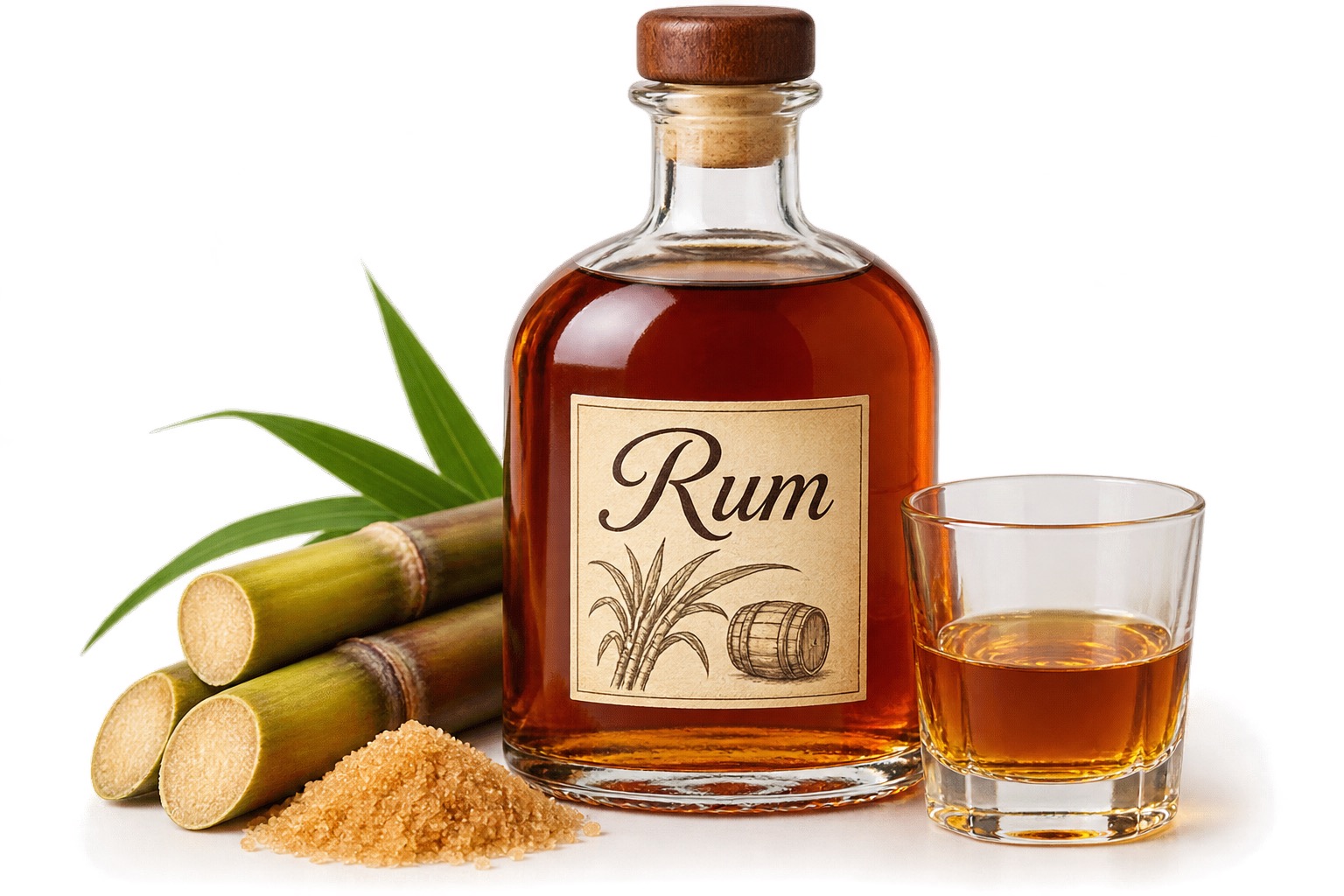
Rum is a distilled spirit made from sugar-cane materials such as fresh cane juice, cane syrup, molasses, or other sugar-cane by-products. Its identity is unusually broad: raw material, fermentation style, still type, proof, barrel choice, climate, blending, filtration, and local law can all change the final character dramatically.
History of Rum
Rum developed alongside the rise of sugar production in the Caribbean. By the early 1600s, sugar planters were converting by-products of sugar refining into distilled spirits. Molasses, once treated as a residual product of sugar manufacture, became the foundation of an important new spirit and export commodity.
The history of rum is inseparable from the colonial plantation economy and the forced labor of enslaved people who cultivated, harvested, processed, and transported sugar cane throughout the Caribbean and Atlantic world. That context is essential to understanding rum's economic and cultural history.
Raw Materials: Molasses vs. Fresh Cane Juice
Molasses Rum
Most rum worldwide is produced from molasses, the concentrated syrup remaining after sugar crystals are removed from cane juice. Molasses can support flavors ranging from clean caramel and vanilla to dark fruit, treacle, spice, coffee, cocoa, and fermentation-driven fruit esters.
Fresh Cane Juice Rum
Some rum traditions begin with freshly pressed sugar-cane juice. The best-known example is rhum agricole, especially associated with Martinique and other French Caribbean islands. Cane-juice spirits can show pronounced grassy, herbal, vegetal, floral, peppery, and fresh-fruit notes.
Fabrication: How Rum Is Made
Fermentation
Fermentation is one of rum's major flavor-building stages. Short, highly controlled fermentations can favor cleaner profiles, while longer or more complex fermentations can produce greater concentrations of acids and esters. Jamaican rum is particularly famous for high-ester styles with intense tropical-fruit and floral aromas.
Distillation Methods
Pot Still
Pot still distillation is batch-based and generally retains more congeners and aromatic compounds. It often produces fuller-bodied, more expressive distillates with notes of ripe fruit, spice, molasses, fermentation, and heavier texture.
Column Still
Column stills operate continuously and can produce lighter, cleaner spirits at higher alcoholic strength. They are important to many Cuban- and Puerto Rican-influenced styles and are frequently blended with more characterful distillates.
Blended Still Traditions
Many producers combine pot-still and column-still distillates. Barbados is especially associated with blending fuller pot-distilled components with lighter column-distilled rum to create balance and complexity.
Aging & Maturation
Rum can be sold unaged or matured in wood. Used American oak barrels are common, but producers may also use barrels that previously held sherry, port, wine, Cognac, or other spirits.
Tropical Aging
Warm climates accelerate interaction among spirit, wood, and oxygen. Extraction and evaporation can occur quickly, often giving tropical-aged rum pronounced vanilla, caramel, toasted oak, coconut, baking spice, dried fruit, cocoa, coffee, tobacco, and nutty tones in less calendar time than in cooler climates.
Continental Aging
Some rums are aged partly or entirely in cooler climates. Slower maturation can produce a different balance of wood extraction, oxidation, and evaporation.
Solera & Fractional Blending
Some producers use multi-vintage or fractional blending systems inspired by solera practice. These should not automatically be interpreted as conventional single-age statements because the final blend can contain spirits of different ages.
Finishing
A matured rum may be transferred to another barrel type for a finishing period, adding another layer of aroma and flavor.
Major Types & Styles of Rum
| Style | Typical Character | Production Notes | Culinary Use |
|---|---|---|---|
| White / Light Rum | Clean, light, subtle cane, citrus, vanilla | Often column distilled; may be aged then filtered | Syrups, fruit desserts, cocktails, sorbet |
| Golden / Amber Rum | Vanilla, caramel, mild oak, spice | Moderate wood influence | Pastry cream, caramel, sauces, cakes |
| Dark Rum | Molasses, brown sugar, spice, dark fruit | Heavier distillate, maturation and/or color contribution | Baba, rum cake, flambé, chocolate desserts |
| Aged Rum | Oak, vanilla, cocoa, tobacco, dried fruit, spice | Extended maturation and blending | Premium plated desserts, sauces, sipping service |
| Rhum Agricole | Grassy, vegetal, floral, peppery, fresh cane | Fresh sugar-cane juice, especially French Caribbean traditions | Tropical fruit, citrus, sorbet, savory marinades |
| High-Ester Jamaican Rum | Banana, pineapple, overripe fruit, floral intensity | Characterful fermentation; often pot distilled | Small-dose pastry flavoring, tropical desserts |
| Overproof Rum | Concentrated aroma and high alcohol | Bottled at elevated strength | Use sparingly; flambé and concentrated flavoring |
| Spiced / Flavored Rum | Added spice, vanilla, citrus or other flavors | Flavoring after distillation | Use only where added flavor matches recipe design |
Important Countries & Origins
| Origin | Typical Tradition | Common Character |
|---|---|---|
| Barbados | Molasses; pot + column blending | Balanced, elegant, fruit, spice, oak |
| Jamaica | Molasses; characterful fermentation; pot still important | High esters, tropical fruit, floral, powerful |
| Cuba | Molasses; lighter column distillation; structured maturation | Clean, refined, oak-led, coffee, cocoa, tobacco |
| Puerto Rico | Light-bodied column-distilled traditions | Clean, approachable, subtle oak |
| Guyana | Diverse historic still types; Demerara tradition | Rich molasses, dark fruit, spice, deep body |
| Martinique | Fresh cane juice; AOC rhum agricole | Grassy, herbal, floral, peppery, cane-driven |
| Guadeloupe | Fresh cane juice and molasses traditions | Herbal, fruity, cane-forward to rich |
| Guatemala | Molasses / cane-derived bases; maturation and blending | Round, sweet-spice, dried fruit, oak |
| Madeira | Protected regional rum tradition | Cane-driven, aromatic, island identity |
| Venezuela / Panama / Dominican Republic | Often lighter Latin-style traditions | Polished, vanilla, caramel, soft spice |
Culinary Uses
Rum is both a beverage and a powerful culinary ingredient. In pastry, its volatility helps distribute aroma quickly while sugar-cane and barrel flavors reinforce caramel, vanilla, chocolate, coffee, tropical fruit, dried fruit, and warm spice.
- Soaking syrups: babà, savarin, rum cake, genoise and fruit cakes.
- Pastry creams and fillings: add after cooking when possible to preserve aroma.
- Caramel and dessert sauces: especially with banana, pineapple, apple, pear, fig and stone fruit.
- Chocolate: dark or aged rum pairs naturally with bittersweet chocolate, cocoa and coffee.
- Frozen desserts: gelato, semifreddo, ice cream and sorbet; alcohol level must be controlled because it lowers freezing point.
- Flambé: can be used for theatrical service or flavor development, with appropriate fire-safety controls.
- Savory applications: glazes, marinades and sauces for pork, game, tropical preparations and barbecue-style profiles.
Educational Sources
- Wine & Spirit Education Trust (WSET) — rum history, major production traditions, raw materials, still types and styles.
- Smithsonian National Museum of American History — Caribbean sugar, molasses and rum history.
- U.S. Alcohol and Tobacco Tax and Trade Bureau (TTB) — U.S. standards and distilled-spirit regulatory references.
- European Union / WIPO geographical-indication references — protected rum origins including Martinique, Madeira and Guatemala.