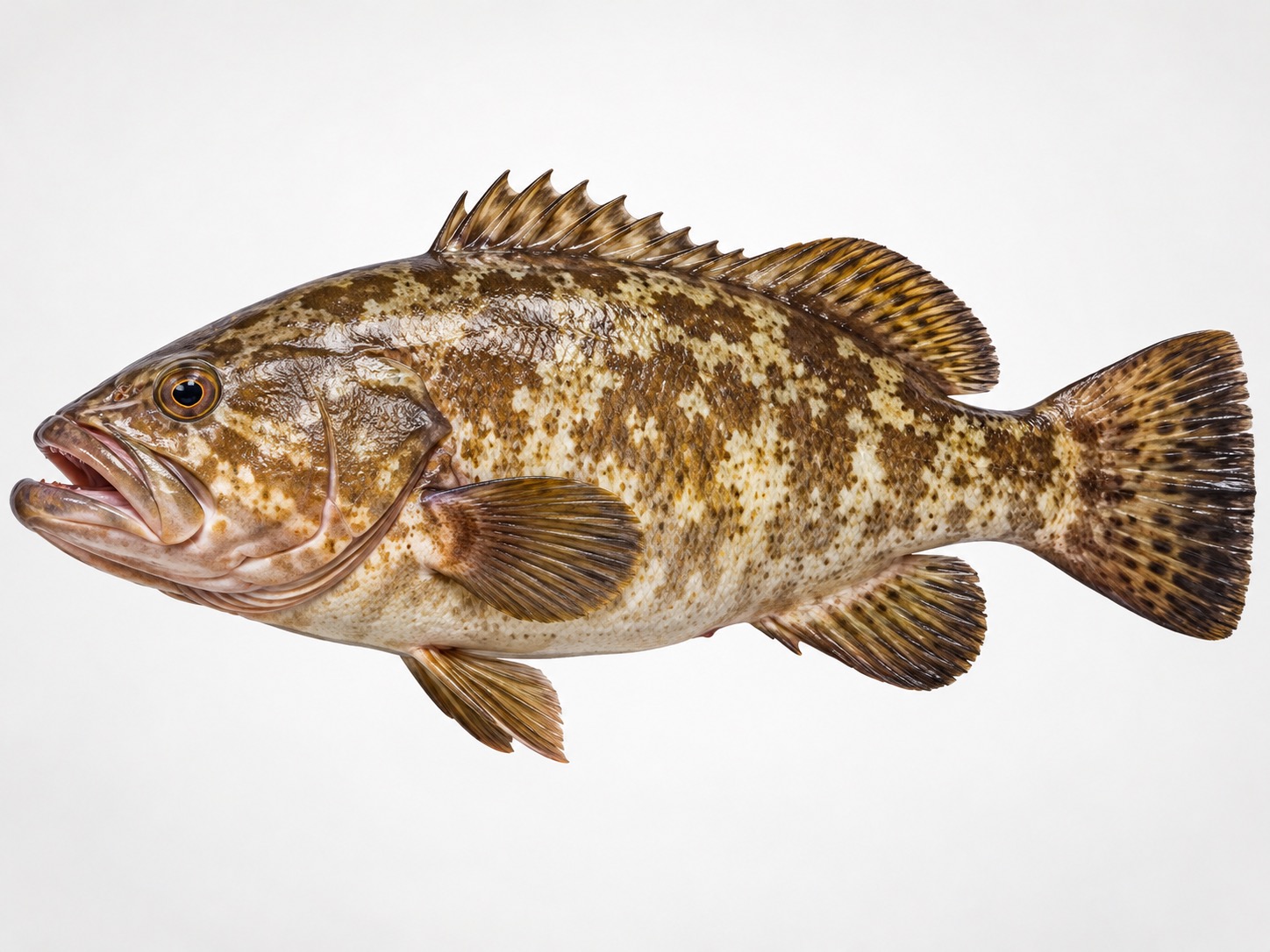
Important culinary-market distinction: “Grouper,” “groper,” and “cernia” are not automatically the same species. New Zealand hāpuku (Polyprion oxygeneios) belongs to the wreckfish family Polyprionidae, while Mediterranean cernia such as the dusky grouper (Epinephelus marginatus) belongs to the grouper family Epinephelidae. They may fill similar culinary roles, but a professional purchase specification should identify the scientific name.
The New Zealand Market: Hāpuku / Groper
New Zealand · Primary IdentityHāpuku / Hapuka / Groper
Polyprion oxygeneios
- Māori name: Hāpuku.
- Common New Zealand market language: Hāpuku, hapuka, groper.
- Family: Polyprionidae — wreckfishes.
- Habitat: large, deep-water demersal fish associated with rugged rocky ground.
- Culinary profile: large firm white-fleshed fish suitable for steaks, thick fillets, roasting and pan cooking.
New Zealand · Second Groper SpeciesBass Groper / Wreckfish
Polyprion americanus
- New Zealand fisheries group hāpuku and bass together in some commercial management contexts.
- It is another large Polyprionidae species rather than a true Epinephelidae grouper.
- Because “groper” can refer to more than one New Zealand fish, the species name matters on invoices and specifications.
Mediterranean Cernia: Similar Culinary Role, Different Species
Italy · MediterraneanCernia Bruna · Dusky Grouper
Epinephelus marginatus
One of the best-known Mediterranean groupers. Italian market names include cernia and cernia bruna. It is a true grouper of the family Epinephelidae.
Italy · MediterraneanCernia Dorata · Goldblotch Grouper
Epinephelus costae
Known internationally as the goldblotch grouper and in Italy as cernia dorata. It is another Mediterranean grouper identity that can appear in restaurant and fish-market terminology.
Italy · MediterraneanCernia Rossa · Mottled Grouper
Mycteroperca rubra
A Mediterranean and eastern Atlantic grouper sold under names that include cernia rossa and cernia di fondo in Italian usage.
How the Same Culinary Category Changes Name Around the World
| Region / Market | Typical Market Name | Scientific Identity | Family | Chef Interpretation |
|---|
| New Zealand | Hāpuku / Hapuka / Groper | Polyprion oxygeneios | Polyprionidae | Large deep-water wreckfish; culinary substitute category for thick white-fish preparations, but not a true grouper. |
| New Zealand | Bass / Bass Groper | Polyprion americanus | Polyprionidae | Large wreckfish often managed commercially alongside hāpuku. |
| Italy / Mediterranean | Cernia / Cernia Bruna | Epinephelus marginatus | Epinephelidae | Classic Mediterranean cernia; true grouper. |
| Italy / Mediterranean | Cernia Dorata | Epinephelus costae | Epinephelidae | Goldblotch grouper; separate species from cernia bruna. |
| Italy / Mediterranean | Cernia Rossa / Cernia di Fondo | Mycteroperca rubra | Epinephelidae | Mottled grouper; another distinct Mediterranean market identity. |
| France | Mérou / Mérou Noir / Mérou Badèche | Species dependent | Usually Epinephelidae | “Mérou” is a broad culinary-market term; confirm species when sourcing. |
| Spain / Iberian markets | Mero | Species dependent | Usually Epinephelidae | Common market-language equivalent of grouper/cernia; scientific identity still matters. |
| Portuguese-speaking markets | Garoupa | Species dependent | Usually Epinephelidae | A broad grouper market term used for several species. |
| United States | Sea Bass for Polyprion oxygeneios | Polyprion oxygeneios | Polyprionidae | U.S. market naming can differ from New Zealand terminology; “grouper” is not automatically an acceptable label for this species. |
Why Scientific Names Matter in a Professional Kitchen
Common names are culinary language, not perfect taxonomy
Fish names change with country, language, fishing tradition and commercial regulation. A menu may say “grouper,” an Italian supplier may say “cernia,” and a New Zealand supplier may say “groper,” yet those words can point to biologically different fish.
For recipe costing, purchasing, allergy/HACCP records, sustainability checks and market-price comparison, Tuscany Cuisine treats the scientific identity as the strongest species-level reference.
Restaurant purchasing specification
- 1. Common market name: what the supplier calls the fish.
- 2. Scientific name: the actual species.
- 3. Country / catch area: where the product originates.
- 4. Product form: whole, H&G, skin-on fillet, skinless fillet, portion or steak.
- 5. Fresh or frozen: never infer this from the species name.
- 6. Unit and package weight: required for valid normalized market costing.
Culinary Comparison
Hāpuku and Mediterranean groupers can both deliver the firm, substantial texture chefs expect from a premium large white fish, which explains why they can occupy similar positions on menus. However, substitution should be based on texture, cut, fat level, cooking method, supply, sustainability and price — not on a belief that “groper,” “grouper” and “cernia” are taxonomically identical.
IdentityCommon + scientific name
OriginCountry + catch area
FormWhole / fillet / steak
MarketNative currency + unit
KitchenYield + recipe application
Market Naming Note for the United States
The U.S. FDA Seafood List identifies Polyprion oxygeneios with the acceptable market name Sea Bass and lists names such as “Hapuka,” “Groper,” “Grouper,” “Hapuku Wreckfish” and “New Zealand Groper” as vernacular cross-references. This is an excellent example of why a chef should not rely on a translated common name alone when comparing international seafood prices.
Connected Tuscany Cuisine Recipe

Roasted Grouper Filet · Cernia
Roasted grouper served with rosemary potatoes and a delicate clam emulsion. The recipe demonstrates how a market fish identity becomes part of recipe costing, inventory mapping, ingredient graphics and the Global Market system.
Chef's Market Rule
Translate the name — but verify the fish.
In global culinary work, the translated common name is only the beginning. The scientific name tells you what the fish actually is. The origin tells you where it came from. The cut tells you what the kitchen receives. The package and unit tell you what the restaurant really pays.
Knowledge is power: identity first, price second.
Reference Notes
Taxonomy and market-name guidance on this page is based on New Zealand Ministry for Primary Industries species codes and fishery records, Earth Sciences New Zealand / NIWA hāpuku information, FAO grouper references, FishBase common-name records and the U.S. FDA Seafood List. Common names vary by country and may not be legally interchangeable in commercial labeling.
Cernia, grouper and New Zealand hāpuku. Professional culinary guide to Polyprion oxygeneios, Polyprion americanus, Epinephelus marginatus, Epinephelus costae and Mycteroperca rubra. Italian names: cernia, cernia bruna, cernia dorata, cernia rossa, cernia di fondo. New Zealand names: hāpuku, hapuka, groper, bass groper. International names include grouper, mérou, mero and garoupa. Culinary market identity, fish purchasing, global seafood prices, restaurant inventory, Menu Builder and Global Market Dashboard.