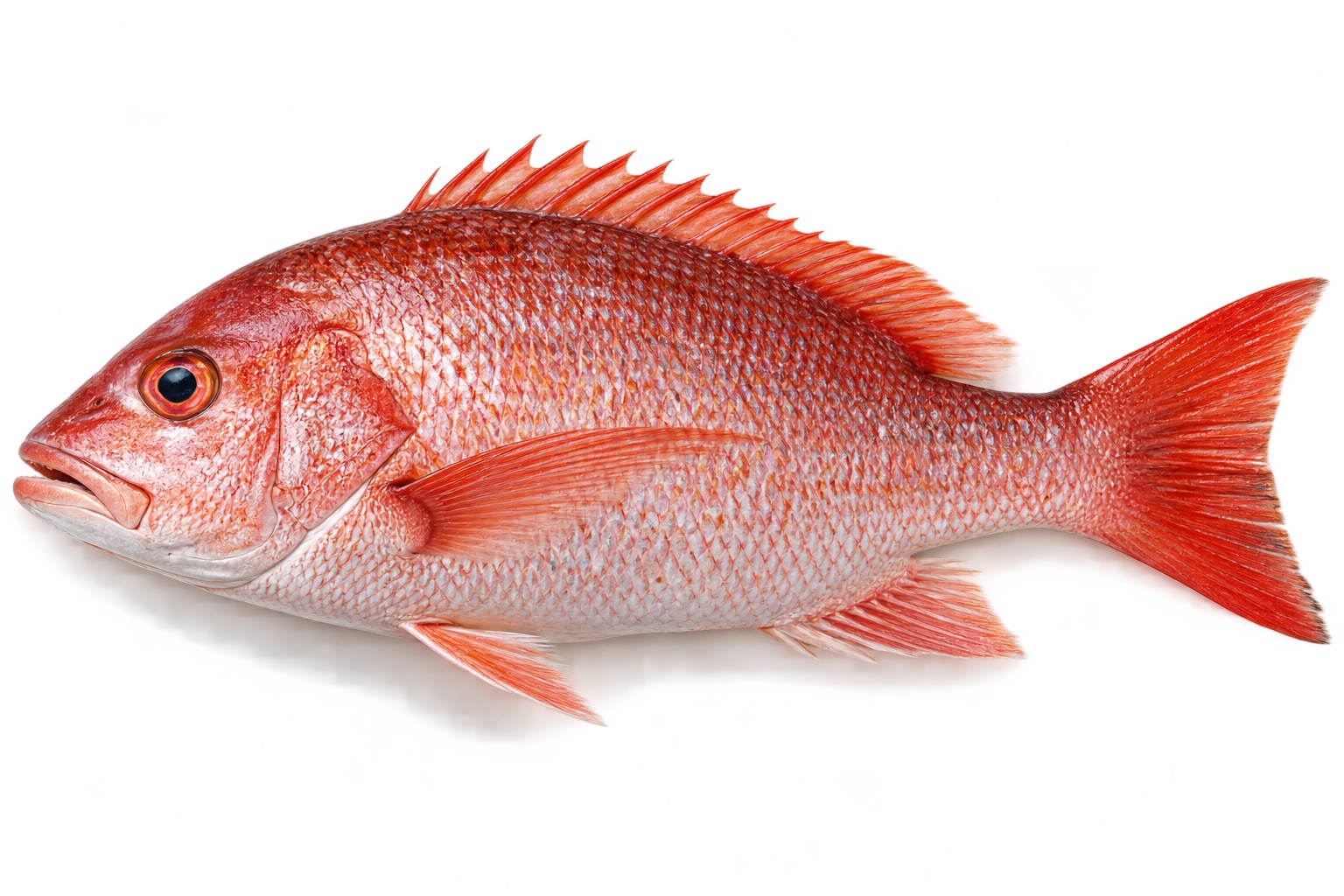
Origin, Range & Habitat
Red Snapper is a western Atlantic reef fish associated especially with the Gulf region and the southeastern United States. Its range extends along the eastern coasts of North America, Central America and northern South America.
Juveniles are typically associated with shallower sandy or muddy bottoms. Adults are bottom-oriented fish commonly found around hard structure such as reefs, rocks, ledges, caves and other areas of relief on the continental shelf.
Flavor Profile & Culinary Character
Chef Pairing Logic
Red Snapper benefits from clean Mediterranean flavors rather than heavy masking. Excellent partners include extra-virgin olive oil, lemon, tomato, capers, parsley, basil, thyme, fennel, artichoke, peppers, olives, white wine, saffron, garlic, shallot and light shellfish or fish reductions.
Best Cooking Applications
Score the skin, season the cavity, add aromatics and roast until the flesh is just cooked and separates cleanly from the frame.
Excellent whole or as skin-on fillets. Oil lightly, control direct heat and protect the lean flesh from drying.
Use dry, skin-on portions. Begin skin-side down and maintain even contact for a crisp surface and moist center.
Aromatic enclosed cooking protects moisture and concentrates herbs, vegetables, citrus and wine around the fish.
Gentle moist heat emphasizes the clean flavor and works especially well with light broths, aromatics and vegetable garnishes.
Useful for carefully portioned fillets or roulades when controlled texture and production consistency are priorities.
Ideal for smaller portions and quick service with citrus, herbs, capers, white wine or a light pan sauce.
Trimmed fillets can be shaped around mousse or vegetables for refined banquet and tasting-menu presentations.
Professional Preparation & Fabrication
- Whole fish: scale thoroughly, remove gills and viscera, rinse only as needed, then dry completely.
- Fillets: remove cleanly from the frame while preserving skin for roasting or searing applications.
- Pin bones: inspect carefully and remove before portioning or rolling.
- Skin-on service: score only when needed and dry the surface thoroughly before cooking.
- Frames and trim: useful for fish fumet, mousse, forcemeat or staff meal when handled under proper food-safety controls.
- Portioning: maintain consistent thickness for even cooking and predictable service timing.
Seasonality & Availability
For culinary purchasing, U.S. wild-caught Red Snapper is available fresh year-round. This market availability should not be confused with recreational or commercial harvest seasons: fishing rules, quotas, openings and limits vary by region, jurisdiction and sector.
Biologically, Red Snapper spawning generally occurs from late spring into fall, with NOAA describing spawning from approximately May through October depending on location.
Buying, Quality & Storage
Whole Fish Quality
- Eyes should appear clear and full rather than sunken.
- Gills should look fresh and richly colored, not brown or dried.
- Skin should be bright with its characteristic red coloration.
- Flesh should feel resilient and spring back after gentle pressure.
- Aroma should be clean and marine, never strongly fishy, sour or ammonia-like.
Storage
Keep Red Snapper refrigerated as cold as practical under approved seafood handling procedures. Store whole fish or portions protected from meltwater and cross-contamination. For professional service, rotate by receiving date, maintain cold-chain documentation and follow the establishment's HACCP plan.
Culinary Applications
- Whole roasted Mediterranean-style fish with herbs, lemon and olive oil
- Skin-on pan-seared snapper with vegetable purée or seasonal greens
- Grilled snapper with salsa verde, salmoriglio or roasted tomato
- Snapper cooked in Carta Fata with artichoke, peppers and aromatic oils
- Poached snapper with fennel, tomato and white wine
- Fish roulade with mousse, herbs or vegetable inserts
- Fine-dining tasting-menu portions with shellfish or fish fumet reductions
- Coastal Italian preparations with capers, olives, parsley and citrus
Carta Fata red snapper roulade with artichoke, bell pepper relish, shallot cream and parsley oil.