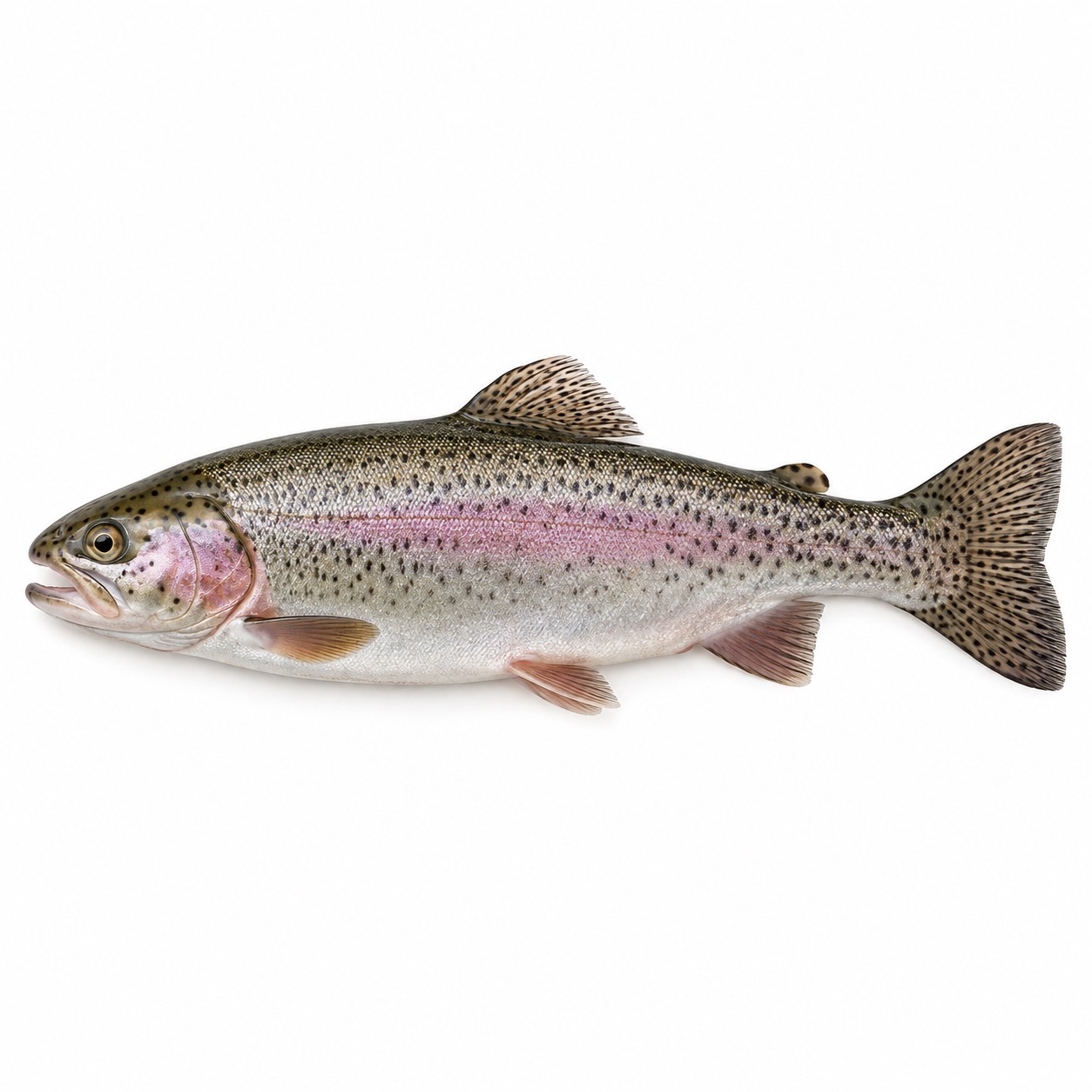
Trout is a freshwater and anadromous finfish valued for its tender flesh,
delicate-to-moderate flavor, fine flakes and versatility in both rustic and refined cooking.
Depending on species, diet, habitat and size, the flesh may range from pale ivory to pink-orange,
with fat levels that vary from lean to moderately rich.
Trout belongs to the salmon family and includes several important culinary species and market forms.
It is commonly sold whole, dressed, butterflied, filleted, portioned or smoked.
Smaller fish are often cooked whole, while larger trout are typically portioned into filets or steaks.
Its flesh responds well to high-heat techniques such as pan searing and grilling, but it is also
delicate enough for poaching, steaming and en papillote. Trout pairs especially well with citrus,
herbs, butter, olive oil, almonds, capers and light wine-based sauces.
Professional kitchen principle:
because trout flesh is relatively delicate, use controlled heat and avoid overcooking.
Crisp skin and moist flesh are usually the preferred service target for pan-seared filets.
Flavor Profile
Delicacy
Fine-flaked and tender, particularly in smaller farmed or freshwater trout.
Richness
Moderate. Some trout can be notably richer depending on fat content, feed and habitat.
Sweetness
Mild natural sweetness with a clean freshwater character.
Umami
Medium. Browning the skin or roasting the fish develops deeper savory notes.
Oiliness
Moderate compared with lean white fish; generally less heavy than mackerel or sardine.
Earthiness
Usually low, though habitat and water quality can affect the final flavor.
Texture
Tender, moist and fine-flaked when properly cooked.
Best Balance
Lemon, herbs, capers, wine, butter and olive oil all support trout without overpowering it.
Common Types of Trout
Rainbow Trout
One of the most common culinary trout. Flesh is tender and mild with moderate richness.
Farm-raised rainbow trout is widely used for whole roasting, pan searing and grilling.
Steelhead Trout
An anadromous form of rainbow trout. Usually larger, richer and more salmon-like,
with pink-orange flesh and a slightly firmer texture.
Brown Trout
Often has a somewhat stronger, more complex flavor than rainbow trout.
Excellent for roasting, grilling, smoking and traditional freshwater preparations.
Brook Trout
A delicate, fine-textured fish frequently served whole because of its smaller size.
Excellent with butter, herbs, almonds and lemon.
Lake Trout
Typically larger and richer, with a higher fat level than many stream trout.
Suitable for roasting, smoking and grilling.
Golden Trout
A visually distinctive trout primarily associated with wild fisheries.
Culinary availability is far more limited than rainbow or farmed trout.
Culinary Usage
Pan-Seared
Excellent for skin-on filets. Start skin-side down to develop crispness,
then finish gently so the flesh stays moist.
Whole Roasted
Small trout can be roasted whole with lemon, garlic, herbs and olive oil.
The cavity may be filled with aromatics before cooking.
Grilled
Whole trout and larger filets both grill well. Light oiling and careful handling
help protect the delicate flesh.
Poached
Gentle poaching in court bouillon, wine or aromatic broth produces a tender,
refined preparation suited to lighter sauces.
Smoked
Trout’s moderate fat content makes it suitable for both hot and cold smoking.
Smoked trout works well in salads, crostini, spreads and composed appetizers.
En Papillote
Sealed cooking with herbs, citrus and vegetables preserves moisture and captures
volatile aromas around the fish.
Fabrication & Professional Preparation
Scale the fish if the skin will be eaten.
Remove gills and viscera when working with whole fish.
Rinse only when necessary and dry thoroughly before cooking.
For filets, cut along the backbone and rib cage using a flexible fish knife.
Remove rib bones and pin bones carefully with fish tweezers.
Trim belly membrane and excess fat only as required for the intended presentation.
Keep portions refrigerated and protected from cross-contamination until cooking.
Yield note:
whole-fish yield varies with fish size, trimming level, head-on versus head-off purchasing,
and whether bones are retained for fumet or sauce production. Record actual kitchen yield
rather than applying a generic conversion factor when costing.
Nutrition
Trout is a nutrient-dense fish that provides high-quality protein and naturally occurring
omega-3 fatty acids. Nutrient values differ significantly by species, whether the fish is
wild or farm-raised, and by cooking method.
Nutrient
Approximate culinary reference per 100 g cooked trout
Energy
~150–190 kcal
Protein
~22–26 g
Total fat
~5–9 g
Carbohydrate
0 g
Omega-3 fats
Present; amount varies by species and production method
Vitamin B12
Good source
Vitamin D
Present; amount varies
Selenium
Good source
Potassium
Present
Nutrition is intentionally presented as a culinary reference range because trout species,
farming conditions and preparation methods vary. Recipe-specific nutrition should be calculated
from the exact trout product and cooking method used.
Seasonality, Purchasing & Storage
Purchasing
Fresh whole trout should have clear eyes, bright skin and a clean, fresh aroma.
Flesh should feel firm and resilient rather than soft or separating.
Filets should appear moist but not waterlogged, with no strong ammonia-like odor.
Verify whether the product is wild or farmed and whether it is sold whole, dressed or filleted.
Storage
Hold refrigerated at approved cold-storage temperatures.
Store raw fish separately from ready-to-eat food.
Use clean drainage and appropriate ice management for fresh whole fish.
Label and date fabricated portions according to the operation’s food-safety system.
This trout record connects fish identification, fabrication, nutrition, culinary technique,
recipe usage, Live Inventory and professional kitchen systems inside the Tuscany Cuisine
culinary knowledge platform.