One of Europe’s most prized flatfish: firm, luminous white flesh, elegant flavor,
excellent moisture retention and a long culinary association with refined seafood cookery.
Mediterranean & Northeast AtlanticPremium White FishWhole Roast · Pan Roast · PoachRombo Chiodato
Why Turbot Matters in the Professional Kitchen
Turbot has long been treated as a premium European flatfish because its white flesh is firm enough
for precise portioning yet delicate enough for elegant sauces and gentle cooking. The flesh forms
broad flakes, remains moist when handled correctly and has a refined flavor that rewards restraint.
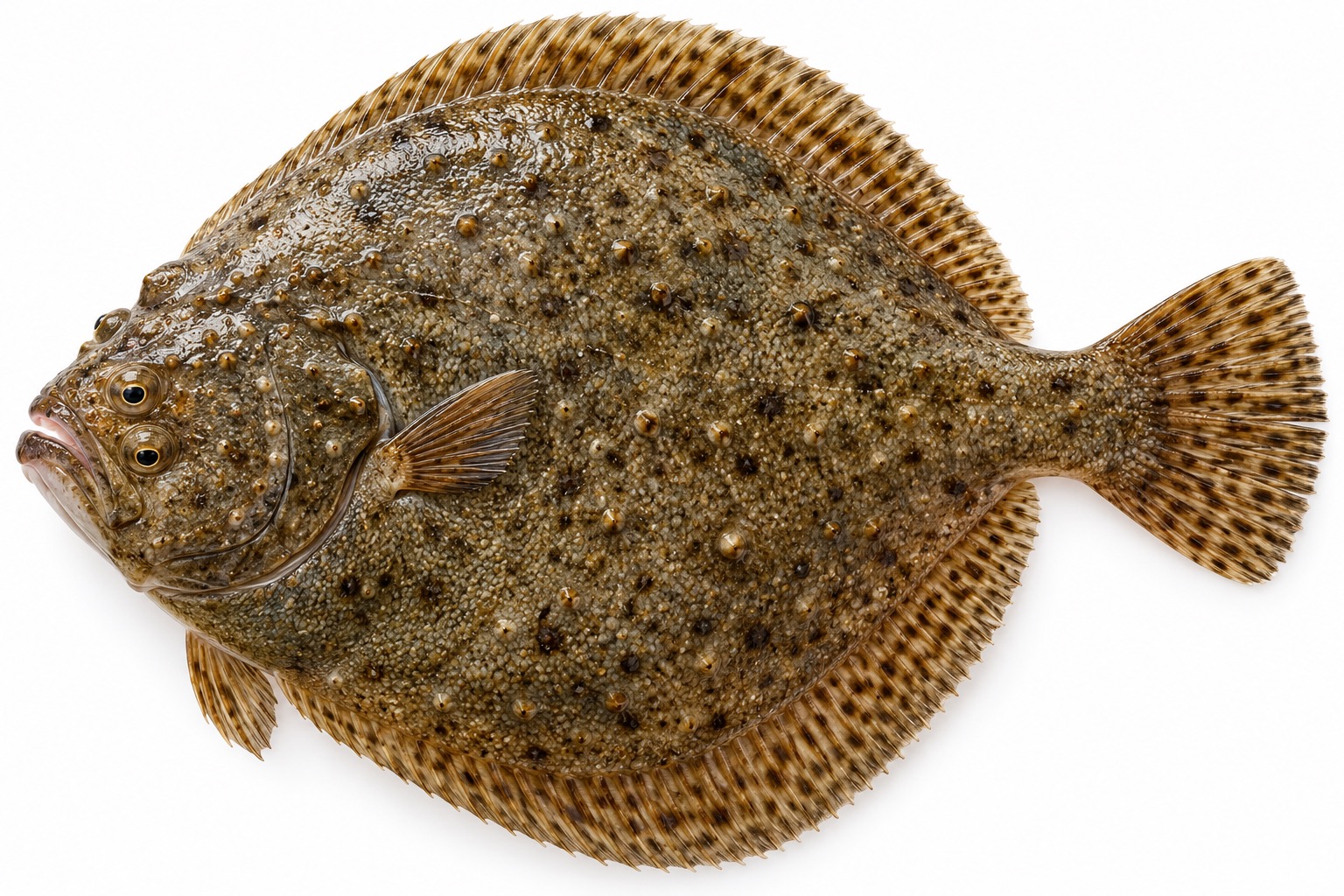
The Italian name rombo chiodato refers to the characteristic hard bony tubercles on
the eyed side of the fish. Those raised “nail-like” points help distinguish true turbot from other
flatfish that may share similar market names.
History & European Culinary Tradition
Turbot’s reputation was built through coastal fisheries, fish markets and classical European cookery.
Mediterranean & Italian Tradition
In Italy, rombo is valued for whole roasting, oven cooking, gentle braising and refined restaurant
preparations. The fish is often paired with potatoes, olive oil, white wine, herbs, lemon, capers,
tomatoes and light fish sauces that complement rather than cover its natural character.
The name rombo chiodato distinguishes the true turbot with its characteristic bony
tubercles from other flatfish sold under broader rombo terminology.
France, Spain & Northern Europe
French classical cuisine has long treated turbot as a luxury fish suitable for poaching, roasting
and sauce-driven service. Spain is especially important today both culturally and commercially,
with whole grilled or roasted turbot appearing in high-level coastal cooking and with Spain playing
a major role in European turbot aquaculture.
North Sea and Atlantic markets in the United Kingdom, Denmark, the Netherlands and France have also
supplied wild turbot into European restaurant and fishmonger channels.
Where Turbot Is Found
Separate natural distribution from modern farming so sourcing information remains accurate.
Northeast AtlanticNative range along European Atlantic coasts, including North Sea and adjacent waters.
Mediterranean SeaNative distribution includes Mediterranean coastal waters and long-standing regional culinary use.
Baltic SeaOccurs through much of the Baltic, especially suitable coastal and brackish habitats.
Black SeaImportant regional turbot fishery with dedicated management measures and conservation attention.
SpainMajor European aquaculture producer and an important culinary market for turbot.
Portugal & FranceEuropean aquaculture and seafood markets contribute to farmed supply and restaurant demand.
United Kingdom & North SeaWild capture fisheries and fish markets historically contribute premium European turbot.
ChinaLarge modern aquaculture production developed after introduction of European turbot broodstock and juveniles.
Chef purchasing principle: “Turbot” on a menu or invoice is not enough. Verify the scientific
identity, origin, wild or farmed production method, harvest area and supplier traceability. Greenland turbot
is a different fish and should not be treated as the same culinary identity as Scophthalmus maximus.
Habitat, Appearance & Identification
A bottom-living predator built for camouflage and ambush.
Body Shape
Broad, nearly circular to diamond-shaped body with both eyes on the upper side after metamorphosis.
Surface
The eyed side lacks ordinary scales and carries distinct hard bony tubercles, the feature behind the Italian “chiodato” name.
Bottom Habitat
Adults live over sandy, rocky and mixed bottoms and may also occur in brackish coastal waters.
Diet
A predatory flatfish feeding mainly on bottom-associated fishes, with crustaceans and bivalves also contributing to the diet.
Market Size
Commercial fish vary widely in size; larger wild fish can provide thick, luxurious portions while smaller farmed fish are often sold whole.
Four Fillets
Like other large flatfish, turbot yields four main fillets, with thicker dorsal portions and thinner belly-side sections.
Seasonality & Responsible Availability
Turbot can appear year-round, but spawning cycles, regional fisheries and farmed supply change the meaning of “season.”
Wild Turbot
Spawning timing varies by region. FishBase describes Mediterranean spawning generally earlier in the year
and Atlantic spawning later into spring and summer. For chefs, this means quality and responsible sourcing
should be evaluated by fishery and region rather than by one universal calendar.
Farmed Turbot
Aquaculture creates more stable year-round availability. European farming expanded strongly in Spain and
Portugal after hatchery and juvenile-production advances, while China later developed very large-scale turbot farming.
Seasonality note: some UK seafood guidance favors January–February and June–December while avoiding
much of the principal spring spawning period. Always confirm current local fishery advice, closures and sustainability
guidance for the exact origin being purchased.
Flavor Profile & Texture
Turbot is valuable because the flesh has structure without becoming coarse.
Flavor
Mild, elegant and subtly sweet with a clean marine character. It generally needs less aggressive seasoning than stronger oily fish.
Texture
Firm, dense white flesh with broad flakes and excellent moisture retention. Larger fish can deliver especially substantial portions.
Natural Richness
The flesh has enough richness to work with butter, olive oil and classic sauces while still remaining refined and delicate.
Professional Purchasing & Fabrication
Buy the fish first with your eyes, nose, hands and supplier documentation.
Selection
Look for clean marine aroma, bright and naturally shaped eyes, moist skin, resilient flesh and a clean belly cavity. The fish should be kept cold with proper drainage and should never sit in standing meltwater.
Fabrication
Whole turbot can be roasted intact or fabricated into four fillets. Preserve the frame, head and trim for fumet or sauce work when quality and food-safety controls allow. Portion thickness should determine the cooking method and finish time.
Professional Cooking Methods
Use controlled heat to protect the flesh and let the natural gelatin and bones contribute flavor.
Whole RoastingExcellent for large fish. Bones and frame help retain moisture and deepen flavor.
Pan RoastingIdeal for thick fillets. Build gentle color, then finish carefully in the oven.
PoachingA classical method for preserving delicate texture and pairing with refined sauces.
SteamingClean, controlled cooking that keeps the flesh moist and highlights pure fish flavor.
BakingWorks well with herbs, white wine, potatoes, vegetables or a light aromatic base.
Sous VideUseful for controlled professional production when performed under a validated food-safety plan.
Avoid overcooking: turbot is expensive because of its quality. Aggressive dry heat can turn a beautiful
fillet firm and dry. Match the heat to the thickness of the portion and remove it while the center remains moist and delicate.
Nutrition Reference
Representative values vary by source, harvest method, farming system and preparation.
Protein
Representative raw turbot references list roughly 16 g protein per 100 g portion.
Energy
Representative values are around 95 kcal per 100 g before cooking fats, sauces or garnishes are added.
Fat
Representative values are about 2.9 g fat per 100 g, making turbot relatively lean while still tasting rich.
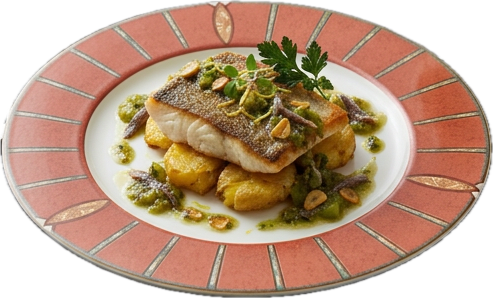
Connected Tuscany Cuisine Recipe
Turbot Filet (Rombo) connects this species knowledge directly to the Secondi system.
The fish is pan-roasted and served over butter-baked potatoes with a green tomato, anchovy, garlic,
Dijon mustard, lemon and extra virgin olive oil sauce.
This species page is not only educational content. It gives turbot a reusable identity for recipes,
Ingredient Library connections, Menu Builder, Live Inventory, purchasing, Global Market and future production records.
Species-reference note: natural distribution, habitat, morphology and spawning information are based on established fisheries references including FishBase and FAO. Aquaculture discussion distinguishes European and Chinese production. Seasonality and sustainability should always be checked against current regional fishery guidance before purchasing.
Turbot, Rombo Chiodato, Scophthalmus maximus. European premium flatfish from the Northeast Atlantic, Mediterranean, Baltic and Black Sea regions. History, Italian tradition, French and Spanish culinary use, aquaculture, habitat, identification, bony tubercles, seasonality, flavor profile, firm moist white flesh, fish fabrication, four fillets, whole roasting, pan roasting, poaching, steaming, baking and sous vide. Connected Tuscany Cuisine recipe: Turbot Filet Rombo with butter-baked potatoes and green tomato anchovy sauce. Chef David Giani. Tuscany Cuisine Culinary Academy.