Beef tripe is one of the great examples of traditional
nose-to-tail cooking: a humble part of the animal transformed
through careful handling, long cooking and proper seasoning
into a tender ingredient capable of absorbing stocks,
tomato, herbs, aromatics and olive oil.
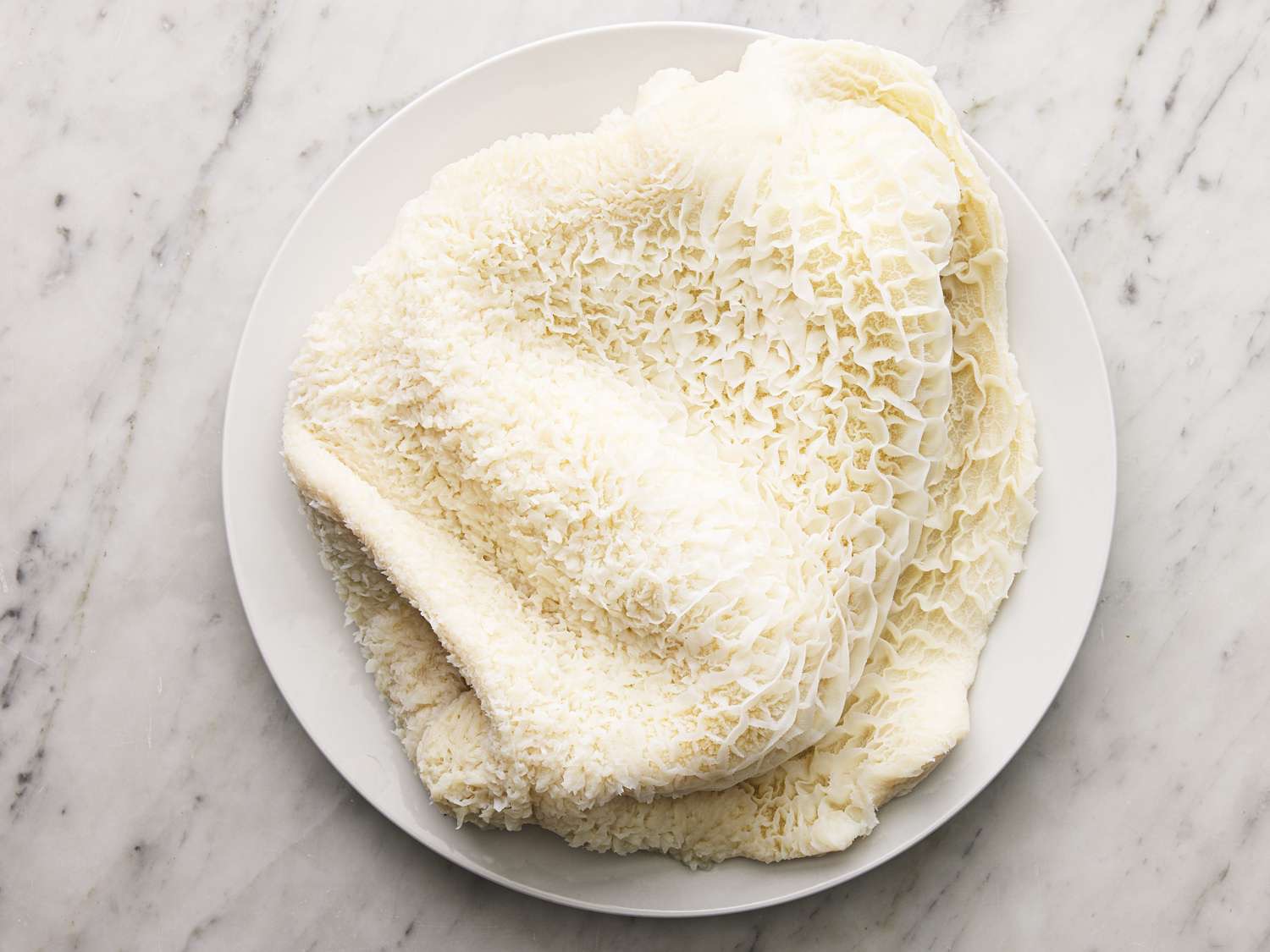
Beef tripe is the edible muscular lining of the stomach
of cattle. Because cattle are ruminants, the stomach system
contains several chambers, and different sections of tripe
develop different appearances and textures.
One of the most recognizable varieties is
honeycomb tripe, named for the geometric
honeycomb pattern visible on its surface.
Tripe is naturally firm and rich in connective tissue.
It is therefore not treated like a steak or quick-cooking
muscle. Its culinary potential is developed through
moist heat and time, allowing the tissue
to soften and become tender while maintaining enough
structure to be sliced or incorporated into a sauce.
Historically, tripe belonged to the more economical
parts of the animal. It was sometimes considered a
secondary or humble cut, but this does not mean that it
is inferior when properly processed and prepared.
Italian cuisine repeatedly demonstrates how skill,
patience and seasoning can transform modest ingredients
into distinctive regional dishes.
From the Animal to the Professional Kitchen
Unlike a conventional beef muscle cut, tripe requires
considerable treatment before it becomes a culinary ingredient.
After slaughter and inspection, the stomach is separated from
the digestive tract and its contents are removed. Edible tripe
is then processed under controlled sanitary conditions.
1
Separation
The stomach sections are separated during the processing
of edible beef offal and inspected for suitability.
2
Emptying & Cleaning
The stomach contents are removed and the tripe is thoroughly
cleaned under controlled processing conditions to eliminate
remaining material from the surface.
3
Scalding / Preparation
Commercial processors may use controlled washing,
scalding and trimming procedures to produce the pale,
cleaned tripe commonly sold to restaurants and consumers.
4
Cold Chain
Once cleaned, tripe must remain properly refrigerated
or frozen until it enters the kitchen production system.
Professional Kitchen Handling
The restaurant should begin with
commercially cleaned, inspected tripe.
The objective in the kitchen is not to reproduce the
slaughterhouse cleaning process, but to maintain sanitation,
prevent cross-contamination and cook the product correctly.
Traditional cooks sometimes rinsed or soaked tripe as part
of preparation. Modern food-safety practice requires care
with this step because splashing water from raw animal
products can spread microorganisms to sinks, countertops,
equipment and ready-to-eat foods.
Why Tripe Needs Long Cooking
Raw tripe is firm and resilient. The objective of cooking
is to soften its connective structure without reducing it
to a shapeless texture.
For most traditional preparations, the cleaned tripe is
first gently simmered or boiled until it begins to become
tender. Depending on the condition and processing of the
tripe when purchased, cooking time can vary considerably.
Basic Simmering Method
Place the commercially cleaned tripe in an appropriate
stainless-steel cooking vessel.
Cover with water or a light aromatic broth.
Add traditional aromatics if desired, such as onion,
celery, carrot, bay leaf or parsley stems.
Bring the liquid to a boil and then reduce to a controlled,
gentle simmer.
Cook until the tripe is tender enough to cut easily
while still retaining its characteristic texture.
Use immediately for a hot preparation or cool rapidly
under an approved food-safety procedure before refrigerated
storage or cold preparation.
Braising
Braising allows tripe to absorb the personality of a sauce.
Tomato, stock, wine, aromatic vegetables, herbs and cheese
can transform the relatively mild tripe into a deeply
flavored dish.
The ability of tripe to carry sauce is one of its greatest
culinary strengths. Its textured surface captures liquid
and seasoning, while prolonged moist cooking gradually
develops tenderness.
Tripe in the Italian Culinary Tradition
Tripe belongs to the history of practical European
nose-to-tail cooking. Before refrigeration and modern
industrial food systems, using the complete animal was
both an economic necessity and a demonstration of respect
for the product.
Italian cooks developed regional preparations that transformed
tripe from an economical cut into a dish with a distinct local
identity.
Trippa alla Fiorentina
In Florence, tripe is one of the city's most recognizable
traditional foods. Tender tripe is sliced and slowly cooked
with aromatic vegetables and tomato. Parmigiano Reggiano
or another appropriate aged cheese may be added at service,
depending on the preparation.
The dish demonstrates an important principle of Tuscan
cooking: an ingredient does not need to begin as an expensive
cut to become important. Technique is what gives it value.
Other Culinary Applications
Slow tomato-based braises
Broth-based soups
Bean and vegetable preparations
Risotto and other primi
Warm antipasti
Cold composed salads
Street-food preparations
Traditional Chilled Julienne Tripe Salad
One of the simplest ways to appreciate properly cooked tripe
is to serve it cold. Once completely tender, the tripe is
cooled and cut into fine julienne. The seasoning should
remain clean and direct so that the texture of the tripe
remains the focus.
Classic Ingredients
Cooked and chilled beef tripe
Fresh garlic, finely minced
Fresh Italian parsley, chopped
Fresh lemon juice
Extra-virgin olive oil
Sea salt
Freshly cracked black pepper
Method
Cook the tripe until completely tender.
Cool it safely and refrigerate until thoroughly chilled.
Cut the tripe into thin julienne strips.
Add finely minced fresh garlic and chopped parsley.
Dress with fresh lemon juice and good-quality
extra-virgin olive oil.
Season with sea salt and freshly cracked black pepper.
Allow the dressing to coat the textured surface of the
tripe before service.
The acidity of the lemon brightens the richness of the
tripe, parsley adds freshness, garlic provides aromatic
intensity and extra-virgin olive oil carries the flavors
while giving the salad a smooth finish.
Chef's Culinary Logic
Flavor
Tripe itself is relatively mild. For this reason it becomes
a carrier for the surrounding flavor structure: broth,
tomato, garlic, herbs, wine, cheese, citrus and olive oil.
Texture
The goal is tenderness without destroying the identity
of the tripe. Properly cooked tripe should be easy to bite
through but still possess texture and structure.
Acidity
Tomato, wine or lemon can provide the acidity necessary
to balance the richness of long-cooked offal.
Fat
Extra-virgin olive oil is particularly effective with tripe
because it carries aromatic ingredients and creates a
rounder mouthfeel without overwhelming the product.
Herbs
Parsley is one of the most natural herbs for tripe.
It supplies freshness and works particularly well with
lemon, garlic and olive oil in cold preparations.
Food Safety & Professional Handling
Beef tripe is an animal organ and should be treated with
the same professional sanitation discipline used for other
raw animal products.
Purchase inspected tripe from an approved supplier.
Maintain the cold chain during receiving and storage.
Prevent raw tripe and its packaging from contacting
ready-to-eat foods.
Wash and sanitize knives, cutting boards, containers,
sinks and work surfaces that contact raw tripe.
Cook the tripe thoroughly according to applicable food-safety
regulations and your operation's HACCP procedures.
If the cooked tripe will be served cold, cool it rapidly
using the operation's approved HACCP cooling procedure,
then hold it under refrigeration.
Reheat cooked leftovers according to applicable food-safety
requirements before hot service.
Important professional distinction:
Commercial tripe processing includes cleaning and washing
under controlled sanitary conditions. In the kitchen,
routinely washing raw meat under running water is not
recommended as a food-safety step because splashing may
spread bacteria. The kitchen should begin with commercially
cleaned tripe, control cross-contamination and rely on
proper cooking and HACCP controls.
From Humble Cut to Valuable Ingredient
Tripe is sometimes described historically as a lower-tier
or inexpensive part of the animal. From a professional
culinary perspective, however, its market price does not
determine its gastronomic value.
The chef creates that value through
clean product selection, correct cooking,
texture control, seasoning and presentation.
A slowly braised Florentine tripe, a carefully made risotto,
or a chilled julienne salad with garlic, parsley, lemon and
extra-virgin olive oil demonstrates precisely why traditional
cuisine should not be evaluated only by the initial cost of
the cut.
This is one of the fundamental lessons of classical cooking:
technique can elevate an economical ingredient into
a memorable dish.