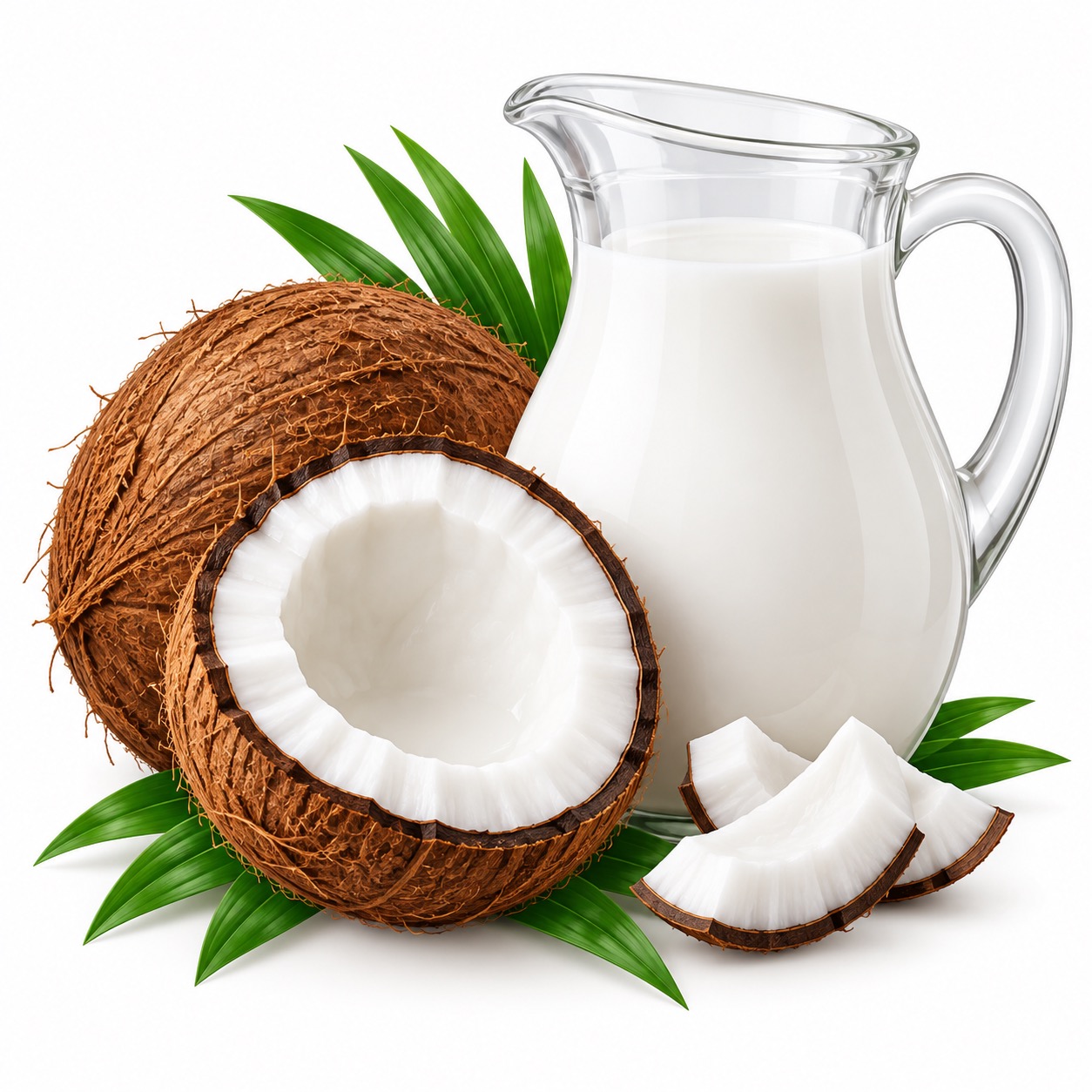
What Is Coconut Milk?
Coconut milk is produced from the white edible kernel of a mature coconut. The coconut flesh is removed from the shell, grated or finely processed, combined with water when necessary and pressed or mechanically extracted. The liquid is then filtered to separate most of the fibrous coconut solids.
The result is an emulsion of coconut fat, water and naturally occurring coconut solids. Full-fat coconut milk is relatively rich and creamy, while light coconut milk contains a greater proportion of water and therefore has a thinner texture and lower fat content.
How Coconut Milk Is Produced
Coconut milk is generally produced from mature coconuts because the developed white kernel contains the fat and solids needed to create a rich emulsion.
The fibrous outer husk and hard shell are removed so the mature white coconut flesh can be separated.
The coconut meat is separated from the shell and cleaned before processing.
The white flesh is grated, ground or mechanically reduced into smaller particles. This exposes the fat and soluble coconut solids.
Water may be added to assist extraction and to control the concentration of the finished product.
The processed coconut flesh is pressed or mechanically extracted to release the creamy coconut emulsion.
Most coarse fiber and remaining solid coconut residue are removed, producing the smooth liquid recognized as coconut milk.
Commercial coconut milk may be pasteurized, sterilized or ultra-high-temperature processed before packaging in cans, cartons or other sealed containers.
Culinary Uses
Coconut milk works both as a flavoring ingredient and as a structural component. Its fat content contributes body and mouthfeel, while the natural coconut aroma can soften chile heat, balance acidity and give sauces or grains a rounded texture.
Professional Kitchen Technique
- Shake or stir canned coconut milk before use because the fat can naturally separate during storage.
- Full-fat coconut milk produces a richer sauce than light coconut milk.
- Add coconut milk gradually in risotto so coconut flavor does not overwhelm the rice or primary protein.
- Avoid excessive high-temperature reduction because coconut milk can become oily or separate.
- Acidic ingredients such as lime or lemon are often best adjusted toward the end of cooking.
- Coconut milk pairs particularly well with ginger, garlic, lemongrass, chile, turmeric, coriander, citrus, shellfish and aromatic herbs.
History & Culinary Traditions
Coconut palms have long been central to food cultures in tropical coastal regions where the plant grows naturally or has been cultivated for generations. Nearly every part of the coconut can be used: the water as a beverage, the flesh as food, the oil as cooking fat and the grated mature kernel as the basis for coconut milk and cream.
Coconut milk became a foundational cooking ingredient throughout Southeast Asia, South Asia, island Southeast Asia, the Pacific, parts of East Africa and the Caribbean. Its importance developed not because it imitated dairy milk, but because it was locally available, energy-dense and extremely adaptable in both savory and sweet cooking.
Traditional kitchens often produced coconut milk immediately before cooking. Mature coconut flesh was grated by hand and squeezed with water. The first extraction was richer and closer to coconut cream, while later extractions produced a thinner liquid suitable for soups, rice preparations and longer cooking.
Global Culinary Traditions
Culinary Versatility
Coconut milk can move easily between savory and sweet preparations. Its richness means it can replace part of the dairy component in many recipes, but it should not automatically be treated as a flavor-neutral substitute. Coconut has a recognizable aroma, and professional menu development should use that flavor intentionally.
In contemporary restaurant kitchens, coconut milk is especially useful when developing dairy-free dishes. It can add body to soups, sauces, curries and rice preparations while allowing the chef to avoid cream or butter when the rest of the recipe is also dairy-free.