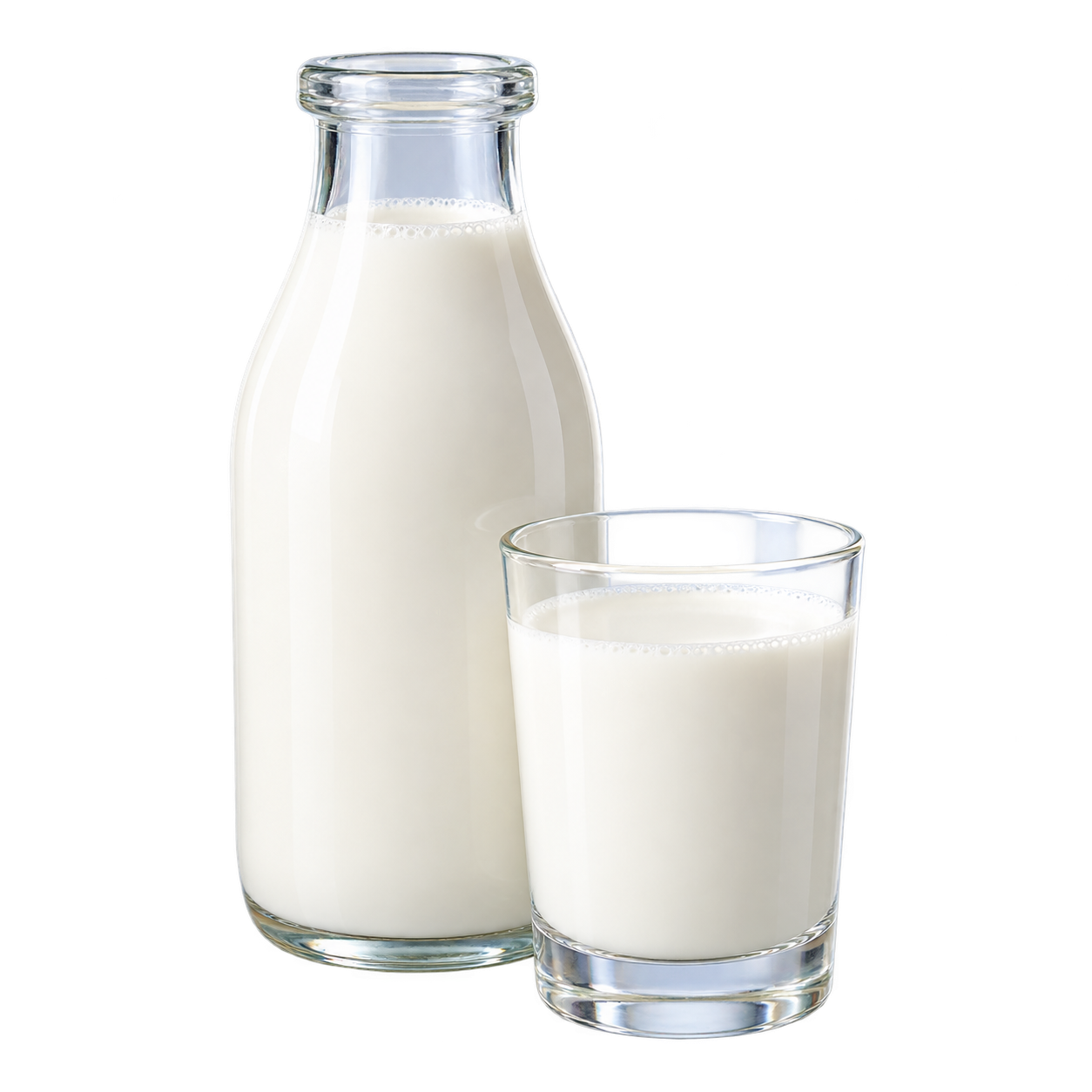
years of documented dairying
Archaeological analysis of fat residues in ancient pottery shows widespread milk use in Neolithic Europe over roughly nine millennia. Fermentation and cheese making helped communities preserve a highly perishable food.
Dairy Ingredient Library
One ancient ingredient, hundreds of transformations. Milk nourishes, enriches, emulsifies, browns, ferments and becomes the foundation of cream, butter, yogurt, gelato and the world of cheese.
Archaeological analysis of fat residues in ancient pottery shows widespread milk use in Neolithic Europe over roughly nine millennia. Fermentation and cheese making helped communities preserve a highly perishable food.
A food that shaped civilization
Milk moved from seasonal nourishment to a year-round culinary system through fermentation, fat separation, curdling, heat treatment and refrigeration.
After cattle, sheep and goats were domesticated, milk gave farming communities a renewable food source. Pottery residues document European milk use from the Neolithic period onward.
Fresh milk spoiled quickly, so cooks transformed it into yogurt-like cultured foods, butter and cheese. These techniques improved flavor, storage life and portability.
Louis Pasteur demonstrated that controlled heating could reduce spoilage organisms in wine and beer. The same scientific principle was later applied to milk safety.
Milk once transmitted diseases including typhoid fever, scarlet fever and tuberculosis. Pasteurization, sanitation and cold-chain controls dramatically reduced that danger.
Modern milk is standardized for fat, often homogenized, safely heat-treated and transformed into products ranging from fresh mozzarella to cultured butter, whey protein and gelato.
The dairy family
Nearly every dairy product begins with one of six transformations: separation, fermentation, churning, curdling, concentration or freezing.
Centrifugal separation divides cream from skim milk; producers then recombine milk fat to a target percentage.
Agitation gathers milk fat into butter; gentle heating can separate water and milk solids from pure butterfat.
Selected bacteria convert lactose into lactic acid, creating tang, body and improved keeping quality.
Acid, cultures and/or rennet coagulate milk proteins into curds, leaving liquid whey.
Removing water increases shelf life, solids and flavor concentration while reducing transport weight.
Freezing creates desserts; industrial fractionation isolates useful milk components for culinary and nutrition applications.
Food-safety foundation
Safety depends on the full chain—from healthy animals and clean equipment to validated heat treatment, protected packaging and continuous refrigeration.
Milk is collected hygienically and cooled quickly to slow microbial growth before transport.
Dairies test quality and screen for issues such as antibiotics, temperature and microbial indicators.
Cream is separated and recombined to produce the declared milk-fat level.
High pressure reduces fat-globule size so cream stays evenly dispersed instead of rising.
Validated heating destroys pathogens; rapid cooling and sealed packaging protect the milk afterward.
Raw milk can carry Campylobacter, E. coli, Listeria, Salmonella, Brucella and other pathogens. Clean farms reduce contamination but cannot guarantee that raw milk is free of harmful microorganisms.
Pasteurization is a controlled time-and-temperature treatment—not sterilization. Correct post-process handling and refrigeration remain essential. Public-health agencies advise choosing pasteurized milk and dairy products, especially for children, older adults, pregnant people and anyone with a weakened immune system.
| Method | Minimum temperature | Minimum time |
|---|---|---|
| Vat / LTLT | 145°F / 63°C | 30 minutes |
| HTST | 161°F / 72°C | 15 seconds |
| Higher-heat systems | Higher validated temperatures | Shorter validated times |
These are regulatory reference combinations for ordinary fluid milk. Products with more fat, sweetener or solids may require different schedules. Commercial operators must follow the applicable validated process and local regulation.
Nutrition & culinary behavior
Milk’s water, proteins, fat, lactose and minerals give it nutritional value and make it a powerful technical ingredient in savory cooking, pastry and baking.
Digestive tolerance
Lactose is milk’s natural sugar. The enzyme lactase breaks it down in the small intestine. When lactase activity is low, unabsorbed lactose can cause gas, bloating, abdominal discomfort or diarrhea.
About 68% of the world’s population has lactose malabsorption—roughly 5.6 billion people when applied to a global population near 8.2 billion. This does not mean all 5.6 billion people have symptoms.
The U.S. estimate is about 36%. Prevalence varies greatly by ancestry and region. Many people with lactose intolerance can tolerate some lactose, especially in small portions, with meals, in yogurt or in lower-lactose aged cheeses. Lactose-free dairy milk is nutritionally similar to regular dairy milk but contains added lactase or pre-split lactose.
A digestive response to the sugar lactose. The amount tolerated varies, and it is often managed by portion size, product choice or lactase.
An immune reaction to milk proteins such as casein or whey. Even lactose-free cow’s milk still contains milk protein and is not safe for a person with a milk allergy.
Connected culinary data
This page registers one normalized milk record so recipes and operational tools can share the same identity, category, base unit, icon, allergen and education-page link.
Normalized record ready
Milk questions
Pasteurization is designed for microbial safety, not to strip milk of nutrition. Public-health guidance states that pasteurized milk retains the nutritional benefits of milk without the foodborne-disease risk associated with raw milk. Some heat-sensitive vitamins may change slightly, but milk is not generally relied on as a major source of vitamin C.
No. Homogenization is a physical process that reduces fat-globule size so cream stays dispersed. Pasteurization is a validated heat process used to destroy harmful microorganisms.
Some can tolerate small servings of aged hard cheeses because much of the lactose leaves with whey or is consumed during fermentation. Individual tolerance varies. This does not apply to milk allergy, and labels still require milk-allergen disclosure.
Both come from milk, but cream contains a much higher proportion of milk fat. Whole milk is standardized to about 3.25% milk fat in the United States; cream categories begin at higher fat levels and behave differently in sauces, whipping and baking.
Keep pasteurized milk at 40°F / 4°C or colder, protect it from cross-contamination, return it promptly to refrigeration, follow date and rotation controls, and discard it when time-temperature safety limits or product quality are uncertain.